


 設置イメージを確認
 送る
送る シェア
シェア
 詳細情報
詳細情報 ガイドを表示

 画像をダウンロード
 似ている作品
 X線調査
X線調査 スライドショー
 統計情報
統計情報Broken Spaces 5
 1974
1974 44.0 x 51.0 cm
 続きを読む
続きを読む
このページに掲載されている作品は著作権法によって保護されており、当社の許可なく同一の複製物を制作または販売することは法律で禁じられています。この保護は、以下のような国際条約に基づき執行されます。 ベルヌ条約 および、以下の条項に定められたものを含む各国の法律により、 米国著作権法 第17編。
敬意を払った法的な代替手段として、私たちはオリジナルにインスピレーションを与えられた、カスタムの手描きアートワークを提供しています。私たちの熟練したプロのアーティストは、元の作品が持つスタイル、情緒、そして芸術的なエッセンスを注意深く研究し、独自の創作物でありながら、同じ感性を呼び起こすような、新しくユニークな作品を作り上げます。
この手法は、著作権で保護された作品の複製や複写を伴わないため、著作権法に完全に準拠しています。これは単なる模倣ではなく、創造的な再解釈です。元の作品からインスピレーションを受けつつも、それとは異なる、全く新しい絵画を生み出すものです。
手描き油彩複製画
当社のアーティストが、お客様のご希望のサイズと額縁に合わせて、キャンバスに手描きで制作する油彩画です。 ( プリント版に切り替え デジタル画像販売へ切り替え)




































作品のオリジナル比率に合わせた、当店の規定サイズからお選びください。

フレームや壁のスペースに合わせて、ご希望の幅と高さを入力してください。本作品は手描きのため、異なる比率のサイズをご希望の場合、絵画の周囲を少し広げて描くか、あるいは端を少しカットして調整することが可能です。お客様のご要望に合わせます。制作を開始する前に、仕上がりを確認するためのデジタルモックアップをお送りいたします。このページに表示されている画像は完成品の実物ではなく、あくまでモックアップによるイメージです。
ご注文後、ArtsDot.com チームより詳細な指示をお送りするとともに、仕上がりイメージ(モックアップ)をご提供いたします。


 ガラスオプションは、110cm未満のサイズでのみご利用いただけます。

Broken Spaces 5
再現技法
複製画サイズ一覧
-


合計金額
¥ 41392
関連作品


アーティストについて
Jack Whitten: A Revolutionary Voice in Abstract Art
Jack Whitten (1939-2018) stands as a towering figure in American abstract art, an artist whose relentless experimentation and profound engagement with history—particularly the legacy of slavery and the Civil Rights Movement—transformed conventional notions of painting and sculpture. More than simply creating visually arresting works, Whitten invented techniques that fundamentally altered the possibilities of artistic expression, earning him recognition as a true innovator and a vital voice in the latter half of the 20th century. His career spanned six decades, marked by constant evolution, a refusal to be categorized, and an unwavering commitment to exploring the complex relationship between art, culture, and social justice.
Born in Bessemer, Alabama—a city steeped in the realities of Jim Crow segregation—Whitten’s early life profoundly shaped his artistic vision. His father's death when he was eight instilled a sense of resilience and independence, while his mother’s private kindergarten provided an initial exposure to the creative process. Crucially, his inheritance from his uncle, a sign painter, furnished him with tools that would become central to his groundbreaking techniques. This early connection to visual communication—the act of creating signs, slogans, and images for public consumption—laid the groundwork for his later explorations of representation and its limitations.
Whitten’s artistic journey began at Tuskegee Institute, where he initially pursued a pre-medical degree, influenced by his brother's ambition to become an army doctor. However, witnessing the injustices of segregation firsthand ignited within him a deep commitment to social change. He joined the ROTC and used earnings from painting store tags to support himself through college, while simultaneously participating in Civil Rights demonstrations, including a pivotal march in Baton Rouge where he helped organize protest signs. This experience solidified his belief in nonviolent resistance and profoundly influenced the themes that would permeate much of his work.
Moving to New York City in 1960, Whitten enrolled at Cooper Union, immersing himself in the vibrant art scene of the burgeoning metropolis. There, he encountered a diverse range of influences—from the abstract expressionists like Willem de Kooning and Jackson Pollock to Black abstractionists such as Romare Bearden and Jacob Lawrence. These encounters sparked a period of intense experimentation, leading him to develop his signature techniques: layering acrylic paint with nylon mesh fabric to create soft, textured surfaces; utilizing a “developer”—a T-shaped tool—to drag the paint across the canvas in single, decisive strokes; and later, employing electrostatic printing methods to produce works that blurred the boundaries between painting and photography. His early work, particularly the "Heads" series (1964), demonstrated his fascination with exploring the interplay of form and perception, utilizing translucent white pigment against black to create ambiguous, almost ghostly figures.
The Black Monolith Series and a Legacy of Protest
Perhaps Whitten’s most enduring contribution to art history is the “Black Monolith” series (1970-1976), a body of work that stands as both a personal memorial and a powerful statement about the legacy of slavery in America. Inspired by the death of his brother, Whitten created a series of paintings—often monumental in scale—dedicated to those he held dear: friends, family members, and prominent figures who had shaped his life and worldview. These works are characterized by their dense layering of paint, often incorporating fragments of newspaper clippings, photographs, and other found materials, creating textured surfaces that evoke the weight of history and memory.
The “Black Monolith” series is not simply a collection of portraits; it’s an exploration of trauma, loss, and resilience. Whitten deliberately employed techniques—such as layering paint with a squeegee to create a sense of movement and disruption—to convey the emotional intensity of his subject matter. The use of black as a dominant color further amplified this effect, symbolizing both mourning and the enduring presence of the past. As he himself stated, “My paintings are designed as weapons,” aiming to “penetrate and destroy the Western aesthetic” and ultimately serve as tools for social and political change.
Technique and Innovation: A Perpetual Experiment
What distinguished Jack Whitten from many of his contemporaries was not a fixed style but an unwavering commitment to experimentation. Throughout his career, he constantly pushed the boundaries of painting technique, developing new methods and materials that defied conventional artistic practices. His early work with nylon mesh fabric created a unique textural effect, while his use of the “developer” tool—a simple T-shaped instrument—allowed him to manipulate paint in ways previously unimaginable.
Whitten’s studio became a laboratory, where he rigorously tested the properties of various materials and techniques. He famously experimented with freezing acrylic paint, heating it, smashing it with a hammer, and applying it directly to paper using electrostatic printing methods. This relentless pursuit of innovation resulted in a remarkably diverse body of work—ranging from delicate, feather-like textures to dense, layered compositions filled with fragments of text and imagery. His willingness to embrace chance and spontaneity further contributed to the unique character of his art.
Recognition and Historical Significance
Despite facing significant challenges as a Black artist in a predominantly white art world, Jack Whitten’s work gradually gained recognition throughout the 1970s and 80s. He received numerous accolades, including a solo exhibition at the Whitney Museum of American Art in 1974 and a National Medal of Arts in 2016—a testament to his profound impact on contemporary art. His work is now held by major museums around the world, including the Museum of Modern Art (MoMA) and the Metropolitan Museum of Art.
More than just an artist, Jack Whitten was a cultural commentator who used his art to address issues of race, identity, and social justice. His “Black Monolith” series remains a powerful symbol of remembrance and resilience, while his innovative techniques continue to inspire artists today. Whitten’s legacy lies not only in the beauty of his paintings but also in his unwavering commitment to challenging conventions and using art as a means of engaging with the complexities of American history.
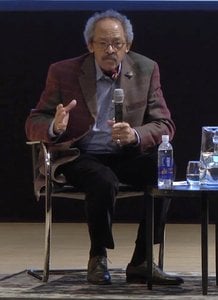
Jack Whitten
1939 -
アーティスト情報
- Full Name: Jack Whitten
- Nationality: American
- Date Of Birth: 1939
- Date Of Death: January 20, 2018
- Place Of Birth: Bessemer, Alabama
- Notable Artworks:
- Black Monolith Series
- Heads Series
- Birmingham 1964
- Artistic Movement Or Style: Abstract painting/sculpture
- Artists Who Influenced This Artist:
- Willem de Kooning
- Robert Blackburn
- Romare Bearden
- Artists Or Movements Influenced By This Artist:
- Jacob Lawrence
- Norman Lewis