


選択した条件に基づいた画像: , .
作品解説
Hubert Robert's 'Alexander the Great before Achilles’ Tomb' captures a poignant scene of historical reflection amidst Roman ruins, blending Neoclassical and Romantic elements with evocative lighting and textures.
 詳細を表示
詳細を表示
アーティストの略歴
18世紀フランスの画家、ユベール・ロベール(1733-1808年)。遺跡や幻想的な風景を描き、ロマン主義と新古典主義に影響を与えました。歴史、衰退、そして想像力を融合させた作品をご覧ください!
手描き油彩複製画
当社のアーティストが、ご希望のサイズと額縁に合わせてキャンバスに手描きで制作する、オーダーメイドの油彩画です。 ( プリント版に切り替え デジタル画像販売へ切り替え)
この絵画の詳細を見る
 設置イメージを表示
 シェアする
シェアする シェアする
シェアする
 詳細を見る
詳細を見る ガイドを表示

 ダウンロード
 似ている作品
 X線調査
X線調査 スライドショーを表示
 Q&A
Q&A 統計情報
統計情報絵画のご注文は、わずか4つの簡単なステップで完了します
ゆっくりとお選びください。回答はいつでも変更可能です。選択内容に応じて、注文カート内の価格が随時更新されます。
1 全4ステップ中のステップ1
サイズをご選択ください。
これらのサイズは、原画の比率を維持しています。図は、高さ2メートルのソファの上の壁に、選択したサイズを配置した際のイメージです。
または、ご希望のサイズを指定する
作品のオリジナル比率に合わせた、当店の規定サイズからお選びください。

フレームや壁のスペースに合わせて、ご希望の幅と高さを入力してください。本作品は手描きのため、異なる比率のサイズをご希望の場合、絵画の周囲を少し広げて描くか、あるいは端を少しカットして調整することが可能です。お客様のご要望に合わせます。制作を開始する前に、仕上がりを確認するためのデジタルモックアップをお送りいたします。このページに表示されている画像は完成品の実物ではなく、あくまでモックアップによるイメージです。
2 4ステップ中の2番目
どのような状態での配送をご希望ですか:ロール状、キャンバス張り、または額装済み?
以下の価格は、ステップ1で選択されたサイズに基づいています。
キャンバスの側面仕上げを選択
フレームを選択

白の側面仕上げ ¥1

エッジぼかし仕上げ ¥1

回り込み仕上げ ¥1

P118B ¥10

P118H ¥10

P118W ¥10

P438Z ¥10

P508JH ¥12

P508YH ¥12

P805H ¥10

P805Z ¥10

P919BZ ¥10

P919G ¥10

P919XJ ¥10

P959ZH ¥10

P968JZ ¥12

W106C ¥8

W218G ¥10

W218JH ¥8

W218Y ¥10

W307PJ ¥10

W316G ¥10

W316PJ ¥8

W316Y ¥10

W398PJ ¥8

W4111J ¥10

W500HY ¥15

W500JH ¥15

W692G ¥12

W849H ¥8

W940BG ¥15

W953PJ ¥8

H24-GOLD ¥30

H24-SILVER ¥30

H36-GOLD ¥45

H36-SILVER ¥45
額装済み
額縁の形状: . 額縁を含む全体サイズ: .
3 4ステップ中の3ステップ目
絵画の内容に変更をご希望されますか?
ほとんどの方は「いいえ」と答えます。一枚一枚が手描きであるため、アーティストがお客様のご要望に合わせて調整することも可能です。
ご注文後、ArtsDot.com のチームより詳細な手順についてメールをお送りし、仕上がりイメージ(モックアップ)をご提示いたします。
4 4ステップ中、第4ステップ
仕上げのオプション(数種類)
すべて任意です。すでに選択されている回答に追加料金はかかりません。
作者は誰?
美術館にあるような、銘板(ネームプレート)を。
刻印入りブロンズプレートの詳細
This elegant plaque features the artist's name and the title of the artwork, finely engraved for a timeless presentation.
It is made from bronze with a refined, elegant finish. The text is precisely laser-engraved for a sharp and permanent result. Measuring 9x2 cm, the plaque is compact yet easy to read. It's built to be durable and scratch-resistant, offering a professional, museum-quality look. Mounting is simple thanks to the included adhesive backing.
透明アクリル銘板の詳細
The plaque includes essential engraved details such as the artist's name, the title of the artwork, the date it was created, the type of media used-like oil on canvas or watercolor-a brief description of the piece, and a QR code that links to the complete artwork information.
It is crafted from clear acrylic, offering a sleek, modern appearance. The text is UV-engraved in black to ensure strong visual contrast. With a size of 10x15 cm, it ensures optimal readability. It comes equipped with two metal hooks for secure wall mounting. The plaque is designed to be weather-resistant, making it suitable for various environments, and it includes interactive features that work seamlessly with smartphone scanning.
黒アクリル製銘板の詳細
This elegant plaque includes engraved information such as the artist's name, the title of the artwork, the date it was created, the type of media used (like oil on canvas or watercolor), a short description of the artwork, and a QR code for quick access to more information.
The plaque itself is made from refined black acrylic with a premium finish. The text is laser-engraved in white for high contrast and readability. Its size is 10x15 cm, designed to be easy to read. It comes with two metal hooks for professional mounting. The design is sleek and fits any interior style. It is also weather-resistant and durable, with built-in digital integration for mobile compatibility.
保護用ニスをご希望ですか?
お届け希望日をお選びください
✓ 内容を確認して注文する
ご注文通りの絵画内容

Alexandre le Grand devant le tombeau d'Achille
再現技法
複製画サイズ一覧
-

至高の熟練アーティスト
より細部までこだわった表現、洗練された技術、そして十分な制作時間
-

複製画用フレーム
-
-
いずれかの辺が105 cm(約41インチ)を超えるアートワークまたは複製画の場合、フレームは分解されたキットの状態でお届けいたします。この方法は、輸送中の破損を防ぎ、安全に配送するために採用しております。
組み立てには専門知識が必要です(DIY用製品ではありません)。
本キットは、経験豊富なプロの額装師が、木工用ボンド(別売)、キャンバス用プライヤー、およびボンドの乾燥時に桟を直角に保持するためのクランプを使用して、組み立ておよびキャンバスの張り作業を行う必要があります。不適切な組み立てやキャンバスの張りの不均一は、作品に永久的な損傷を与える恐れがあり、弊社の保証対象外となります。
 いずれかの辺が105 cm(約41インチ)を超えるアートワークまたは複製画の場合、フレームは分解されたキットの状態でお届けいたします。この方法は、輸送中の破損を防ぎ、安全に配送するために採用しております。
すべての無垢材のパーツが含まれており、組み立てに最適なサイズに正確にカットされています。
付属のネジを使用し、角の接合部には別途木工用ボンドをご用意ください(ボンドは付属しておりません)。ボンドは額装業者様にてご手配をお願いいたします。
プロ仕様の道具が必要ですが、キットには含まれていません:キャンバス用ストレッチングプライヤー(テンショナー)、および接着剤が乾燥するまで木枠を直角に固定するためのクランプ。
重要:
コーナーの接合部には木工用ボンドが必要です。また、ボンドが完全に乾くまでクランプでバーを固定しておく必要があり、組み立てたフレームにキャンバスを張るにはキャンバス用ストレッチングプライヤーが必要となります。これらの道具はキットに含まれておりません。このサイズをご注文される前に、経験豊富なプロの額装師(フライマー)の手配をお願いいたします。

キャプション
-
-

保護用ワニス
光沢ワニス(色彩を鮮やかに引き立て、光や湿気から保護します)
-

作品をカスタマイズ
カスタマイズの例:顔をお客様の写真に差し替える、ペットを追加する(例:猫を犬に変更)、背景に隠しメッセージを入れる、背景の風景や要素を変更する。
-

お急ぎ便
世界中への配送()は、通常の5週間ではなく、3〜4週間でお届けいたします。(10 11月)。品質には一切の妥協を許しません。
-
お急ぎ便
世界中への配送()は、5週間ほどでお届けします。(17 11月)。
込み
合計金額
¥ 65349
ガラスオプションは、110cm未満のサイズでのみご利用いただけます。
すべての注文に同梱
- 世界中へ無料エクスプレス配送
- 高品質なリネンキャンバス
- 配送時完全保険付
- 関税・輸入税の払い戻し保証
- 真の色彩再現に関する保証
- 100日間返品保証(製造上の欠陥がある場合のみ)
- 100% 全額返金保証
- まとめ買い割引のご案内


A Dramatic Encounter: Hubert Robert’s Meditation on Power and Decay
Hubert Robert’s “Alexandre le Grand devant le tombeau d’Achille” (c. 1754-1757) is not merely a depiction of a historical scene; it's a carefully constructed tableau brimming with symbolic weight, rendered in the evocative style characteristic of the late 18th century. The painting transports us to a ruined Roman landscape – a deliberate choice by Robert that immediately establishes a dialogue between grandeur and transience. Here, Alexander the Great stands before what is clearly identified as Achilles’ tomb, not in triumphant victory, but in a posture of contemplative solemnity. This isn't the heroic Alexander of classical sculpture; he appears almost weary, his gaze fixed on the fragmented remains of the past, suggesting a profound awareness of mortality and the fleeting nature of even the most formidable power.
Robert masterfully employs a flattened perspective, prioritizing atmosphere and emotional resonance over strict adherence to linear realism. The composition is deliberately complex, layering figures – soldiers, onlookers, and Alexander himself – within a carefully orchestrated architectural setting. The strong vertical lines of the columns contrast sharply with the horizontal fragmentation of the fallen structures, creating a visual tension that mirrors the painting’s thematic concerns. Notice how Robert uses diffused lighting, reminiscent of an overcast day, to soften the edges and imbue the scene with a melancholic quality. The earthy color palette – dominated by ochres, browns, and muted blues – further reinforces this sense of age and decay, while subtle touches of red in the drapery draw the eye and add a touch of dramatic intensity.
Neoclassical Roots, Romantic Longing
While firmly rooted in the Neoclassical tradition—a style emphasizing clarity, order, and rational composition—Robert’s work also reveals a strong influence from the burgeoning Romantic movement. The ruins themselves are not simply historical artifacts; they represent a powerful symbol of time's relentless passage and the inevitable decline of all things. The scene evokes a sense of nostalgia for a lost golden age, a yearning for beauty amidst decay – a hallmark of Romanticism’s fascination with emotion and the sublime. Robert wasn’t just documenting ruins; he was crafting visions, blending observation with imagination to create scenes that resonated with both a longing for the past and an anticipation of the future.
The choice of Achilles' tomb is particularly significant. Achilles, the epitome of heroic strength and martial prowess, represents an ideal of masculine virtue—a concept increasingly challenged by the Enlightenment’s emphasis on reason and individual liberty. Alexander, standing before his demise, implicitly acknowledges this shift in values. The juxtaposition of the powerful conqueror with the fallen hero suggests a subtle critique of unchecked ambition and the ultimate futility of earthly glory. Robert's skill lies not just in depicting the scene accurately but in imbuing it with layers of meaning that invite contemplation.
Technique and Materials: A Layered Masterpiece
“Alexandre le Grand devant le tombeau d’Achille” is a testament to Robert's meticulous technique. Likely executed in oil on canvas, the painting demonstrates a sophisticated understanding of color blending and layering—a hallmark of the Rococo and Neoclassical periods. The visible brushstrokes contribute to the sense of texture and immediacy, while subtle glazing techniques create depth and luminosity. The rough, aged surfaces of the ruins are contrasted with smoother areas of skin tones, further emphasizing the painting’s thematic concerns about time and decay. Robert's use of pigments mixed with oil—a standard practice at the time—allowed him to achieve a remarkable range of tonal values and subtle color variations.
The painting’s composition suggests a deliberate effort to capture not just a visual likeness but also an emotional atmosphere. Robert’s careful attention to detail, combined with his masterful use of light and shadow, creates a scene that is both visually stunning and profoundly moving. It's a work that invites the viewer to contemplate the enduring legacy of heroes, the inevitability of decay, and the complex relationship between power and mortality.
Q&A
「Alexandre le Grand devant le tombeau d'Achille」の詳細を確認することはできますか?
ユベール・ロベール作「Alexandre le Grand devant le tombeau d'Achille」のX線ビューは、作品のX線解析ページでご覧いただけます。11層の光学レイヤーを通じて画像をインタラクティブに解析できる、詳細な検証機能です。
「Alexandre le Grand devant le tombeau d'Achille」のプレビューはどこで確認できますか?
ユベール・ロベール作「Alexandre le Grand devant le tombeau d'Achille」のプレビューは、作品の設置イメージページでご確認いただけます。
ユベール・ロベール作「Alexandre le Grand devant le tombeau d'Achille」はどのような種類の作品ですか?
カタログ内では、ユベール・ロベール作「Alexandre le Grand devant le tombeau d'Achille」はWallArtとして分類されています。このカテゴリーを活用することで、類似の作品を探すことができます。
関連作品


ユベール・ロベール
1733 - 1808, フランス
作家プロフィール
ルネサンスの夢想家:ユベール・ロベールの世界
ユベール・ロベール(1733年生まれ)は、魅惑的な風景画と遺跡へのロマンチックな憧憬を象徴する画家であり、18世紀フランス美術において独特の位置を占めています。パリに生まれた彼は、華麗なロココ様式から新古典主義の夜明け、そして激動のフランス革命へと移り変わる時代の中で生きました。彼は単なる遺跡の記録者ではありませんでした。観察と想像力を融合させ、過去への郷愁と未来への期待を呼び起こすビジョンを創造したのです。彼の芸術的旅は、彫刻家ミシェル=アンジュ・スロッツの下での厳格な訓練から始まりました。スロッツはロベールの才能を見抜きながらも、光、雰囲気、そして形式の繊細な詩を捉えることが彼の真の天職であると直感し、彼を絵画へと導きました。ローマの幻想:芸術的アイデンティティの形成
ロベールの芸術的発展における重要な転換点は、1754年にエティエンヌ=フランソワ・ドゥ・ショワゼルに同行してローマへ長期滞在したことです。彼は歴史と建築的な壮大さに満ちた世界に没頭しました。11年間、古代都市は彼の野外スタジオとなり、崩れかけた神殿、雄大なアーチ、そして生い茂る庭園が彼の想像力を刺激しました。これは単なる見たものを再現する行為ではありませんでした。解釈し、再構築し、メランコリックな美しさで満たすことだったのです。彼はジョヴァンニ・パオロ・パンニニと共に働き、その影響はロベールの初期の *capriccio* 作品に見られます。これらの作品は、古典的な遺跡と現代生活を組み合わせた幻想的な風景画です。しかし、ロベールは模倣を超え、緻密な描写、大気遠近法、そして光と影の微妙なニュアンスに対する深い感受性を特徴とする独自のスタイルを発展させました。彼は単に遺跡を描いていたのではなく、時間そのものを描き出していたのです。儚さの美しさと記憶の永続的な力を捉えていたのです。この時期の彼のスケッチブックは、ヴィラ・デステやカプラローラのローマのランドマークの研究で満たされ、建築的なニュアンスと風景構成に対する鋭い観察眼を示しています。パリでの名声と王室の庇護
1765年にロベールがパリに帰還したことは、彼のキャリアにおける転換点となりました。彼は芸術界内で急速に認められ、「古代および現代のさまざまな建造物で飾られたローマ港」をアカデミー・ロワイヤル・ド・ペーントゥール・エ・スカルプチュールの会員に選出されました。その後のサロンでの展覧会は、遺跡や風光明媚な風景を描いた作品で観客を魅了し、広く賞賛されました。啓蒙主義の著名な人物であるデニ・ディドローは、ロベールの絵画が喚起する壮大さを称賛し、彼が鑑賞者を別の時空へと誘う能力を認めました。この成功により王室からの庇護を受け、装飾プロジェクトの依頼や「国王庭園設計者」、そして後に「国王コレクション管理者」という地位を得ました。彼はイゼルの絵画だけでなく、革新的な庭園デザインや宮殿の内装にも求められるアーティストとなりました。彼の作品は、歴史、考古学、そして風光明媚な風景に魅了されたコレクターを惹きつける *capriccio* 絵画の流行と共鳴しましたが、ロベールはそれを独自の感性で昇華させ、単なる装飾芸術を超越しました。革命、不屈の精神、そして永続的な遺産
フランス革命はロベールにとって前例のない挑戦をもたらしました。多くのアーティストが激動する政治情勢の中で苦労する中、彼は変化の流れに翻弄されました。恐怖政治の時代には投獄され、その経験から一連の監獄生活を描いたスケッチを制作することさえありました。しかし、彼はこの時期を通して精力的に絵画を続け、芸術への揺るぎない献身を示しました。革命後、ロベールは新たに設立されたMuséum Central des Arts(後のルーブル美術館)のキュレーターに任命され、彼の専門知識と文化遺産の保護に対する献身が認められたのです。彼は博物館コレクションの整理とカタログ作成において重要な役割を果たし、フランスの芸術的宝物を次世代のために確保しました。ユベール・ロベールは1808年にパリで亡くなり、畏敬の念と賞賛を呼び起こす並外れた作品群を残しました。彼の遺産は技術的な習熟だけでなく、歴史的な正確さと想像力豊かなビジョンを融合させる比類のない能力にあります。彼はロココ様式と新古典主義様式を結びつけ、歴史への関心と想像力によってロマン主義の側面を予見し、重要な人物としての地位を確立しました。- 主な影響: ジョヴァンニ・パオロ・パンニニ、ピラネージ、ローマの建築的な風景。
- 主要なテーマ: 遺跡、風景、*capriccio* 絵画、歴史的記憶、時間の経過。
- 芸術的スタイル: 緻密な描写、大気遠近法、喚起的な照明、観察と想像力の融合。
関連記事

Hubert Robert: Picturing Ruins, Preserving Memory – A Study of Romantic Antiquarianism & Artistic Innovation
Explore the captivating world of Hubert Robert, master of Romantic landscape painting & 'capriccio' ruins. Discover his historical context, artistic innovations, and collecting insights with ArtsDot.

葛飾北斎:25の傑作が語る浮世絵の世界 - ArtsDot
葛飾北斎の25選:『神奈川沖浪裏』や『富嶽三十六景』など、浮世絵の世界を深く探求。木版画の技法と日本美術の美をArtsDotで。高品質なアートプリントで空間に感動を。コレクションはこちら。
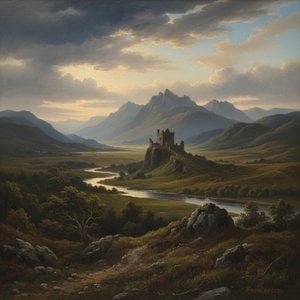
Alexander Nasmyth: Picturing Scotland's Romantic Landscape – Innovation & Identity
Explore the life & art of Alexander Nasmyth, a pivotal figure in Scottish Romantic landscape painting. Discover his iconic works, including portraits of Robert Burns, and learn about his lasting influence on national identity. Fine art reproductions available.