


 設置イメージを確認
 送る
送る シェア
シェア
 詳細情報
詳細情報 ガイドを表示

 画像をダウンロード
 似ている作品
 X線調査
X線調査 スライドショー
 統計情報
統計情報Ecce Homo
 Acrylic On Canvas
- WallArt
- Late Medieval Symbolism
 1475
1475 71.0 x 61.0 cm
 Städel Museum
 続きを読む
続きを読む
ジークレー/アートプリント
スピーディーな制作と多彩な仕上げオプションが魅力の、ミュージアムクオリティなジークレー・キャンバスプリント。 ( 手描きの複製画を注文する デジタル画像販売へ切り替え)




P118B ¥10

P118H ¥10

P118W ¥10

P438Z ¥10

P508JH ¥12

P508YH ¥12

P805H ¥10

P805Z ¥10

P919BZ ¥10

P919G ¥10

P919XJ ¥10

P959ZH ¥10

P968JZ ¥12

W106C ¥8

W218G ¥10

W218JH ¥8

W218Y ¥10

W307PJ ¥10

W316G ¥10

W316PJ ¥8

W316Y ¥10

W398PJ ¥8

W4111J ¥10

W500HY ¥15

W500JH ¥15

W692G ¥12

W849H ¥8

W940BG ¥15

W953PJ ¥8




作品のオリジナル比率に合わせた、当店の規定サイズからお選びください。

額縁や壁のスペースに合わせて、ご希望の幅と高さを入力してください。プリントはカットすることは可能ですが、元の画像より大きくすることはできないため、異なる比率のサイズを選択された場合は、画像の一部が欠けることになります。印刷を開始する前に、内容を確認していただくためのデジタルモックアップをお送りいたします。このページに表示されている画像は、実際のカット後の状態を示すものではありません。実際の仕上がりはモックアップにてご確認ください。


 ガラスオプションは、110cm未満のサイズでのみご利用いただけます。

Ecce Homo
ジークレー/アートプリント
複製画サイズ一覧
-


合計金額
¥ 9767
A Moment of Profound Sorrow: Unpacking Hieronymus Bosch's "Ecce Homo"
Hieronymus Bosch’s “Ecce Homo,” painted in 1475, is not merely a depiction of the crucifixion; it’s a visceral plunge into the anxieties and moral complexities of late medieval Europe. This arresting image, rendered in tempera on wood panel, immediately confronts the viewer with an unsettling tableau – a scene of profound sorrow and bewildered horror surrounding the figure of Christ. Bosch, a master of psychological realism and symbolic density, doesn't offer a straightforward narrative of sacrifice; instead, he presents a fragmented, almost hallucinatory experience, reflecting the turbulent spiritual climate of his time.
The painting’s setting is deceptively simple: a brick wall, likely representing the Roman edge of Jerusalem, serves as a stark backdrop to the drama unfolding before it. A small crowd gathers – soldiers in gleaming armor, their faces etched with confusion and perhaps even fear; priests and monks, their expressions a mixture of grief and contemplation; and ordinary citizens, frozen in moments of stunned disbelief. The central figure of Christ, hanging on the cross, is not idealized or serene. His face, rendered with an almost brutal honesty, bears the marks of suffering – wounds, contusions, and a palpable sense of agony. It’s this unflinching portrayal of human vulnerability that anchors the scene and elevates it beyond a simple religious illustration.
The Language of Symbolism: Decoding Bosch's Visual Vocabulary
Bosch was renowned for his intricate use of symbolism, and “Ecce Homo” is a prime example. The swords scattered across the foreground are not simply indicators of violence; they represent the betrayal and bloodshed inherent in Christ’s sacrifice. The presence of animals – a dog licking the feet of Christ (a common symbol of repentance), and a monkey grasping a sword – adds layers of meaning, hinting at the corruption and moral decay within society. The figures themselves are often ambiguous, their gestures and expressions open to multiple interpretations. Some scholars believe the woman pointing at Christ is Mary Magdalene, while others see her as representing the collective grief of humanity. Even the brick wall itself can be interpreted as a barrier between the earthly realm and the divine, emphasizing the separation between God and man.
Furthermore, Bosch’s distinctive style – characterized by meticulous detail, vibrant colors (though faded over time), and an unsettling blend of realism and fantasy – contributes significantly to the painting's emotional impact. The figures are rendered with a remarkable degree of naturalism, yet their expressions and postures convey a sense of unease and disorientation. The background is filled with bizarre, dreamlike imagery—a small, grotesque figure seemingly observing the scene from above—further enhancing the painting’s surreal quality.
Technique and Context: A Master at Work
Bosch's technique in “Ecce Homo” reveals a skilled artist deeply rooted in the traditions of Netherlandish painting. He employed tempera on wood panel, a medium known for its luminosity and durability. The meticulous detail evident in the rendering of the figures’ clothing, armor, and facial features demonstrates his mastery of observation and representation. However, Bosch pushed beyond mere imitation; he used these techniques to create a world imbued with symbolic meaning and psychological depth.
Painted around 1475, “Ecce Homo” reflects the anxieties prevalent in Europe during this period – a time of religious upheaval, political instability, and growing social unrest. The Black Death had ravaged the continent just decades earlier, leaving a deep scar on the collective psyche. Bosch’s art often explored themes of sin, damnation, and the perils of earthly life, reflecting a widespread sense of moral uncertainty. “Ecce Homo” stands as a powerful testament to this era, offering a haunting glimpse into the spiritual and emotional landscape of 15th-century Europe.
ArtsDot offers exquisite, hand-painted reproductions of Hieronymus Bosch’s “Ecce Homo,” meticulously crafted to capture the painting's original beauty and symbolic richness. Bring this extraordinary work of art into your home or office – a captivating conversation piece that invites contemplation and reflection.
よくあるご質問
「Ecce Homo」(1475)は、ヨルハナムス・ボッシュのキャリアにおけるどの時期の作品にあたりますか?
1475年という制作年代から、「Ecce Homo」はヨルハナムス・ボッシュのMature Periodに属します。
現在、ヨルハナムス・ボッシュ作「Ecce Homo」はどこで展示されていますか?
ヨルハナムス・ボッシュ作「Ecce Homo」の真作はStädel Museum, Frankfurt, Germanyに所蔵されています。複製画(レプリカ)を用いることで、ご自宅でも作品をお楽しみいただけます。
「Ecce Homo」は、ヨルハナムス・ボッシュのテーマやスタイルとどのように結びついているのでしょうか?
「Ecce Homo」は、ヨルハナムス・ボッシュの他の作品と同様に、Late Medieval Symbolism様式と、描き続けられてきたテーマであるlate medieval symbolism, moral tales, religious anxiety, societal critique, allegorical, dreamlike visions complex, bosch’s unique, unsettling imagery”を共有しています。
関連作品


アーティストについて
Hieronymus Bosch (c. 1450-1516): ドイツのルネサンス神秘主義者の驚くべき芸術家
Hieronymus Boschは、約1450年にオランダのデン・ボッシュで生まれました。当時の Brabant地域は、後期の中世宗教熱情とフォロクルの中心であり、彼の芸術的な視界を深く形成しました。彼の家族は絵画の伝統を持っており、父親と祖父の両方が画家でした。彼は家族の工房で幼少期に美術訓練を受け、伝統的なオランダ絵画の技術と注意深い詳細を吸収しました。しかし、彼はすぐにこれらの規範を超え、驚くべき想像力を表現するキャリアを築きました。彼の生애に関する情報は非常に乏しく、記録は断片化されており、彼の人間と作品の両方に対する神秘的な雰囲気を増しています。彼は約1481年にAleyt Goyaerts van den Meerveenと結婚し、彼女の家族が所有する財産によって経済的な安定を得ましたが、他のことはほとんど知られていませんでした。彼の個人的な生活は謎に包まれています。驚くべき芸術的スタイルと幻想的なイメージ
Boschの芸術的なスタイルはすぐに認識可能でした。彼は油絵をオークパネルに塗ることで有名な技術を持っています。彼は初期の作品で伝統的なオランダ絵画の影響を受けましたが、すぐにそれを模倣するのではなく、独自の視界を開発しました。彼の絵画は単なる現実の描写ではありません。それは幻想的な生き物や奇妙な生物や不安なシーンが満たされた象徴的な風景であり、人間の精神と社会に対する深い疑問を探求しています。彼は特に悪意、誘惑、そして神の裁定への脆弱性を強調する宗教的なテーマに取り組んでいます。彼の生き物は悪魔のような恐ろしい生き物、幻想的な動物、そして奇妙に人間的な人物で、それは聖なるものと profane なものが融合した独特の不安感を生み出しています。彼はこれらの要素を組み合わせることで、他の芸術家よりも驚くべき視界を持つアーティストとなり、彼の芸術は時代を超えて人々を魅了し続けています。彼は特に悪魔のような恐ろしい生き物、幻想的な動物、そして奇妙に人間的な人物で、それは聖なるものと profane なものが融合した独特の不安感を生み出しています。彼の創造性は驚くべきものであり、他の芸術家よりも驚くべき視界を持つアーティストとなり、彼の芸術は時代を超えて人々を魅了し続けています。彼は特に悪魔のような恐ろしい生き物、幻想的な動物、そして奇妙に人間的な人物で、それは聖なるものと profane なものが融合した独特の不安感を生み出しています。彼の創造性は驚くべきものであり、他の芸術家よりも驚くべき視界を持つアーティストとなり、彼の芸術は時代を超えて人々を魅了し続けています。彼は特に悪魔のような恐ろしい生き物、幻想的な動物、そして奇妙に人間的な人物で、それは聖なるものと profane なものが融合した独特の不安感を生み出しています。彼の創造性は驚くべきものであり、他の芸術家よりも驚くべき視界を持つアーティストとなり、彼の芸術は時代を超えて人々を魅了し続けています。彼は特に悪魔のような恐ろしい生き物、幻想的な動物、そして奇妙に人間的な人物で、それは聖なるものと profane なものが融合した独特の不安感を生み出しています。彼の創造性は驚くべきものであり、他の芸術家よりも驚くべき視界を持つアーティストとなり、彼の芸術は時代を超えて人々を魅了し続けています。彼は特に悪魔のような恐ろしい生き物、幻想的な動物、そして奇妙に人間的な人物で、それは聖なるものと profane なものが融合した独特の不安感を生み出しています。彼の創造性は驚くべきものであり、他の芸術家よりも驚くべき視界を持つアーティストとなり、彼の芸術は時代を超えて人々を魅了し続けています。彼は特に悪魔のような恐ろしい生き物、幻想的な動物、そして奇妙に人間的な人物で、それは聖なるものと profane なものが融合した独特の不安感を生み出しています。彼の創造性は驚くべきものであり、他の芸術家よりも驚くべき視界を持つアーティストとなり、彼の芸術は時代を超えて人々を魅了し続けています。彼は特に悪魔のような恐ろしい生き物、幻想的な動物、そして奇妙に人間的な人物で、それは聖なるものと profane なものが融合した独特の不安感を生み出しています。彼の創造性は驚くべきものであり、他の芸術家よりも驚くべき視界を持つアーティストとなり、彼の芸術は時代を超えて人々を魅了し続けています。彼は特に悪魔のような恐ろしい生き物、幻想的な動物、そして奇妙に人間的な人物で、それは聖なるものと profane なものが融合した独特の不安感を生み出しています。彼の創造性は驚くべきものであり、他の芸術家よりも驚くべき視界を持つアーティストとなり、彼の芸術は時代を超えて人々を魅了し続けています。彼は特に悪魔のような恐ろしい生き物、幻想的な動物、そして奇妙に人間的な人物で、それは聖なるものと profane なものが融合した独特の不安感を生み出しています。彼の創造性は驚くべきものであり、他の芸術家よりも驚くべき視界を持つアーティストとなり、彼の芸術は時代を超えて人々を魅了し続けています。彼は特に悪魔のような恐ろしい生き物、幻想的な動物、そして奇妙に人間的な人物で、それは聖なるものと profane なものが融合した独特の不安感を生み出しています。彼の創造性は驚くべきものであり、他の芸術家よりも驚くべき視界を持つアーティストとなり、彼の芸術は時代を超えて人々を魅了し続けています。彼は特に悪魔のような恐ろしい生き物、幻想的な動物、そして奇妙に人間的な人物で、それは聖なるものと profane なものが融合した独特の不安感を生み出しています。彼の創造性は驚くべきものであり、他の芸術家よりも驚くべき視界を持つアーティストとなり、彼の芸術は時代を超えて人々を魅了し続けています。彼は特に悪魔のような恐ろしい生き物、幻想的な動物、そして奇妙に人間的な人物で、それは聖なるものと profane なものが融合した独特の不安感を生み出しています。彼の創造性は驚くべきものであり、他の芸術家よりも驚くべき視界を持つアーティストとなり、彼の芸術は時代を超えて人々を魅了し続けています。彼は特に悪魔のような恐ろしい生き物、幻想的な動物、そして奇妙に人間的な人物で、それは聖なるものと profane なものが融合した独特の不安感を生み出しています。彼の創造性は驚くべきものであり、他の芸術家よりも驚くべき視界を持つアーティストとなり、彼の芸術は時代を超えて人々を魅了し続けています。彼は特に悪魔のような恐ろしい生き物、幻想的な動物、そして奇妙に人間的な人物で、それは聖なるものと profane なものが融合した独特の不安感を生み出しています。彼の創造性は驚くべきものであり、他の芸術家よりも驚くべき視界を持つアーティストとなり、彼の芸術は時代を超えて人々を魅了し続けています。彼は特に悪魔のような恐ろしい生き物、幻想的な動物、そして奇妙に人間的な人物で、それは聖なるものと profane なものが融合した独特の不安感を生み出しています。彼の創造性は驚くべきものであり、他の芸術家よりも驚くべき視界を持つアーティストとなり、彼の芸術は時代を超えて人々を魅了し続けています。彼は特に悪魔のような恐ろしい生き物、幻想的な動物、そして奇妙に人間的な人物で、それは聖なるものと profane なものが融合した独特の不安感を生み出しています。彼の創造性は驚くべきものであり、他の芸術家よりも驚くべき視界を持つアーティストとなり、彼の芸術は時代を超えて人々を魅了し続けています。彼は特に悪魔のような恐ろしい生き物、幻想的な動物、そして奇妙に人間的な人物で、それは聖なるものと profane なものが融合した独特の不安感を生み出しています。彼の創造性は驚くべきものであり、他の芸術家よりも驚くべき視界を持つアーティストとなり、彼の芸術は時代を超えて人々を魅了し続けています。彼は特に悪魔のような恐ろしい生き物、幻想的な動物、そして奇妙に人間的な人物で、それは聖なるものと profane なものが融合した独特の不安感を生み出しています。彼の創造性は驚くべきものであり、他の芸術家よりも驚くべき視界を持つアーティストとなり、彼の芸術は時代を超えて人々を魅了し続けています。彼は特に悪魔のような恐ろしい生き物、幻想的な動物、そして奇妙に人間的な人物で、それは聖なるものと profane なものが融合した独特の不安感を生み出しています。彼の創造性は驚くべきものであり、他の芸術家よりも驚くべき視界を持つアーティストとなり、彼の芸術は時代を超えて人々を魅了し続けています。彼は特に悪魔のような恐ろしい生き物、幻想的な動物、そして奇妙に人間的な人物で、それは聖なる
ヨルハナムス・ボッシュ
1450 - 1516 , オランダ
アーティスト情報
- Artistic Movement Or Style: シュルレアリスム、シンボリズム
- Artists Or Movements Influenced By This Artist: ['ピエーター・ブーデルガー・ザ・イルダー']
- Date Of Death: 1516年
- Full Name: Hieronymus Bosch
- Nationality: オランダ人
- Notable Artworks: ['楽園の庭」「最後の審判トリプティーク」「聖母昇天」「洗禮記念']
- Place Of Birth: ボッヘルンボスク、オランダ
関連記事

Hieronymus Bosch: Decoding the Visions of a Netherlandish Master
Explore the captivating world of Hieronymus Bosch! Delve into the symbolism, religious context, and artistic innovation of this Netherlandish master with ArtsDot's expert analysis. Discover his iconic paintings & lasting influence.

Late Medieval Masterpieces: 10 Artworks That Defined an Era | ArtsDot
Journey through 10 defining Late Medieval masterpieces – from Giotto's frescoes to Jan van Eyck’s realism. Explore the stories, techniques & vibrant colors of Gothic art. Find museum-quality reproductions and elevate your home decor with ArtsDot.com! Discover all masterpieces on ArtsDot.com

プラド美術館の至宝25選:名画が語るスペイン美術史 | ArtsDot
プラド美術館の至宝25選🎨 ベルラスケス、ゴヤの名画を紐解き、スペイン美術史を旅する。油絵、バロック、印象派…ArtsDotで高品質な複製画とインテリアアートを見つけよう。名画の世界をあなたの空間に✨ Explore the full collection online!
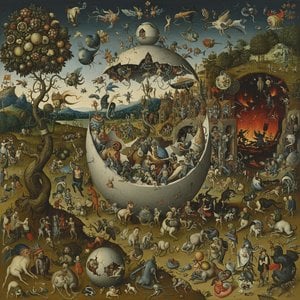
ヒエロニムス・ボッシュ傑作25選:幻想と寓意の世界 | ArtsDot
ヒエロニムス・ボッシュの傑作25選。中世絵画の幻想的な世界を巡り、寓意と象徴に満ちた作品群を紐解きます。ArtsDotで高品質な油絵複製やアートプリントをお楽しみください。ボッシュの色彩とテーマをあなたの空間に。今すぐコレクションをご覧ください。

High Medieval Art: 10 Masterpieces That Shaped an Era | ArtsDot
Journey through High Medieval Art! Explore 10 iconic masterpieces – from Giotto's frescoes to stunning Gothic cathedrals. Discover the stories behind these timeless paintings, sculptures & illuminated manuscripts. Find museum-quality art reproductions at ArtsDot.com.


