

 プレビュー
プレビュー
 シェアする
シェアする シェアする
シェアする
 詳細を見る
詳細を見る

 ダウンロード
 似ている作品
 X線調査
X線調査 スライドショー
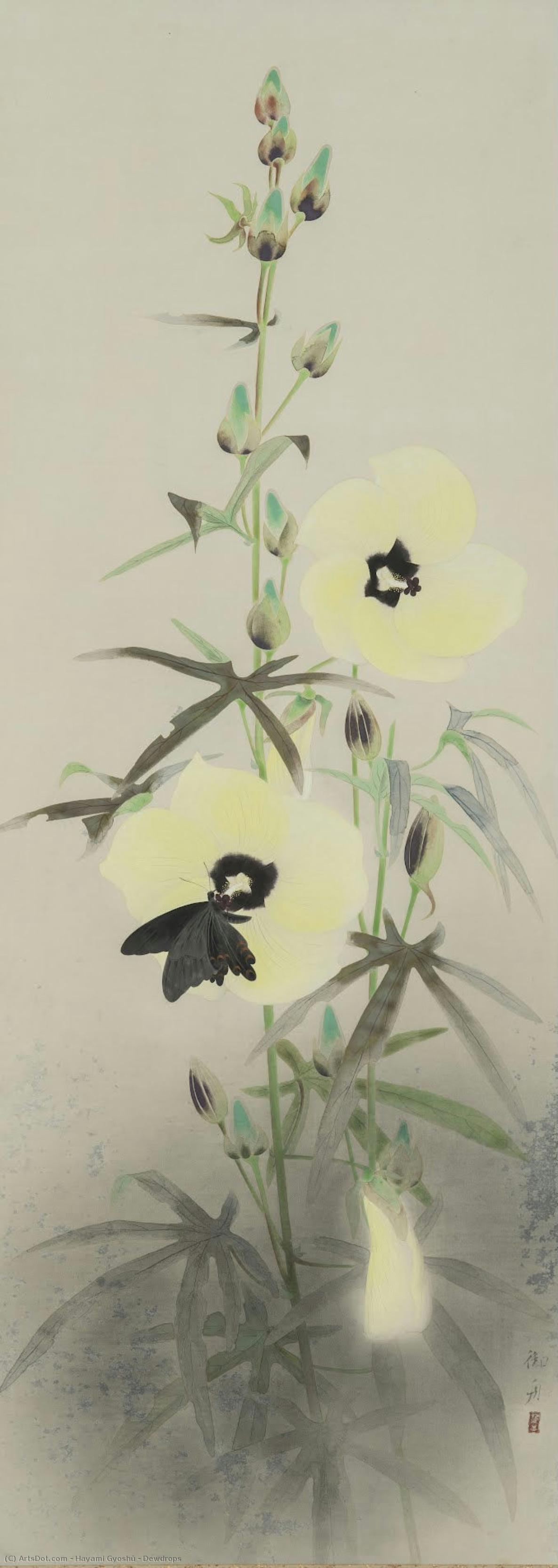
Dewdrops


 詳細を見る
詳細を見る
手描き油彩複製画
当社のアーティストが、お客様のご希望のサイズと額縁に合わせて、キャンバスに手描きで制作する油彩画です。 ( プリント版に切り替え 画像に切り替え)




































作品のオリジナル比率に合わせた、当店の規定サイズからお選びください。

特定のフレームやスペースに合わせて、ご希望のサイズをご入力いただけます。選択されたサイズが元の画像の比率と異なる場合、アートワークをトリミングするか、手描きで要素を追加して絵画を拡張いたします。デジタルモックアップ を制作し、制作開始前にご確認(承認)をいただきます。
画面上のプレビューは、実際のトリミングや拡張を正確に反映しているものではありません。最終的な構図は、モックアップによってのみ正確にご確認いただけます。
カスタムサイズもご利用いただけますが、元の比率を維持するためには、あらかじめ用意されたリストからサイズを選択することをお勧めいたします。
ご注文後、ArtsDot.com チームより詳細な指示をお送りするとともに、仕上がりイメージ(モックアップ)をご提供いたします。


 ガラスオプションは、110cm未満のサイズでのみご利用いただけます。

Dewdrops
複製技法
複製画のサイズ
-


合計金額
$ 263
作品解説
関連作品


アーティストの略歴
The Ethereal Vision of Hayami Gyoshū
In the delicate intersection of reality and dream, the works of Hayami Gyoshū reside, offering a window into a world where nature is both meticulously observed and profoundly spiritual. Born as Eiichi Maita in the vibrant, bustling district of Asakusa, Tokyo, in 1894, the artist would eventually transcend his humble beginnings to become one of the most luminous figures of the Taishō and Shōwa eras. His journey was not merely one of personal growth but a profound evolution of the Nihonga tradition, a style of Japanese painting that seeks to harmonize traditional materials with a modern, sensitive perception of the natural world.
The foundation of Gyoshū’s mastery was laid through rigorous discipline and an almost monastic devotion to the art of seeing. Beginning his studies at the age of fifteen under the tutelage of Matsumoto Fuko, he immersed himself in the painstaking techniques of traditional painting and even explored the intricate world of maki-e lacquerwork. This early training instilled in him a reverence for detail that would define his later achievements. As he matured, his talent caught the eye of influential mentors like Shikō Imamura, who integrated him into the prestigious Kojikai circle. This period of his life was marked by an intense absorption of various classical schools, including Yamato-e and Rinpa, creating a rich, multi-layered artistic vocabulary that allowed him to bridge the gap between ancient heritage and contemporary expression.
A Symphony of Realism and Symbolism
What distinguishes Gyoshū from his contemporaries was his ability to infuse hyper-realistic detail with an unmistakable sense of Symbolism. His brushwork did not merely replicate the physical world; it sought to capture its very soul. Influenced by the profound aesthetics of Chinese paintings from the Song and Yuan dynasties, as well as the spiritual depth of Bunjinga, his compositions often feature elements that serve as metaphors for the fleeting nature of existence. A single dewdrop clinging to a petal or the subtle texture of a mountain mist becomes a meditation on impermanence—a core tenet of Zen Buddhist thought.
His technical prowess was most evident in his use of light and atmosphere. By layering thin, translucent washes of pigment, Gyoshū achieved a luminous quality that seemed to radiate from within the silk or paper itself. This technique allowed him to render the most delicate transitions of color, making his landscapes feel alive with breath and movement. His later works moved toward an even more profound abstraction of feeling, where the boundaries between the subject and its environment began to blur into a singular, evocative experience of beauty.
Legacy and the Eternal Flame
Though his life was tragically brief—concluding in 1935 at the age of only forty—the impact of Hayami Gyoshū remains undiminished. He was a founding member of the revived Japan Fine Arts Academy, a role that cemented his importance in the institutional history of Japanese art. His ability to synthesize the precision of realism with the evocative power of symbolism provided a blueprint for future generations of Nihonga painters navigating the complexities of a modernizing Japan.
Today, when we look upon his most celebrated works, such as the mesmerizing Enbu (Dancing in the Flames), we do not merely see a historical artifact. We encounter a living dialogue between the artist and the universe. His legacy is found in every carefully rendered leaf and every shimmering light effect that continues to haunt and inspire the modern viewer, reminding us of the profound beauty that exists in the quietest corners of the natural world.

hayami gyoshū
1894 - 1935 , Japan
基本情報
- Artistic Movement Or Style: Nihonga
- Artists Or Movements Influenced By This Artist: ['Taisho Art']
- Artists Who Influenced This Artist: ['Angado Gajuku']
- Date Of Birth: August 2, 1894
- Date Of Death: March 20, 1935
- Full Name: Eiichi Maita
- Nationality: Japanese
- Notable Artworks:
- Dancing in Flames
- Mountain Peak Green and Clear
- Place Of Birth: Tokyo, Japan

