


 送る
送る シェア
シェア
 詳細情報
詳細情報 ガイドを表示

 画像をダウンロード
 似ている作品
 スライドショー
 統計情報
統計情報Arithmetic


 続きを読む
続きを読む
手描き油彩複製画
当社のアーティストが、お客様のご希望のサイズと額縁に合わせて、キャンバスに手描きで制作する油彩画です。 ( プリント版に切り替え デジタル画像販売へ切り替え)




































作品のオリジナル比率に合わせた、当店の規定サイズからお選びください。

フレームや壁のスペースに合わせて、ご希望の幅と高さを入力してください。本作品は手描きのため、異なる比率のサイズをご希望の場合、絵画の周囲を少し広げて描くか、あるいは端を少しカットして調整することが可能です。お客様のご要望に合わせます。制作を開始する前に、仕上がりを確認するためのデジタルモックアップをお送りいたします。このページに表示されている画像は完成品の実物ではなく、あくまでモックアップによるイメージです。
ご注文後、ArtsDot.com チームより詳細な指示をお送りするとともに、仕上がりイメージ(モックアップ)をご提供いたします。


 ガラスオプションは、110cm未満のサイズでのみご利用いただけます。

Arithmetic
再現技法
複製画サイズ一覧
-


合計金額
¥ 41735
A Geometric Symphony: Decoding Giorgione’s Arithmetic
In the heart of the Venetian Renaissance, where the shimmering reflections of the Adriatic met the intellectual fervor of humanist scholarship, emerged a work of profound and enigmatic beauty. Arithmetic, attributed to the elusive master Giorgione, is not merely a study of shapes, but a window into the soul of a period obsessed with the divine order of the universe. At first glance, the viewer is met with a deceptively simple arrangement of circles and geometric forms, yet beneath this surface lies a complex tapestry of meaning. The painting functions as a visual meditation on the mathematical proportions that Renaissance thinkers believed governed both the heavens and the earth. It is a piece that invites the eye to wander through its intricate patterns, finding rhythm in the placement of each arc and line, much like a silent piece of music composed in pigment.
The technique employed in this work speaks to the very essence of Venetian colorito. Eschewing the rigid, linear constraints often found in Florentine disegno, Giorgione utilized a fresco-style approach that allows for a breathtaking luminosity. By applying thin, translucent washes of color onto the surface, the artist achieved a depth that feels almost atmospheric, as if the light itself is trapped within the layers of pigment. The palette is a sophisticated collection of earth tones—warm ochres, muted terracottas, and soft umbers—which lend the composition a timeless, organic quality. This mastery of tonal harmony ensures that even the most abstract elements feel grounded in a natural reality, creating a sense of permanence and weight that is rare in such delicate execution.
The Intersection of Science and Spirit
To understand Arithmetic, one must look toward the cultural crossroads of 1510 Venice. This was an era where the boundaries between art, science, and philosophy were fluid. The title itself serves as a clue to the painting's symbolic depth; it reflects the Renaissance fascination with classical ideals and the belief that mathematical precision was a reflection of divine perfection. Each circle and geometric intersection acts as a symbol of cosmic balance. For the modern collector or interior designer, this piece offers more than just aesthetic pleasure; it provides a focal point of intellectual intrigue. It is a work that rewards prolonged contemplation, revealing new layers of complexity each time it is viewed.
Integrating such a masterpiece into a contemporary space requires an appreciation for its emotional resonance. There is a profound stillness within the composition, a quietude that can transform a room into a sanctuary of thought. Whether placed in a minimalist gallery setting or as a sophisticated accent in a richly textured study, the painting’s ability to blend architectural structure with soft, painterly textures makes it an invaluable asset for any curated collection. It stands as a testament to Giorgione's unique ability to capture not just the visible world, but the invisible laws that shape our perception of beauty and order.
よくあるご質問
「Arithmetic」のPortrait形式は、どのような場所に飾るのがおすすめですか?
ジョルジョーネ作「Arithmetic」の展示に関する情報は、フォーマット(Portrait)と推奨される設置場所(Office)の2点です。
ジョルジョーネ作「Arithmetic」にはどのような技法が用いられていますか?
「Arithmetic」の技法はFrescoです。
「Arithmetic」にはどのような色が使われていますか?
ジョルジョーネ作「Arithmetic」は、Earthyなカラーパレットを使用しています。この配色が、作品全体の色彩的特徴を象徴しています。
関連作品


アーティストについて
ヴェネツィアの謎:ジョルジョーネの生涯と遺産
ジョルジョ・バルバレッリ・ダ・カステルフランコ、世界ではジョルジョーネとして知られる彼は、ルネサンス美術における最も魅惑的で捉えどころのない人物の一人です。ヴェネツィア近郊のカステルフランコ出身の彼は、およそ1477年または1478年に生まれ、わずか32歳から33歳の若さでおよそ1510年にその生涯を閉じたという短い人生は、何世紀にもわたって美術界に影響を与え続けています。多くの同時代の芸術家たちとは異なり、その生涯に関する記録は乏しく、ジョルジョーネの物語は、ジョルジョ・ヴァザーリによるロマンチックな記述から断片的に拾い集められたものです。彼がヴェネツィアの活気に満ちた文化に深く没頭し、芸術的革新と美への感覚的な感謝を育んだ都市で過ごしたことは明らかです。彼はおそらくジョヴァンニ・ベッリーニの下で学徒となり、確立された伝統を吸収した後、独自の道を切り開きました。ドージェ・アゴスティーノ・バルバリゴのような著名な人物の肖像画など、初期の依頼は、その才能がすぐに認められたことを示しています。しかし、彼が従来の主題から離れ、絵画に対する革命的なアプローチをとったときこそ、ジョルジョーネは真に自分自身を区別しました。詩的なビジョン:スタイルと革新
ジョルジョーネの芸術的スタイルは、線形透視法と正確な描写への主流のフィレンツェの重点から大きな逸脱でした。彼は色彩、雰囲気、そして暗示的な気まぐれさを重視し、それがヴェネツィア派の代名詞となりました。彼の技法には輪郭を和らげ、微妙なトーンの変化(スフマート)を用いて大気効果を作り出し、細部へのこだわりよりも全体的な調和を優先することが含まれていました。このアプローチは単なる技術的な選択ではなく、根本的に異なる芸術的感性を示していました。ジョルジョーネは現実を再現することなく、その本質、一過性の感情、そして詩的な共鳴を捉えようとしました。彼の絵画にはしばしば不可解な主題と曖昧な物語が登場し、明確な物語を提供するのではなく、熟考の世界へと鑑賞者を誘います。『嵐』は、おそらく彼の最も有名な作品であり、何世紀にもわたって美術史家を悩ませてきた嵐の風景の中の兵士と乳児を抱く女性という場面が完璧にその例を示しています。同様に、『田園コンサート』(フェート・シャンペストル)は、特定の物語ではなく、調和のとれた構成と抒情的な品質のために称賛される牧歌的な環境での音楽家たちの理想的な集まりを描いています。これらの作品は解決すべきパズルとして意図されたものではなく、感情、気分、そして驚きの感覚を喚起することを目的としていました。傑作と永続的な影響
彼の短いキャリアにもかかわらず、ジョルジョーネは小さくも深く影響力のある作品を残しました。『眠るヴィーナス』は、おそらくジョルジョーネの死後、ティツィアーノの助けを借りて完成したものであり、色彩と形態における彼の才能を示す象徴的な女神の描写です。なだらかなポーズと柔らかい肌の色合いは、美への感覚的な感謝を育んだヴェネツィアの評価を体現しています。『ユディト』や肖像画など、他の注目すべき作品も、主題の本質を捉える鋭い能力を示しています。ジョルジョーネの影響は彼自身の絵画を超えて広がりました。彼はティツィアーノの指導者となり、最も称賛されたルネサンス期の芸術家の一人となり、色彩と大気的な絵画におけるジョルジョーネの革新を継承しました。色彩と雰囲気への重点は、フィレンツェの伝統とは対照的に、ヴェネツィア美術学校の開発に深く影響を与え、芸術的革新の中心地としてのヴェネツィアを確立しました。持続的な遺産:ジョルジョーネの歴史的重要性
短いキャリアにもかかわらず、ジョルジョーネは美術史において重要な位置を占めています。彼は初期のヴェネツィアの伝統とティツィアーノやその後の他の巨匠の革新を結びつけ、イタリア絵画の軌跡を根本的に変えました。彼の詩的な気分、大気効果、曖昧な物語への重点は、芸術的探求のための新たな道を開き、世代の芸術家にインスピレーションを与えました。彼を取り巻く謎めいた人生と作品自体が、彼の持続的な神秘性と魅力を高めています。彼は芸術的自由、革新、そして暗示の力という象徴であり、形よりも感情を優先し、正確さよりも雰囲気を優先し、物語よりも詩を優先した画家です。ジョルジョーネの主な作品
- 嵐 (1506-1508年頃)
- 田園コンサート(フェート・シャンペストル)(1509年頃)
- 眠るヴィーナス (1510年頃)
- ユディト (1504年)
- ヴェネツィア貴族の肖像画

ジョルジョーネ
1477 - 1510 , イタリア
アーティスト情報
- フルネーム: ジョルジョーネ(Giorgione)
- 主な作品:
- テンペスタ
- 田園コンサート
- 眠るヴィーナス
- ユディット
- 出生地: カステルフランコ・ヴェネト (イタリア)
- 国籍: イタリア
- 影響を与えたアーティスト: ['ティツィアーノ']
- 影響を受けたアーティスト: ['ジョヴァンニ・ベッリーニ']
- 死亡年月日: 1510年
- 生年月日: 1477/78年頃
- 芸術運動またはスタイル: ルネサンス、ヴェネツィア派
関連記事
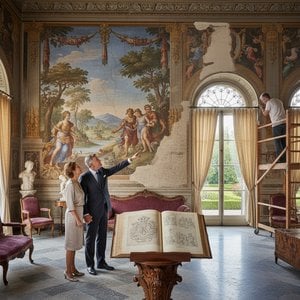
家族の遺産を壁画で彩る:伝統技法が紡ぐ、時を超越する美と記憶
古代から現代までの壁画の歴史と技法を解説。日本の壁画文化やカスタムオーダーによる家族の遺産表現、保存・修復技術まで網羅。専門家が時を超越する美と記憶を紡ぐ芸術的価値をご案内します。

Giorgione: Enigma and Innovation in Early Venetian Renaissance Painting
Explore the enigmatic world of Giorgione, a pivotal figure in the Venetian Renaissance. Discover his innovative techniques, iconic paintings like 'The Tempest', and lasting influence on art history. Learn more at ArtsDot.

The Enduring Legacy of Fresco Painting: Techniques, History & Contemporary Relevance
Explore the rich history & enduring artistry of fresco painting – from Giotto to Michelangelo! Discover techniques, conservation efforts, & modern applications. Learn how ArtsDot brings this timeless art form to your home.

The Enduring Legacy of Fresco: Technique, History & Artistic Expression
Explore the rich history & enduring artistry of fresco painting. Discover techniques from Giotto to Michelangelo, conservation efforts, & modern applications. Learn how ArtsDot brings this timeless art form to your home.

The Enduring Legacy of Fresco: Technique, History & Artistic Expression Across Cultures
Explore the rich history & enduring legacy of fresco painting! Discover ancient techniques, Giotto's masterpieces, and modern applications. Expert insights for art lovers & professionals.


