


The picture follows your choices: , .
コレクション詳細
Admire Franz Marc's 'Two Cats, Blue and Yellow,' a vibrant Expressionist masterpiece capturing the essence of nature through bold colors and meticulous brushstrokes. Explore its artistic significance & order your premium reproduction today!
 続きを読む
続きを読む
アーティストプロフィール
マルクはドイツ表現主義を代表する画家。動物を象徴的に描いた「青い馬の塔」など、鮮やかな色彩と精神性を融合させた作品が特徴。 ブルーライダーグループの創設者として、近現代美術に大きな影響を与えました。
手描き油彩複製画
当社のアーティストが、お客様のご希望のサイズと額縁に合わせて、キャンバスに手描きで制作する油彩画です。 ( プリント版に切り替え デジタル画像販売へ切り替え)
More about this painting
 設置イメージを確認
 送る
送る シェア
シェア
 詳細情報
詳細情報 ガイドを表示

 画像をダウンロード
 似ている作品
 X線調査
X線調査 スライドショー
 Q&A
Q&A 統計情報
統計情報Order your painting in four simple steps
Take your time. You can change any answer; the price in your order card follows each choice.
1 Step one of four
Which size would you like?
These sizes keep the proportions of the original painting. The drawing shows your choice on a wall, above a two-metre sofa.
Or give your own measurements
作品のオリジナル比率に合わせた、当店の規定サイズからお選びください。

フレームや壁のスペースに合わせて、ご希望の幅と高さを入力してください。本作品は手描きのため、異なる比率のサイズをご希望の場合、絵画の周囲を少し広げて描くか、あるいは端を少しカットして調整することが可能です。お客様のご要望に合わせます。制作を開始する前に、仕上がりを確認するためのデジタルモックアップをお送りいたします。このページに表示されている画像は完成品の実物ではなく、あくまでモックアップによるイメージです。
2 Step two of four
How should it be prepared: rolled, stretched or framed?
The prices below are for the size you chose in step one.
Choose the edges of the stretched canvas
Choose your frame

White ¥1

Blurside ¥1

Extended ¥1

P118B ¥10

P118H ¥10

P118W ¥10

P438Z ¥10

P508JH ¥12

P508YH ¥12

P805H ¥10

P805Z ¥10

P919BZ ¥10

P919G ¥10

P919XJ ¥10

P959ZH ¥10

P968JZ ¥12

W106C ¥8

W218G ¥10

W218JH ¥8

W218Y ¥10

W307PJ ¥10

W316G ¥10

W316PJ ¥8

W316Y ¥10

W398PJ ¥8

W4111J ¥10

W500HY ¥15

W500JH ¥15

W692G ¥12

W849H ¥8

W940BG ¥15

W953PJ ¥8

H24-GOLD ¥30

H24-SILVER ¥30

H36-GOLD ¥45

H36-SILVER ¥45
額装済み
Moulding: . Overall size with the frame: .
3 Step three of four
Would you like anything changed in the painting?
Most people answer no. Because each painting is made by hand, our artist can also adapt it for you.
After order, ArtsDot.com team will email client for instructions and provide a mockup preview
4 Step four of four
A few finishing options
All of them are optional. The answers already selected cost nothing extra.
Who paints it?
A nameplate, as in a museum?
刻印入りブロンズプレートの詳細
This elegant plaque features the artist's name and the title of the artwork, finely engraved for a timeless presentation.
It is made from bronze with a refined, elegant finish. The text is precisely laser-engraved for a sharp and permanent result. Measuring 9x2 cm, the plaque is compact yet easy to read. It's built to be durable and scratch-resistant, offering a professional, museum-quality look. Mounting is simple thanks to the included adhesive backing.
透明アクリル銘板の詳細
The plaque includes essential engraved details such as the artist's name, the title of the artwork, the date it was created, the type of media used-like oil on canvas or watercolor-a brief description of the piece, and a QR code that links to the complete artwork information.
It is crafted from clear acrylic, offering a sleek, modern appearance. The text is UV-engraved in black to ensure strong visual contrast. With a size of 10x15 cm, it ensures optimal readability. It comes equipped with two metal hooks for secure wall mounting. The plaque is designed to be weather-resistant, making it suitable for various environments, and it includes interactive features that work seamlessly with smartphone scanning.
黒アクリル製銘板の詳細
This elegant plaque includes engraved information such as the artist's name, the title of the artwork, the date it was created, the type of media used (like oil on canvas or watercolor), a short description of the artwork, and a QR code for quick access to more information.
The plaque itself is made from refined black acrylic with a premium finish. The text is laser-engraved in white for high contrast and readability. Its size is 10x15 cm, designed to be easy to read. It comes with two metal hooks for professional mounting. The design is sleek and fits any interior style. It is also weather-resistant and durable, with built-in digital integration for mobile compatibility.
A protective varnish?
When do you need it?
✓ Check and order
Your painting, as you ordered it

Cat with Kittens
再現技法
複製画サイズ一覧
-

厳選された熟練アーティスト
より細部までこだわった表現、洗練された技術、そして十分な制作時間
-

複製画用額装
-
-
いずれかの辺が105 cm(約41インチ)を超えるアートワークまたは複製画の場合、フレームは分解されたキットの状態でお届けいたします。この方法は、輸送中の破損を防ぎ、安全に配送するために採用しております。
組み立てには専門知識が必要です(DIY用製品ではありません)。
本キットは、経験豊富なプロの額装師が、木工用ボンド(別売)、キャンバス用プライヤー、およびボンドの乾燥時に桟を直角に保持するためのクランプを使用して、組み立ておよびキャンバスの張り作業を行う必要があります。不適切な組み立てやキャンバスの張りの不均一は、作品に永久的な損傷を与える恐れがあり、弊社の保証対象外となります。
 いずれかの辺が105 cm(約41インチ)を超えるアートワークまたは複製画の場合、フレームは分解されたキットの状態でお届けいたします。この方法は、輸送中の破損を防ぎ、安全に配送するために採用しております。
すべての無垢材のパーツが含まれており、組み立てに最適なサイズに正確にカットされています。
付属のネジを使用し、角の接合部には別途木工用ボンドをご用意ください(ボンドは付属しておりません)。ボンドは額装業者様にてご手配をお願いいたします。
プロ仕様の道具が必要ですが、キットには含まれていません:キャンバス用ストレッチングプライヤー(テンショナー)、および接着剤が乾燥するまで木枠を直角に固定するためのクランプ。
重要:
コーナーの接合部には木工用ボンドが必要です。また、ボンドが完全に乾くまでクランプでバーを固定しておく必要があり、組み立てたフレームにキャンバスを張るにはキャンバス用ストレッチングプライヤーが必要となります。これらの道具はキットに含まれておりません。このサイズをご注文される前に、経験豊富なプロの額装師(フライマー)の手配をお願いいたします。

銘板
-
-

保護用ワニス
光沢ワニス(色彩を鮮やかに引き立て、光や湿気から保護します)
-

作品をカスタマイズ
カスタマイズの例:顔をお客様の写真に差し替える、ペットを追加する(例:猫を犬に変更)、背景に隠しメッセージを入れる、背景の風景や要素を変更する。
-

お急ぎ便
世界中への配送()は、通常の5週間ではなく、3〜4週間でお届けいたします。(29 10月)。品質には一切の妥協を許しません。
-
お急ぎ便
世界中への配送()は、5週間ほどでお届けします。(5 11月)。
送料込
合計金額
¥ 41379
ガラスオプションは、110cm未満のサイズでのみご利用いただけます。
Included with every order
- 世界中へ無料エクスプレス配送
- 高品質なリネンキャンバス
- 配送時完全保険付
- 関税・輸入税の払い戻し保証
- 忠実な色彩再現の保証
- 100日間返品保証(製造上の欠陥がある場合のみ)
- 100% 全額返金保証
- まとめ買い割引のご案内


Franz Marc’s “Cat with Kittens”: A Symphony of Color and Spiritual Resonance
The painting "Cat with Kittens" by Franz Marc is more than just an image; it's a distillation of Expressionist philosophy into visual form. Created in 1912, during the height of Der Blaue Reiter’s artistic fervor—a movement dedicated to exploring inner emotional experience through abstraction—this oil on canvas piece transcends mere representation, aiming instead for a profound connection with the viewer’s soul. Marc's unwavering belief that art could illuminate the hidden truths of existence is palpable in every brushstroke.Expressionism and Color: Decoding Marc’s Palette
Marc’s stylistic choices are deliberately disruptive to academic conventions. He abandons meticulous realism, opting for bold color palettes—primarily oranges, blacks, and muted blues—that prioritize emotional impact over accurate depiction. The vibrant orange dominating the cat's fur isn’t merely a pigment choice; it symbolizes warmth, vitality, and maternal instinct – qualities central to Marc’s worldview. Contrasting sharply with this fiery hue is the black, representing darkness, mystery, and perhaps even death, yet balanced by the blues that evoke tranquility and contemplation. This juxtaposition underscores the Expressionist preoccupation with confronting anxieties about mortality while simultaneously embracing beauty and harmony.Compositional Harmony: Finding Balance Amidst Chaos
The painting’s composition contributes significantly to its emotive power. Marc employs a simplified geometric structure—circles and squares—to depict the cat and its kittens, creating an illusion of stability within a dynamic visual field. The central feline figure commands attention, radiating confidence and nurturing care. Surrounding it are three smaller figures nestled within the cat's belly, symbolizing vulnerability and dependence. Yet, despite their diminutive size, these kittens are rendered with meticulous detail, emphasizing the interconnectedness of life and highlighting Marc’s reverence for nature—a recurring theme throughout his oeuvre.Marie Laurencin and Cubism: Influences Shaping Marc’s Vision
Franz Marc wasn't operating in isolation; he was deeply influenced by fellow artists like Marie Laurencin, a pioneer of Cubist aesthetics. Laurencin’s fragmented forms and flattened planes mirrored Marc’s desire to challenge traditional perspective, mirroring the movement's rejection of illusionistic representation. This shared interest in exploring new visual languages reflects the broader intellectual climate of early 20th-century Europe—a period marked by experimentation and a yearning for artistic innovation.A Legacy Preserved: Museums and Reproductions
Today, Marc’s “Cat with Kittens” resides in prestigious institutions such as the Thyssen-Bornemisza Museum in Madrid and the Staedtische Galerie im Lenbachhaus in Germany, ensuring its enduring presence within the art historical canon. Furthermore, reproductions crafted by ArtsDot.com allow enthusiasts worldwide to experience the painting's beauty and emotional depth without incurring the expense of acquiring an original masterpiece. To delve deeper into Laurencin’s contribution to Cubism, consult Wikipedia for comprehensive biographical information.- Explore More: Handmade Oil Painting Reproductions
- Learn About Marie Laurencin:Wikipedia
よくあるご質問
「Cat with Kittens」は何を描いた作品で、どのような雰囲気を持っていますか?
フランツ・マルク作「Cat with Kittens」は、animal painting, mother cat, kittens, color palette, harmony, brushstrokes, german art, blue reiterとSereneな雰囲気を融合させています。
フランツ・マルク作「Cat with Kittens」をスライドショーで閲覧するには、どうすればよいですか?
フランツ・マルク作「Cat with Kittens」は、作品のスライドショーページにてスライドショーとしてご覧いただけます。
「Cat with Kittens」には、どのような情緒や感情が込められているのでしょうか?
フランツ・マルク作「Cat with Kittens」に描かれた情緒はSereneであり、その感情的なトーンはCalmです。


フランツ・マルク
1880 - 1916, ドイツ
アーティストについて
Franz Marc (1880-1916): Pioneer of German Expressionism and the Soulful Vision of Color
Franz Moritz Wilhelm Marc, geboren 1880 in München, war ein Maler dessen kurze und intensiv fokussierte künstlerische Karriere den Verlauf des deutschen Expressionismus nachhaltig veränderte. Seine Geschichte ist eine tiefgreifende Suche nach spiritueller Erkenntnis übersetzt in eine lebendige visuelle Sprache – eine Anfrage nach dem Verständnis der Essenz des Lebens durch die Reinheit, die er in der Natur fand, insbesondere im Tierreich. Ursprünglich beeinflusst von seinem Vater Wilhelm Marc, einem Landschaftsmaler, verfolgte Franzs künstlerischer Weg nicht sofort einen bestimmten Kurs. Er erwog kurz Theologie und kämpfte mit Fragen des Glaubens und der Existenz, bevor er sich schließlich dem Kunststudium am Münchner Akademie der Schönen Künste widmete. Diese frühen Erkundigungen in religiöse Gedanken würden tief in seinem Werk verwurzelt bleiben und ihn davon überzeugen, dass Kunst ein Kanal für spirituelle Erfahrung sein könne. Seine akademische Ausbildung verschaffte ihm technische Grundlagen, aber Begegnungen mit den Werken Vincent van Goghs während Besuchen von Paris entzündeten tatsächlich seine künstlerische Vision. Van Goghs emotionale Verwendung von Farbe und rohe Ausdruckskraft berührten Marc tief und befreiten ihn von konventionellen Techniken und führten ihn auf einen subjektiveren und emotional aufgeladenen Stil zurück.Die Blaue Reiter und eine Neue Künstlerische Sichtweise
Marcs künstlerische Entwicklung war nicht einsam; sie blühte im dynamischen Kontext des frühen 20. Jahrhunderts in München auf. Er experimentierte mit verschiedenen Künstlergruppen, darunter die Neue Künstlervereinigung München, bevor er 1911 gemeinsam mit Wassily Kandinsky *Der Blaue Reiter* (Die Blaue Reiter) gründete. Dies war nicht nur eine Gruppe oder eine Ausstellungsserie; es war eine philosophische und künstlerische Revolution. *Der Blaue Reiter* suchte über reine Darstellung hinaus und strebte danach, innere spirituelle Wahrheiten durch Abstraktion und symbolische Farbe auszudrücken. Das gleichnamige Magazin wurde zu einer Plattform für die Verbreitung dieser Ideen und präsentierte nicht nur seine eigene Arbeit sondern auch die anderer aufgeschlossener Künstler und erforschte vielfältige kulturelle Einflüsse von Volkskunst bis hin zur primitiven Skulptur. Marcs Beiträge zu diesem Zeitraum waren entscheidend. Er ließ sich von der Darstellung von Landschaften als statische Szenen abweichen und konzentrierte sich stattdessen auf Tiere – Pferde, Hirsche, Füchse – als Gefäß für spirituelle Energie. Diese waren nicht einfach Tierporträts; sie waren symbolische Darstellungen von Unschuld, Harmonie und einer Verbindung zur Natur, die er glaubte, dass die Menschheit durch gesellschaftliche Beschränkungen und intellektualisierung verloren hatte. Die Einflüsse Robert Delaunay’s Erforschung abstrakter Formen und lebhafter Farben förderten Marc zusätzlich zu einer Vereinfachung und verstärkten emotionalen Ausdruck in seinem Werk. Gemälde wie *Der Tiger* (1912) und *Rothirsch* (1912) verkörpern diese Verschiebung und zeigen eine kraftvolle Verwendung von Farbe und einen zunehmenden Fokus auf die inhärenten Eigenschaften seiner dargestellten Objekte statt einer realistischen Darstellung.Symbolismus, Farbe und Die Essenz Des Seins
Marcs künstlerischer Stil ist sofort erkennbar für seine besondere Verwendung von Farbe und Form. Er verwendete Farbe nicht deskriptiv; stattdessen erfüllte er sie mit symbolischem Inhalt. Blau repräsentierte Spiritualität und Männlichkeit, Gelb bedeutete Freude und Weiblichkeit und Rot verkörperte Gewalt und Materie. Diese waren keine zufälligen Entscheidungen sondern eine sorgfältig konstruierte Methode, um spezifische emotionale und philosophische Ideen auszudrücken. Seine Tiere sind nicht einfach Objekte; sie sind Verkörperungen dieser Konzepte. Die Vereinfachung von Formen – Figuren auf ihre wesentliche Gestalt reduzierend – verstärkte zusätzlich die zugrunde liegende spirituelle Essenz, die er einfangen wollte. *Der Tiger* (1912) und *Rothirsch* (1912) sind Beispiele für diesen Ansatz und zeigen eine beeindruckende Verwendung von Farbe und einen zunehmenden Fokus auf die inhärenten Eigenschaften seiner dargestellten Objekte statt einer realistischen Darstellung. Er glaubte, dass Tiere eine inhärente Reinheit und Verbindung zur Natur besaßen, die Menschen durch gesellschaftliche Beschränkungen und intellektualisierung verloren hatten. Durch ihre Darstellung mit großer Ehrfurcht und symbolischer Gewichtung suchte Marc darauf hinzuweisen, dass die Menschheit diese Harmonie wiedergefunden hatte und eine tiefere Wertschätzung für die natürliche Welt inspiriert. Sein Werk war nicht darauf ausgelegt, *was* er sah sondern *wie* er fühlte – eine tief persönliche und spirituelle Reaktion auf seine Umgebung.Ein Tragischer Tod Und Ein Dauerhaftes Erbe
Der Ausbruch des Ersten Weltkriegs im Jahr 1914 veränderte Marcs Leben und künstlerische Entwicklung dramatisch. Trotz seines Versuchs, aufgrund seines Status als Künstler von der Wehrpflicht auszusteigen, wurde er eingezogen und diente als Kavallerieoffizier. Die Schrecken des Krieges trafen ihn tief ein, doch auch inmitten des Chaos setzte er sich weiterhin dem Malen zu und fand Trost und Bedeutung in seiner Kunst. Tragisch starb Franz Marc am 4. März 1916 im Zuge eines Gefechts bei Verdun unerwartet und wurde damit für die Kunstwelt zu einem Verlust von großer Tragweite. Sein früheres Leben wurde plötzlich unterbrochen, doch auch inmitten des Chaos setzte er sich weiterhin dem Malen zu und fand Trost und Bedeutung in seiner Kunst. Er starb am 4. März 1916 im Zuge eines Gefechts bei Verdun unerwartet und wurde damit für die Kunstwelt zu einem Verlust von großer Tragweite. Sein Werk wird bis heute gefeiert und inspiriert Generationen von Künstlern und begeistert Publikum mit seiner tiefen Emotion und seinem spirituellen Nachhall. Marcs Gemälde werden in wichtigen Museen auf der ganzen Welt ausgestellt, darunter das Lenbachhaus in München, das eine umfangreiche Sammlung seiner Werke beherbergt. Er wird nicht nur als Pionier des deutschen Expressionismus sondern auch als visionärer Künstler erinnert, der sich wagte, die tiefgreifende Verbindung zwischen Kunst, Spiritualität und der Natur zu erforschen – ein Erbe, das weiterhin Ehrfurcht und Kontemplation hervorruft.


関連記事

Slate Blue Masterpieces: 10 Iconic Paintings & Timeless Home Decor Ideas
Immerse yourself in the captivating world of slate blue! Explore 10 iconic paintings by Monet, Van Gogh & Renoir. Discover their stories, techniques & find museum-quality art reproductions for your home at .

Franz Marc: Expressionism, Spirituality & the Animal Symbolism of a Modern Master
Explore the profound world of Franz Marc's Expressionist paintings. Discover his spiritual connection to animals, innovative use of color, and lasting impact on modern art history. Learn more at ArtsDot.
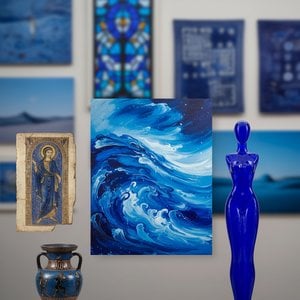
The Allure of Azure: Exploring the Symbolic & Aesthetic Depths of Blue in Art History
Explore the rich history of blue in art! Discover its symbolism, from ancient pigments to modern masterpieces by Kandinsky & Seurat. Uncover the psychological impact and cultural meanings behind this captivating hue.