

- 88.0 x 89.0 cm


選択した条件に基づいた画像: , .
作品解説
Experience Egon Schiele's 'River Landscape' (1913). This Art Nouveau oil painting captures serene beauty with vibrant colors & expressive brushstrokes, showcasing nature’s essence.
 詳細を表示
詳細を表示
アーティストの略歴
エゴン・シーレ(1890-1918):大胆な肖像画、心理的テーマ、そして独特の線が生み出す、感情に訴えかける表現主義の世界。死と生、人間の内面を深く掘り下げた傑作たちを発見してください!
手描き油彩複製画
当社のアーティストが、ご希望のサイズと額縁に合わせてキャンバスに手描きで制作する、オーダーメイドの油彩画です。 ( プリント版に切り替え デジタル画像販売へ切り替え)
この絵画の詳細を見る
 設置イメージを表示
 シェアする
シェアする シェアする
シェアする
 詳細を見る
詳細を見る ガイドを表示

 ダウンロード
 似ている作品
 X線調査
X線調査 スライドショーを表示
 Q&A
Q&A 統計情報
統計情報絵画のご注文は、わずか4つの簡単なステップで完了します
ゆっくりとお選びください。回答はいつでも変更可能です。選択内容に応じて、注文カート内の価格が随時更新されます。
1 全4ステップ中のステップ1
サイズをご選択ください。
これらのサイズは、原画の比率を維持しています。図は、高さ2メートルのソファの上の壁に、選択したサイズを配置した際のイメージです。
または、ご希望のサイズを指定する
作品のオリジナル比率に合わせた、当店の規定サイズからお選びください。

フレームや壁のスペースに合わせて、ご希望の幅と高さを入力してください。本作品は手描きのため、異なる比率のサイズをご希望の場合、絵画の周囲を少し広げて描くか、あるいは端を少しカットして調整することが可能です。お客様のご要望に合わせます。制作を開始する前に、仕上がりを確認するためのデジタルモックアップをお送りいたします。このページに表示されている画像は完成品の実物ではなく、あくまでモックアップによるイメージです。
2 4ステップ中の2番目
どのような状態での配送をご希望ですか:ロール状、キャンバス張り、または額装済み?
以下の価格は、ステップ1で選択されたサイズに基づいています。
キャンバスの側面仕上げを選択
フレームを選択

白の側面仕上げ ¥1

エッジぼかし仕上げ ¥1

回り込み仕上げ ¥1

P118B ¥10

P118H ¥10

P118W ¥10

P438Z ¥10

P508JH ¥12

P508YH ¥12

P805H ¥10

P805Z ¥10

P919BZ ¥10

P919G ¥10

P919XJ ¥10

P959ZH ¥10

P968JZ ¥12

W106C ¥8

W218G ¥10

W218JH ¥8

W218Y ¥10

W307PJ ¥10

W316G ¥10

W316PJ ¥8

W316Y ¥10

W398PJ ¥8

W4111J ¥10

W500HY ¥15

W500JH ¥15

W692G ¥12

W849H ¥8

W940BG ¥15

W953PJ ¥8

H24-GOLD ¥30

H24-SILVER ¥30

H36-GOLD ¥45

H36-SILVER ¥45
額装済み
額縁の形状: . 額縁を含む全体サイズ: .
3 4ステップ中の3ステップ目
絵画の内容に変更をご希望されますか?
ほとんどの方は「いいえ」と答えます。一枚一枚が手描きであるため、アーティストがお客様のご要望に合わせて調整することも可能です。
ご注文後、ArtsDot.com のチームより詳細な手順についてメールをお送りし、仕上がりイメージ(モックアップ)をご提示いたします。
4 4ステップ中、第4ステップ
仕上げのオプション(数種類)
すべて任意です。すでに選択されている回答に追加料金はかかりません。
作者は誰?
美術館にあるような、銘板(ネームプレート)を。
刻印入りブロンズプレートの詳細
This elegant plaque features the artist's name and the title of the artwork, finely engraved for a timeless presentation.
It is made from bronze with a refined, elegant finish. The text is precisely laser-engraved for a sharp and permanent result. Measuring 9x2 cm, the plaque is compact yet easy to read. It's built to be durable and scratch-resistant, offering a professional, museum-quality look. Mounting is simple thanks to the included adhesive backing.
透明アクリル銘板の詳細
The plaque includes essential engraved details such as the artist's name, the title of the artwork, the date it was created, the type of media used-like oil on canvas or watercolor-a brief description of the piece, and a QR code that links to the complete artwork information.
It is crafted from clear acrylic, offering a sleek, modern appearance. The text is UV-engraved in black to ensure strong visual contrast. With a size of 10x15 cm, it ensures optimal readability. It comes equipped with two metal hooks for secure wall mounting. The plaque is designed to be weather-resistant, making it suitable for various environments, and it includes interactive features that work seamlessly with smartphone scanning.
黒アクリル製銘板の詳細
This elegant plaque includes engraved information such as the artist's name, the title of the artwork, the date it was created, the type of media used (like oil on canvas or watercolor), a short description of the artwork, and a QR code for quick access to more information.
The plaque itself is made from refined black acrylic with a premium finish. The text is laser-engraved in white for high contrast and readability. Its size is 10x15 cm, designed to be easy to read. It comes with two metal hooks for professional mounting. The design is sleek and fits any interior style. It is also weather-resistant and durable, with built-in digital integration for mobile compatibility.
保護用ニスをご希望ですか?
お届け希望日をお選びください
✓ 内容を確認して注文する
ご注文通りの絵画内容

River Landscape
再現技法
複製画サイズ一覧
-

至高の熟練アーティスト
より細部までこだわった表現、洗練された技術、そして十分な制作時間
-

複製画用フレーム
-
-
いずれかの辺が105 cm(約41インチ)を超えるアートワークまたは複製画の場合、フレームは分解されたキットの状態でお届けいたします。この方法は、輸送中の破損を防ぎ、安全に配送するために採用しております。
組み立てには専門知識が必要です(DIY用製品ではありません)。
本キットは、経験豊富なプロの額装師が、木工用ボンド(別売)、キャンバス用プライヤー、およびボンドの乾燥時に桟を直角に保持するためのクランプを使用して、組み立ておよびキャンバスの張り作業を行う必要があります。不適切な組み立てやキャンバスの張りの不均一は、作品に永久的な損傷を与える恐れがあり、弊社の保証対象外となります。
 いずれかの辺が105 cm(約41インチ)を超えるアートワークまたは複製画の場合、フレームは分解されたキットの状態でお届けいたします。この方法は、輸送中の破損を防ぎ、安全に配送するために採用しております。
すべての無垢材のパーツが含まれており、組み立てに最適なサイズに正確にカットされています。
付属のネジを使用し、角の接合部には別途木工用ボンドをご用意ください(ボンドは付属しておりません)。ボンドは額装業者様にてご手配をお願いいたします。
プロ仕様の道具が必要ですが、キットには含まれていません:キャンバス用ストレッチングプライヤー(テンショナー)、および接着剤が乾燥するまで木枠を直角に固定するためのクランプ。
重要:
コーナーの接合部には木工用ボンドが必要です。また、ボンドが完全に乾くまでクランプでバーを固定しておく必要があり、組み立てたフレームにキャンバスを張るにはキャンバス用ストレッチングプライヤーが必要となります。これらの道具はキットに含まれておりません。このサイズをご注文される前に、経験豊富なプロの額装師(フライマー)の手配をお願いいたします。

キャプション
-
-

保護用ワニス
光沢ワニス(色彩を鮮やかに引き立て、光や湿気から保護します)
-

作品をカスタマイズ
カスタマイズの例:顔をお客様の写真に差し替える、ペットを追加する(例:猫を犬に変更)、背景に隠しメッセージを入れる、背景の風景や要素を変更する。
-

お急ぎ便
世界中への配送()は、通常の5週間ではなく、3〜4週間でお届けいたします。(6 11月)。品質には一切の妥協を許しません。
-
お急ぎ便
世界中への配送()は、5週間ほどでお届けします。(13 11月)。
込み
合計金額
¥ 41563
ガラスオプションは、110cm未満のサイズでのみご利用いただけます。
すべての注文に同梱
- 世界中へ無料エクスプレス配送
- 高品質なリネンキャンバス
- 配送時完全保険付
- 関税・輸入税の払い戻し保証
- 真の色彩再現に関する保証
- 100日間返品保証(製造上の欠陥がある場合のみ)
- 100% 全額返金保証
- まとめ買い割引のご案内


River Landscape by Egon Schiele: A Journey Through Expressionist Serenity
Egon Schiele, an Austrian Expressionist painter renowned for his emotionally charged portraits and landscapes, created the captivating oil on canvas painting titled River Landscape in 1913. This artwork is a quintessential representation of Art Nouveau influences blended with early Expressionist sensibilities, characterized by its emphasis on natural forms, flowing lines, and a palpable sense of introspection.
Composition and Visual Elements
Measuring 88 x 89 cm, River Landscape presents a serene vista dominated by a gently winding river that carves through a valley. Towering mountains rise in the background, their peaks adorned with trees, creating a layered depth within the composition. The presence of two figures subtly integrated into the scene adds a human element to the otherwise tranquil environment, hinting at a narrative without explicitly defining it. Schiele’s use of color is deliberate; earthy tones dominate the foreground, contrasting with the cooler blues and purples of the distant mountains and sky. Bold brushstrokes contribute to the painting's dynamic energy, while the flattened perspective enhances its dreamlike quality.
Artistic Style and Technique
Schiele’s artistic style in River Landscape reflects a departure from traditional representational art, embracing the expressive freedom of Expressionism. While influenced by Art Nouveau’s organic forms and flowing lines, Schiele infuses his work with a raw emotional intensity that is distinctly his own. The visible brushstrokes and textured surface demonstrate a direct engagement with the medium, conveying a sense of immediacy and authenticity. He utilizes layering techniques to build depth and create visual interest, while also employing atmospheric perspective to suggest distance in the mountainous backdrop. This combination of stylistic elements results in a painting that is both visually striking and emotionally resonant.
Historical Context and Symbolism
The Art Nouveau period, which preceded and influenced Schiele’s work, emphasized aesthetic beauty and natural motifs. However, Schiele's River Landscape moves beyond mere decorative representation, delving into deeper psychological territory. Created in the years leading up to World War I, the painting can be interpreted as reflecting a sense of underlying anxiety and uncertainty prevalent during that era. The river itself may symbolize the flow of life, while the mountains represent enduring strength and stability. The two figures within the landscape could embody human connection or isolation amidst the vastness of nature. The tree, reaching towards the sky, is often seen as a symbol of growth, resilience, and spiritual aspiration.
Emotional Impact and Legacy
River Landscape evokes a sense of quiet contemplation and introspective melancholy. The painting’s subdued color palette and expressive brushwork create an atmosphere that is both calming and unsettling. Schiele's ability to capture the essence of nature while simultaneously conveying complex emotions makes this artwork a powerful testament to his artistic genius. The influence of Art Nouveau can be seen in various modern art movements, including Expressionism and Fauvism. Schiele’s work, particularly River Landscape, demonstrates the evolution of artistic styles over time and continues to inspire artists and collectors alike.
Q&A
「River Landscape」のSquare形式は、どのような場所に飾るのがおすすめですか?
エゴン・シエレ作「River Landscape」のSquare形式は、Living Roomに飾る際におすすめです。作品の形式と空間の調和が、複製画を配置する際の指針となります。
エゴン・シエレ作「River Landscape」 の色彩に調和する空間はどこでしょうか?
エゴン・シエレ作「River Landscape」のDarkな色彩は、おすすめの空間であるLiving Roomに調和します。
エゴン・シエレ作「River Landscape」のスライドショーはありますか?
スライドショーはこちら:エゴン・シエレ作「River Landscape」のスライドショーページ。


エゴン・シエレ
1890 - 1918, オーストリア
作家プロフィール
表現の中に刻まれた生涯
1890年、オーストリアのトゥルン・アン・デア・ドナウに生を受けたエゴン・シーレの人生は、類まれな芸術的ヴィジョンと、深い個人的な苦難が交錯する激動の旅路でした。彼の幼少期は、病と喪失の影に覆われていました。わずか14歳の時、父が梅毒によってこの世を去った悲劇は、その後の彼の作品に深く共鳴し、死への執着や存在の儚さというテーマに火をつけることとなります。当初は母に、その後は叔父レオポルド・チハチェックによる、やや支配的な後見のもとで育ったシーレの子供時代には、一般的な安定こそ欠けていたものの、そこから強烈な独立心が養われました。少年時代から彼は鉄道に対して深い魅惑を抱いており、そのモチーフは後の絵画にも密かに姿を現します。また、芽生えつつあった描画の才能は、当初、実利的な道から逸れるものとして父の不興を買うこともありましたが、こうした形成期の経験が、彼の中に鋭い感受性と剥き出しの感情をもたらしました。それは、生と死、そして人間という存在の本質を問い続ける、彼の芸術表現の代名詞となることになります。
ウィーンという試練:芸術的発展
シーレの正式な芸術教育は、ウィーンの工芸学校(Kunstgewerbeschule)から始まりましたが、彼はすぐにその保守的なアプローチに閉塞感を抱くようになります。その後、美術アカデミー(Akademie der bildenden Künste)へと移るものの、厳格なアカデミズムの伝統に対してさらなる幻滅を感じることとなりました。この不満は、彼に正式な訓練を放棄させることにつながりましたが、それは自らの道を切り拓こうとする揺るぎない芸術的信念の証でもありました。初期の年月において、グスタフ・クリムトの影響は決定的なものでした。シーレはクリムキムトの装飾的な様式や象徴性の探求に敬意を払い、その大家から直接的な指導を受けることもありました。しかし、シーレはやがてクリムトの美学から離脱し、剥き出しの誠実さと心理的な強烈さを特徴とする、極めて個性的な独自の声を確立していきます。1909年には「新ウィーン芸術集団」を共同設立し、既存の芸術規範に挑む進歩的な芸術家たちと肩を並べました。初期の作品、とりわけ不安をかき立てる肖像画や自画像は、歪んだ人物像と触知できるほどの脆弱性を描き出し、感情の混乱を力強く表現する声明として現れ始めました。これらの絵画は単なる肉体の描写ではなく、人間の精神を苛む不安、欲望、恐怖といった「内なる風景」の探求だったのです。彼は、目に見えるものとしてではなく、自らが感じたものを描こうとしたのでした。
剥き出しの感情と揺るぎない真実
エゴン・シーレの芸術は、その生々しい誠実さと心理的な深みによって、一目でそれと分かります。彼は、性、死、不安、孤独といった、しばしばタブーとされるテーマに対し、逃げ隠れすることのない眼差しで立ち向かいました。彼の独特な様式は、引き伸ばされた肢体、ねじ曲がったポーズ、そして不安感や感情の昂ぶりを伝える表現力豊かな線によって特徴づけられます。人体、特に裸体は彼の主要な主題となりましたが、それは理想化された美の対象としてではなく、人間体験の複雑さを探求するための器としての役割を果たしていました。自画像は彼の作品群の重要な部分を占め、孤独と自己疑念に満ちた彼自身の内面世界を、親密なほど間近に覗かせます。彼は自分自身を、決して美化することなく、あえて不格好で脆弱な姿で描くことを厭いませんでした。そこには深い自己認識と内省が宿っています。自画像にとどまらず、シーレは他者の肖像も数多く描き、表面の下に潜む真実を突き刺すような、不穏なまでのリアリズムでその人物像を捉えました。風景画は人物画ほど中心的ではありませんでしたが、形態と色彩の習熟を示しており、しばしば肖像画と同様の感情的な強烈さを反映しています。特にシーレの作品において「線」の使用は際立っています。それは単に形を定義するための道具ではなく、感情や心理的緊張を伝える表現力としての力を持っています。また、繊細で紙のような外皮を持つホオズキ(Physalis)のような繰り返されるモチーフは、死と無常の象徴として、彼の死への執着をさらに強調しています。
断ち切られた遺産:業績と意義
検閲や法的困難――自身の芸術によって未成年者を堕落させたという容疑による短期間の投獄を含む――に直面しながらも、シーレはウィーンの前衛的なサークルにおいて確かな地位を築きました。彼の作品は当時の慣習に挑み、称賛と憤慨の両方を巻き起こしました。1918年、スペイン風邪のパンデミックの中で28歳という若さで早すぎる死を迎えるまでに、彼はオーストリア表現主義の旗手としての地位を確立していました。ホオズキのある自画像、抱き合うカップル、
- 主要なテーマ: 死、性、孤独、心理的葛藤
- 影響を受けたもの: グスタフ・クリムト、ウィーン分離派、個人的なトラウマ
- 様式の特徴: 引き伸ばされた肢体、ねじ曲がったポーズ、表現力豊かな線、剥き出しの感情


関連記事

The Enduring Legacy of Oil on Canvas: Technique, History & Aesthetic Impact
Explore the rich history & techniques of oil painting – from Renaissance masters to Impressionism. Discover pigments, layering methods, and why this timeless medium endures. Expert insights for artists & art enthusiasts.
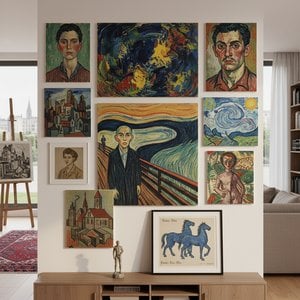
表現主義を彩る至宝:アート史に刻まれた10の傑作
表現主義の心を揺さぶる10選。ムンク、キルヒナーら巨匠の傑作を紐解き、色彩とエモーションの世界へ。ArtsDot.comで、時代を超越したアートをあなたの空間に取り入れませんか?高品質な複製絵画やインテリアアイデアが満載。

Egon Schiele: Expressionism, Anxiety & the Modern Condition – A Comprehensive Exploration
Explore the emotionally charged world of Egon Schiele (1890-1918). Discover his Expressionist masterpieces, psychological themes, and lasting impact on modern art. A comprehensive guide for collectors & enthusiasts.