


 プレビュー
プレビュー
 シェアする
シェアする シェアする
シェアする
 詳細を見る
詳細を見る

 ダウンロード
 似ている作品
 X線調査
X線調査 スライドショー
A Monkey Alchemist

 詳細を見る
詳細を見る
手描き油彩複製画
当社のアーティストが、お客様のご希望のサイズと額縁に合わせて、キャンバスに手描きで制作する油彩画です。 ( プリント版に切り替え 画像に切り替え)




































作品のオリジナル比率に合わせた、当店の規定サイズからお選びください。

特定のフレームやスペースに合わせて、ご希望のサイズをご入力いただけます。選択されたサイズが元の画像の比率と異なる場合、アートワークをトリミングするか、手描きで要素を追加して絵画を拡張いたします。デジタルモックアップ を制作し、制作開始前にご確認(承認)をいただきます。
画面上のプレビューは、実際のトリミングや拡張を正確に反映しているものではありません。最終的な構図は、モックアップによってのみ正確にご確認いただけます。
カスタムサイズもご利用いただけますが、元の比率を維持するためには、あらかじめ用意されたリストからサイズを選択することをお勧めいたします。
ご注文後、ArtsDot.com チームより詳細な指示をお送りするとともに、仕上がりイメージ(モックアップ)をご提供いたします。


 ガラスオプションは、110cm未満のサイズでのみご利用いただけます。

A Monkey Alchemist
複製技法
複製画のサイズ
-


合計金額
$ 288
関連作品


アーティストの略歴
The Quiet Observer: The Life and Legacy of Edmund Bristow
In the tapestry of nineteenth-century British art, few threads are as delicately woven or as intensely personal as those left by Edmund Bristow. Born in 1787 in the historic town of Eton, Berkshire, Bristow emerged from a lineage steeped in the meticulous traditions of heraldic painting. His father’s craft, which demanded an exacting eye for detail and a reverence for symbolic precision, provided the foundational bedrock upon which Edmund would build his unique artistic identity. This early exposure to the disciplined world of emblems and crests undoubtedly shaped his later ability to capture the subtle nuances of life, whether in the curve of a horse's neck or the delicate petal of a flower.
Bristow’s ascent within the upper echelons of British society was marked by an extraordinary early patronage that few artists of his era could claim. The favor of Princess Elizabeth, who would later become Queen Victoria, and the Duke of Clarence (the future King William IV), provided him with more than just financial stability; it granted him access to a world of refined observation. These royal connections encouraged him to document the iconic landscapes of his youth, producing exquisite sketches of Eton College and Windsor Castle. Through these works, he began to develop a style that balanced the architectural grandeur of the English landscape with an intimate, almost tender, focus on the life inhabiting it.
A Mastery of Motion and Stillness
As his career matured, Bristow’s artistic focus expanded into a profound exploration of both the animate and inanimate. He became a celebrated master of animal portraiture, possessing a rare, empathetic ability to render the spirit of his subjects. His canvases were not merely anatomical studies; they were character studies. Whether depicting the playful energy of monkeys, the domestic grace of cats, or the powerful dynamism of equestrian pursuits, Bristow infused his animals with a palpable sense of intelligence and movement. This skill was particularly evident in his sporting scenes, where he captured the breathless tension of the hunt and the rhythmic stride of horses with remarkable realism.
Beyond the movement of beasts, Bristow found deep inspiration in the quietude of still life. His paintings of fruits, flowers, and domestic objects reflect a dedication to atmospheric realism. In these works, he utilized light and texture to elevate everyday objects into subjects of contemplation, mirroring the meticulousness he inherited from his heraldic roots. This duality—the ability to capture both the thundering pulse of a sporting party and the silent dignity of a bowl of fruit—defines the breadth of his technical achievement.
The Eccentricity of Artistic Integrity
What truly distinguishes Edmund Bristow from his contemporaries was perhaps his uncompromising, almost stubborn, devotion to his own creative impulse. In an era where many artists were driven by the demands of the commission market, Bristow remained a fiercely independent spirit. He famously worked only when struck by genuine inspiration, often rejecting lucrative opportunities if they did not align with his internal vision. This eccentricity extended even to his relationship with his own creations; he was known for a profound reluctance to sell his completed works, treating them more as personal milestones of observation than as commodities.
This commitment to artistic integrity ensured that his body of work remains an authentic record of his perceptions, untainted by the pressures of commercial trends. His correspondence with the celebrated Sir Edwin Landseer suggests a shared devotion to capturing the true essence of nature, further cementing his place within the lineage of great British naturalists. Today, Bristow is remembered not merely as a painter of scenes, but as a quiet chronicler of the British soul—an artist who found extraordinary beauty in the small, the wild, and the everyday.

Edmund Bristow
1787 - 1876 , United Kingdom
基本情報
- Artistic Movement Or Style: Animal Painting
- Artists Or Movements Influenced By This Artist: ['Dutch Golden Age']
- Artists Who Influenced This Artist: ['Sir Edwin Landseer']
- Date Of Birth: Apr 1787
- Date Of Death: Feb 1876
- Full Name: Edmund Bristow
- Nationality: British
- Notable Artworks:
- Monkey Pugilists
- Cat's Paw
- Law and Justice
- Incredulity
- The Rehearsal
- Pros and Cons of Life
- Place Of Birth: Eton, United Kingdom
関連記事

From Concept to Canvas: Leveraging Digital Mockups for Precision & Client Satisfaction in Custom Oil Painting Reproduction
Transform your vision into reality with ArtsDot's custom oil painting reproductions. Experience precision & peace of mind through our expert digital mockup process, ensuring a flawless masterpiece tailored to your style. Discover the art of bespoke creation today!
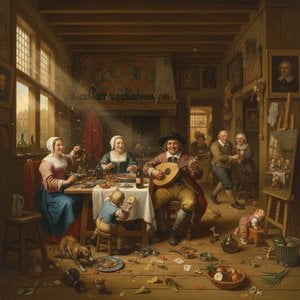
Jan Steen: A Master of Dutch Genre Painting & the Golden Age
Explore the life & art of Jan Steen, a leading Dutch Golden Age painter renowned for his humorous genre scenes & insightful social commentary. Discover his techniques, legacy, and collecting tips.

From Snapshot to Canvas: The Art of Transforming Travel Photography into Timeless Oil Paintings
Transform your cherished travel photos into timeless oil paintings with expert artists at ArtsDot.com. Museum-quality reproductions & custom portraits – preserve your memories beautifully.

From Imagination to Canvas: Commissioning Bespoke Fantasy Art with Traditional Oil Painting Techniques
Commission breathtaking bespoke fantasy art with skilled oil painters. Explore techniques, artist selection & preservation tips. Invest in a unique masterpiece today!

Oil on Canvas Masters: 10 Paintings That Redefined Art History |
Journey through art history with our guide to 10 legendary oil on canvas masterpieces! Explore iconic works by Van Gogh, Monet & Rembrandt. Find museum-quality reproductions and elevate your home decor at . Discover all masterpieces online.

