
- ホーム

- 油絵の複製画
- domenico induno
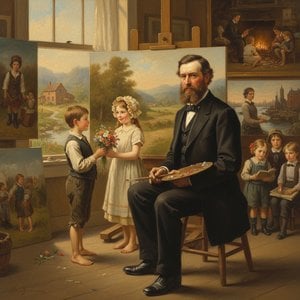
- Self-portrait

 Preview
 シェアする
シェアする シェアする
シェアする
 詳細を見る
詳細を見る

 ダウンロード
 似ている作品
 X線調査
X線調査 スライドショー
Self-portrait


 詳細を見る
詳細を見る
手描き油彩複製画
当社のアーティストが、お客様のご希望のサイズと額縁に合わせて、キャンバスに手描きで制作する油彩画です。 ( Switch to Print Switch to Image)




P118B $10

P118H $10

P118W $10

P438Z $10

P508JH $12

P508YH $12

P805H $10

P805Z $10

P919BZ $10

P919G $10

P919XJ $10

P959ZH $10

P968JZ $12

W106C $8

W218G $10

W218JH $8

W218Y $10

W307PJ $10

W316G $10

W316PJ $8

W316Y $10

W398PJ $8

W4111J $10

W500HY $15

W500JH $15

W692G $12

W849H $8

W940BG $15

W953PJ $8




作品のオリジナル比率に合わせた、当店の規定サイズからお選びください。

特定のフレームやスペースに合わせて、ご希望のサイズをご入力いただけます。選択されたサイズが元の画像の比率と異なる場合、アートワークをトリミングするか、手描きで要素を追加して絵画を拡張いたします。デジタルモックアップ を制作し、制作開始前にご確認(承認)をいただきます。
画面上のプレビューは、実際のトリミングや拡張を正確に反映しているものではありません。最終的な構図は、モックアップによってのみ正確にご確認いただけます。
カスタムサイズもご利用いただけますが、元の比率を維持するためには、あらかじめ用意されたリストからサイズを選択することをお勧めいたします。
ご注文後、ArtsDot.com チームより詳細な指示をお送りするとともに、仕上がりイメージ(モックアップ)をご提供いたします。


 ガラスオプションは、110cm未満のサイズでのみご利用いただけます。

Self-portrait
複製技法
複製画のサイズ
-


合計金額
$ 263
関連作品


アーティストの略歴
John Singleton Copley: A Bostonian Pioneer of Portraiture
John Singleton Copley, born in Boston in 1738, stands as a pivotal figure in the history of American art, bridging the gap between the nascent colonial spirit and the established traditions of European portraiture. His life was marked by both remarkable success and poignant personal tragedies, ultimately leading him to establish a distinguished career in London, where he continued to innovate within the conventions of his craft. Copley’s legacy rests primarily on his masterful portraits, which captured not only the likenesses of wealthy Bostonians but also their personalities, social standing, and the burgeoning sense of identity within the colonies.Early Life and Artistic Training
Copley's early life was shaped by a complex family history. His father, Richard Copley, an Anglo-Irish tobacco merchant, arrived in Boston with his family in 1736, bringing with him a lineage steeped in trade and social connections. His mother, Mary Singleton Copley Pelham, descended from a prominent Irish family of Lancastrian origin. This mixed heritage provided Copley with exposure to both the practical world of commerce and the refined circles of Boston society. Initially, he received informal artistic training under his uncle, Henri-François Riesener, a painter who had served as court painter to Louis XVI. Riesener’s studio offered a valuable introduction to drawing and painting techniques, but Copley quickly surpassed his mentor's abilities, demonstrating an exceptional talent for capturing likenesses with remarkable accuracy and detail. He later studied under Robert Strange, another Boston artist, further honing his skills before embarking on his independent career.The Rise of a Colonial Portraitist
Copley’s reputation as a portrait painter began to flourish in the 1760s and 1770s, coinciding with the rise of Boston's merchant class and their desire to document their wealth and status. He quickly became the artist of choice for prominent figures like John Hancock, Samuel Adams, and Governor Thomas Hutchinson. His portraits were not merely representations of appearance; Copley meticulously observed his subjects, capturing their expressions, gestures, and clothing with an almost photographic realism. Crucially, he went beyond simple likenesses, imbuing his paintings with a sense of character and personality—a skill that distinguished him from many of his contemporaries. Works like “Boy with an Apple” (1768) and “Josiah Quincy” (1773) exemplify this approach, revealing Copley’s ability to convey both physical appearance and inner qualities.A Move to London and Shifting Artistic Styles
In 1774, amidst the escalating tensions leading up to the American Revolution, Copley relocated to London. This move marked a significant shift in his artistic focus. While he continued to paint portraits for wealthy English patrons, he also embraced historical painting—a genre less common in colonial America. His historical works, such as “The Death of General Wolfe” (1775), were ambitious and innovative, reflecting the grand narratives of European history while incorporating contemporary elements and a distinctly British sensibility. These paintings demonstrated his growing technical skill and willingness to experiment with new approaches to composition and subject matter.Legacy and Historical Significance
Despite facing financial difficulties in his later years, John Singleton Copley left an indelible mark on the history of American art. He is considered one of the first true American artists, bridging the gap between colonial realism and European artistic traditions. His portraits not only documented the lives of Boston’s elite but also served as powerful symbols of wealth, status, and identity during a period of profound social and political change. Copley's influence can be seen in subsequent generations of American painters, who built upon his foundation of technical skill and psychological insight. His work remains celebrated for its realism, elegance, and the enduring quality of its portraits—testaments to the talent and vision of this remarkable Bostonian artist.
domenico induno
1815 - 1878
基本情報
- Artistic Movement Or Style: Portrait painting
- Artists Or Movements Influenced By This Artist: ['Portrait painting']
- Artists Who Influenced This Artist: ['Richard Copley']
- Date Of Birth: July 3, 1738
- Date Of Death: September 9, 1815
- Full Name: John Singleton Copley
- Nationality: American
- Notable Artworks:
- Watson and the Shark
- John Copley, 1st Baron Lyndhurst
- Place Of Birth: Boston, Massachusetts Bay
関連記事

Alonzo Chappel: Historical Narrative & Romantic Vision in 19th-Century American Painting
Explore the captivating world of Alonzo Chappel, a master of 19th-century American historical painting. Discover his iconic works, Romantic style & lasting legacy. Learn about collecting Chappel's art today!

Anselm Feuerbach: Romantic Idealism & the Search for Spiritual Harmony in 19th-Century Painting
Explore the life & work of Anselm Feuerbach, a leading German Neoclassical painter. Discover his Romantic idealism, mythological scenes, and stunning portraits. Learn about his influences & lasting legacy with ArtsDot.
John George Brown: Capturing American Life & Sentiment in 19th-Century Genre Painting
Explore the captivating genre paintings of John George Brown, celebrated for his realistic depictions of 19th-century American life. Discover his legacy & find museum-quality reproductions at ArtsDot.

John Frederick Lewis: Orientalism, Detail & Genre Painting in 19th-Century British Art
Explore the captivating Orientalist paintings of John Frederick Lewis! Discover his mastery of detail, genre scenes & influence on 19th-century British art. Learn about his life, techniques & legacy at ArtsDot.

Thomas George Webster: Navigating Genre Boundaries & American Identity in 19th-Century Landscape Painting
Explore the captivating genre scenes of Thomas George Webster, a Victorian painter bridging British traditions with American themes. Discover his style, influences & legacy in 19th-century art history.

