

 設置イメージを表示
 シェアする
シェアする シェアする
シェアする
 詳細を見る
詳細を見る ガイドを表示

 ダウンロード
 似ている作品
 X線調査
X線調査 スライドショーを表示
 Q&A
Q&A 統計情報
統計情報頭」


 詳細を表示
詳細を表示
このページに掲載されている作品は著作権法によって保護されており、当社の許可なく同一の複製物を制作または販売することは法律で禁じられています。この保護は、以下のような国際条約に基づき執行されます。 ベルヌ条約 および、以下の条項に定められたものを含む各国の法律により、 米国著作権法 第17編。
この手法は、著作権で保護された作品の複製や複写を伴わないため、著作権法に完全に準拠しています。これは単なる模倣ではなく、創造的な再解釈です。元の作品からインスピレーションを受けつつも、それとは異なる、全く新しい絵画を生み出すものです。
ジークレー/アートプリント
スピーディーな制作と多彩な仕上げオプションが魅力の、ミュージアムクオリティなジークレー・キャンバスプリント。 ( 手描き複製画を注文する デジタル画像販売へ切り替え)




P118B ¥10

P118H ¥10

P118W ¥10

P438Z ¥10

P508JH ¥12

P508YH ¥12

P805H ¥10

P805Z ¥10

P919BZ ¥10

P919G ¥10

P919XJ ¥10

P959ZH ¥10

P968JZ ¥12

W106C ¥8

W218G ¥10

W218JH ¥8

W218Y ¥10

W307PJ ¥10

W316G ¥10

W316PJ ¥8

W316Y ¥10

W398PJ ¥8

W4111J ¥10

W500HY ¥15

W500JH ¥15

W692G ¥12

W849H ¥8

W940BG ¥15

W953PJ ¥8




作品のオリジナル比率に合わせた、当店の規定サイズからお選びください。

額縁や壁のスペースに合わせて、ご希望の幅と高さを入力してください。プリントはカットすることは可能ですが、元の画像より大きくすることはできないため、異なる比率のサイズを選択された場合は、画像の一部が欠けることになります。印刷を開始する前に、内容を確認していただくためのデジタルモックアップをお送りいたします。このページに表示されている画像は、実際のカット後の状態を示すものではありません。実際の仕上がりはモックアップにてご確認ください。


 ガラスオプションは、110cm未満のサイズでのみご利用いただけます。

頭」
ジークレー/アートプリント
複製画サイズ一覧
-


合計金額
¥ 9963
デイマンタス・ナルケヴィチュス『頭』の魅力:歴史と象徴が織りなす芸術的探求
デイマンタス・ナルケヴィチュスはリトアニア出身のアーティストであり、映画制作と彫刻の両分野で国際的に高い評価を得ています。彼の作品は特にソビエト時代のリトアニアという歴史的な背景を反映し、トラウマ、アイデンティティ、そして思想が文化表現に与える影響といったテーマを探求しています。この作品、『頭』はカール・マルクス像の制作過程を記録した貴重なフィルム資料を活用して撮影されたものであり、その芸術的価値と歴史的意義は深く掘り下げることができます。- 作品概要: この巨大な無釉白い大理石彫像は、リトアニアにおけるマルクス主義思想の象徴的な表現として機能しています。彫刻家のレフ・ケルベルが設計したこの像は1971年にカール・マルクシュタット(現在のチェムニッツ)で設立されたものであり、その制作過程を映画撮影によって記録されました。撮影された写真は当時の東ドイツにおける情報とプロパガンダのためのもので、芸術家ナルケヴィチュスの視点から歴史的な状況を捉えた重要な資料と言えるでしょう。
- 構成と技法: 作品はシンプルな構成で特徴づけられます。圧倒的なスケールのマルクス像がフレームの中心に配置され、その周囲には建設資材や作業員が映っています。撮影された写真は特に、彫刻のプロセスを詳細に記録しており、その技術的な側面も注目されます。撮影者は主に映画カメラを使用し、対象物の形状と質感を立体的に捉えるための工夫が見られます。また、作品は無釉の大理石を用いており、その表面には彫刻家が施した細かい線状の傷やひび割れなどがあります。
- 色彩と光: 作品の色調はモノクロで構成されており、これは記録的な性質を強調する効果があります。撮影された写真は当時の東ドイツにおける情報とプロパガンダのためのものであり、芸術家ナルケヴィチュスの視点から歴史的な状況を捉えた重要な資料と言えるでしょう。撮影者は特にマルクス像の形状と質感を立体的に捉えるための工夫を見せています。光は作品全体に均一に当てられ、彫像の陰影を効果的に表現しています。この照明は芸術家が意図したものであり、見る人に感動を与える力を持っています。
- 歴史的背景と象徴性: この作品はソビエト時代のリトアニアにおけるマルクス主義思想の象徴的な表現として機能しています。カール・マルクシュタットに設立されたこの像は、当時の政治体制に対する挑戦であり、芸術家ナルケヴィチュスがテーマとして取り組んだ歴史的意義を反映しています。彫像の無釉の状態は制作途中の状態を表しており、完成品となるための努力と未来への希望を象徴しています。
- 芸術家の視点: デイマンタス・ナルケヴィチュスは記憶と歴史を映画作品を通して表現するアーティストです。彼の作品はヴェネツィア国際映画祭やポンピドゥール美術館など、多くの国際的な舞台で展覧され、その独特な芸術的スタイルは世界中の美術愛好家から高い評価を得ています。
Q&A
「頭」」は、Deimantas Narkevičiusの画業におけるどの時期の作品にあたりますか?
Deimantas Narkevičiusの画業において、「頭」」はMature Periodに制作されたものです。この時期の作品を知ることで、同アーティストの他の作品との比較検討が可能になります。
「頭」」は、Deimantas Narkevičiusが繰り返し描いてきた主題の中でどのような位置を占めているのでしょうか?
Deimantas Narkevičiusの代表的なテーマであるfilm documentation, sculpture memory, soviet ideology, historical reflection, marx monument symbolism legacy, lithuanian identity trauma narrative, political critique artistic visionにおいて、「頭」」はsculpture, marx monument, gdr art, photography, marble bust, soviet era, construction site, political symbolismに独自の焦点を当てています。
Deimantas Narkevičius作「頭」」のデジタルデータを入手するには、どうすればよいですか?
Deimantas Narkevičius作「頭」」のデジタルイメージは、こちらの高解像度デジタル画像ページにてご購入いただけます:高解像度デジタル画像のダウンロード
関連作品


作家プロフィール
The Cinematic Architect of Memory
In the quiet, evocative landscapes of Lithuania, where the echoes of a complex Soviet past still linger in the architecture and the atmosphere, the work of Deimantas Narkevičius emerges as a profound meditation on time itself. Born in 1964 in Utena, Narkevičius began his artistic journey not with the lens of a camera, but with the tactile discipline of a sculptor. This foundational training at the Vilnius Art Institute instilled in him a unique sensitivity to form, space, and materiality—a sensibility that would later breathe life into his cinematic explorations. While many artists use film merely as a medium for documentation, Narkevičius treats the moving image as a sculptural element, carving out narratives from the raw materials of historical footage, found photographs, and the heavy silence of abandoned industrial sites.
His transition from the physical weight of sculpture to the ephemeral nature of video and film was not a departure, but an evolution. As Lithuania navigated the turbulent disintegration of the Soviet Union and its subsequent rebirth as a democratic state, Narkeyičius found himself at the intersection of personal recollection and political upheaval. He became a chronicler of the "rupture"—that delicate, often painful space between what was lived and what is remembered. His work does not simply present history; it interrogates the very mechanisms by which we construct myths from reality, using techniques such as voice-overs, interviews, and carefully staged re-enactments to blur the lines between documentary truth and cinematic imagination.
Layers of History and the Poetics of Space
The brilliance of Narkevičius’s practice lies in his ability to transform historical trauma into a poetic inquiry. He often directs his gaze toward the remnants of the Soviet era—monumental structures, decommissioned missile bases, and industrial hubs like the town of Elektrėnai. In works such as Energy Lithuania, he explores the symbiotic relationship between human vitality and the mechanical energy of power plants, treating these sites not merely as relics of a failed ideology, but as melancholic monuments to an era of vanished utopias. Through his lens, the decay of an industrial landscape becomes a metaphor for the fragility of political structures and the enduring persistence of cultural identity.
Influenced by the atmospheric depth of filmmakers like Andrei Tarkovsky and the structural experimentation of Peter Watkins, Narkevičius employs a visual language that is both intimate and expansive. He frequently utilizes close-ups to capture the nuances of human expression, grounding his larger political critiques in the lived experiences of individuals. This approach allows him to navigate the tension between the macro-history of nations and the micro-histories of the soul. His films act as a bridge, connecting the viewer to a past that may feel unrecognizable, yet remains fundamentally intertwined with the present through the persistent pull of collective memory.
A Global Presence and Lasting Legacy
The international recognition of Deimantas Narkevičius has solidified his position as one of the most significant voices in contemporary moving-image art. His presence on the global stage is marked by participation in the world's most prestigious cultural institutions, where his work challenges audiences to confront the fluidity of truth. His achievements include:
- Representing Lithuania at the 49th Venice Biennale, a pivotal moment that introduced his nuanced explorations of identity to a global audience.
- Exhibiting in premier institutions such as the Centre Pompidou in Paris, the Tate Modern in London, and the Museum of Modern Art (MoMA) in New York.
- Contributing to the discourse of contemporary curation through his roles as an art critic and exhibition curator, further enriching the dialogue surrounding political and social art.
Ultimately, the significance of Narkevičius’s oeuvre lies in its refusal to offer easy answers. He does not seek to provide a definitive record of history, but rather to highlight the cracks and shadows where memory resides. By treating history as both material and methodology, he invites us to witness the ongoing process of creation—the way we constantly mold our past to make sense of our present. His work remains a vital, haunting testament to the power of art to navigate the complexities of time, identity, and the enduring human spirit.

Deimantas Narkevičius
1964 - , Lithuania
プロフィール概要
- Full Name: Deimantas Narkevičius
- Nationality: Lithuanian
- Date Of Birth: 1964
- Date Of Death: (Living)
- Place Of Birth: Utena, Lithuania
- Notable Artworks:
- The Head
- Energy Lithuania
- Scena
- Legend Coming True
- Artistic Movement Or Style: Film and video art
- Artists Who Influenced This Artist: ['Peter Watkins']
- Artists Or Movements Influenced By This Artist: ['Soviet Cinema']
関連記事

豪華邸宅における空間統合と比例戦略:モニュメンタル・アート複製が語る声明
豪華邸宅のデザインにおける空間統合と比例戦略。モニュメンタル・アート複製が語る声明を解き明かし、カスタムポートレートによるパーソナライズされた空間演出を実現します。専門家のアドバイスで、洗練された住まいを。
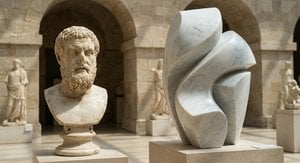
The Enduring Allure of Marble in Art History: From Classical Sculpture to Modern Abstraction
Explore the captivating history of marble sculpture from ancient Greece to modern art. Discover renowned artists like Canova & Michelangelo, carving techniques, and investment insights at ArtsDot.

Karl Blossfeldt's 'Urformen der Kunst': Pioneering Botanical Photomicrography & Aesthetic Form
Explore Karl Blossfeldt's groundbreaking *Urformen der Kunst* & pioneering botanical photography. Discover the aesthetic power of nature, New Objectivity influences, and his lasting impact on modern art. Learn about collecting key works.

Karl Bodmer: Capturing Indigenous Life & Landscapes of the American West
Explore the captivating art of Karl Bodmer, whose detailed paintings documented Indigenous life along the Missouri River in the 19th century. Discover his legacy and lasting impact on Western art history.

The Enduring Legacy of Marble: A Comprehensive Exploration of Technique, Symbolism & Artistic Expression
Explore the rich history of marble sculpture from antiquity to the Renaissance! Discover key techniques, influential artists & enduring themes in classical art. Expert insights for collectors and enthusiasts at ArtsDot.
