

 設置イメージを表示
 シェアする
シェアする シェアする
シェアする
 詳細を見る
詳細を見る ガイドを表示

 ダウンロード
 似ている作品
 X線調査
X線調査 スライドショーを表示
 Q&A
Q&A 統計情報
統計情報Spring - a triptych

 詳細を表示
詳細を表示
このページに掲載されている作品は著作権法によって保護されており、当社の許可なく同一の複製物を制作または販売することは法律で禁じられています。この保護は、以下のような国際条約に基づき執行されます。 ベルヌ条約 および、以下の条項に定められたものを含む各国の法律により、 米国著作権法 第17編。
この手法は、著作権で保護された作品の複製や複写を伴わないため、著作権法に完全に準拠しています。これは単なる模倣ではなく、創造的な再解釈です。元の作品からインスピレーションを受けつつも、それとは異なる、全く新しい絵画を生み出すものです。
ジークレー/アートプリント
スピーディーな制作と多彩な仕上げオプションが魅力の、ミュージアムクオリティなジークレー・キャンバスプリント。 ( 手描き複製画を注文する デジタル画像販売へ切り替え)




P118B ¥10

P118H ¥10

P118W ¥10

P438Z ¥10

P508JH ¥12

P508YH ¥12

P805H ¥10

P805Z ¥10

P919BZ ¥10

P919G ¥10

P919XJ ¥10

P959ZH ¥10

P968JZ ¥12

W106C ¥8

W218G ¥10

W218JH ¥8

W218Y ¥10

W307PJ ¥10

W316G ¥10

W316PJ ¥8

W316Y ¥10

W398PJ ¥8

W4111J ¥10

W500HY ¥15

W500JH ¥15

W692G ¥12

W849H ¥8

W940BG ¥15

W953PJ ¥8




作品のオリジナル比率に合わせた、当店の規定サイズからお選びください。

額縁や壁のスペースに合わせて、ご希望の幅と高さを入力してください。プリントはカットすることは可能ですが、元の画像より大きくすることはできないため、異なる比率のサイズを選択された場合は、画像の一部が欠けることになります。印刷を開始する前に、内容を確認していただくためのデジタルモックアップをお送りいたします。このページに表示されている画像は、実際のカット後の状態を示すものではありません。実際の仕上がりはモックアップにてご確認ください。


 ガラスオプションは、110cm未満のサイズでのみご利用いただけます。

Spring - a triptych
ジークレー/アートプリント
複製画サイズ一覧
-


合計金額
¥ 9954
関連作品


作家プロフィール
The Soul of the Lens: The Life and Legacy of Clarence Hudson White
In the soft, diffused light of the early twentieth century, a new way of seeing was being born—one that sought to elevate the camera from a mere mechanical tool to a brush capable of profound emotional expression. At the heart of this revolution stood Clarence Hudson White, an artist whose vision transformed the photographic medium into a poetic language of light and shadow. Born in 1871 amidst the idyllic landscapes of small-town Ohio, White’s early life was steeped in the quiet rhythms of rural America. This formative period, characterized by a deep connection to the natural world and the simple dignity of domestic life, would later become the cornerstone of his artistic identity. His sensibilities were further enriched by a childhood fascination with music, particularly the violin, which instilled in him a rhythmic approach to composition and a sensitivity to harmony that would define his photographic eye.
White’s journey into the world of imagery was not one of formal academic training, but rather a serendipitous encounter with the magic of light. A visit to the World's Columbian Exposition in Chicago in 1893 ignited a passion for photography that would consume his life. Though largely self-taught, he possessed an innate ability to manipulate light to achieve a painterly quality, a hallmark of the Pictorialism movement. His work moved away from the sharp, clinical documentation of reality, opting instead for soft focus and evocative textures that suggested mood rather than mere fact. This approach allowed him to capture what many called the "spirit" of his subjects—the tender interplay of sunlight through a window, the gentle contours of a loved one's face, or the melancholic beauty of a fading landscape.
A Pioneer of the Photo-Secession
As White’s reputation grew, he found himself at the center of a radical movement that sought to redefine the boundaries of art. Alongside the formidable Alfred Stieglitz, White became a founding member of the Photo-Secession, an elite group of photographers dedicated to promoting photography as a fine art. This was a period of intense creative struggle and triumph, where the very definition of "art" was being contested in galleries and salons across the globe. White’s contribution to this movement was vital; his images provided a bridge between the traditional aesthetics of painting and the emerging possibilities of the photographic print. His work often featured themes of domesticity and intimacy, utilizing his family and friends as models to create a sense of universal, quiet beauty that resonated deeply with the era's romantic sensibilities.
The technical mastery White achieved was nothing short of extraordinary. He understood that the true subject of a photograph was not merely what stood before the lens, but the artist's subjective vision of it. Through careful manipulation of exposure, printing processes, and composition, he could imbue a simple scene with profound symbolic weight. His compositions often echoed his early sketches—images of floating spheres or seated figures that hinted at a deeper, more metaphysical reality beneath the surface of the everyday. This ability to infuse the mundane with the extraordinary is what truly set him apart as a master of the Pictorialist style.
The Legacy of the Clarence H. White School
Beyond his individual achievements behind the camera, White’s impact on the trajectory of American photography was cemented through his role as an educator. In 1914, he established the Clarence H. White School of Photography in New York City, the first institution in America dedicated to teaching photography as a fine art. This school became a crucible for innovation, attracting a generation of photographers who would go on to shape the future of the medium. His students included luminaries such as:
- Dorothea Lange, whose documentary work would define the human face of the Great Depression;
- Gertrude Käsebier, a fellow pioneer of the Pictorialist movement;
- Ralph Steiner, who brought a modern, avant-garde sensibility to the craft.
Through his teaching, White ensured that his philosophy of expressive, subjective photography would endure long after his passing. Though his own photographic output declined in his later years due to the immense demands of running his school, his influence remained pervasive. His death in 1925, following a heart attack while teaching in Mexico City, marked the end of an era, yet the echoes of his vision continue to be felt. Clarence Hudson White did more than just take photographs; he taught the world how to look at the light, finding the extraordinary within the ordinary and forever changing the way we perceive the beauty of our shared existence.

プロフィール概要
- Artistic Movement Or Style: Pictorialist Photography
- Artists Or Movements Influenced By This Artist:
- Malevich
- John White Alexander
- Artists Who Influenced This Artist: ['Alfred Stieglitz']
- Date Of Birth: April 8, 1871
- Date Of Death: July 8, 1925
- Full Name: Clarence Hudson White
- Nationality: American
- Notable Artworks:
- Morning, 1905
- Drops of Rain, 1902
- The Sea [Rose Pastor Stokes, Caritas Island, Connecticut], 1909
- Place Of Birth: West Carlisle, Ohio
関連記事
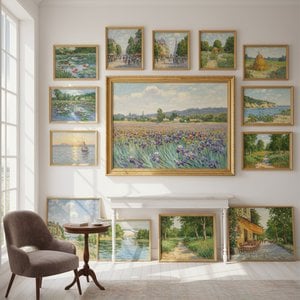
印象派風景を彩った至宝:アート史に名を刻む10選
印象派風景の革新を彩った10選。モネ、ルノワールら巨匠の名作を紐解き、色彩と光が生み出す感動の世界へ。アートの歴史とインテリアのインスピレーションをArtsDot.comで。高品質な複製画で、あなただけの空間を創造しましょう。

Anniversary Art Gifts: 10 Masterpieces for a Lasting Love Story |
Find the perfect anniversary gift! Explore 10 meaningful art masterpieces – from Monet to Van Gogh – & discover their romantic stories. Shop museum-quality reproductions at for a lasting tribute to your love.

The Lyrical Landscape: Finding Spiritual Depth in the Works of Savrasov and Levitan
Explore the spiritual depth of Savrasov and Levitan's Russian landscapes. Discover the mastery of lyrical realism today.

Cultivating Serenity: The Psychological Impact of Art Reproductions in Wellness Space Design
Discover how strategic art integration enhances wellness space design. Expert guidance on curating collections for serenity, improved guest experiences & ROI. Learn more!