


 プレビュー
プレビュー
 プリントを購入
 シェアする
シェアする シェアする
シェアする
 詳細を見る
詳細を見る

 ダウンロード
 似ている作品
 X線調査
X線調査 スライドショー
Boy With Bread And Butter

 詳細を見る
詳細を見る




P118B $10

P118H $10

P118W $10

P438Z $10

P508JH $12

P508YH $12

P805H $10

P805Z $10

P919BZ $10

P919G $10

P919XJ $10

P959ZH $10

P968JZ $12

W106C $8

W218G $10

W218JH $8

W218Y $10

W307PJ $10

W316G $10

W316PJ $8

W316Y $10

W398PJ $8

W4111J $10

W500HY $15

W500JH $15

W692G $12

W849H $8

W940BG $15

W953PJ $8




作品のオリジナル比率に合わせた、当店の規定サイズからお選びください。

特定のフレームやスペースに合わせて、ご希望のサイズをご入力いただけます。選択されたサイズが元の画像の比率と異なる場合、アートワークをトリミングするか、手描きで要素を追加して絵画を拡張いたします。デジタルモックアップ を制作し、制作開始前にご確認(承認)をいただきます。
画面上のプレビューは、実際のトリミングや拡張を正確に反映しているものではありません。最終的な構図は、モックアップによってのみ正確にご確認いただけます。
カスタムサイズもご利用いただけますが、元の比率を維持するためには、あらかじめ用意されたリストからサイズを選択することをお勧めいたします。
ご注文後、ArtsDot.com チームより詳細な指示をお送りするとともに、仕上がりイメージ(モックアップ)をご提供いたします。


 ガラスオプションは、110cm未満のサイズでのみご利用いただけます。

Boy With Bread And Butter
複製技法
複製画のサイズ
-


合計金額
$ 263
関連作品


アーティストの略歴
The Soul of Hungarian Romanticism: The Life of Bertalan Székely
Bertalan Székely stands as a monumental figure in the tapestry of Hungarian art, a painter whose brush captured the very essence of a nation’s identity through the sweeping lenses of Romanticism and Academic precision. Born in 1835 in the historic city of Cluj-Napoca, within the vibrant landscape of Transylvania, Székely was destined for a life of intellectual depth. Though his noble lineage and family aspirations initially pointed him toward the structured world of engineering, his heart belonged to the ethereal realm of aesthetics. This early tension between technical discipline and artistic passion would later manifest in his work as a masterful command over composition and a profound sensitivity to human emotion. His formative years were shaped by the rigorous halls of the Academy of Fine Arts in Vienna, where between 1851 and 1855, he studied under the esteemed masters Johann Nepomuk Geiger and Carl Rahl. It was here that the foundations of his technique were laid, absorbing the grand traditions of European painting. Upon returning to his beloved Cluj-Napoca, Székely did not merely paint; he taught, nurturing the next generation of Hungarian talent and refining his own understanding of artistic principles. His early professional journey, which included a significant period working with Count Aichelburg in Marschendorf, provided him with the social and financial scaffolding necessary to pursue more ambitious, large-scale endeavors.A Journey Through Europe and the Rise of History Painting
The year 1862 marked a transformative epoch in Székely’s life as he relocated to Munich, a city then pulsing with artistic innovation. Under the mentorship of Karl von Piloty, a titan of the era, Székely’s artistic focus underwent a profound metamorphosis. He moved away from simpler subjects and embraced the grand, dramatic narrative of history painting—a genre that allowed him to weave together political significance, cultural heritage, and theatrical intensity. This period was characterized by an increasing fascination with the monumental, seeking to capture moments of historical gravity that could resonate with the Hungarian spirit. His ascent to international recognition was cemented in 1863 when he secured a prestigious prize for his breathtaking depiction, The Escape of Emperor Charles VII. This triumph was more than a personal victory; it was a gateway to the wider European art scene. With the prize money as his guide, Székely embarked on transformative expeditions to the Netherlands and Paris. Immersing himself in the works of the great masters and observing the evolving trends of the continent, he integrated a sophisticated European sensibility into his distinctly Hungarian themes. This era of travel infused his palette with new light and his compositions with a cosmopolitan elegance that would define his mature style.Legacy of Mastery: From Portraits to Landscapes
As his career progressed, Székely’s repertoire expanded with remarkable versatility. While history painting remained a cornerstone of his legacy, the decades spanning the 1860s through the 1880s saw him masterfully navigating the intimate realms of portraiture and the depiction of female figures. His portraits were noted for their dignity and psychological depth, capturing not just the likeness of his subjects but their very character. Yet, as time flowed, so too did his artistic interests; he eventually turned his gaze toward the natural world, finding profound beauty in the sweeping landscapes that mirrored the rugged and romantic spirit of his homeland. Beyond the canvas, Székely’s influence was etched into the very architecture of Hungarian culture. He served as a foundational pillar of the Hungarian Royal Drawing School—now the prestigious Hungarian University of Fine Arts—eventually leading it as Director. His decorative genius also graced some of the nation's most sacred and civic spaces, including:- The magnificent Matthias Church in Budapest, where his murals breathe life into religious history.
- The grand Budapest Opera House, contributing to its opulent atmosphere.
- The City Hall in Kecskemét, marking his role as a painter of civic pride.

Bertalan Székely
1835 - 1910 , Hungary
基本情報
- Artistic Movement Or Style: Romantic & Academic
- Artists Or Movements Influenced By This Artist:
- Muybridge
- Marey
- Artists Who Influenced This Artist:
- Johann Nepomuk Geiger
- Carl Rahl
- Date Of Birth: May 8, 1835
- Date Of Death: August 21, 1910
- Full Name: Bertalan Székely
- Nationality: Hungarian
- Notable Artworks:
- The Escape of Emperor Charles VII
- Portrait of Adalbert Stifter
- Discovering the Body of King Louis II
- Thunderstorm
- Women of Eger
- Place Of Birth: Kolozsvár, Hungary
関連記事

The Enduring Legacy of Oil on Canvas: Technique, History & Aesthetic Impact
Explore the rich history & techniques of oil painting – from Renaissance masters to Impressionism. Discover pigments, layering methods, and why this timeless medium endures. Expert insights for artists & art enthusiasts.

Oil on Canvas: A Historical & Technical Exploration of a Timeless Artistic Medium
Explore the rich history & enduring techniques of oil painting on canvas. Discover the science behind its longevity, conservation practices, and contemporary relevance. Expert insights for art enthusiasts.

The Enduring Power of Painting: A Historical & Contemporary Exploration of Form and Emotion
Explore the rich history & enduring techniques of oil painting with ArtsDot. Discover masterpieces, learn about art collecting, and find authentic handmade reproductions crafted by skilled artists.

油彩のキャンバス:技法、歴史、そして現代の実践 - 古典美術愛好家へ
油彩の技法、歴史、巨匠たちの秘密を徹底解説。古典美術愛好家向けに、初期フランドル絵画から現代の実践まで深く掘り下げます。ArtsDotで高品質な複製画やカスタムオーダーも承ります。
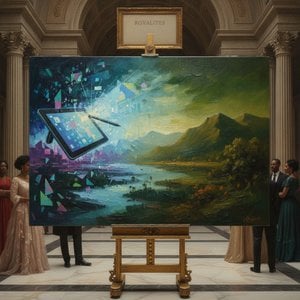
NFTコレクター向け:デジタル画像を手描きオイルレプリカに変換し、ミュージアム品質で収益と価値を最大化
ArtsDotは、デジタル画像をミュージアム品質の手描きオイルレプリカへ変換する専門家です。高い技術と厳格な品質管理で、NFTコレクターに信頼できる投資価値を提供します。

