


 プレビュー
プレビュー
 シェアする
シェアする シェアする
シェアする
 詳細を見る
詳細を見る ガイド
ガイド

 ダウンロード
 似ている作品
 X線調査
X線調査 スライドショー
 統計情報
統計情報Alabama #17-5
 Painting
- Contemporary Realism
 1987
1987- Contemporary
 35.0 x 45.0 cm
 USC フィッシャー美術館
 詳細を見る
詳細を見る
ジークレー/アートプリント
迅速な制作と多彩な仕上げオプションを備えた、ミュージアムクオリティのジークレーまたはキャンバスプリント。 ( 手描きの絵画を購入 デジタル画像販売へ切り替え)




P118B $10

P118H $10

P118W $10

P438Z $10

P508JH $12

P508YH $12

P805H $10

P805Z $10

P919BZ $10

P919G $10

P919XJ $10

P959ZH $10

P968JZ $12

W106C $8

W218G $10

W218JH $8

W218Y $10

W307PJ $10

W316G $10

W316PJ $8

W316Y $10

W398PJ $8

W4111J $10

W500HY $15

W500JH $15

W692G $12

W849H $8

W940BG $15

W953PJ $8




作品のオリジナル比率に合わせた、当店の規定サイズからお選びください。

特定のフレームやスペースに合わせて、ご自身でサイズを指定することも可能です。選択されたサイズが元の画像の比率と一致しない場合、作品をトリミングするか、鏡面反射または単色での塗りつぶしによって画像を拡張いたします。制作を開始する前に、ご確認用のデジタルモックアップをお送りいたします。
画面上のプレビューには、実際のトリミングや拡張は反映されませんのでご注意ください。最終的な構図を正確に確認できるのは、モックアップのみとなります。
カスタムサイズも承っておりますが、元の比率を維持するためには、あらかじめ用意されたリストからサイズを選択することをお勧めいたします。


 ガラスオプションは、110cm未満のサイズでのみご利用いただけます。

Alabama #17-5
ジークレー/アートプリント
複製画のサイズ
-


合計金額
$ 62
関連作品


アーティストの略歴
Anselm Kiefer: A Sculptor of German Memory
Born in Donaueschingen, Baden-Württemberg, Germany, on March 8, 1945, Anselm Kiefer’s life and art are inextricably linked to the weighty history of his nation. Raised near the Rhine River in the Black Forest, he was named after the classical painter Anselm Feuerbach – a deliberate choice that foreshadowed his lifelong preoccupation with German identity, its past traumas, and the complexities of confronting memory. From an early age, Kiefer envisioned himself as an artist, a path he diligently pursued through studies at the University of Freiburg and the Karlsruhe Academy, ultimately finding mentorship in the unconventional studio of Joseph Beuys during his formative years in Düsseldorf.
Kiefer’s artistic journey began in the late 1960s, a period marked by significant social and political upheaval in Germany. His early works, often characterized by a bleak and desolate aesthetic, immediately signaled a departure from prevailing trends. Unlike the vibrant colors of Pop Art or the expressive gestures of Abstract Expressionism, Kiefer’s canvases were dominated by muted tones – browns, grays, and blacks – reflecting a profound sense of loss and unease. He quickly established himself as a key figure in the *New Symbolism* movement, utilizing unconventional materials such as straw, ash, clay, lead, and shellac to create textured surfaces that evoked the weight of history. These materials weren’t merely decorative; they were imbued with symbolic meaning, representing the ruins of the past, the burden of memory, and the fragility of existence.
The Weight of History: German Identity and Trauma
A defining characteristic of Kiefer's oeuvre is his relentless engagement with Germany’s complex and often painful history. He doesn’t shy away from confronting the darkest chapters – the rise of Nazism, the horrors of World War II, and the legacy of the Holocaust. However, his approach transcends simple historical documentation; he seeks to excavate the emotional residue of these events, translating them into a visual language that is both unsettling and profoundly moving. As Kiefer himself stated, “After the ‘misfortune,’ as we all name it so euphemistically now, people thought that in 1945 we were starting all over again. . . . . It’s nonsense. The past was put under taboo, and to dig it up again generates resistance and disgust.”
His work frequently draws upon German mythology, literature, and art history – Wagner's *Ring* cycle, Goethe’s poetry, and the imagery of Caspar David Friedrich are recurring motifs. These references aren’t presented as straightforward historical narratives but rather as symbolic keys to unlocking deeper truths about the national psyche. Kiefer deliberately employs clichés and commonplace icons, layering them with unsettling juxtapositions that expose their inherent contradictions and reveal the manipulative potential of propaganda during the Third Reich. The painting *Margarete*, inspired by Paul Celan’s poem “Todesfuge,” exemplifies this approach – a haunting meditation on death, memory, and the enduring power of language.
Early Experiments and Provocative Gestures
Kiefer's artistic development was marked by a series of provocative gestures in his early career. In 1969, during a trip through Switzerland, France, and Italy, he staged a photographic self-portrait series called *Occupations*. Dressed in paramilitary clothing, he imitated Hitler in various natural and monumental settings – a deliberate act of confronting the figurehead of fascism and challenging viewers to confront their own complicity. This image, photographed from behind against the backdrop of the sea, is layered with multiple historical references: the early nineteenth century, the 1930s, and the time of its creation in the late 1960s. For Kiefer, understanding history begins not just with remembering it but with actively engaging with it through re-enactment and excavation.
A Transatlantic Journey and Continued Exploration
Following a period of artistic exploration in Germany, Kiefer relocated to Barjac, in the Languedoc region of southern France, in 1992. This move marked a shift in his creative practice, allowing him to experiment with new materials and techniques while maintaining a critical engagement with German history. Since 1992, he has lived and worked primarily in France, most recently in Paris. His work continues to evolve, reflecting not only the weight of the past but also the complexities of contemporary life. Kiefer’s art remains a powerful testament to the enduring legacy of trauma and the ongoing struggle to come to terms with history – a struggle that is both deeply personal and profoundly universal.
Key Achievements and Recognition
Anselm Kiefer's work has garnered widespread critical acclaim and numerous prestigious awards. He has been recognized as one of the most important artists of his generation, celebrated for his innovative use of materials, his unflinching honesty, and his profound engagement with history and memory. His paintings and sculptures are held in major museums around the world, including the Metropolitan Museum of Art, Tate Modern, and the Centre Pompidou. In 2018, he was awarded Austrian citizenship, a recognition that underscores the enduring significance of his work within European culture.

barry w. andersen
1945 - , United States of America
基本情報
- Artistic Movement Or Style: Neo-Expressionism, New Symbolism
- Artists Or Movements Influenced By This Artist: ['Paul Celan']
- Artists Who Influenced This Artist:
- Joseph Beuys
- Anselm Feuerbach
- Date Of Birth: March 8, 1945
- Full Name: Anselm Kiefer
- Nationality: German
- Notable Artworks:
- Margarete
- Schneeschmelze im Odenwald Winter ade
- Scheiden tut
- Place Of Birth: Donaueschingen, Germany
関連記事

Chrome Green Masterpieces: 10 Famous Paintings & Their Alluring Hues |
Explore 10 famous paintings where 'Chrome Green' reigns supreme! Discover Monet, Manet & Van Gogh’s masterpieces. Learn the stories behind these iconic artworks and find museum-quality art reproductions for your home at .
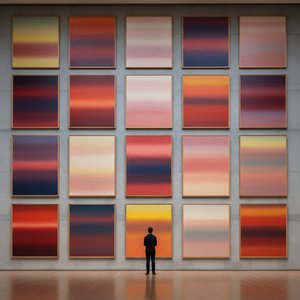
マーク・ロスコ傑作25選:色彩が織りなす深遠な世界|ArtsDot
マーク・ロスコの傑作25選。抽象表現主義を代表する巨匠、色彩が織りなす深遠な世界を探求します。絵画の背景や技法、感動的なストーリーを紐解き、ArtsDotで高品質なアートプリントをお楽しみください。リビングやオフィスにモダンアートを飾るなら!

Verdant Visions: Exploring the Symbolism & Aesthetic Impact of Green in Art History
Explore the rich history & symbolism of green in art! Discover iconic paintings, techniques, and how to bring verdant harmony into your home with ArtsDot's expert guide.

Emerald Visions: Top 10 Paintings Dominated by Cadmium Green |
Explore 10 iconic paintings where cadmium green reigns supreme! From Monet to Van Gogh, discover the stories behind these masterpieces & the power of color. Find museum-quality art reproductions and elevate your home decor on .

Crimson Threads of Narrative: Exploring Symbolism & Representation in Artworks Featuring the Red Dress
Explore the rich symbolism of the red dress in art history! From ancient power displays to iconic portraits like Cézanne’s 'Madame Cezanne', discover the cultural and artistic significance behind this captivating color. Expert analysis & insights.