

 設置イメージを表示
 シェアする
シェアする シェアする
シェアする
 詳細を見る
詳細を見る ガイドを表示

 ダウンロード
 似ている作品
 X線調査
X線調査 スライドショーを表示
 Q&A
Q&A 統計情報
統計情報The Earth


 詳細を表示
詳細を表示
このページに掲載されている作品は著作権法によって保護されており、当社の許可なく同一の複製物を制作または販売することは法律で禁じられています。この保護は、以下のような国際条約に基づき執行されます。 ベルヌ条約 および、以下の条項に定められたものを含む各国の法律により、 米国著作権法 第17編。
この手法は、著作権で保護された作品の複製や複写を伴わないため、著作権法に完全に準拠しています。これは単なる模倣ではなく、創造的な再解釈です。元の作品からインスピレーションを受けつつも、それとは異なる、全く新しい絵画を生み出すものです。
ジークレー/アートプリント
スピーディーな制作と多彩な仕上げオプションが魅力の、ミュージアムクオリティなジークレー・キャンバスプリント。 ( 手描き複製画を注文する デジタル画像販売へ切り替え)




P118B ¥10

P118H ¥10

P118W ¥10

P438Z ¥10

P508JH ¥12

P508YH ¥12

P805H ¥10

P805Z ¥10

P919BZ ¥10

P919G ¥10

P919XJ ¥10

P959ZH ¥10

P968JZ ¥12

W106C ¥8

W218G ¥10

W218JH ¥8

W218Y ¥10

W307PJ ¥10

W316G ¥10

W316PJ ¥8

W316Y ¥10

W398PJ ¥8

W4111J ¥10

W500HY ¥15

W500JH ¥15

W692G ¥12

W849H ¥8

W940BG ¥15

W953PJ ¥8




作品のオリジナル比率に合わせた、当店の規定サイズからお選びください。

額縁や壁のスペースに合わせて、ご希望の幅と高さを入力してください。プリントはカットすることは可能ですが、元の画像より大きくすることはできないため、異なる比率のサイズを選択された場合は、画像の一部が欠けることになります。印刷を開始する前に、内容を確認していただくためのデジタルモックアップをお送りいたします。このページに表示されている画像は、実際のカット後の状態を示すものではありません。実際の仕上がりはモックアップにてご確認ください。


 ガラスオプションは、110cm未満のサイズでのみご利用いただけます。

The Earth
ジークレー/アートプリント
複製画サイズ一覧
-


合計金額
¥ 9970
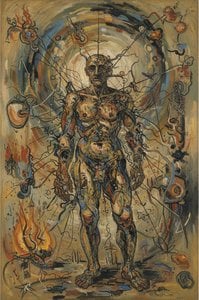
André Masson’s “The Earth”: A Descent Into Surrealist Automatism
André Masson's "The Earth," painted in 1939, stands as a quintessential example of Surrealist automatism—a technique championed by Masson and fellow artists to bypass conscious thought and tap into the subconscious realm. More than just an aesthetically striking composition, it’s a profound exploration of primal anxieties and a visual manifestation of the artist's confrontation with existential uncertainties during the turbulent years leading up to World War II.Composition and Visual Language
The artwork immediately captivates with its central oval form—a dominant presence that evokes imagery of amniotic sacs or embryonic beginnings. This organic shape isn’t merely decorative; it serves as a focal point for a dynamic network of radiating lines in shades of red, black, and white. These lines aren't meticulously drawn; rather, they erupt outwards from the center with an impulsive energy, creating a chaotic visual field that defies conventional perspective. The deliberate lack of spatial coherence underscores Masson’s rejection of rational representation, prioritizing instead the expressive power of gesture and emotion. It feels like witnessing a geological upheaval—a violent birth of form from amorphous darkness.Technique and Material Considerations
Masson employed oil paint on canvas – a medium chosen for its ability to capture subtle tonal variations and facilitate layering techniques. The artist’s approach leaned heavily into automatism, utilizing spontaneous brushstrokes and washes of color to generate the artwork's textural surface. Evidence suggests considerable reworking—a process characteristic of Surrealist practice where artists strive to liberate their creative impulses from intellectual constraints. The canvas itself appears to be lightly primed, allowing for a rich interplay between pigment and substrate, contributing to the overall impression of immediacy and visceral impact.Symbolism and Contextual Significance
Painted during the height of Surrealist fervor, “The Earth” reflects the movement’s preoccupation with Freudian psychoanalysis and its desire to delve into the unconscious mind. The oval form symbolizes fertility and rebirth—themes central to Surrealist mythology—but also carries a darker connotation of vulnerability and impending doom. The radiating lines represent forces of destruction and creation simultaneously, mirroring anxieties about societal upheaval and the looming threat of war. Masson’s work aligns with broader artistic explorations of primal instincts and fears, reflecting a collective apprehension regarding humanity's precarious position in the face of cosmic indifference.Emotional Resonance
Ultimately, “The Earth” succeeds in conveying a palpable sense of unease and mystery. The artwork doesn’t offer comforting illusions; instead, it confronts viewers with an unsettling depiction of chaos and ambiguity. It invites contemplation on themes of genesis, destruction, and the inherent instability of existence—questions that resonated deeply within Masson's own artistic vision and continue to captivate audiences today. Its raw energy and evocative imagery solidify its place as a cornerstone of Surrealist art history.関連作品


作家プロフィール
アンドレ・マソン:内なる世界を探求したシュルレアリスムの先駆者
1896年、フランスのバラグニー=シュル=テレーヌに生まれたアンドレ・マソンは、20世紀美術における重要な役割を担った画家です。幼少の頃から絵画に才能を示し、ブリュッセルの王立芸術アカデミーでコンスタン・モンタルドのもとで基礎的な訓練を受けました。しかし、彼の芸術的探求心は、伝統的な様式にとらわれず、常に新しい表現の可能性を追い求めるものでした。初期の作品にはキュビスムの影響が見られ、近代美術の潮流にいち早く関心を寄せたことがうかがえます。
シュルレアリスムとの出会いと自動描画
1920年代に入ると、マソンはシュルレアリスム運動の中心人物の一人となります。アントナン・アルトー、ミシェル・レイリス、ホアン・ミロ、ジョルジュ・バタイユ、ジャン・デュビュフェ、ジョルジュ・マルキンといった同時代の芸術家たちとの交流を通じて、彼は意識の深層を探る試みに熱中しました。特に彼が積極的に取り入れたのが、自動描画という技法です。これは、理性的なコントロールを放棄し、潜在意識の手によって導かれるようにして作品を描き出すもので、シュルレアリスムの核心とも言える表現方法でした。無数のペンとインクによる作品群は、彼の革新的なアプローチを鮮やかに物語っています。
砂と膠を用いた実験的表現
マソンの実験精神は、自動描画にとどまりませんでした。彼はキャンバスに砂や膠を投げつけ、その偶然の形状に基づいて油絵を描き出すというユニークな技法を開発しました。この手法によって生み出された作品は、従来の絵画の概念を覆し、見る者に強烈な視覚的衝撃を与えました。また、彼の作品には暴力的なテーマやエロティックなモチーフが頻繁に登場し、伝統的な芸術規範からの大胆な逸脱を示しています。
様式の変遷とアメリカへの影響
1920年代後半になると、マソンはシュルレアリスムから距離を置き始め、アンドレ・デランといった画家たちに影響を受けたより構造的な様式へと移行しました。この変化は、彼の風景画に見ることができます。第二次世界大戦中、ナチスによって彼の作品は「退廃芸術」と断罪されましたが、彼はヴァリアン・フライの支援を受けてアメリカ合衆国へ逃れることができました。そして、その滞在中にジャクソン・ポロックをはじめとするアメリカのアブストラクト・エクスプレッショニストたちに大きな影響を与えました。
晩年の風景画と芸術的遺産
戦後、マソンはフランスに戻り、南仏の Aix-en-Provence に拠点を定めました。彼は再び風景画を描き始め、より自然主義的な主題へと回帰しました。しかし、彼の作品には常に内なる世界への探求が込められており、晩年の作品においてもシュルレアリスム時代から続くテーマや技法が見られます。アンドレ・マソンは、シュルレアリスムのパイオニアとして、また自動描画という革新的な技法の創始者として、20世紀美術史にその名を刻んでいます。彼の功績は、キュビスムからアブストラクト・エクスプレッショニズムに至るまで、幅広い芸術運動に影響を与え、現代アートの発展に大きく貢献しました。

アンドレ・マソン
1896 - 1987 , フランス
プロフィール概要
- Artistic Movement Or Style:
- シュルレアリスム
- キュビズム
- Artists Or Movements Influenced By This Artist:
- ジャクソン・ポロック
- 抽象表現主義
- Artists Who Influenced This Artist: ['アンドレ・デラン']
- Date Of Birth: 1896年1月4日
- Date Of Death: 1987年
- Full Name: アンドレ・エメ・ルネ・マソン
- Nationality: フランス人
- Notable Artworks (List Of Titles):
- Beyond
- Landscape with Rocks
- The metamorphosis of the lovers
- Pygmalion
- Place Of Birth (City And Country): フランス、バラグニー=シュル=テレーヌ
関連記事

Mastering Abstraction: The 25 Most Iconic Works by Wassily Kandinsky
Explore 25 iconic Kandinsky masterpieces and the birth of abstraction. Discover the full collection online at ArtsDot.com.

抽象表現主義を定義する十大傑作:芸術と装飾の深遠な旅
抽象表現主義を定義する10の傑作。ポロック、ロスコら巨匠たちの情熱と色彩の世界へ。各作品に込められた物語と技法を紐解き、至高のアート体験を。ArtsDot.comで、ミュージアムクオリティの複製画や洗練されたインテリアアイデアを発見してください。

Beyond Representation: Exploring Gesturality, Emotion, and Philosophical Underpinnings of Contemporary Abstract Painting
Explore the evolution of abstract painting with ArtsDot. Discover key artists, historical context & investment insights. Find museum-quality reproductions and expert appraisal services.

幾何学的抽象絵画を定義した傑作10選|アート、アーティスト、インテリア装飾
モンドリアン、マレーヴィチ…幾何学的抽象絵画を代表する傑作10選。各作品の背景や色彩構成、アーティストの情熱に迫ります。美術館品質の複製画はArtsDot.comで。オンラインでアートコレクションをご覧ください。
André Masson: Automatism, Surrealism & Primal Expression in 20th-Century Art
Explore the revolutionary art of André Masson – pioneer of automatism & Surrealist expression. Discover his powerful imagery, innovative techniques, and lasting influence on modern art. Learn more at ArtsDot.