

 設置イメージを表示
 シェアする
シェアする シェアする
シェアする
 詳細を見る
詳細を見る ガイドを表示

 ダウンロード
 似ている作品
 X線調査
X線調査 スライドショーを表示
 Q&A
Q&A 統計情報
統計情報Leda


 詳細を表示
詳細を表示
このページに掲載されている作品は著作権法によって保護されており、当社の許可なく同一の複製物を制作または販売することは法律で禁じられています。この保護は、以下のような国際条約に基づき執行されます。 ベルヌ条約 および、以下の条項に定められたものを含む各国の法律により、 米国著作権法 第17編。
この手法は、著作権で保護された作品の複製や複写を伴わないため、著作権法に完全に準拠しています。これは単なる模倣ではなく、創造的な再解釈です。元の作品からインスピレーションを受けつつも、それとは異なる、全く新しい絵画を生み出すものです。
ジークレー/アートプリント
スピーディーな制作と多彩な仕上げオプションが魅力の、ミュージアムクオリティなジークレー・キャンバスプリント。 ( 手描き複製画を注文する デジタル画像販売へ切り替え)




P118B ¥10

P118H ¥10

P118W ¥10

P438Z ¥10

P508JH ¥12

P508YH ¥12

P805H ¥10

P805Z ¥10

P919BZ ¥10

P919G ¥10

P919XJ ¥10

P959ZH ¥10

P968JZ ¥12

W106C ¥8

W218G ¥10

W218JH ¥8

W218Y ¥10

W307PJ ¥10

W316G ¥10

W316PJ ¥8

W316Y ¥10

W398PJ ¥8

W4111J ¥10

W500HY ¥15

W500JH ¥15

W692G ¥12

W849H ¥8

W940BG ¥15

W953PJ ¥8




作品のオリジナル比率に合わせた、当店の規定サイズからお選びください。

額縁や壁のスペースに合わせて、ご希望の幅と高さを入力してください。プリントはカットすることは可能ですが、元の画像より大きくすることはできないため、異なる比率のサイズを選択された場合は、画像の一部が欠けることになります。印刷を開始する前に、内容を確認していただくためのデジタルモックアップをお送りいたします。このページに表示されている画像は、実際のカット後の状態を示すものではありません。実際の仕上がりはモックアップにてご確認ください。


 ガラスオプションは、110cm未満のサイズでのみご利用いただけます。

Leda
ジークレー/アートプリント
複製画サイズ一覧
-


合計金額
¥ 9968
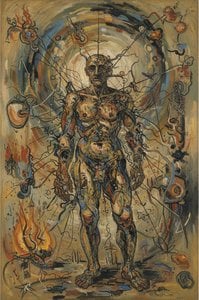
A Descent into Myth: Exploring Masson's "Leda"
André Masson’s 1947 work, “Leda,” is far more than a depiction of a classical myth; it's an intensely personal and psychologically charged exploration of desire, transformation, and the unsettling power dynamics inherent in the story of Leda and Zeus. The Greek myth recounts how Zeus, disguised as a swan, seduced or raped Leda, resulting in the birth of Helen of Troy and other children. Masson doesn’t offer a literal representation of this narrative. Instead, he channels the myth's emotional core through a powerful visual language rooted in Surrealism and Abstract Expressionism. This piece invites viewers to confront not just the story itself, but also the complex feelings it evokes – vulnerability, powerlessness, and the unsettling beauty that can emerge from chaos.Style & Technique: Automatic Drawing and Surrealist Expression
Masson was a pivotal figure in the Surrealist movement, deeply involved with its exploration of the unconscious mind. “Leda” exemplifies his embrace of *automatic drawing*, a technique championed by André Breton and other Surrealists aimed at bypassing conscious control to access raw, unfiltered creativity. The artwork is rendered entirely in shades of gray and black ink on paper, creating a striking monochromatic effect that amplifies the intensity of the swirling lines. The dense, scribbled application of these lines isn’t merely decorative; it's integral to the work's expressive power. It creates a palpable texture, almost as if one could feel the artist's hand moving across the surface. The style blends Surrealism’s dreamlike imagery with Abstract Expressionism’s emphasis on spontaneous gesture and emotional expression, resulting in a unique visual language that is both unsettling and captivating.Symbolism & Emotional Impact
The distorted forms of Leda and the swan are key to understanding the artwork's symbolic weight. The intertwining figures lack clear boundaries, suggesting a blurring of identities and a loss of control – central themes within the myth itself. The chaotic lines evoke feelings of anxiety, desire, and transformation. The absence of a defined background further intensifies this sense of disorientation, drawing the viewer into the swirling emotional vortex at the heart of the piece. While the swan traditionally represents beauty and grace, in Masson’s hands, it becomes an instrument of unsettling power, its form distorted and integrated with Leda's own, creating a complex visual metaphor for vulnerability and violation. The monochromatic palette reinforces this sense of unease, stripping away any potential for comforting color or light.Historical Context & Masson's Artistic Journey
Created in 1947, “Leda” reflects the post-war climate of existential questioning and psychological exploration that characterized much of Abstract Expressionism. Having witnessed the horrors of World War II, many artists sought to express profound emotional truths beyond traditional representational forms. Masson’s work, deeply rooted in Surrealist principles, aligns with this impulse. His early training encompassed Cubism, but his association with Surrealism led him to experiment extensively with automatic techniques and altered states of consciousness – all evident in the raw energy and psychological depth of “Leda.” His exploration of mythology wasn't merely academic; it was a means of delving into universal human experiences like desire, power, and transformation.関連作品


作家プロフィール
アンドレ・マソン:内なる世界を探求したシュルレアリスムの先駆者
1896年、フランスのバラグニー=シュル=テレーヌに生まれたアンドレ・マソンは、20世紀美術における重要な役割を担った画家です。幼少の頃から絵画に才能を示し、ブリュッセルの王立芸術アカデミーでコンスタン・モンタルドのもとで基礎的な訓練を受けました。しかし、彼の芸術的探求心は、伝統的な様式にとらわれず、常に新しい表現の可能性を追い求めるものでした。初期の作品にはキュビスムの影響が見られ、近代美術の潮流にいち早く関心を寄せたことがうかがえます。
シュルレアリスムとの出会いと自動描画
1920年代に入ると、マソンはシュルレアリスム運動の中心人物の一人となります。アントナン・アルトー、ミシェル・レイリス、ホアン・ミロ、ジョルジュ・バタイユ、ジャン・デュビュフェ、ジョルジュ・マルキンといった同時代の芸術家たちとの交流を通じて、彼は意識の深層を探る試みに熱中しました。特に彼が積極的に取り入れたのが、自動描画という技法です。これは、理性的なコントロールを放棄し、潜在意識の手によって導かれるようにして作品を描き出すもので、シュルレアリスムの核心とも言える表現方法でした。無数のペンとインクによる作品群は、彼の革新的なアプローチを鮮やかに物語っています。
砂と膠を用いた実験的表現
マソンの実験精神は、自動描画にとどまりませんでした。彼はキャンバスに砂や膠を投げつけ、その偶然の形状に基づいて油絵を描き出すというユニークな技法を開発しました。この手法によって生み出された作品は、従来の絵画の概念を覆し、見る者に強烈な視覚的衝撃を与えました。また、彼の作品には暴力的なテーマやエロティックなモチーフが頻繁に登場し、伝統的な芸術規範からの大胆な逸脱を示しています。
様式の変遷とアメリカへの影響
1920年代後半になると、マソンはシュルレアリスムから距離を置き始め、アンドレ・デランといった画家たちに影響を受けたより構造的な様式へと移行しました。この変化は、彼の風景画に見ることができます。第二次世界大戦中、ナチスによって彼の作品は「退廃芸術」と断罪されましたが、彼はヴァリアン・フライの支援を受けてアメリカ合衆国へ逃れることができました。そして、その滞在中にジャクソン・ポロックをはじめとするアメリカのアブストラクト・エクスプレッショニストたちに大きな影響を与えました。
晩年の風景画と芸術的遺産
戦後、マソンはフランスに戻り、南仏の Aix-en-Provence に拠点を定めました。彼は再び風景画を描き始め、より自然主義的な主題へと回帰しました。しかし、彼の作品には常に内なる世界への探求が込められており、晩年の作品においてもシュルレアリスム時代から続くテーマや技法が見られます。アンドレ・マソンは、シュルレアリスムのパイオニアとして、また自動描画という革新的な技法の創始者として、20世紀美術史にその名を刻んでいます。彼の功績は、キュビスムからアブストラクト・エクスプレッショニズムに至るまで、幅広い芸術運動に影響を与え、現代アートの発展に大きく貢献しました。

アンドレ・マッソン
1896 - 1987 , フランス
プロフィール概要
- Artistic Movement Or Style:
- シュルレアリスム
- キュビズム
- Artists Or Movements Influenced By This Artist:
- ジャクソン・ポロック
- 抽象表現主義
- Artists Who Influenced This Artist: ['アンドレ・デラン']
- Date Of Birth: 1896年1月4日
- Date Of Death: 1987年
- Full Name: アンドレ・エメ・ルネ・マソン
- Nationality: フランス人
- Notable Artworks (List Of Titles):
- Beyond
- Landscape with Rocks
- The metamorphosis of the lovers
- Pygmalion
- Place Of Birth (City And Country): フランス、バラグニー=シュル=テレーヌ
関連記事

Georges Braque: Pioneering Cubism & the Evolution of Modern Form
Explore the revolutionary art of Georges Braque, a pioneer of Cubism alongside Picasso. Discover his artistic evolution, key works, and lasting impact on modern art. A guide for discerning collectors.

Beyond Reality's Grasp: Exploring the Philosophical Foundations of Surrealism
Explore the philosophical roots & artistic innovations of Surrealism with ArtsDot. Discover Dalí, Ernst, Delvaux & Freud's influence on this revolutionary movement. High-quality art reproductions available.
André Masson: Automatism, Surrealism & Primal Expression in 20th-Century Art
Explore the revolutionary art of André Masson – pioneer of automatism & Surrealist expression. Discover his powerful imagery, innovative techniques, and lasting influence on modern art. Learn more at ArtsDot.

Beyond Sight: Exploring Tactile Dimensions and Illumination in Abstract Painting
Explore the captivating world of tactile abstraction! Discover impasto techniques, influential artists like Richter & Hoyland, and expert insights for collecting textured art. Elevate your space with museum-quality pieces.

Beyond Reality's Veil: Exploring the Enigmatic World of Metaphysical Art
Explore the captivating world of Metaphysical art with ArtsDot. Discover Giorgio de Chirico's iconic paintings, philosophical influences & lasting impact on Surrealism. Expert insights for collectors.