

 設置イメージを表示
 シェアする
シェアする シェアする
シェアする
 詳細を見る
詳細を見る ガイドを表示

 ダウンロード
 似ている作品
 X線調査
X線調査 スライドショーを表示
 Q&A
Q&A 統計情報
統計情報Shadows at Noon

- 25.0 x 35.0 cm


 詳細を表示
詳細を表示
このページに掲載されている作品は著作権法によって保護されており、当社の許可なく同一の複製物を制作または販売することは法律で禁じられています。この保護は、以下のような国際条約に基づき執行されます。 ベルヌ条約 および、以下の条項に定められたものを含む各国の法律により、 米国著作権法 第17編。
この手法は、著作権で保護された作品の複製や複写を伴わないため、著作権法に完全に準拠しています。これは単なる模倣ではなく、創造的な再解釈です。元の作品からインスピレーションを受けつつも、それとは異なる、全く新しい絵画を生み出すものです。
ジークレー/アートプリント
スピーディーな制作と多彩な仕上げオプションが魅力の、ミュージアムクオリティなジークレー・キャンバスプリント。 ( 手描き複製画を注文する デジタル画像販売へ切り替え)




































作品のオリジナル比率に合わせた、当店の規定サイズからお選びください。

額縁や壁のスペースに合わせて、ご希望の幅と高さを入力してください。プリントはカットすることは可能ですが、元の画像より大きくすることはできないため、異なる比率のサイズを選択された場合は、画像の一部が欠けることになります。印刷を開始する前に、内容を確認していただくためのデジタルモックアップをお送りいたします。このページに表示されている画像は、実際のカット後の状態を示すものではありません。実際の仕上がりはモックアップにてご確認ください。


 ガラスオプションは、110cm未満のサイズでのみご利用いただけます。

Shadows at Noon
ジークレー/アートプリント
複製画サイズ一覧
-


合計金額
¥ 9778
Delving into the Artist's Vision
Alan Crane's Shadows at Noon is a testament to his exceptional skill and artistic vision. The lithograph measures 25 x 35 cm and showcases the artist's ability to play with light and shadow, creating an atmosphere that is both serene and thought-provoking. The scene depicts people sitting on the ground in front of a building, with animals scattered around them, evoking a sense of tranquility and harmony.Exploring the Artistic Style
The use of lithography as a medium adds a unique texture to the piece, giving it a sense of depth and dimensionality. Alan Crane's style is characterized by his attention to detail and his ability to capture the subtleties of light and shadow. This is evident in Shadows at Noon, where the interplay between light and dark creates a sense of tension and balance.- Lithography as a medium allows for a range of tonal values, from deep blacks to subtle grays.
- The composition of the piece is carefully balanced, with the figures and animals arranged in a harmonious manner.
- The use of light is a key element, with the shadows adding depth and dimensionality to the scene.
The allure of Shadows at Noon lies in its ability to evoke a sense of calm and contemplation, inviting the viewer to step into the serene world created by Alan Crane. As we gaze upon this masterpiece, we are reminded of the power of art to transport us to another time and place.
Q&A
「Shadows at Noon」は、何年に、どの様式(ムーブメント)で制作されたものですか?
「Shadows at Noon」は、Contemporary Realismの作品として1952年に制作されました。制作年と様式は、美術史におけるこの作品の位置付けを明確にするものです。
Shadows at Noonは、Alan Craneのキャリアにおけるどの時期の作品にあたりますか?
Alan Craneの画業において、「Shadows at Noon」はMature Periodに制作されたものです。この時期の作品を知ることで、同アーティストの他の作品との比較検討が可能になります。
Alan Crane作「Shadows at Noon」の来場者の属性(統計データ)はどこで確認できますか?
Alan Crane作「Shadows at Noon」の閲覧統計ページでは、公開されている閲覧統計をご覧いただけます。この作品の月間閲覧数、アーティストのなかで最も閲覧されている作品との比較、そして訪問者の地域情報などが掲載されています。
関連作品


作家プロフィール
Alan Crane: Weaver of Light and Shadow in the American West
Alan Crane, a name perhaps less familiar than some of his contemporaries, nevertheless holds a significant place within the landscape of 20th-century American art. Born in Brooklyn, New York, in 1901, Crane’s artistic journey was one marked by a deep connection to the natural world, particularly the rugged beauty and evocative light of the American West, coupled with a masterful command of lithography – a medium he embraced with an almost obsessive dedication.
Crane's early life provided fertile ground for his future artistic pursuits. He studied at Pratt Institute, absorbing the principles of design and illustration while simultaneously developing a keen eye for detail and composition. Crucially, he found mentorship under Winold Weiss, a pioneering figure in American muralism, and later collaborated with Richard Boleslawsky, a renowned theatrical designer known for his innovative use of color and form. These early influences instilled in Crane a respect for craftsmanship, an appreciation for dramatic lighting, and a willingness to experiment with new techniques – qualities that would define his distinctive style.
Crane’s artistic trajectory took a pivotal turn when he relocated to New England, immersing himself in the landscapes of Massachusetts and Maine. It was during this period that he truly discovered his passion for lithography, recognizing its potential to capture the subtle nuances of light, shadow, and texture with unparalleled precision. He joined numerous art organizations – including the Salmagundi Club, Audubon Artists, and the Rockport Art Association – demonstrating a commitment to artistic community and continuous learning.
The Lithographic Vision
Crane’s work is overwhelmingly defined by his extraordinary skill as a lithographer. He wasn't simply reproducing images; he was translating them onto stone with an almost alchemical precision. His prints are characterized by a remarkable ability to render atmospheric effects – the shimmering heat of the desert sun, the cool dampness of a forest floor, the dramatic interplay of light and shadow in a mountain range. This mastery stemmed from countless hours spent meticulously working on his stones, refining each line and tone until it perfectly conveyed the essence of his subject.
His subjects often centered around the American West – vast landscapes, weathered buildings, and scenes of rural life. However, Crane’s approach wasn't merely descriptive; he imbued his prints with a sense of mood and emotion. He frequently employed a muted palette, dominated by earthy tones and subtle gradations of gray, creating an atmosphere of quiet contemplation and understated beauty. The influence of European landscape painters, particularly the Barbizon School, is evident in his use of light and color, but Crane’s work possesses a uniquely American sensibility – a reverence for the ruggedness and resilience of the West.
Mexico: A Source of Inspiration
A significant chapter in Crane's artistic development unfolded during his extended visits to Mexico. Beginning in 1948, he spent several years exploring the country’s diverse landscapes and cultures, producing a remarkable series of lithographs that captured the spirit of this vibrant nation. These prints – “Haunted Garden, Mexico,” “Indian Laurels, Chapala,” “Clouds and Spires, San Miguel Allende” – are considered among his finest works, showcasing his ability to translate the exotic beauty of Mexico onto stone with sensitivity and respect.
His time in Mexico wasn’t merely a period of observation; it was a transformative experience that profoundly shaped his artistic vision. He developed a deeper understanding of color theory, composition, and the interplay between light and shadow – skills he subsequently applied to his depictions of the American West. The Mexican landscapes provided him with new perspectives on form, texture, and atmosphere, enriching his already considerable talent.
Notable Works and Legacy
Beyond his lithographs, Crane produced a substantial body of work in other media, including illustrations for books and magazines. His book *Pepita Bonita* (1942), *Gloucester Joe* (1943) and *Nick and Nan in Yucatan* (1945) are prime examples of his versatility and artistic range. His Smithsonian artwork “Village in the Sun” is a testament to his meticulous attention to detail and ability to capture the essence of architectural design.
Alan Crane’s legacy extends beyond his individual works; he played a vital role in the development of American lithography, demonstrating its potential as a medium for capturing the subtleties of light, shadow, and texture. His prints continue to be admired for their beauty, craftsmanship, and evocative power – a testament to his artistic vision and unwavering dedication to his craft. He died in 1969, leaving behind a rich body of work that continues to inspire artists and art lovers alike.
Further Exploration
- Spires and Clouds (1949): A stunning lithograph showcasing architectural grandeur & dramatic skies. (/en/art/alan-crane-spires-and-clouds-AQTHB6-en/)
- Shadows at Noon (1952): Captivating 1952 lithograph showcasing serene rural scenes & masterful light/shadow play. (/en/art/alan-crane-shadows-at-noon-AQTHAJ-en/)
- Village in the Sun (1946): A serene 1946 masterpiece of architectural detail & light. (/en/art/alan-crane-village-in-the-sun-AQTHAU-en/)
- Alan Crane - Artists | The Old Print Shop: https://oldprintshop.com/artists/268

Alan Crane
1901 - 1969
プロフィール概要
- Artistic Movement Or Style: Lithography, Illustration
- Artists Or Movements Influenced By This Artist: ['Elizabeth Borton de Trevino']
- Artists Who Influenced This Artist:
- Winold Weiss
- Richard Boleslawski
- Date Of Birth: 1901
- Date Of Death: 1969
- Full Name: Alan Horton Crane
- Nationality: American
- Notable Artworks:
- Spires and Clouds
- Shadows at Noon
- Village in the Sun
- Place Of Birth: Brooklyn, New York
関連記事

Josef Kriehuber: A Life Immersed in Viennese Topography – From Lithographic Precision to Romantic Observation
Explore the life and work of Josef Kriehuber, a master lithographer who captured 19th-century Vienna. Discover his portraits of nobility, landscapes, & artistic techniques. A guide for collectors & art enthusiasts.

The Eloquent Darkness: Exploring Shadow as Subject, Symbolism & Technique in Art History
Explore the captivating history of shadow in art! Discover chiaroscuro & tenebrism techniques used by masters like Caravaggio & Rembrandt. Uncover symbolism, emotional impact & enduring legacy with ArtsDot.

Walter Crane: Aestheticism, Socialism & the Evolution of British Decorative Art
Explore the life & work of Walter Crane, a pivotal figure in Aestheticism & the Arts & Crafts movement. Discover his socialist ideals, stunning illustrations, and lasting impact on British art & design.

エドワード・ホッパー傑作25選:アメリカの孤独と光影の世界 | ArtsDot
エドワード・ホッパーの傑作25選。アメリカ絵画を代表するモダンアート、孤独と光影の世界を紐解きます。名画「Nighthawks」や「ハウス・バイ・ザ・レールロード」など、美術史に残る作品群をArtsDotで高品質複製画としてお楽しみください。インテリアに深みを与えるアートプリントも多数。今すぐコレクションをご覧ください。
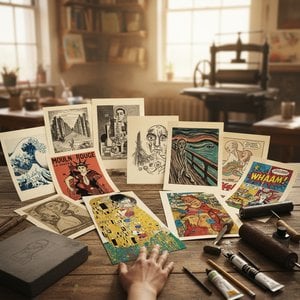
Top 10 Lithographs That Revolutionized Art | ArtsDot
Explore 10 legendary lithographs by Toulouse-Lautrec, Munch & Picasso that redefined art! Discover the stories behind these iconic prints and find museum-quality reproductions for your home decor at ArtsDot.com. Explore the full collection online.