
- Pagina iniziale

- Musei
- Chiesa parrocchiale

Sommario
Dettagli rapidi
- Works on APS: 1
- Alternate names:
- Chiesa parrocchiale
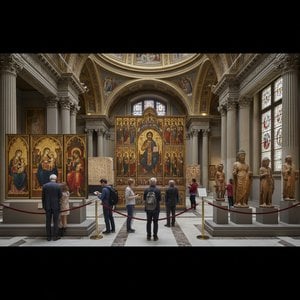
- Chiesa parrocchiale di San Nicola
- Chiesa di St. Nikolaus
- Chiesa Parrocchiale Wildungen
- Featured artists: konrad von soest
- Location: Wildungen, Deutschland
Quiz d'arte
Per ogni domanda è presente una sola risposta corretta.
Domanda 1:
Qual è lo stile architettonico predominante della Chiesa di San Nicola?
Domanda 2:
In quale secolo fu originariamente costruita la chiesa?
Domanda 3:
Qual è il ruolo della Chiesa di San Nicola nella storia culturale di Wildungen?
Domanda 4:
Lo stile architettonico della chiesa riflette le sensibilità artistiche prevalenti durante quale periodo?
Domanda 5:
Qual è una caratteristica distintiva della Chiesa di San Nicola che la distingue dalle altre chiese?
Articoli correlati

Sacred Narratives on Canvas: Exploring Religious Scenes & Their Enduring Influence
Explore the rich history of religious art from Giotto to the Renaissance masters with ArtsDot. Discover symbolism, techniques & enduring legacies. Museum-quality reproductions available.

Sacred Narratives Embodied: A Comprehensive Exploration of Religious Iconography in Art History
Explore the rich history of religious iconography in art! Discover symbolism, movements & masterpieces from Byzantine to Renaissance periods. Expert insights for collectors and enthusiasts at ArtsDot.

The Shadow of Faith: Exploring Gothic Art's Spiritual Intensity & Architectural Innovation
Explore the spiritual intensity & architectural innovation of Gothic art! Discover the symbolism behind cathedrals, stained glass & master artists like Giotto and Monet. A deep dive into medieval history & artistic expression.


Iscriviti alla nostra newsletter
Rimani aggiornato sulle ultime novità dell'arte, sulle offerte esclusive e sulle idee di decorazione.
Ricevi 3 suggerimenti d'arte gratuiti
Raccontaci del tuo progetto e i nostri esperti d'arte ti proporranno 3 suggerimenti artistici personalizzati.
Not Sure Where to Start?
Let Us Curate 3 Options Just for You - Free!