early life and training
Giulio Falzoni, an italian painter, was born in bologna in 1887. He was a pupil of the renowned italian painter giovanni battista crema. This mentorship played a significant role in shaping falzoni's artistic style, which would later be characterized by its vibrant colors and attention to detail. Falzoni’s formative years were marked by immersion in the atelier of Crema, where he absorbed the principles of Impressionism—a movement that championed capturing fleeting moments of light and color—laying the groundwork for his distinctive visual language.artistic style and contributions
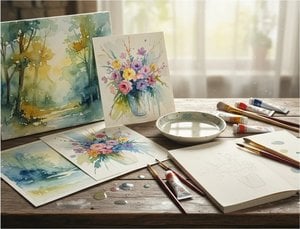
Falzoni's artistic signature resided primarily in watercolor painting, a medium he embraced with unwavering dedication. Exhibited extensively throughout italy and abroad, his canvases breathed life into landscapes, still lifes, and portraits alike, reflecting an astute understanding of tonal harmony and compositional balance. As a member of the italian watercolor society and the international watercolor society, Falzoni actively championed the advancement of watercolor art, fostering experimentation and promoting its expressive potential within the artistic community. His style—rooted in Impressionism—captured the essence of italian scenery with remarkable sensitivity, imbuing each piece with an aura of tranquility and beauty. Notable works included depictions of roman landscapes and intimate portrayals of everyday subjects rendered in luminous hues.notable works and exhibitions
Falzoni’s artistic output garnered considerable acclaim during his lifetime, securing prominent positions within prestigious museums and private collections across europe. Among his most celebrated paintings are “San Romano,” a masterful depiction of a medieval scene executed with meticulous precision, and “Card Players,” an evocative portrayal of human interaction infused with subtle psychological nuance—both works exemplify Falzoni’s ability to convey emotion through color and form. His exhibitions spanned from the early 1900s to the mid-1960s, showcasing his evolving artistic vision and establishing him as a pivotal figure in italian watercolor history.museums and collections
Falzoni's legacy continues to resonate within the realm of art scholarship and connoisseurship. His paintings are housed in institutions such as Palazzo d’Accursio (bologna), italy—where visitors can admire a comprehensive collection encompassing artworks from diverse eras—and Spedale di Santa Maria della Scala (bologna), italy, which houses an impressive assemblage of frescoes and watercolors by local artists like Falzoni. These museums serve as invaluable repositories of artistic heritage, safeguarding Falzoni’s oeuvre for future generations.legacy
Giulio Falzoni's enduring influence extends beyond the confines of his own time, inspiring contemporary artists with his unwavering commitment to Impressionistic aesthetics. His masterful technique—characterized by a harmonious blend of color and light—remains a testament to the transformative power of artistic vision. Falzoni’s contribution to italian watercolor art solidified his place as a significant voice within the broader panorama of 20th-century european painting, ensuring that his legacy would endure for decades to come.Domande e risposte
Quante opere di Giulio Falzoni sono disponibili per la consultazione?
Puoi sfogliare 4 opere d'arte opere di Giulio Falzoni nella pagina Tutte le opere d'arte.
Dove si trovano le opere di Giulio Falzoni raggruppate per palette?
La pagina Per palette raggruppa le opere di Giulio Falzoni in base alle loro palette di colori.
Posso sfogliare le opere di Giulio Falzoni in base all'umore?
Le opere di Giulio Falzoni possono essere esplorate per emozione nella pagina Stanze d'atmosfera dell'artista, che organizza le opere d'arte in base alle emozioni che trasmettono.
Esiste un elenco completo delle opere di Giulio Falzoni?
Ogni opera di Giulio Falzoni su questo sito può essere consultata nella pagina Tutte le opere d'arte dell'artista.
Posso ordinare le opere di Giulio Falzoni per colore?
La pagina Indice Spettrale organizza le opere di Giulio Falzoni per colore.
Come posso seguire l'evoluzione dell'opera di Giulio Falzoni anno dopo anno?
Le opere di Giulio Falzoni possono essere visualizzate in ordine cronologico nella pagina Cronologia opere dell'artista.
In quale periodo storico ha operato Giulio Falzoni?
Giulio Falzoni ha operato nel periodo Età Moderna. Tale epoca colloca storicamente l'attività dell'artista.
È possibile visitare un museo virtuale delle opere di Giulio Falzoni?
È possibile effettuare una visita virtuale: la pagina Museo 3D di Giulio Falzoni presenta le opere dell'artista in una galleria tridimensionale.