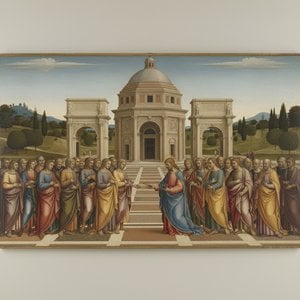
L'Architetto della Firenze Rinascimentale
Giuliano da Sangallo si erge come una figura monumentale del Rinascimento italiano, un architetto la cui visione ha plasmato il paesaggio culturale di Firenze e non solo. Più che un semplice costruttore, egli era un artigiano intriso di ideali classici, formatosi sotto l'egida di luminari come Leon Battista Alberti e Filippo Brunelleschi. La sua eredità risiede non solo nella grandezza delle sue strutture, ma anche nella trasmissione del sapere artistico attraverso le generazioni, influenzando profondamente maestri quali Raffaello e Leonardo da Vinci. Nato intorno al 1445 a Firenze, gli anni formativi di Giuliano furono segnati da un'educazione privilegiata grazie al padre, Francesco Giamberito, un abile intagliatore e architetto che servì sotto Cosimo de' Medici. Questo legame familiare fornì un accesso inestimabile al mecenatismo artistico e favorì una partnership duratura con Lorenzo de' Medici, un rapporto che avrebbe definito l'intera traiettoria della carriera di Sangallo.
Come molti aspiranti artigiani dell'epoca, Giuliano iniziò il suo apprendistato come legnaiolo, affinando le competenze fondamentali nella costruzione e nell'artigianato. Fondamentalmente, egli abbracciò gli ideali umanistici sostenuti da Alberti e Brunelleschi, immergendosi nello studio di testi antichi e precedenti architettonici. La sua ascesa verso la fama ebbe inizio con l'incarico affidatogli da Cosimo de' Medici per una villa fortificata, un progetto che mise in luce il suo nascente talento per l'architettura difensiva e consolidò la sua reputazione di formidabile ingegnere. Questo primo impegno stabilì un legame cruciale con Lorenzo il Magnifico, che sarebbe diventato il suo patrono più costante. Riconoscendo la versatilità di Sangallo, Lorenzo gli affidò progetti ambiziosi che andavano ben oltre le fortificazioni, permettendo all'architetto di intrecciare l'eleganza classica nella trama stessa dell'urbanistica fiorentina.
Maestria della Forma e Influenza Classica
L'opera di Giuliano da Sangallo è caratterizzata da una fusione perfetta di forza e grazia, un tratto distintivo dello stile del Rinascimento maturo. I suoi progetti cercavano spesso di far rivivere l'armonia matematica e la proporzione tipiche dell'antichità romana, pur rimanendo profondamente radicati nelle tradizioni locali della Toscana. Uno dei suoi contributi più celebrati è il progetto per la facciata di San Lorenzo a Firenze. Commissionato da Lorenzo de' Medici, questo progetto esemplifica la capacità dell'architetto di creare spazi che siano allo stesso tempo spiritualmente elevanti e strutturalmente profondi. Questa basilica, che ospita le vibranti vetrate di Ghirlandaio, si erge come testimonianza dell'influenza di Sangallo sull'innovazione artistica e della sua abilità nel coordinare diversi talenti artistici verso una visione singola e armoniosa.
Oltre alle strutture religiose, la maestria di Sangallo si estese alla creazione di ville e chiese che definirono l'estetica dell'epoca. Il suo lavoro su Santa Maria delle Carceri rimane un apice del suo successo architettonico, mostrando un uso sofisticato della geometria e dei motivi classici. La capacità dell'architetto di bilanciare i severi requisiti dell'ingegneria militare con la delicata bellezza del design residenziale gli permise di navigare tra le complesse esigenze della corte medicea. La sua influenza non fu meramente strutturale ma anche profondamente personale; attraverso suo fratello Antonio da Sangallo il Vecchio e i suoi figli, Antonio e Francesco, il linguaggio architettonico che egli contribuì a far nascere continuò a evolversi e a dominare il panorama europeo per decenni.
Un'Eredità Eterna nella Pietra e nello Spirito
L'importanza storica di Giuliano da Sangallo risiede nel suo ruolo di ponte tra le prime innovazioni di Brunelleschi e il raffinato classicismo del tardo Rinascimento. Fu una figura chiave che aiutò a tradurre le teorie intellettuali dell'umanesimo in monumenti tangibili e duraturi. L'opera della sua vita rappresenta un periodo in cui l'architettura smise di essere puramente funzionale per diventare un mezzo espressivo di potere politico, devozione religiosa e indagine filosofica.
Riflettere sul suo impatto significa considerare questi pilastri fondamentali della sua carriera:
- Il legame con i Medici: Il suo ruolo di architetto prediletto di Lorenzo il Magnifico, che gli permise di plasmare l'identità fisica dell'era medicea.
- Sintesi Architettonica: La riuscita integrazione dei principi classici teorici di Alberti con le tradizioni ingegneristiche pratiche di Firenze.
- Influenza Generazionale: L'istituzione di una dinastia familiare di architetti che portò il suo DNA stilistico nel XVI secolo.
- Trasformazione Urbana: Il suo contributo allo sviluppo sia di strutture difensive fortificate, sia di spazi religiosi e residenziali eleganti e luminosi.
Sebbene sia scomparso nel 1516, le pietre di Firenze continuano a pronunciare il suo nome. Ogni volta che uno spettatore contempla le proporzioni equilibrate di una facciata rinascimentale o percepisce l'armonia ritmica di un cortile classico, sta vivendo lo spirito eterno di Giuliano da Sangallo.
Domande e risposte
Posso studiare l'uso del colore di Giuliano Da Sangallo in tutte le sue opere?
Il Profilo Cromatico dell'Artista di Giuliano Da Sangallo è una pagina che presenta il profilo cromatico dell'intera produzione dell'artista.
Dove si possono trovare le opere di Giuliano Da Sangallo raggruppate per movimento artistico?
La pagina Tutti i movimenti raggruppa le opere di Giuliano Da Sangallo per movimento artistico.
È possibile visitare un museo virtuale delle opere di Giuliano Da Sangallo?
La Galleria 3D di Giuliano Da Sangallo è una pagina che presenta le opere dell'artista all'interno di una galleria virtuale tridimensionale.