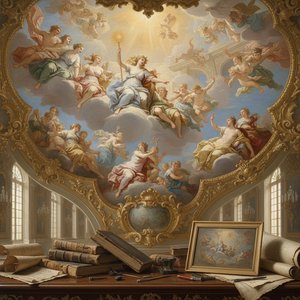
L'eredità veneziana di Giandomenico Tiepolo
Nel cuore luminoso della Venezia del diciottesimo secolo, un'epoca definita dallo splendore decadente del Rococò, Giandomenico Tiepolo emerse come un maestro sia del grande spettacolo che dell'intimo dramma umano. Nato nel 1727, la sua vita fu indissolubilmente intrecciata con la trama di una delle dinastie più formidabili della storia dell'arte. In quanto figlio del leggendario Giovanni Battista Tiepolo, Giandomenzione non ereditò semplicemente un nome; ereditò un linguaggio visivo fatto di luce, movimento e teatralità. Sebbene gran parte della sua prima carriera sia trascorsa all'ombra dei monumentali affreschi del padre, Giandomenico possedeva uno spirito creativo singolare che gli permise di trascendere la mera imitazione, conquistando infine una nicchia che fondeva la scala epica della sua stirpe con un'osservazione toccante, e spesso satirica, della vita veneziana.
Gli anni formativi dello sviluppo di Tiepolo furono caratterizzati da un profondo apprendistato all'interno degli stessi laboratori che decoravano i palazzi d'Europa. Lavorando al fianco del padre in progetti ambiziosi, come gli mozzafiato affreschi di Würzburg, Giandomenico padroneggiò le complessità tecniche della composizione su grande scala e l'innovativa tecnica dello "schizzo a olio". Questo metodo, che permetteva una cattura più fluida e spontanea dell'emozione, divenne una pietra miliare del suo approccio. Attraverso queste collaborazioni, imparò a manipolare la luce per creare profondità e dramma, ma iniziò anche a sviluppare un interesse per soggetti molto più piccoli e delicati, che si distaccavano dai miti eroici prediletti dalla generazione precedente.
Una maestria di movimento e carattere
Man mano che la sua identità artistica maturava, l'opera di Giandomenico iniziò a mostrare una affascinante dualità. Da un lato, mantenne la grande tradizione dell'arte decorativa veneziana, contribuendo significativamente ad opulenti interni come quelli presenti nella Villa Valmarana a Vicenza. Dall'altro, rivolse lo sguardo verso le strade e i teatri di Venezia, trovando ispirazione nella Commedia dell'arte. È in questo ambito che risiede la sua immaginazione più duratura ed evocativa, specificamente nella sua celebre serie dedicata a Arlecchino (Punchinello). Attraverso questi personaggi, Tiepolo si allontanò dal divino e dal mitologico per esplorare il bizzarro, il grottesco e l'intrinsecamente umano.
La sua abilità tecnica non si limitava al pennello; era anche un dotato incisore, utilizzando il mezzo per esplorare linee sottili e texture atmosferiche. Questa versatilità gli permise di catturare un ampio spettro di temi:
- Devozione religiosa: Opere come L'agonia nell'orto dimostrano la sua capacità di gestire una profonda tensione spirituale con grazia classica.
- Fantasie architettoniche: Le sue raffigurazioni di strutture immaginarie, come la Veduta del padiglione gotico, mostrano una maestria della prospettiva e una visione romantica della grandezza architettonica.
- Satira sociale: Attraverso le sue incisioni, catturò l'essenza fuggevole e spesso malinconica della società veneziana, usando maschere e burattini per rispecchiare le complessità dell'identità umana.
Significato storico e spirito eterno
Il significato storico di Giandomenico Tiepolo risiede nel suo ruolo di ponte tra le vette vertiginose dell'era Barocco-Rococò e gli stili più introspettivi e osservativi che sarebbero seguiti. Mentre portava avanti la torcia del monumentalismo paterno, egli anticipò anche lo spostamento verso un realismo più psicologico e sociale. La sua capacità di oscillare tra la scala epica di un affresco palaziale e l'arguta intimità di uno studio di carattere rende la sua opera una finestra unica sull'anima della Venezia tardo settecentesca.
In definitiva, l'eredità di Tiepolo è fatta di profonda adattabilità e profondità emotiva. Egli non si limitò a replicare la gloria del passato; la reinterpretò attraverso una lente di osservazione contemporanea. Che sia attraverso le ampie narrazioni della sua formazione iniziale o le pungenti e bellissime incisioni degli anni successivi, Giandomenico Tiepolo rimane una figura vitale la cui opera continua a affascinare con il suo connubio di magia teatrale e tenera umanità.
Domande e risposte
Esiste una linea del tempo delle opere di Giandomenico Tiepolo?
Le opere di Giandomenico Tiepolo possono essere visualizzate in ordine cronologico nella pagina Cronologia opere dell'artista.
In quale città e in quale paese è nato/a Giandomenico Tiepolo?
Giandomenico Tiepolo è nato a Venezia, in Italia.
Dove si trovano le opere di Giandomenico Tiepolo organizzate per colore?
Le opere di Giandomenico Tiepolo possono essere esplorate per colore nella pagina Indice Spettrale dell'artista.
Come si è evoluta l'arte di Giandomenico Tiepolo nel tempo?
La carriera di Giandomenico Tiepolo si svela periodo dopo periodo nella pagina Cronologia: una linea temporale orizzontale delle opere, raggruppate in capitoli relativi ai vari periodi della sua carriera.
Dove si trovano le opere di Giandomenico Tiepolo raggruppate per palette?
Per trovare le opere di Giandomenico Tiepolo in una specifica palette, consulta la pagina Per palette dell'artista.
Dove posso vedere il profilo cromatico delle opere di Giandomenico Tiepolo?
Il profilo cromatico delle opere di Giandomenico Tiepolo è visualizzabile nella pagina Genoma della Palette dell'artista.
Come posso trovare le opere di Giandomenico Tiepolo su un tema specifico?
Le opere di Giandomenico Tiepolo possono essere esplorate tramite parole chiave nella pagina Per parole chiave dell'artista. Ogni parola chiave raggruppa le opere correlate.
Con quali altri nomi è noto Giandomenico Tiepolo?
Giandomenico Tiepolo compare con i nomi alternativi Giovanni Domenico Tiepolo.