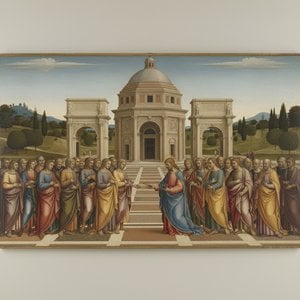
L'Enigmatico Maestro del Crepuscolo Umbro
Nell'età dell'oro del Rinascimento italiano, mentre nomi come Perugino e Pinturicchio dominavano i palcoscenici più illustri della storia, un genio più sottile e profondo stava plasmando silenziosamente l'anima estetica di Perugia. Fiorenzo Di Lorenzo (ca. 1445–1522) rimane uno degli enigmi più affascinanti della scuola umbra. Sebbene il leggendario biografo Giorgio Vasari non abbia offerto grandi elogi diretti, la trama stessa dell'arte dell'epoca porta il suo inconfondibile marchio. Studiare Fiorenzo significa scrostare gli strati di un periodo definito dalla transizione, scoprendo un artista che non si limitò a seguire le tendenze, ma fornì il vocabolamento fondamentale per i maestri che lo avrebbero seguito.
La giovinezza di Fiorenzo Di Lorenzo è avvolta nelle morbide nebbie del XV secolo. Sebbene i registri precisi della sua nascita e della sua formazione siano elusivi, la sua presenza a Perugia è innegabile. Era un uomo profondamente inserito nella vita civile e spirituale della sua città; i documenti storici rivelano persino che prestò servizio come decemvir nel 1472, suggerendo una figura di significativa rilevanza sociale e responsabilità. Questo legame con il cuore della società umbra gli fornì probabilmente il patrocinio necessario per coltivare uno stile che fosse allo stesso tempo profondamente devozionale e tecnicamente sofisticato. Sebbene non si possa indicare con assoluta certezza la bottega di un maestro specifico, gli echi stilistici presenti nelle sue prime opere suggeriscono che egli abbia respirato la stessa aria creativa di Benedetto Bonfigli, assorbendo le tradrazioni locali di chiarezza e grazia che sarebbero diventate il suo tratto distintivo.
Uno Stile Definito dalla Risonanza Emotiva
Ciò che distingue veramente Fiorenzo dalla grazia più celebre e spesso più "affettata" del suo contemporaneo Perugino è un palpabile senso di intensità umana. Laddove altri cercavano un distacco sereno, quasi etereo, l'artista perseguiva una profondità espressiva che radicava i suoi soggetti religiosi in una realtà tangibile. La sua maestria nello spazio e nella luce gli permise di creare composizioni che risultavano allo stesso tempo monumentali e intime. Nelle sue mani, il sacro non era distante; era presente, pulsante di un carattere che risuonava con un profondo potere emotivo.
La sua perizia tecnica è più evidente nel trattamento della tempera su tavola, un medium che richiede un'immensa disciplina per raggiungere la luminosità. La sua opera, sebbene composta da circa cinquanta opere superstiti, mostra una straordinaria versatilità nei soggetti:
- La Madonna del Raccomandato (1476): Un capolavoro luminoso che funge da una delle sue firme più vitali, dimostrando un precoce dominio della luce e di una tenera emozione materna.
- L'Adorazione dei Magi (ca. 1490): Una composizione più grande e complessa che evidenzia la sua capacità di organizzare ampi gruppi di figure all'interno di uno spazio coerente e architettonicamente solido.
- Pale d'altare e Retabli: Il suo lavoro per chiese come Santa Maria Nuova mostra la sua abilità nel formato del polittico, dove utilizzava intricate predelle e lunette per intrecciare complesse narrazioni teologiche.
Eredità e Significato Storico
La vera misura dell'importanza di Fiorenzo Di Lorenzo non risiede nella quantità delle sue tele superstiti, ma nella sua profonda influenza sulla traiettoria del Rinascimento umbro. È ampiamente accettato dagli studiosi che le prime opere sia di Perugino che di Pinturicchio contengano manierismi e sfumature stilistiche che rimandano direttamente all'influenza di Fiorenzo. Egli agì come un ponte vitale, traducendo le rigide strutture del primo Quattrocento nel linguaggio più fluido ed emotivo del Rinascimento maturo. Fu l'architetto silenzioso di un movimento estetico, fornendo l'impalcatura tecnica su cui i grandi maestri costruirono la propria fama.
Oggi, gran parte della sua eredità è preservata nelle sale sacre della Galleria Nazionale dell'Umbria. Stare di fronte a un originale di Fiorenzo significa testimoniare un momento in cui lo spirituale e l'umano confluirono con un'unicità senza pari. Egli rimane una testimonianza dell'idea che la grandezza non richieda sempre la voce più forte, ma piuttosto la visione più duratura: un pittore che, attraverso la sua maestria nel carattere e nello spazio, ha contribuito a definire l'essenza stessa del Rinascimento italiano.
Domande e risposte
Dove posso vedere tutte le opere di Fiorenzo Di Lorenzo?
Tutte le opere di Fiorenzo Di Lorenzo presenti su questo sito web sono consultabili nella pagina Tutte le opere dell'artista.
Posso sfogliare le opere di Fiorenzo Di Lorenzo in base all'umore?
Le opere di Fiorenzo Di Lorenzo possono essere esplorate per emozione nella pagina Spazi d'atmosfera, dove le opere sono raccolte in base al mood che trasmettono.
Quali opere di Fiorenzo Di Lorenzo sono le più visualizzate?
È disponibile una pagina Statistiche dedicata a Fiorenzo Di Lorenzo, che presenta le statistiche relative alle sue opere su questo sito web.