Charles Gibbons
Charles Gibbons emerged onto the Canadian art landscape in Montreal during the latter half of the 1950s, driven by an unwavering fascination for visual expression—a passion that would propel him to become a prominent figure within the realm of abstract expressionism. Details concerning his formative years remain elusive, yet it’s clear that early exposure to artistic principles laid the groundwork for his distinctive style.Artistic Style and Influences
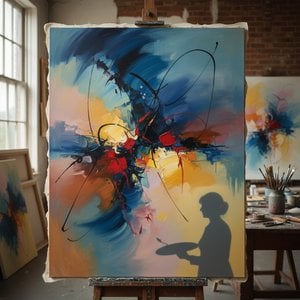
Gibbons' oeuvre is characterized by an arresting fusion of boldness and dynamism. His canvases pulsate with energetic brushstrokes—a hallmark of abstract expressionism—against a backdrop of vibrant color palettes, often dominated by hues that evoke emotion and movement. This stylistic approach finds its roots in the pioneering works of artists like Willem de Kooning and Jackson Pollock, whose techniques championed spontaneity and gesture as conduits for conveying inner experience. Notably, Gibbons’ artistic sensibilities resonate with the ethos of heimo zobernig's untitled (200 x 200 cm), a piece that embodies the movement’s commitment to stripping away representational constraints in favor of pure visual sensation. The influence of Rothko and Still is palpable—Gibbons’ canvases aspire to achieve similar meditative depths, mirroring their masterful use of color fields to induce contemplation.Notable Works and Exhibitions
While comprehensive documentation of Gibbons' exhibitions remains sparse, his artwork has gained recognition through online platforms such as ArtsDot.com, where a curated selection showcases his expressive abstract expressionist pieces. These works—particularly reminiscent of Clyfford Still’s ph-1007—demonstrate Gibbons’ dedication to exploring the complexities of form and color, pushing boundaries within the broader context of modern art. His artistic vision continues to inspire younger artists, mirroring the impact of Yoo Youngkuk's "Morning," which captivates viewers with its serene yet profound aesthetic qualities.Legacy and Future Directions
Despite limited biographical information, Gibbons’ contribution to Canadian art history is undeniable. He stands as a testament to the enduring power of abstract expressionism—a movement that continues to challenge conventions and provoke dialogue about artistic interpretation. As contemporary art evolves, it will be fascinating to observe how Gibbons' distinctive style adapts to emerging trends and expands upon his foundational explorations of color and gesture.Conclusion
Charles Gibbons’ artistic journey represents a significant chapter in Canadian visual culture. Through his uncompromising pursuit of expressive abstraction—informed by the legacies of masters like Rothko and Still—Gibbons has solidified his position as an artist who champions emotional resonance and invites viewers to engage in a contemplative encounter with art. His work remains a beacon for artists seeking to transcend representational limitations and embrace the transformative potential of pure visual language.Domande e risposte
A quale periodo storico appartiene l'opera di Charles Gibbons?
Charles Gibbons ha operato nel periodo Contemporaneo, collocando storicamente la sua attività.
Posso sfogliare le opere di Charles Gibbons in base alla palette di colori?
Per trovare le opere di Charles Gibbons raggruppate per una specifica palette, consulta la pagina Per palette di colori dell'artista.
Dove posso esplorare le opere di Charles Gibbons suddivise per soggetto?
La pagina Catalogo per soggetti permette di esplorare le opere di Charles Gibbons suddivise per soggetto.