


 Anteprima in scala reale
 Condividi
 Condividi
 Dettagli
 Guida stampabile

 Scarica
 Articoli simili
 Radiografia
 Slideshow
 Statistiche
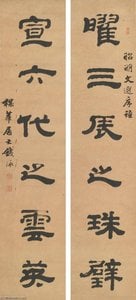
COUPLET IN SEAL SCRIPT
 Traditional Chinese Art
 138.0 x 34.0 cm
 Leggi tutto
Acquista un'immagine digitale ad alta risoluzione e ottimizzata, di qualità nettamente superiore all'anteprima online.
Ogni file è meticolosamente preparato dai nostri specialisti interni attraverso l'uso di strumenti avanzati e un sapiente ritocco manuale. Garantiamo che ogni immagine presenti una chiarezza eccezionale, una precisione cromatica impeccabile e dettagli raffinati.
Il file finale viene consegnato via e-mail entro 72 ore, ottimizzato per un uso immediato in contesti professionali, editoriali e di stampa. Si tratta della stessa qualità affidata ai più prestigiosi studi di design, editori e gallerie d'arte.
Immagine Digitale
Scarica un file ad alta risoluzione per uso personale, per la stampa e per progetti creativi. ( Passa alle stampe Ordina la riproduzione dipinta a mano)
Incluso in ogni acquisto di immagini digitali
Consegna digitale professionale e garantita
Quando scegli ArtsDot.com, non riceverai solo un'immagine: riceverai un'opera d'arte digitale professionalmente ottimizzata, realizzata con la massima precisione e accompagnata da una garanzia di soddisfazione. Ecco tutto ciò che include il tuo ordine, automaticamente:

Consegna rapida via email
Riceverai il file dell'immagine digitale ad alta risoluzione via email entro 72 ore dall'ordine, pronto per un uso immediato.

File digitale potenziato dall'IA
La tua opera d'arte viene ottimizzata professionalmente attraverso l'uso di strumenti avanzati di intelligenza artificiale e una revisione manuale, garantendo il massimo livello di dettaglio, nitidezza e accuratezza cromatica.

Riconsegna gratuita a vita
Hai eliminato o perso accidentalmente il tuo file? Non preoccuparti: te lo invieremo di nuovo in qualsiasi momento, gratuitamente.

Nessun costo di importazione, mai
Goditi la tua opera d'arte istantaneamente senza costi doganali, dazi o spese di spedizione: i download digitali sono sempre esenti da tasse.

Garanzia di fedeltà cromatica
Garantiamo che la tua immagine digitale rifletta i colori originali con la massima fedeltà, grazie all'uso di strumenti professionali e a una gestione accurata del colore.

Garanzia soddisfatti o rimborsati 100 giorni
Se non sei soddisfatto della tua immagine digitale, la revisioneremo o ti rimborseremo il 100% entro 100 giorni, senza domande.

Garanzia di rimborso al 100%
Non sei soddisfatto? Ricevi un rimborso completo entro 100 giorni dal ricevimento del tuo file digitale, senza dover fornire spiegazioni.

Sconti per ordini multipli
Acquista 3 immagini, risparmia il 10% - Acquista 5, risparmia il 15% - Acquista 10+, risparmia il 20%. Ideale per progetti creativi, gallerie e agenzie.
Opere correlate




Biografia dell'artista
A Life Etched in Ink: The World of Yang Yisun
Yang Yisun (1813-1881), a name perhaps unfamiliar to many outside the circles of dedicated Chinese art scholars, represents a pinnacle of achievement within the tradition of *seal script calligraphy*. He wasn’t merely a calligrapher; he was a scholar-official deeply immersed in the revival of classical forms, a collector with discerning taste, and an artist who imbued his work with both technical mastery and profound personal meaning. Born into a family of modest means in Anhui province, Yang Yisun's early life foreshadowed little of the artistic renown that would later define him. He passed the imperial examinations, securing a position within the government bureaucracy – a path typical for aspiring intellectuals of his era. However, it was not official duties but an insatiable passion for antiquity and calligraphy that truly consumed him.The Revivalist’s Path: Influences and Early Development
Yang Yisun emerged during a period of burgeoning interest in epigraphy – the study of ancient inscriptions – fueled by the scholarly pursuits of the Qing dynasty. The Jiaqing Emperor's promotion of orthodox Confucianism created an environment ripe for re-examining historical models, and Yang Yisun wholeheartedly embraced this movement. He wasn’t content with simply copying past masters; he sought to *understand* the underlying principles that governed their brushwork, the very spirit of the characters themselves. His early studies focused on the bronze inscriptions of the Zhou dynasty, particularly those found on ritual vessels. These archaic forms, known as *zhuanshu*, captivated him with their solemnity and inherent power. He believed they held a direct connection to the origins of Chinese culture, embodying a purity lost in later, more stylized scripts. Influenced by epigraphers like Luo Zhenyu, Yang Yisun dedicated himself to meticulously recreating these ancient characters, not as mere reproductions but as living expressions of historical consciousness.Mastering the Seal: Technique and Artistic Philosophy
Yang Yisun’s technical skill was exceptional. He possessed an uncanny ability to replicate the textures and nuances of bronze inscriptions using brush and ink on paper. However, his artistry extended far beyond mere imitation. He understood that *zhuanshu* wasn't simply about form; it was about rhythm, balance, and the expressive potential of line. His calligraphy is characterized by a remarkable solidity – each character feels grounded, substantial, yet imbued with a subtle energy. The brushwork is deliberate, controlled, but never rigid. He employed a variety of ink tones, creating depth and visual interest within each inscription. More importantly, Yang Yisun believed that calligraphy should reflect the inner state of the artist. His work wasn’t simply decorative; it was a form of self-cultivation, a means of expressing his moral principles and philosophical beliefs. He often inscribed poems and prose passages alongside his *zhuanshu* compositions, further enriching their meaning and context.A Legacy in Stone and Ink: Major Achievements
While Yang Yisun produced numerous works throughout his career – paintings, poetry, and extensive collections of rubbings from ancient inscriptions – he is best known for his *seal script calligraphy*. His compositions were highly sought after by collectors and connoisseurs. He was commissioned to create inscriptions for steles (stone tablets) in temples and gardens, ensuring that his artistry would endure beyond his lifetime.- The Chung Young Yang Museum Collection: Today, the most comprehensive collection of Yang Yisun’s work resides at the Chung Young Yang Museum in Seoul, South Korea, founded by his descendants. This museum provides invaluable insight into the breadth and depth of his artistic achievements.
- Rubbing Expertise: His meticulous rubbings from ancient bronze vessels are considered benchmarks for accuracy and artistry, providing scholars with crucial resources for studying epigraphy.
- Influence on Later Generations: Yang Yisun’s dedication to the revival of *zhuanshu* inspired a generation of calligraphers to re-examine classical forms. His work helped to elevate the status of seal script calligraphy within the broader landscape of Chinese art.
