


 Anteprima in scala reale
 Condividi
 Condividi
 Dettagli

 Scarica immagine
 Articoli simili
 Radiografia
 Slideshow
Roadside Stand, vicinity Birmingham, Alabama
 Acrylic On Canvas
- WallArt
- Documentary Photography
 1971
1971 24.0 x 19.0 cm
 George Eastman Museum
 Leggi tutto
Riproduzione a olio fatta a mano
Olio su tela dipinto a mano nelle tue dimensioni e con la tua cornice, realizzato su ordinazione dai nostri artisti. ( Ordina stampa Acquista download)




P118B $10

P118H $10

P118W $10

P438Z $10

P508JH $12

P508YH $12

P805H $10

P805Z $10

P919BZ $10

P919G $10

P919XJ $10

P959ZH $10

P968JZ $12

W106C $8

W218G $10

W218JH $8

W218Y $10

W307PJ $10

W316G $10

W316PJ $8

W316Y $10

W398PJ $8

W4111J $10

W500HY $15

W500JH $15

W692G $12

W849H $8

W940BG $15

W953PJ $8




Scegli tra le nostre dimensioni predefinite, che rispettano le proporzioni originali dell'opera d'arte.

È possibile inserire dimensioni personalizzate per adattare l'opera a una cornice o a uno spazio specifico. Se la dimensione selezionata non corrisponde alle proporzioni dell'immagine originale, provvederemo a ritagliare l'opera o a estendere il dipinto con elementi aggiuntivi dipinti a mano. Un mockup digitale ti sarà inviato per approvazione prima dell'inizio della produzione.
Si prega di notare che l'anteprima a schermo non riflette il ritaglio o l'estensione effettivi. Solo il mockup mostrerà accuratamente la composizione finale.
Sebbene siano disponibili dimensioni personalizzate, consigliamo di selezionare una dimensione dall'elenco predefinito per preservare le proporzioni originali.
Dopo l'ordine, il team di ArtsDot.com contatterà il cliente via e-mail per le istruzioni e fornirà un'anteprima del mockup
Consegna in tutto il mondo () in 3/4 settimane anziché nelle normali 5 settimane. (16 Agosto). Nessun compromesso sulla qualità.

Spedizione espressa gratuita in tutto il mondo

Tela in lino di alta qualità

Assicurazione completa sulla spedizione

Garanzia di rimborso dei dazi doganali

Garanzia di fedeltà cromatica dell'originale

Politica di reso entro 60 giorni (solo per difetti di fabbricazione)

Garanzia di rimborso al 100%

Sconto per acquisti multipli
 L'opzione vetro è disponibile solo per dimensioni inferiori a 110 cm

Roadside Stand, vicinity Birmingham, Alabama
Tecnica di riproduzione
Dimensioni della riproduzione
-


Prezzo totale
$ 288
Descrizione dell'opera
A Snapshot of Resilience: Examining Walker Evans’s “Roadside Stand”
Walker Evans's "Roadside Stand, vicinity Birmingham, Alabama," produced in 1971, transcends mere documentation; it embodies a profound meditation on American identity during the twilight years of the Depression era. Captured with masterful precision using a large format camera – a deliberate choice reflecting Evans’s commitment to capturing nuanced detail – the photograph presents a deceptively simple tableau: a weathered storefront displaying fish alongside two men diligently tending their trade in rural Alabama. Yet, within this unassuming scene lies an astonishing wealth of observation and symbolic resonance. The image's stylistic hallmark is undeniably documentary photography, prioritizing authenticity over idealized representation. Evans eschewed artistic embellishment, favoring instead a direct engagement with the subject matter—a conscious rejection of prevailing trends toward painterly abstraction that dominated the art world of his time. This approach aligns perfectly with Evans’s broader philosophical stance: he sought to portray America as it *was*, confronting its hardships and vulnerabilities without resorting to sentimental glossing over. The muted palette – predominantly shades of gray punctuated by subtle highlights – contributes significantly to this atmosphere of understated solemnity, mirroring the pervasive sense of economic hardship that gripped the nation during the period. Technically speaking, Evans utilized a large format camera, allowing for exceptional sharpness and tonal range—crucial elements in conveying the textures and subtleties of the Alabama landscape and its inhabitants. The meticulous printing process ensured that every nuance of light and shadow was faithfully reproduced, preserving the photograph's inherent realism. Lines dominate the composition, delineating the building’s structure and guiding the viewer’s gaze across the frame. Geometric shapes—rectangular signage and rounded fish illustrations—create a visual rhythm that reinforces the image’s stability and quiet dignity. Beyond its aesthetic qualities, “Roadside Stand” speaks powerfully to the historical context of its creation. Produced in 1935-1937 during Evans's involvement with the Farm Security Administration (FSA), the photograph served as part of a larger effort to document the plight of American farmers struggling amidst the Great Depression. The FSA’s mission was not merely to record hardship but to foster empathy and understanding—a goal Evans admirably achieved through his unflinching portrayal of rural Alabama life. The inclusion of two men diligently displaying their wares symbolizes perseverance and industriousness, embodying the spirit of resilience that characterized the era. Furthermore, the fish itself functions as a potent symbol – representing sustenance, livelihood, and ultimately, hope amidst despair. Ultimately, “Roadside Stand” remains an enduring testament to Evans’s artistic vision and his unwavering dedication to capturing the essence of American experience. Its quiet beauty resides not in grand gestures but in meticulous observation—a reminder that profound insight can be found within the most unassuming corners of our world. It continues to inspire artists and designers alike, prompting contemplation on themes of authenticity, resilience, and the enduring power of visual storytelling.Opere correlate


Biografia dell'artista
A Witness to America: The Life and Legacy of Walker Evans
Walker Evans, born in St. Louis in 1903, emerged as a pivotal figure in American photography, his name inextricably linked with the visual record of the Great Depression & everyday life with stark realism. Yet to define him solely by this period would be to diminish the breadth of his artistic vision and enduring influence. His journey was one of constant exploration, evolving from literary aspirations to a uniquely observant photographic style that captured not just *what* America was, but *how* it felt – its quiet dignity, its stark realities, and its often-overlooked beauty. Evans’s upbringing, marked by frequent moves between cities like Toledo, Chicago, and New York, instilled in him an early awareness of the diverse facets of American life. Though educated at prestigious institutions like Phillips Academy Andover and briefly at Williams College, his true education unfolded through self-directed study and immersion in the cultural currents of the time. A year spent in Paris in 1926 exposed him to European artistic trends, but it was upon his return to New York that he discovered his calling, initially as a writer before turning decisively towards photography around 1928.Forging a Documentary Vision
The early influences on Evans’s photographic approach were profound. He admired the meticulous documentation of Eugène Atget, whose images of Parisian streets felt both timeless and immediate, and August Sander, whose portraits aimed for an objective cataloging of German society. Equally important were literary figures like T.S. Eliot, D.H. Lawrence, James Joyce, and e.e. cummings – writers who valued precision of language and a keen observation of the human condition. These influences coalesced in Evans’s developing aesthetic: a commitment to clarity, directness, and an avoidance of sentimentality. This approach found its most powerful expression during his tenure with the Farm Security Administration (FSA) beginning in 1935. Tasked with documenting the effects of the Depression on rural communities in the Southern United States, Evans traveled extensively, capturing images that became iconic representations of hardship and resilience. His collaboration with writer James Agee on *Let Us Now Praise Famous Men* (1941), a groundbreaking work combining stark photographs with lyrical prose depicting three tenant farming families in Alabama, remains a cornerstone of documentary literature and photography. Though initially rejected by *Fortune* magazine for its length and unconventional style, the project stands as a testament to their shared commitment to portraying the lives of ordinary people with honesty and empathy. Evans’s use of an 8x10 view camera contributed significantly to his distinctive style; the large format yielded images of exceptional detail and formal clarity, lending a sense of timelessness to his subjects.Early Influences & Literary Roots
Evans’ fascination with photography began early in life, fueled by a childhood spent moving between cities—Toledo, Chicago, and New York—where he absorbed diverse cultural influences. He attended Phillips Academy Andover and Williams College, honing his intellectual curiosity alongside developing artistic sensibilities. Notably, Evans was deeply moved by the writings of T.S. Eliot, D.H. Lawrence, James Joyce, and e.e. cummings, writers who championed precision of language and a contemplative engagement with human experience—values that would permeate his photographic practice. His admiration for Eugène Atget’s Parisian streetscapes instilled in him a desire to capture the essence of everyday life with unwavering honesty. Similarly, August Sander's portraits inspired Evans to strive for objectivity and cataloging, reflecting a broader interest in representing society accurately.The FSA Years: Defining Documentary Photography
Evans’ career took its most significant turn when he accepted a position with the Farm Security Administration (FSA) in 1935—a pivotal moment that cemented his reputation as America's foremost documentarian. Assigned to chronicle the plight of rural Americans during the Great Depression, Evans embarked on extensive journeys across the Southern United States, utilizing an 8x10 view camera to produce images that transcended mere representation and achieved a profound aesthetic resonance. His collaboration with James Agee on *Let Us Now Praise Famous Men* resulted in a literary masterpiece alongside his photographic work—a testament to their shared dedication to portraying ordinary individuals with compassion and unflinching truthfulness. The FSA’s rejection of Agee's lengthy manuscript underscored Evans’ commitment to distilling complex narratives into concise visual statements.Beyond FSA: Portraits & Aesthetic Exploration
Following his tenure with the FSA, Evans continued to refine his artistic vision—embracing color photography in the 1960s and exploring architectural spaces and urban landscapes with understated elegance. He utilized Polaroid cameras to capture spontaneous moments of street life, demonstrating a willingness to challenge conventional photographic conventions and delve into new avenues for artistic expression. His work consistently prioritized clarity, directness, and formal precision—qualities that profoundly influenced subsequent generations of photographers. Evans’ legacy extends far beyond his iconic FSA images; he established a new standard for realism in photography and inspired artists to observe the world with discerning eyes. ## Notable Achievements & Recognition Walker Evans achieved considerable acclaim throughout his career, earning three Guggenheim Fellowships and becoming a member of the National Institute of Arts and Letters. His photographs were exhibited extensively—most notably at the Museum of Modern Art’s landmark retrospective in 1938—establishing him as one of the most influential figures in American photography history. Evans's work continues to inspire artists today, reminding us of the transformative power of visual storytelling and the enduring beauty found within the commonplace.
Walker Evans
1903 - 1975 , Stati Uniti d'America
Informazioni rapide
- Artistic Movement Or Style: Documentary photography
- Artists Who Influenced This Artist:
- August Sander
- Eugène Atget
- Date Of Birth: 1903
- Full Name: Walker Evans III
- Nationality: American
- Notable Artworks:
- Let Us Now Praise Famous Men
- Silverware
- Place Of Birth: St. Louis, USA
Articoli correlati

I 10 Capolavori della Fotografia Documentaria che Hanno Fatto Storia |
Esplora i 10 capolavori della fotografia documentaria che hanno cambiato la storia dell'arte. Scopri le storie, gli artisti e le emozioni dietro queste icone fotografiche. Stampe artistiche di alta qualità su .

Beyond the Lens: Photography's Enduring Influence on Modern & Contemporary Art
Explore photography's pivotal role in shaping modern & contemporary art. Discover key movements, influential artists like Stieglitz, and expert collecting advice from ArtsDot.

Monochrome Visions: Exploring the Aesthetic & Historical Significance of Black & White Photography
Explore the rich history & artistic power of black and white photography. From early techniques to iconic masters like Ansel Adams, discover why monochrome continues to captivate art lovers today. Expert insights for collectors.

Pictorialism: A Search for Artistic Photography's Soul – Aesthetics, Techniques & Legacy
Explore the captivating world of Pictorialism – a pivotal movement that transformed photography into fine art. Discover key artists like Stieglitz & Käsebier, techniques, and collecting tips from experts.
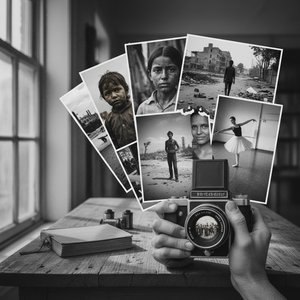
Witnessing History: Documentary Photography as an Art Movement
Explore the powerful history of documentary photography – from its origins to contemporary masters like Gordon Parks. Discover how this art form shapes our understanding of society and witness pivotal moments in time.

