

- 118.0 x 185.0 cm


The picture follows your choices: , .
Descrizione del reperto
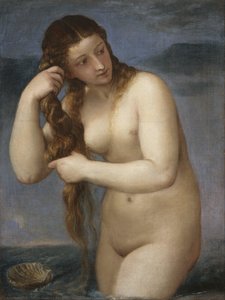
Experience the captivating 'Venus Blindfolding Cupid' by Titian! This iconic Renaissance masterpiece, housed in Rome, showcases vibrant colors and mythological drama. Explore its history & artistic brilliance.
 Espandi i dettagli
Biografia dell'artista
Tiziano Vecellio, il gigante della pittura veneziana e del Rinascimento italiano, rivoluzionò l'uso del colore con opere immortali come Venere Urbino e la Scuola Grande dei Maestri.
Riproduzione a olio fatta a mano
Olio su tela dipinto a mano nelle tue dimensioni e con la tua cornice, realizzato su ordinazione dai nostri artisti. ( Passa alle stampe Passa all'immagine digitale)
More about this painting
 Anteprima in scala reale
 Invia
Invia Condividi
 Dettagli opera
 Guida
Guida

 Scarica
 Simili
 Radiografia
 Slideshow
 Q&A
Q&A Statistiche
Order your painting in four simple steps
Take your time. You can change any answer; the price in your order card follows each choice.
1 Step one of four
Which size would you like?
These sizes keep the proportions of the original painting. The drawing shows your choice on a wall, above a two-metre sofa.
Or give your own measurements
Scegli tra le nostre dimensioni predefinite, che rispettano le proporzioni originali dell'opera d'arte.

Inserisci la larghezza e l'altezza desiderate, per adattarle alla tua cornice o alla tua parete. Trattandosi di un'opera dipinta a mano, in caso di dimensioni con un formato differente, l'artista può estendere leggermente il dipinto oltre i bordi dell'immagine o ritagliare una piccola parte — la scelta spetta a te. Ti invieremo un mockup digitale da approvare prima che la realizzazione abbia inizio. L'immagine mostrata in questa pagina non rappresenta il risultato finale — solo il mockup lo fa.
2 Step two of four
How should it be prepared: rolled, stretched or framed?
The prices below are for the size you chose in step one.
Choose the edges of the stretched canvas
Choose your frame

White €1

Blurside €1

Extended €1

P118B €10

P118H €10

P118W €10

P438Z €10

P508JH €12

P508YH €12

P805H €10

P805Z €10

P919BZ €10

P919G €10

P919XJ €10

P959ZH €10

P968JZ €12

W106C €8

W218G €10

W218JH €8

W218Y €10

W307PJ €10

W316G €10

W316PJ €8

W316Y €10

W398PJ €8

W4111J €10

W500HY €15

W500JH €15

W692G €12

W849H €8

W940BG €15

W953PJ €8

H24-GOLD €30

H24-SILVER €30

H36-GOLD €45

H36-SILVER €45
Con cornice
Moulding: . Overall size with the frame: .
3 Step three of four
Would you like anything changed in the painting?
Most people answer no. Because each painting is made by hand, our artist can also adapt it for you.
After order, ArtsDot.com team will email client for instructions and provide a mockup preview
4 Step four of four
A few finishing options
All of them are optional. The answers already selected cost nothing extra.
Who paints it?
Consegna in tutto il mondo () in 3/4 settimane anziché nelle normali 5 settimane. (2 Novembre). Nessun compromesso sulla qualità.
A nameplate, as in a museum?
Dettagli della targhetta in bronzo inciso
This elegant plaque features the artist's name and the title of the artwork, finely engraved for a timeless presentation.
It is made from bronze with a refined, elegant finish. The text is precisely laser-engraved for a sharp and permanent result. Measuring 9x2 cm, the plaque is compact yet easy to read. It's built to be durable and scratch-resistant, offering a professional, museum-quality look. Mounting is simple thanks to the included adhesive backing.
Dettagli della targhetta in acrilico trasparente
The plaque includes essential engraved details such as the artist's name, the title of the artwork, the date it was created, the type of media used-like oil on canvas or watercolor-a brief description of the piece, and a QR code that links to the complete artwork information.
It is crafted from clear acrylic, offering a sleek, modern appearance. The text is UV-engraved in black to ensure strong visual contrast. With a size of 10x15 cm, it ensures optimal readability. It comes equipped with two metal hooks for secure wall mounting. The plaque is designed to be weather-resistant, making it suitable for various environments, and it includes interactive features that work seamlessly with smartphone scanning.
Dettagli della targhetta in acrilico nero
This elegant plaque includes engraved information such as the artist's name, the title of the artwork, the date it was created, the type of media used (like oil on canvas or watercolor), a short description of the artwork, and a QR code for quick access to more information.
The plaque itself is made from refined black acrylic with a premium finish. The text is laser-engraved in white for high contrast and readability. Its size is 10x15 cm, designed to be easy to read. It comes with two metal hooks for professional mounting. The design is sleek and fits any interior style. It is also weather-resistant and durable, with built-in digital integration for mobile compatibility.
A protective varnish?
When do you need it?
✓ Check and order
Your painting, as you ordered it

Venus Blindfolding Cupid
Tecnica di riproduzione
Dimensioni riproduzione
-

Artisti di alto livello
Maggiore dettaglio, finezza e tempi di produzione dedicati
-

Cornice per riproduzione
-
-
Per opere d'arte o riproduzioni con un lato superiore a 105 cm (circa 41 pollici), la cornice verrà spedita in forma di kit smontato. Questo metodo garantisce una consegna sicura e previene danni durante il trasporto.
Montaggio professionale richiesto - non è un prodotto fai-da-te.
Il kit deve essere assemblato e la tela tesa da un esperto cornice professionista, utilizzando colla per legno (non inclusa), una pinza per tendere la tela e morsetti per mantenere i listelli in squadra durante l'asciugatura della colla. Un montaggio errato o una tensione non uniforme della tela possono danneggiare permanentemente l'opera d'arte e non sono coperti dalla nostra garanzia.
 Per opere d'arte o riproduzioni con un lato superiore a 105 cm (circa 41 pollici), la cornice verrà spedita in forma di kit smontato. Questo metodo garantisce una consegna sicura e previene danni durante il trasporto.
Tutte le barre in legno massello sono incluse, tagliate con precisione alle dimensioni corrette.
Da assemblare con le viti fornite e con la colla per legno per gli incastri degli angoli, che non è inclusa e dovrà essere reperita dal vostro corniceio.
Sono necessari strumenti professionali non inclusi: una pinza tendicanvas (tenditore) e dei morsetti per mantenere i listelli in squadra durante l'asciugatura della colla.
Importante:
Gli incastri d'angolo richiedono colla per legno, i listelli devono essere mantenuti in posizione con dei morsetti finché la colla non è completamente asciutta, e il tensionamento della tela sulla cornice assemblata richiede una pinza per tendere la tela. Nessuno di questi strumenti è incluso nel kit. Si prega di consultare un incorniciatore professionista esperto prima di ordinare questa misura.

Didascalia
-
-

Vernice protettiva
Vernice lucida (esalta i colori, protegge da luce e umidità)
-

Personalizza la mia opera
Esempi di personalizzazione: sostituire il volto con una foto del cliente; aggiungere un animale domestico (ad esempio, sostituire un gatto con un cane); inserire un messaggio nascosto nello sfondo; cambiare il paesaggio o gli elementi dello sfondo.
-

Consegna rapida
Consegna in tutto il mondo () in 3/4 settimane anziché nelle normali 5 settimane. (2 Novembre). Nessun compromesso sulla qualità.
-
Spedizione espressa
Spedizione in tutto il mondo () in 5 settimane. (9 Novembre).
Spedizione inclusa
Prezzo finale calcolato
€ 234
L'opzione vetro è disponibile solo per dimensioni inferiori a 110 cm
Included with every order
- Spedizione espressa gratuita in tutto il mondo
- Tela in lino di alta qualità
- Assicurazione completa sulla spedizione
- Garanzia di rimborso dei dazi doganali
- Garanzia di fedeltà cromatica assoluta
- Politica di reso entro 100 giorni (solo per difetti di fabbricazione)
- Garanzia di rimborso al 100%
- Offerta per acquisti multipli


A Moment of Dramatic Intensity: Exploring Titian’s “Venus Blindfolding Cupid”
Titian’s “Venus Blindfolding Cupid,” painted around 1565, isn't merely a depiction of a mythological scene; it’s an exquisitely rendered exploration of desire, power, and the delicate balance between love and its darker impulses. Housed within the hallowed halls of the Galleria Borghese in Rome, this oil on canvas masterpiece immediately captivates with its rich palette and masterful handling of light and shadow. The painting pulsates with a palpable energy, drawing the viewer into a scene brimming with both sensual allure and underlying tension – a testament to Titian’s profound understanding of human psychology.
The composition itself is a carefully orchestrated dance of figures. Venus, portrayed as a woman of formidable beauty and regal bearing, gently but firmly binds Cupid's eyes with a silk scarf. Her expression isn’t one of cruel intent, but rather a serene acceptance of the inevitable consequences of her actions. Cupid, initially depicted in mid-struggle, is now rendered almost passive, his youthful energy subdued by the force of Venus’s influence. The supporting figures – attendants and onlookers – are subtly integrated into the scene, adding to the sense of drama and amplifying the emotional weight of the moment. Titian's skill lies not just in capturing individual likenesses but in creating a cohesive narrative through gesture, expression, and spatial arrangement.
The Renaissance Master’s Palette: Technique and Style
Titian was renowned throughout his career for his revolutionary approach to color – a characteristic that is vividly displayed in “Venus Blindfolding Cupid.” He employed a technique known as *sfumato*, blurring the lines between forms and creating an atmospheric haze, particularly around the figures’ skin. This contributes significantly to the painting's dreamlike quality and enhances the sense of intimacy. The use of warm, golden hues dominates the scene – reflecting off Venus’s luxurious garments and illuminating Cupid’s youthful flesh. Yet, Titian masterfully juxtaposes these vibrant tones with cooler shades in the background, creating a dynamic interplay of light and shadow that adds depth and complexity to the composition.
- Oil on Canvas: The choice of oil paint allowed Titian to achieve unparalleled luminosity and richness of color – qualities that were revolutionary for his time.
- Sfumato Technique: This blurring effect softens edges, creating a sense of depth and atmosphere.
- Color Harmony: Titian’s masterful use of complementary colors generates visual excitement and draws the eye to key elements within the painting.
A Mythological Tapestry: Symbolism and Context
The scene itself is rooted in classical mythology, drawing upon the story of Venus and Cupid's attempt to seduce Mars. However, Titian transcends a simple retelling of the myth; he delves into its underlying themes of love’s power, the vulnerability of desire, and the inevitable consequences of unchecked passion. The act of blindfolding Cupid symbolizes the overwhelming force of love – a force that can both create and destroy. It also speaks to the loss of innocence and the surrender of control that often accompanies romantic entanglement.
Painted during the High Renaissance, “Venus Blindfolding Cupid” reflects the era’s fascination with classical antiquity and its emphasis on humanism. Titian's work aligns with the broader artistic trends of the time – a move towards greater realism, emotional depth, and a celebration of beauty. The painting’s placement within the Galleria Borghese, alongside other masterpieces of the period, underscores its significance as a pivotal work in the development of Venetian art.
A Timeless Vision: Legacy and Interpretation
“Venus Blindfolding Cupid” has resonated with viewers for centuries, inspiring countless interpretations and reproductions. Its enduring appeal lies not only in its technical brilliance but also in its profound exploration of universal human emotions. The painting’s dramatic intensity, coupled with Titian's masterful use of color and light, creates a truly unforgettable experience. Whether viewed as a celebration of love or a cautionary tale about the dangers of passion, this masterpiece continues to captivate and provoke thought – a testament to the enduring power of art.
Domande e risposte
"Venus Blindfolding Cupid" di Tiziano Vecellio è un'opera dai toni chiari o scuri?
I valori rilevati per "Venus Blindfolding Cupid" di Tiziano Vecellio sono: luminosità ombre profonde, luminanza Ombra morbida.
Come è strutturata la composizione cromatica di "Venus Blindfolding Cupid" di Tiziano Vecellio?
In "Venus Blindfolding Cupid", un Dichiarazione contrasto si sposa con una Forte unità cromatica armonia.
Che tipo di opera d'arte è "Venus Blindfolding Cupid" di Tiziano Vecellio?
"Venus Blindfolding Cupid" è un'opera in Opere da parete.
Opere simili




Tiziano Vecellio
1490 - 1576, Italia
Biografia dell'artista
Tiziano Vecellio: The Venetian Titan
Tiziano Vecellio, universally known as Titian, stands as a monumental figure of the Italian Renaissance—perhaps its most celebrated colorist and a master who redefined the possibilities of oil painting. Born around 1490 in Pieve di Cadore, nestled amidst the dramatic landscapes of the Venetian Alps, his journey from humble beginnings to international acclaim is a testament to prodigious talent and an unwavering dedication to artistic innovation. The exact date of Titian’s birth remains elusive, debated by scholars, but contemporary sources and his early stylistic development suggest that he emerged into the world sometime between 1488 and 1490.
His father, Gregorio Vecellio, was a military man—a profession that instilled in young Tiziano a disciplined spirit and an appreciation for observation. Lucia, his mother, nurtured him with a love of beauty and fostered his artistic inclinations. Recognizing their sons’ potential, the family arranged for Tiziano and Francesco to apprentice under Sebastiano Zuccato, a renowned mosaicist—a decision that would irrevocably steer them toward a path of artistic excellence.
Venice at the turn of the 16th century was a vibrant hub of commerce, culture, and artistic ferment. Titian’s initial training took place within the workshop of Giovanni Bellini—the most influential painter in Venice at the time—where he absorbed the stylistic precepts of his elder mentor. This formative experience instilled in him a profound understanding of Venetian painting traditions and established the foundation for his own distinctive style.
A Meeting with Giorgione: The Seeds of Innovation
However, it was through contact with Giorgione—a fellow Venetian painter whose work possessed an ethereal poetic quality—that Titian truly embarked on his artistic odyssey. The two artists collaborated on several ambitious projects, including the decoration of the exterior walls of the Fondaco dei Tedeschi—a bustling trading post for German merchants—and their partnership cemented a bond that would shape the trajectory of Venetian art.
Giorgione’s influence is palpable in Titian’s early canvases—characterized by hazy atmospheric effects, muted colors, and an emphasis on capturing mood rather than precise detail. Paintings like *A Man with a Quilted Sleeve* exemplify this stylistic approach, demonstrating Titian’s burgeoning talent for portraiture while simultaneously reflecting Giorgione’s pioneering exploration of perceptual illusion.
From Pastel Dreams to Bold Luminosity
As Titian matured, he gradually distanced himself from Giorgione’s delicate aesthetic and embraced a bolder, more dramatic style—one marked by vibrant hues, expressive brushstrokes, and an unwavering commitment to conveying emotion. *The Visitation of Mary and Elizabeth*, now housed in the Accademia di Venezia, exemplifies this stylistic shift, showcasing Titian’s mastery of composition and color to create a scene brimming with psychological depth.
Throughout his prolific career, Titian consistently pushed the boundaries of artistic convention—experimenting with innovative techniques and exploring diverse subjects ranging from mythological narratives to religious iconography. His portraits became renowned for their uncanny realism—capturing not only physical likeness but also subtle nuances of character and emotion—establishing him as one of the foremost portraitists of his era.
A Legacy Illuminated
Titian’s artistic legacy extends far beyond his lifetime, profoundly influencing generations of painters who followed in his footsteps. His pioneering use of color—particularly his masterful manipulation of tonal harmonies—established a new paradigm for oil painting and inspired artists across Europe to embrace luminous palettes and expressive brushwork.
From Rubens to Rembrandt to Delacroix, Titian’s influence permeated the artistic landscape of the Baroque period and beyond. His paintings continue to captivate audiences today with their breathtaking beauty—a testament to his unparalleled skill as a colorist and a painter—solidifying his place among the titans of Western art history.


Articoli correlati

Le 10 Opere d'Arte Più Romantiche di Sempre | .it
Scopri le 10 opere d'arte più romantiche di sempre! Esplora la passione di Delacroix, i paesaggi di Friedrich e l'amore nell'arte del XIX secolo. Trova riproduzioni di alta qualità su e trasforma la tua casa con capolavori senza tempo.

Titian Ramsay Peale: Precisione Botanica e Innovazione Artistica nell'America del XIX Secolo
Scopri la vita e l'opera di Titian Ramsay Peale, pioniere della pittura botanica americana e naturalista del XIX secolo. Esplora le sue illustrazioni scientifiche innovative e il suo contributo all'arte e alla scienza.

Tiziano Vecellio: Innovazione, Tecnica e la Tradizione del Ritratto Rinascimentale Veneziano
Esplora l'innovazione e la tecnica di Tiziano Vecellio, maestro del Rinascimento veneziano. Approfondimenti sulla ritrattistica, il colore e l'eredità artistica che influenzò secoli di pittura.