

 Anteprima in scala reale
 Invia
Invia Condividi
 Dettagli opera
 Guida
Guida

 Scarica
 Simili
 Radiografia
 Slideshow
 Domande e risposte
 Statistiche
Venus and Adonis 1

 Espandi i dettagli
Ottieni un file pronto per la stampa che supera di gran lunga l'anteprima web. Ogni immagine digitale in vendita proviene da un master ad alta risoluzione del nostro archivio — con una larghezza solitamente compresa tra 5.000 e 15.000 pixel — permettendoti di stampare in grande formato, ritagliare con precisione o riprodurre dettagli minuziosi in totale sicurezza.
Nessun file lascia il nostro studio senza essere stato elaborato. Un esperto digitale verifica la corrispondenza dei colori con il dipinto originale e li corregge se necessario, per poi migliorarne la nitidezza e i dettagli attraverso strumenti di fotoritocco professionale — mantenendo sempre fedeltà alla pennellata e allo stile dell'artista. Il risultato è un'immagine che appare come il dipinto stesso, e non come una scansione filtrata.
L'approvazione avviene prima della conclusione dell'ordine: il nostro esperto invierà l'immagine via e-mail entro 72 ore per la tua revisione. Non sei soddisfatto? Puoi richiedere modifiche o correzioni, oppure un rimborso qualora la qualità non dovesse soddisfare le tue aspettative.
Questa è la qualità su cui fanno affidamento editori, studi di design, gallerie e stamperie.
Immagine Digitale
Scarica un file ad alta risoluzione per uso personale, per la stampa e per progetti creativi. ( Passa alle stampe Acquista il dipinto realizzato a mano)
Incluso in ogni ordine di immagini digitali
Consegna digitale professionale e garantita
Quando scegli ArtsDot.com, non riceverai solo un'immagine: riceverai un'opera d'arte digitale professionalmente ottimizzata, realizzata con la massima precisione e accompagnata da una garanzia di soddisfazione. Ecco tutto ciò che include il tuo ordine, automaticamente:

Consegna rapida via email
Riceverai il file dell'immagine digitale ad alta risoluzione via email entro 72 ore dall'ordine, pronto per un uso immediato.

File digitale ottimizzato dall'IA
La tua opera d'arte viene ottimizzata professionalmente attraverso l'uso di strumenti avanzati di intelligenza artificiale e una revisione manuale, garantendo il massimo livello di dettaglio, nitidezza e accuratezza cromatica.

Riconsegna gratuita a vita
Hai eliminato o perso accidentalmente il tuo file? Non preoccuparti: te lo invieremo di nuovo in qualsiasi momento, gratuitamente.

Nessun costo di importazione, mai
Goditi la tua opera d'arte istantaneamente senza costi doganali, dazi o spese di spedizione: i download digitali sono sempre esenti da tasse.

Garanzia di fedeltà cromatica
Garantiamo che la tua immagine digitale rifletta i colori originali con la massima fedeltà, grazie all'uso di strumenti professionali e a una gestione accurata del colore.

Garanzia soddisfatti o rimborsati 100 giorni
Se non sei soddisfatto della tua immagine digitale, la revisioneremo o ti rimborseremo il 100% entro 100 giorni, senza domande.

Garanzia di rimborso al 100%
Non sei soddisfatto? Ricevi un rimborso completo entro 100 giorni dal ricevimento del tuo file digitale, senza dover fornire spiegazioni.

Sconti per ordini multipli
Acquista 3 immagini, risparmia il 10% - Acquista 5, risparmia il 15% - Acquista 10+, risparmia il 20%. Ideale per progetti creativi, gallerie e agenzie.
Titian's *Venus and Adonis*: A Renaissance Reverie
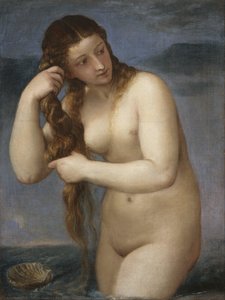
The painting *Venus and Adonis 1*, attributed to the masterful Venetian painter Titian Vecellio (c. 1490 – 1576), is more than a depiction of mythological figures; it’s an immersion into the heart of High Renaissance ideals, rendered with a breathtaking confidence in color and form. Created during a period of immense artistic innovation within Venice—a city that served as a crucible for new techniques and daring compositions—this oil on canvas work embodies Titian's profound understanding of human anatomy, dramatic storytelling, and the sheer expressive power of pigment. The scene unfolds with a palpable tension, capturing a pivotal moment from Ovid’s *Metamorphoses* – Venus’s desperate attempt to revive the fallen Adonis after his fatal hunt. The dynamic arrangement of figures, the carefully considered use of light and shadow, and the rich tapestry of textures all contribute to an experience that transcends mere representation, inviting viewers into the very drama of the narrative.
- Subject Matter: The painting’s subject is rooted in classical mythology. Venus, goddess of love and beauty, attempts to rescue Adonis from his wounds, while a young man watches with apparent distress.
- Composition: Titian masterfully employs diagonal lines to create a sense of movement and instability, reflecting the chaotic nature of the scene and intensifying the emotional impact. The placement of the figures—particularly Venus’s outstretched hand—draws the eye directly into the heart of the narrative.
- Technique: Titian's signature technique – layering thin glazes of oil paint – is evident in the luminous quality of the skin tones and the vibrant hues of the drapery. This method, perfected over decades, allowed him to achieve an unparalleled level of realism and depth.
A Window into Venetian Painting
Titian’s work was profoundly influential, shaping the course of Italian Renaissance painting and establishing Venice as a dominant force in the art world. As a leading figure within the Venetian School, Titian moved away from the more rigid conventions of Florentine artists like Leonardo da Vinci, embracing instead a looser, more sensual style characterized by intense color and dramatic lighting. This approach was directly influenced by the vibrant atmosphere of Venice itself – a city renowned for its trade, its canals, and its diverse cultural influences. The Venetian School’s emphasis on color wasn't simply decorative; it served to heighten emotional expression and create a sense of immediacy within the paintings.
The painting’s context is crucial to understanding its significance. Titian was working during a time when patronage—the financial support provided by wealthy individuals or institutions—was essential for artists. The most significant patrons were the Doge of Venice, and various noble families who commissioned works to decorate their palaces and villas. This commission-driven environment fostered an atmosphere of intense competition and innovation among Venetian painters, leading to the creation of some of the most celebrated artworks in Western art history.
Symbolism and Emotional Resonance
Beyond its narrative content, *Venus and Adonis* is rich with symbolic meaning. Venus represents not only love but also fertility, beauty, and desire – themes that were central to Renaissance thought. The vulnerability of Adonis, depicted as a young man overwhelmed by the power of love, speaks to universal anxieties about mortality and loss. The setting itself—a wooded area with a prominent tree—adds to the painting’s evocative quality, suggesting both the wildness of nature and the potential for danger.
Titian's ability to evoke such powerful emotions through his art is a testament to his mastery of color and composition. The painting’s dramatic lighting, with its strong contrasts between light and shadow, further enhances this effect, drawing the viewer into the scene and creating a sense of immediacy. The overall impression is one of intense passion, vulnerability, and tragic beauty – qualities that have captivated audiences for centuries.
A Legacy of Artistic Innovation
*Venus and Adonis 1* stands as a pivotal work in Titian’s oeuvre and a cornerstone of High Renaissance art. Its technical brilliance, dramatic composition, and profound emotional resonance continue to inspire artists and art lovers alike. Reproductions of this masterpiece offer an unparalleled opportunity to experience the full force of Titian's genius, bringing his vibrant vision into any setting.
Domande e risposte
"Venus and Adonis 1" presenta forti contrasti chiaroscurali?
"Venus and Adonis 1" di Tiziano Vecellio presenta un contrasto Dichiarazione tra le sue zone chiare e scure.
Quale colore risalta di più in "Venus and Adonis 1"?
Il colore dominante di "Venus and Adonis 1" di Tiziano Vecellio è Verde ftalocianina (#221513).
Qual è la dimensione di stampa consigliata per "Venus and Adonis 1" di Tiziano Vecellio?
La dimensione di stampa consigliata per "Venus and Adonis 1" di Tiziano Vecellio è Grande formato.
Opere simili




Biografia dell'artista
Tiziano Vecellio: The Venetian Titan
Tiziano Vecellio, universally known as Titian, stands as a monumental figure of the Italian Renaissance—perhaps its most celebrated colorist and a master who redefined the possibilities of oil painting. Born around 1490 in Pieve di Cadore, nestled amidst the dramatic landscapes of the Venetian Alps, his journey from humble beginnings to international acclaim is a testament to prodigious talent and an unwavering dedication to artistic innovation. The exact date of Titian’s birth remains elusive, debated by scholars, but contemporary sources and his early stylistic development suggest that he emerged into the world sometime between 1488 and 1490.
His father, Gregorio Vecellio, was a military man—a profession that instilled in young Tiziano a disciplined spirit and an appreciation for observation. Lucia, his mother, nurtured him with a love of beauty and fostered his artistic inclinations. Recognizing their sons’ potential, the family arranged for Tiziano and Francesco to apprentice under Sebastiano Zuccato, a renowned mosaicist—a decision that would irrevocably steer them toward a path of artistic excellence.
Venice at the turn of the 16th century was a vibrant hub of commerce, culture, and artistic ferment. Titian’s initial training took place within the workshop of Giovanni Bellini—the most influential painter in Venice at the time—where he absorbed the stylistic precepts of his elder mentor. This formative experience instilled in him a profound understanding of Venetian painting traditions and established the foundation for his own distinctive style.
A Meeting with Giorgione: The Seeds of Innovation
However, it was through contact with Giorgione—a fellow Venetian painter whose work possessed an ethereal poetic quality—that Titian truly embarked on his artistic odyssey. The two artists collaborated on several ambitious projects, including the decoration of the exterior walls of the Fondaco dei Tedeschi—a bustling trading post for German merchants—and their partnership cemented a bond that would shape the trajectory of Venetian art.
Giorgione’s influence is palpable in Titian’s early canvases—characterized by hazy atmospheric effects, muted colors, and an emphasis on capturing mood rather than precise detail. Paintings like *A Man with a Quilted Sleeve* exemplify this stylistic approach, demonstrating Titian’s burgeoning talent for portraiture while simultaneously reflecting Giorgione’s pioneering exploration of perceptual illusion.
From Pastel Dreams to Bold Luminosity
As Titian matured, he gradually distanced himself from Giorgione’s delicate aesthetic and embraced a bolder, more dramatic style—one marked by vibrant hues, expressive brushstrokes, and an unwavering commitment to conveying emotion. *The Visitation of Mary and Elizabeth*, now housed in the Accademia di Venezia, exemplifies this stylistic shift, showcasing Titian’s mastery of composition and color to create a scene brimming with psychological depth.
Throughout his prolific career, Titian consistently pushed the boundaries of artistic convention—experimenting with innovative techniques and exploring diverse subjects ranging from mythological narratives to religious iconography. His portraits became renowned for their uncanny realism—capturing not only physical likeness but also subtle nuances of character and emotion—establishing him as one of the foremost portraitists of his era.
A Legacy Illuminated
Titian’s artistic legacy extends far beyond his lifetime, profoundly influencing generations of painters who followed in his footsteps. His pioneering use of color—particularly his masterful manipulation of tonal harmonies—established a new paradigm for oil painting and inspired artists across Europe to embrace luminous palettes and expressive brushwork.
From Rubens to Rembrandt to Delacroix, Titian’s influence permeated the artistic landscape of the Baroque period and beyond. His paintings continue to captivate audiences today with their breathtaking beauty—a testament to his unparalleled skill as a colorist and a painter—solidifying his place among the titans of Western art history.

Tiziano Vecellio
1490 - 1576 , Italia
Informazioni essenziali
- Artistic Movement Or Style: Venetian painting
- Artists Who Influenced This Artist:
- Giovanni Bellini
- Giorgione
- Date Of Birth: c. 1490
- Date Of Death: 1576
- Full Name: Tiziano Vecellio
- Nationality: Italian
- Notable Artworks:
- A Man with a Quilted Sleeve
- The Visitation
- Bearded Young Man
- Place Of Birth: Pieve di Cadore, Italia