


 Anteprima in scala reale
 Condividi
 Condividi
 Dettagli
 Guida stampabile

 Scarica
 Articoli simili
 Radiografia
 Slideshow
 Statistiche
Simultaneous Counter Composition.


 Leggi tutto
Riproduzione a olio fatta a mano
Olio su tela dipinto a mano nelle tue dimensioni e con la tua cornice, realizzato su ordinazione dai nostri artisti. ( Passa alle stampe Passa all'immagine digitale)




P118B €10

P118H €10

P118W €10

P438Z €10

P508JH €12

P508YH €12

P805H €10

P805Z €10

P919BZ €10

P919G €10

P919XJ €10

P959ZH €10

P968JZ €12

W106C €8

W218G €10

W218JH €8

W218Y €10

W307PJ €10

W316G €10

W316PJ €8

W316Y €10

W398PJ €8

W4111J €10

W500HY €15

W500JH €15

W692G €12

W849H €8

W940BG €15

W953PJ €8




Scegli tra le nostre dimensioni predefinite, che rispettano le proporzioni originali dell'opera d'arte.

È possibile inserire dimensioni personalizzate per adattare l'opera a una cornice o a uno spazio specifico. Se la dimensione selezionata non corrisponde alle proporzioni dell'immagine originale, provvederemo a ritagliare l'opera o a estendere il dipinto con elementi aggiuntivi dipinti a mano. Un mockup digitale ti sarà inviato per approvazione prima dell'inizio della produzione.
Si prega di notare che l'anteprima a schermo non riflette il ritaglio o l'estensione effettivi. Solo il mockup mostrerà accuratamente la composizione finale.
Sebbene siano disponibili dimensioni personalizzate, consigliamo di selezionare una dimensione dall'elenco predefinito per preservare le proporzioni originali.
Dopo l'ordine, il team di ArtsDot.com contatterà il cliente via e-mail per ricevere le istruzioni e fornirà un'anteprima del mockup
Consegna in tutto il mondo () in 3/4 settimane anziché nelle normali 5 settimane. (5 Ottobre). Nessun compromesso sulla qualità.

Spedizione espressa gratuita in tutto il mondo

Tela in lino di alta qualità

Assicurazione completa sulla spedizione

Garanzia di rimborso dei dazi doganali

Garanzia di perfetta fedeltà cromatica

Politica di reso entro 100 giorni (solo per difetti di fabbricazione)

Garanzia di rimborso al 100%

Sconto per acquisti multipli
 L'opzione vetro è disponibile solo per dimensioni inferiori a 110 cm

Simultaneous Counter Composition.
Tecnica di riproduzione
Dimensioni della riproduzione
-


Prezzo totale
€ 226
The Geometry of Inner Harmony: Exploring Theo van Doesburg's Abstraction
To stand before Theo van Doesburg’s Simultaneous Counter Composition is not merely to observe paint on canvas; it is to step into a meticulously constructed intellectual space where color and form engage in a vibrant, calculated dialogue. This piece, dating from 1930, stands as a powerful testament to the revolutionary spirit of De Stijl, the movement that sought to purify art down to its most essential geometric truths. Van Doesburg, an architect of abstraction, believed that true reality could be found not in the messy chaos of visible nature, but in the underlying harmony of pure lines and primary colors. The painting immediately envelops the viewer in a field of structured energy, inviting the eye to wander across its carefully balanced quadrants.
A Masterclass in Primary Structure
The composition itself is breathtaking in its deliberate organization. Divided into distinct yet interconnected sections—left, center, and right—the canvas pulses with a controlled chromatic symphony. We see the bold interplay of red, yellow, blue, black, and white, colors that carry immense symbolic weight within modernist thought. These hues are not simply placed side-by-side; they interact, their adjacency creating optical vibrations. The varying sizes and shapes of the squares suggest a dynamic tension, as if opposing forces—structure versus fluidity, chaos versus order—are locked in a perfect, silent negotiation. It is an exercise in visual equilibrium, where every seemingly arbitrary block contributes to the whole.
Historical Echoes: De Stijl's Vision
Understanding this work requires acknowledging its historical cradle: the fervor of Neoplasticism. Van Doesburg was instrumental in guiding art away from mere representation and toward a universal language built on abstraction. This painting embodies that quest for universal harmony, echoing the philosophical underpinnings of the early 20th century desire to rebuild culture after periods of immense upheaval. The rigid geometry is not a limitation, but rather an assertion of underlying cosmic order—a belief that even in the most abstract arrangement, there exists profound, discernible beauty and balance.
Bringing Geometric Vibrancy Home
For the collector or designer seeking to infuse a space with intellectual depth and vibrant energy, Simultaneous Counter Composition offers unparalleled impact. Its bold, graphic nature means it functions as both a striking piece of art and a powerful architectural accent. Reproducing this work allows one to bring the disciplined passion of early modernism into contemporary living. Imagine its clean lines juxtaposed against soft furnishings or rich wood tones; the painting acts as a brilliant focal point, demanding contemplation while simultaneously providing visual rest through its inherent balance.
Emotional Resonance and Technique
The emotional impact of this piece is one of exhilarating clarity. It feels both rigorously intellectual and deeply soulful. The technique, characterized by flat planes of color meeting at sharp, decisive edges, celebrates the purity of the painted surface. When considering a reproduction, note how the vibrancy of these primary colors—the way they seem to vibrate against each other—is crucial. Owning this piece is owning a conversation between structure and spirit, a vibrant reminder that even in apparent complexity, perfect harmony can be found.
Domande e risposte
In che anno è stata creata "Simultaneous Counter Composition." di Theo van Doesburg?
"Simultaneous Counter Composition." di Theo van Doesburg è stata creata nel 1930.
Quale tecnica è stata utilizzata per "Simultaneous Counter Composition." di Theo van Doesburg?
"Simultaneous Counter Composition." è realizzata in Painting.
A quale emozione è associata "Simultaneous Counter Composition."?
"Simultaneous Counter Composition." di Theo van Doesburg trasmette un tono emotivo Energetic.
Quanto è luminoso, in generale, "Simultaneous Counter Composition."?
Nel complesso, "Simultaneous Counter Composition." è registrato come balanced. La luminosità percepita descrive quanto l'opera appaia chiara o scura.
A quale artista è attribuito "Simultaneous Counter Composition."?
"Simultaneous Counter Composition." è stata creata da Theo van Doesburg. Le informazioni contenute in questa pagina descrivono l'opera originale di Theo van Doesburg.
Quanti anni aveva Theo van Doesburg quando ha creato "Simultaneous Counter Composition." nel 1930?
Quando "Simultaneous Counter Composition." fu creata nel 1930, Theo van Doesburg - nato nel 1883 - aveva 47 anni.
Qual è l'identità cromatica di "Simultaneous Counter Composition." di Theo van Doesburg?
"Simultaneous Counter Composition." di Theo van Doesburg utilizza una tavolozza Dark, con Prussian Blue (#051e3b) come colore dominante.
Opere correlate


Biografia dell'artista
Primi anni e carriera
Theo van Doesburg, artista olandese, nacque il 30 agosto 1883 a Utrecht, nei Paesi Bassi. È noto soprattutto come fondatore e leader di De Stijl, un movimento artistico del neoplasticismo. I primi lavori di Van Doesburg furono influenzati da Vincent van Gogh, sia nello stile che nel soggetto.La nascita del Neoplasticismo
Nel 1913, dopo aver letto "Rückblicke" di Wassily Kandinsky, Van Doesburg si rese conto che esisteva un livello più elevato e spirituale nella pittura che originava dalla mente piuttosto che dalla vita quotidiana. Ciò portò allo sviluppo del neoplasticismo, noto anche come De Stijl. Il movimento sosteneva l'astrazione pura e l'universalità attraverso la riduzione agli elementi essenziali di forma e colore.Opere notevoli e collaborazioni
- Studio per composizioni simultanee xxii, uno studio a matita per composizioni simultanee, è un esempio di arte neoplasticista. (Situato nel Kröller-Müller Museum, Otterlo, Paesi Bassi)
- Van Doesburg collaborò con Piet Mondrian su vari progetti, tra cui la rivista De Stijl.
- Lavorò anche con Georges Vantongerloo e Sophie Taeuber-Arp nella progettazione di case per artisti.
Eredità e influenza
Il lavoro di Van Doesburg ebbe un impatto significativo sullo sviluppo dell'arte moderna. La sua eredità può essere vista in vari aspetti dell'arte, dall'architettura alla pittura. Il movimento neoplasticista continua a influenzare gli artisti oggi.- Visualizza le opere di Theo van Doesburg su ArtsDot
- Leggi di più su Theo van Doesburg su Wikipedia
- Esplora le opere di Piet Mondrian su ArtsDot
- 30 agosto 1883: nacque Theo van Doesburg
- 1913: sviluppò il neoplasticismo
- 7 marzo 1931: morì

Theo van Doesburg
1883 - 1931 , Paesi Bassi
Informazioni rapide
- Artistic Movement Or Style: De Stijl, Neoplasticismo
- Artists Or Movements Influenced By This Artist: ['Neoplasticismo']
- Artists Who Influenced This Artist:
- Vincent van Gogh
- Wassily Kandinsky
- Date Of Birth: 30 agosto 1883
- Date Of Death: 7 marzo 1931
- Full Name: Theo van Doesburg
- Nationality: Olandese
- Notable Artworks: ['Studio per composizioni simultanee xxii']
- Place Of Birth (City And Country): Utrecht, Paesi Bassi
Articoli correlati

Goya: I 25 Capolavori Immortali dell'Anima Spagnola | ArtsDot
Esplora i 25 capolavori di Francisco Goya, il genio spagnolo tra Romanticismo e Realismo. Ritratti iconici, 'Los Caprichos' e le toccanti 'Disastri della Guerra'. Trova stampe su tela e riproduzioni artistiche di alta qualità per la tua casa su ArtsDot.com.

Astrazione Geometrica: 10 Capolavori che Hanno Definito un Movimento Artistico
Esplora i 10 capolavori dell'Astrazione Geometrica: Mondrian, Malevich e Kandinsky rivoluzionano l'arte moderna. Scopri la storia, i colori e le tecniche di questi movimenti iconici. Stampe d'arte di alta qualità su ArtsDot.com!

Beyond Form & Color: Geometric Abstraction's Evolution in 20th/21st Century Art
Explore the evolution of geometric abstraction from Cubism to contemporary art. Discover key artists like Malevich & Mondrian, investment insights, and expert collecting advice at ArtsDot.
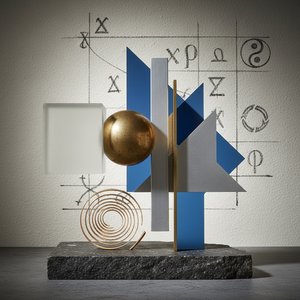
Beyond Form: Exploring the Philosophical Foundations of Geometric Abstraction
Explore the philosophical roots & artistic evolution of geometric abstraction with ArtsDot. Discover Mondrian, Malevich, De Stijl & more. Expert insights for collectors and art enthusiasts.

Theo van Doesburg e il Neoplasticismo: Pionieri dello Stijl e l'Evoluzione dell'Astrattismo
Esplora il rivoluzionario movimento De Stijl e l'influenza di Theo van Doesburg sul Neoplasticismo. Analisi approfondita, storia, principi e impatto sull'arte moderna.


