

 Anteprima in scala reale
 Invia
Invia Condividi
 Dettagli opera
 Guida
Guida

 Scarica
 Simili
 Radiografia
 Slideshow
 Domande e risposte
 Statistiche
The Forth Bridge


 Espandi i dettagli
Giclée / Stampe d'arte
Stampa giclée o su tela di qualità museale, con produzione rapida e diverse opzioni di finitura. ( Acquista il dipinto realizzato a mano Passa all'immagine digitale)




P118B €10

P118H €10

P118W €10

P438Z €10

P508JH €12

P508YH €12

P805H €10

P805Z €10

P919BZ €10

P919G €10

P919XJ €10

P959ZH €10

P968JZ €12

W106C €8

W218G €10

W218JH €8

W218Y €10

W307PJ €10

W316G €10

W316PJ €8

W316Y €10

W398PJ €8

W4111J €10

W500HY €15

W500JH €15

W692G €12

W849H €8

W940BG €15

W953PJ €8




Scegli tra le nostre dimensioni predefinite, che rispettano le proporzioni originali dell'opera d'arte.

Inserisci la larghezza e l'altezza desiderate, per adattarle alla tua cornice o alla tua parete. Una stampa può essere solo ritagliata, mai resa più grande dell'immagine originale; pertanto, un formato con una forma differente comporterà la perdita di una parte dell'opera. Ti invieremo un mockup digitale da approvare prima di procedere con la stampa. L'immagine mostrata in questa pagina non rappresenta il ritaglio reale — solo il mockup lo mostra.
Consegna in tutto il mondo () in 2 settimane invece delle normali 4/5 settimane. (8 Novembre)

Spedizione espressa gratuita in tutto il mondo

Tela in lino di alta qualità

Assicurazione completa sulla spedizione

Garanzia di rimborso dei dazi doganali

Garanzia di fedeltà cromatica assoluta

Politica di reso entro 100 giorni (solo per difetti di fabbricazione)

Garanzia di rimborso al 100%

Offerta per acquisti multipli
 L'opzione vetro è disponibile solo per dimensioni inferiori a 110 cm

The Forth Bridge
Giclée / Stampe d'arte
Dimensioni riproduzione
-


Prezzo finale calcolato
€ 56
The Forth Bridge by John Lavery: A Study in Scottish Impressionism & the Portraiture of a Generation
Sir John Lavery’s “The Forth Bridge” stands as more than just a depiction of an iconic engineering marvel; it embodies the spirit of Edwardian Scotland—a period marked by both grand ambition and profound contemplation. Completed in 1914, amidst the escalating tensions leading up to World War I, this monumental canvas captures not merely the bridge’s physical form but also its atmospheric presence, reflecting Lavery's masterful grasp of Impressionist principles.Subject Matter & Composition: Bridging Tradition and Modernity
The artwork centers around the Forth Bridge itself—a colossal cantilever structure spanning the Firth of Forth between Edinburgh and Fife. Lavery skillfully employs diagonal lines to emphasize the bridge’s dominant position, creating a dynamic tension that draws the viewer's eye across the expansive canvas. Below, the turbulent waters mirror the sky’s muted hues, establishing a harmonious interplay between nature and human endeavor. Foreground elements—a grassy bank dotted with buildings—provide crucial scale, anchoring the scene and grounding it in its immediate surroundings. This deliberate compositional choice speaks to Lavery’s desire to portray not just what is seen but how it feels – a sense of grandeur tempered by the subtle beauty of the Scottish landscape.Style & Technique: Impressionistic Brushstrokes Capture Light and Emotion
Lavery's artistic style firmly aligns with Impressionism, prioritizing capturing fleeting moments of light and color rather than meticulous detail. Visible brushstrokes dominate the surface of the canvas, conveying a palpable sense of movement and atmosphere. The artist skillfully blends pigments to achieve soft tonal gradations, particularly evident in the sky—a wash of blues and greys suggestive of an overcast day. Metallic hues subtly illuminate the bridge’s steel structure, hinting at the brilliance of sunlight reflecting off its intricate lattice work. These techniques are characteristic of Lavery's approach, mirroring Whistler’s influence and establishing him as a pivotal figure in British art during his time.Color Palette & Symbolism: Cool Tones Reflect Tranquility Amidst Uncertainty
The predominant color palette utilizes cool tones—blues and greys—creating an ambiance of serenity despite the looming shadow of war. These hues dominate the water and sky, reflecting Lavery’s sensitivity to mood and emotion. Warmer shades of green and brown are employed for the land in the foreground, providing a visual counterpoint to the coolness of the upper regions. The bridge itself is rendered in muted metallics—primarily greys—accentuated by highlights that capture the play of light on its steel framework. Symbolically, the bridge represents connection – bridging the gap between Edinburgh and Fife, but also perhaps symbolizing the aspirations of Scotland as it navigated the turbulent currents of the early 20th century.Historical Context & Legacy: Lavery's Vision Amidst a Changing Era
Painted in 1914, “The Forth Bridge” encapsulates Lavery’s artistic vision during a period of significant social and political upheaval. The impending outbreak of World War I casts an inescapable pall over the scene, subtly informing its contemplative mood. Yet, Lavery transcends mere documentation; he transforms the bridge into a symbol of resilience—a testament to human ingenuity and perseverance in the face of adversity. His artwork continues to resonate with audiences today, serving as a reminder of Scotland’s artistic heritage and its enduring fascination with grand landscapes and monumental structures. It exemplifies Lavery's ability to convey profound emotion through masterful technique and composition, securing his place among Britain’s most celebrated portraitists and landscape painters.Additional Research: Exploring Lavery's Artistic Influences & Wider Oeuvre
Sir John Lavery (1856-1941) was a painter who effortlessly captured the spirit of his age – an era defined by both opulent Edwardian society and the somber realities of wartime. His journey from humble beginnings to becoming one of Britain’s most sought-after portraitists is a testament to his talent, ambition, and ability to navigate the complex social currents of his time. Orphaned early in life, Lavery found himself transplanted to Scotland, where he received foundational training at Haldane Academy in Glasgow during the 1870s. This initial exposure ignited a passion that would lead him to further studies at the Académie Julian in Paris in the early 1880s, immersing him in the heart of European artistic innovation. Upon his return to Glasgow, Lavery quickly became associated with the influential Glasgow School movement, absorbing its aesthetic principles and forging connections that would shape his early development. He was particularly influenced by Whistler’s ethereal landscapes and tonal harmonies, mirroring these stylistic choices in numerous paintings throughout his prolific career. His work spanned portraiture, landscape painting, and mural commissions, reflecting a diverse artistic sensibility and cementing his reputation as one of Scotland's foremost artists.Domande e risposte
Che posto occupa "The Forth Bridge" tra i temi ricorrenti di Sir John Lavery?
"The Forth Bridge" raffigura bridge, landscape, scotland, engineering, lavery, victorian, architecture, mentre i temi ricorrenti di Sir John Lavery sono edwardian society, scottish landscape, victorian era, engineering marvel, lavery legacy. Il confronto tra i due evidenzia come l'opera si relazioni con i soggetti abituali dell'artista.
Come posso visualizzare "The Forth Bridge" di Sir John Lavery in modalità presentazione?
È disponibile un diaporama: la pagina Slideshow di "The Forth Bridge" di Sir John Lavery.
Dove posso trovare una guida dedicata a "The Forth Bridge"?
La pagina Schede didattiche di "The Forth Bridge" di Sir John Lavery offre una scheda informativa stampabile su due fogli: l'opera d'arte con la sua tabella identificativa, una linea temporale decennale che la colloca nel periodo di vita dell'artista, altre opere dello stesso autore, la tavolozza dei colori misurata e citazioni pronte da copiare in quattro stili diversi.
Opere simili


Biografia dell'artista
Sir John Lavery: Una Vita tra Ritratti e Società
- Nato: Belfast, Irlanda (1856)
- Morto: 1941
Sir John Lavery RA è stato un pittore irlandese molto apprezzato, rinomato per i suoi ritratti affascinanti e le suggestive rappresentazioni di scene belliche. Nato a Belfast, dimostrò talento artistico fin da giovane, frequentando l'Accademia Haldane a Glasgow negli anni '70 dell'Ottocento prima di perfezionare ulteriormente le sue abilità all'Académie Julian a Parigi nei primi anni dell'Ottocento.
Primi Anni e Influenze
Tornato a Glasgow, Lavery si associò agli artisti della influente Glasgow School. Un momento cruciale arrivò nel 1888 quando ricevette l'incarico di dipingere la visita ufficiale della Regina Vittoria alla Esposizione Internazionale di Glasgow. Questo prestigioso incarico lanciò la sua carriera come ritrattista richiesto dalla società, spingendolo a trasferirsi a Londra poco dopo.
- Prime Influenze: Lavery fu notevolmente influenzato da James McNeill Whistler, evidente nel suo stile artistico e nell'approccio alla ritrattistica.
- Associazione con la Glasgow School: Il suo periodo con la Glasgow School favorì una distinta sensibilità estetica che informò le sue opere successive.
Rappresentazioni Belliche e Riconoscimenti Ufficiali
Come William Orpen, Lavery fu nominato artista ufficiale durante la Prima Guerra Mondiale. Tuttavia, persistenti problemi di salute e un grave incidente automobilistico causato da un raid di Zeppelin gli impedirono di servire sul fronte occidentale. Invece, si concentrò sulla documentazione di scene belliche all'interno della Gran Bretagna, catturando barche, aeroplani e dirigibili.
- Artista Ufficiale: Nonostante le limitazioni, i contributi di Lavery come artista ufficiale fornirono preziose testimonianze visive di una nazione in guerra.
- Opere Belliche Notevoli: La sua serie includeva "War Room – depicts surrender of high seas fleet 1918," "Munitions, Newcastle, 1917,” e “A Coast Defence – an 18-pounder anti-aircraft gun, Tyneside, 1917.”
Vita Successiva ed Eredità
Dopo la guerra, Lavery fu nominato cavaliere ed eletto alla Royal Academy nel 1921. La sua vita personale si intrecciò con eventi storici significativi; lui e sua moglie, Hazel, svolsero un ruolo discreto nella Guerra d'Indipendenza irlandese e nella Guerra Civile, fornendo la loro casa di Londra per i negoziatori irlandesi. Immortalizzò Michael Collins con il suo dipinto "Michael Collins, Love of Ireland," ora ospitato alla Hugh Lane Municipal Gallery.
- Rapporti Anglo-Irlandesi: Il coinvolgimento dei Lavery rifletteva un complesso rapporto tra Gran Bretagna e Irlanda durante un periodo di intenso sconvolgimento politico.
- L'Influenza di Hazel Lavery: Hazel Lavery, sua moglie, divenne un soggetto frequente nei suoi dipinti e servì come figura allegorica dell'"Irlanda" sulle banconote irlandesi dal 1928 al 1975.
- Patronato Generoso: Lavery fece donazioni sostanziali delle sue opere all'Ulster Museum e alla Hugh Lane Municipal Gallery, consolidando la sua eredità nell'arte irlandese.
Stile Artistico e Opere Chiave
Lo stile artistico di Lavery mescolava elementi dell'Impressionismo con un occhio attento a catturare personalità e atmosfera. I suoi ritratti sono celebrati per il loro realismo, eleganza e la perspicace rappresentazione del carattere. Era anche abile nel dipingere paesaggi e scene della vita quotidiana.
- Opere Chiave: "The Opening of the Modern Foreign and Sargent Galleries at the Tate Gallery, 26 June 1926," “On the Loing: An Afternoon Chat (also known as Under the Cherry Tree),” "A Visitor to the Studio," "Eileen, Her First Communion."
- Temi Ricorrenti: Ritratti di figure importanti, scene della società britannica e rappresentazioni di esperienze belliche erano centrali nel suo *corpus*.

Sir John Lavery
1856 - 1941 , Irlanda
Dettagli rapidi
- Artistic Movement Or Style: Impressionismo
- Artists Who Influenced This Artist: ['James McNeill Whistler']
- Date Of Birth: 20 marzo 1856
- Date Of Death: 1941
- Full Name: Sir John Lavery
- Nationality: Irlandese
- Notable Artworks:
- Michael Collins, Love of Ireland
- Summer on the River
- War Room – depicts surrender
- Lady Lavery
- The Artist's Studio
- A Visitor to the Studio
- On the Loing: An Afternoon Chat
- Place Of Birth: Belfast, Irlanda
Articoli correlati

Impressionismo: I 10 Capolavori che Rivoluzionarono la Pittura | ArtsDot
Esplora i 10 capolavori dell'Impressionismo con ArtsDot. Scopri Monet, Renoir e Degas: storia, tecnica e colori che hanno rivoluzionato l'arte. Stampe di alta qualità per la tua casa! Esplora la collezione online.

I 25 Capolavori di Paul Cézanne: L'Architetto della Forma
Scopri i 25 capolavori di Paul Cézanne e la rivoluzione post-impressionista. Esplora la collezione su ArtsDot.com.
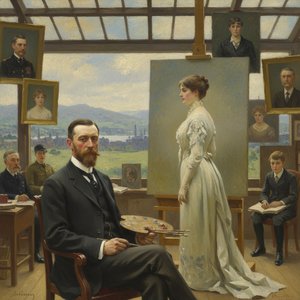
Sir John Lavery: Uno Studio sull'Impressionismo Scozzese e il Ritratto di una Generazione
Esplora la vita e l'opera di Sir John Lavery, maestro dell'Impressionismo scozzese. Scopri i suoi ritratti iconici, le influenze artistiche e il contributo all'arte britannica del XIX secolo.

George Paul Chalmers: Rediscovering the Angus Rembrandt & Scottish Colourist Roots
Explore the captivating world of George Paul Chalmers (1833-1878), a pivotal Scottish painter. Discover his landscapes, portraits & connection to the Aesthetic Movement and Colourists. Learn about this 'Angus Rembrandt's' legacy with ArtsDot.

Sir John Watson Gordon: A Study in Scottish Landscape Painting & Tonal Impressionism
Explore the captivating portraits of Sir John Watson Gordon, a leading Scottish master. Discover his evolution from neoclassical style to atmospheric Tonalism and influence on 19th-century British art. Learn about his iconic sitters & legacy.


