


 Anteprima in scala reale
 Invia
Invia Condividi
 Dettagli opera

 Scarica immagine
 Simili
 Radiografia
 Slideshow
Potter at Work
 Acrylic On Canvas
- WallArt
- Scottish Impressionism
 1888
1888- 19th Century
 Galleria d'Arte e Museo di Kelvingrove
 Espandi i dettagli
Riproduzione a olio fatta a mano
Olio su tela dipinto a mano nelle tue dimensioni e con la tua cornice, realizzato su ordinazione dai nostri artisti. ( Acquista stampa Acquista immagine)




P118B $10

P118H $10

P118W $10

P438Z $10

P508JH $12

P508YH $12

P805H $10

P805Z $10

P919BZ $10

P919G $10

P919XJ $10

P959ZH $10

P968JZ $12

W106C $8

W218G $10

W218JH $8

W218Y $10

W307PJ $10

W316G $10

W316PJ $8

W316Y $10

W398PJ $8

W4111J $10

W500HY $15

W500JH $15

W692G $12

W849H $8

W940BG $15

W953PJ $8




Scegli tra le nostre dimensioni predefinite, che rispettano le proporzioni originali dell'opera d'arte.

È possibile inserire dimensioni personalizzate per adattare l'opera a una cornice o a uno spazio specifico. Se la dimensione selezionata non corrisponde alle proporzioni dell'immagine originale, provvederemo a ritagliare l'opera o a estendere il dipinto con elementi aggiuntivi dipinti a mano. Un mockup digitale ti sarà inviato per approvazione prima dell'inizio della produzione.
Si prega di notare che l'anteprima a schermo non riflette il ritaglio o l'estensione effettivi. Solo il mockup mostrerà accuratamente la composizione finale.
Sebbene siano disponibili dimensioni personalizzate, consigliamo di selezionare una dimensione dall'elenco predefinito per preservare le proporzioni originali.
Dopo l'ordine, il team di ArtsDot.com contatterà il cliente via e-mail per le istruzioni e fornirà un'anteprima del mockup
Consegna in tutto il mondo () in 3/4 settimane anziché nelle normali 5 settimane. (27 Agosto). Nessun compromesso sulla qualità.

Spedizione espressa gratuita in tutto il mondo

Tela in lino di alta qualità

Assicurazione completa sulla spedizione

Garanzia di rimborso dei dazi doganali

Garanzia di fedeltà cromatica

Politica di reso entro 60 giorni (solo per difetti di fabbricazione)

Garanzia di rimborso al 100%

Offerta per acquisti multipli
 L'opzione vetro è disponibile solo per dimensioni inferiori a 110 cm

Potter at Work
Tecnica di riproduzione
Dimensioni riproduzione
-


Prezzo totale calcolato
$ 263
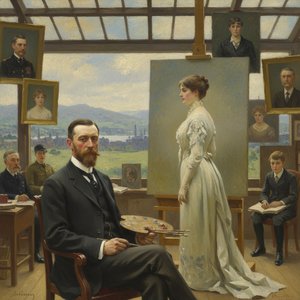
Potter at Work: A Portrait of Quiet Reflection Amidst Decorative Splendor
Sir John Lavery’s “Potter at Work” transcends mere depiction; it's a masterful distillation of Edwardian England – a snapshot frozen in time, capturing not just an individual but also the ethos of a burgeoning artistic movement. Painted in 1888, this portrait presents us with a man seated at a table laden with vases and utensils, absorbed in reading. The scene exudes understated elegance, reflecting Lavery’s fascination with Whistlerian Impressionism and his keen observation of societal nuances. The artist skillfully employs loose brushstrokes and muted tonal palettes characteristic of the Scottish School, prioritizing light and atmosphere over meticulous detail. This technique lends an ethereal quality to the composition, mirroring the contemplative mood conveyed by the subject's posture and gaze. Notice how Lavery captures the subtle interplay of light on the porcelain surfaces – a deliberate choice that underscores the importance of visual perception within the artistic framework. The inclusion of vases isn’t merely decorative; they serve as symbols of refinement and domestic tranquility, aligning perfectly with the values prevalent during Lavery's era. Beyond its aesthetic merits, “Potter at Work” speaks to broader themes of intellectual curiosity and mindful engagement with one’s surroundings. It invites viewers to consider the quiet dignity of scholarly pursuits alongside the beauty inherent in everyday objects – a juxtaposition that encapsulates Lavery’s artistic vision. The man’s attire—a formal tie—further reinforces this sense of social propriety, grounding the scene within its historical context.Artist Biography: John Kyffin Williams - Echoes of Welsh Landscape
Like many artists of his generation, Sir John Lavery drew inspiration from fellow Impressionists such as Whistler and John Kyffin Williams, whose exploration of light and color profoundly influenced Lavery’s artistic sensibilities. Williams' distinctive style—characterized by bold impasto technique—captures the rugged grandeur of Welsh landscapes with breathtaking immediacy. This shared commitment to capturing fleeting moments and conveying emotional resonance demonstrates the interconnectedness of artistic movements and underscores Lavery’s dedication to portraying the human condition against a backdrop of natural beauty.Historical Context: Edwardian Society & The Pursuit of Aesthetic Ideal
“Potter at Work” emerges from the opulent Edwardian period, a time marked by rapid industrialization alongside a fervent embrace of artistic innovation. Lavery’s oeuvre reflects this duality – portraying both aristocratic portraits and scenes depicting rural life with equal sensitivity. The Victorian influence lingered, yet Impressionism championed spontaneity and subjective experience, challenging traditional conventions and redefining notions of beauty. This artwork embodies the spirit of its time, capturing not only visual splendor but also a deeper yearning for intellectual stimulation and harmonious connection with the natural world.Symbolic Resonance: Vessels & Reflection – A Meditation on Domestic Tranquility
The vases adorning the table hold significant symbolic weight within “Potter at Work.” They represent more than just decorative elements; they symbolize refinement, hospitality, and a cultivated appreciation for art—values highly esteemed during Lavery’s lifetime. Simultaneously, the man's absorbed reading posture symbolizes intellectual contemplation and inner peace – an invitation to viewers to pause and consider the profound beauty found in quiet moments of reflection. Lavery skillfully utilizes these visual cues to elevate the portrait beyond mere representation, transforming it into a meditation on human experience and artistic aspiration.Opere simili


Biografia dell'artista
Sir John Lavery: Una Vita tra Ritratti e Società
- Nato: Belfast, Irlanda (1856)
- Morto: 1941
Sir John Lavery RA è stato un pittore irlandese molto apprezzato, rinomato per i suoi ritratti affascinanti e le suggestive rappresentazioni di scene belliche. Nato a Belfast, dimostrò talento artistico fin da giovane, frequentando l'Accademia Haldane a Glasgow negli anni '70 dell'Ottocento prima di perfezionare ulteriormente le sue abilità all'Académie Julian a Parigi nei primi anni dell'Ottocento.
Primi Anni e Influenze
Tornato a Glasgow, Lavery si associò agli artisti della influente Glasgow School. Un momento cruciale arrivò nel 1888 quando ricevette l'incarico di dipingere la visita ufficiale della Regina Vittoria alla Esposizione Internazionale di Glasgow. Questo prestigioso incarico lanciò la sua carriera come ritrattista richiesto dalla società, spingendolo a trasferirsi a Londra poco dopo.
- Prime Influenze: Lavery fu notevolmente influenzato da James McNeill Whistler, evidente nel suo stile artistico e nell'approccio alla ritrattistica.
- Associazione con la Glasgow School: Il suo periodo con la Glasgow School favorì una distinta sensibilità estetica che informò le sue opere successive.
Rappresentazioni Belliche e Riconoscimenti Ufficiali
Come William Orpen, Lavery fu nominato artista ufficiale durante la Prima Guerra Mondiale. Tuttavia, persistenti problemi di salute e un grave incidente automobilistico causato da un raid di Zeppelin gli impedirono di servire sul fronte occidentale. Invece, si concentrò sulla documentazione di scene belliche all'interno della Gran Bretagna, catturando barche, aeroplani e dirigibili.
- Artista Ufficiale: Nonostante le limitazioni, i contributi di Lavery come artista ufficiale fornirono preziose testimonianze visive di una nazione in guerra.
- Opere Belliche Notevoli: La sua serie includeva "War Room – depicts surrender of high seas fleet 1918," "Munitions, Newcastle, 1917,” e “A Coast Defence – an 18-pounder anti-aircraft gun, Tyneside, 1917.”
Vita Successiva ed Eredità
Dopo la guerra, Lavery fu nominato cavaliere ed eletto alla Royal Academy nel 1921. La sua vita personale si intrecciò con eventi storici significativi; lui e sua moglie, Hazel, svolsero un ruolo discreto nella Guerra d'Indipendenza irlandese e nella Guerra Civile, fornendo la loro casa di Londra per i negoziatori irlandesi. Immortalizzò Michael Collins con il suo dipinto "Michael Collins, Love of Ireland," ora ospitato alla Hugh Lane Municipal Gallery.
- Rapporti Anglo-Irlandesi: Il coinvolgimento dei Lavery rifletteva un complesso rapporto tra Gran Bretagna e Irlanda durante un periodo di intenso sconvolgimento politico.
- L'Influenza di Hazel Lavery: Hazel Lavery, sua moglie, divenne un soggetto frequente nei suoi dipinti e servì come figura allegorica dell'"Irlanda" sulle banconote irlandesi dal 1928 al 1975.
- Patronato Generoso: Lavery fece donazioni sostanziali delle sue opere all'Ulster Museum e alla Hugh Lane Municipal Gallery, consolidando la sua eredità nell'arte irlandese.
Stile Artistico e Opere Chiave
Lo stile artistico di Lavery mescolava elementi dell'Impressionismo con un occhio attento a catturare personalità e atmosfera. I suoi ritratti sono celebrati per il loro realismo, eleganza e la perspicace rappresentazione del carattere. Era anche abile nel dipingere paesaggi e scene della vita quotidiana.
- Opere Chiave: "The Opening of the Modern Foreign and Sargent Galleries at the Tate Gallery, 26 June 1926," “On the Loing: An Afternoon Chat (also known as Under the Cherry Tree),” "A Visitor to the Studio," "Eileen, Her First Communion."
- Temi Ricorrenti: Ritratti di figure importanti, scene della società britannica e rappresentazioni di esperienze belliche erano centrali nel suo *corpus*.

Sir John Lavery
1856 - 1941 , Irlanda
Dati rapidi
- Artistic Movement Or Style: Impressionismo
- Artists Who Influenced This Artist: ['James McNeill Whistler']
- Date Of Birth: 20 marzo 1856
- Date Of Death: 1941
- Full Name: Sir John Lavery
- Nationality: Irlandese
- Notable Artworks:
- Michael Collins, Love of Ireland
- Summer on the River
- War Room – depicts surrender
- Lady Lavery
- The Artist's Studio
- A Visitor to the Studio
- On the Loing: An Afternoon Chat
- Place Of Birth: Belfast, Irlanda
Articoli correlati
Sir John Lavery: Uno Studio sull'Impressionismo Scozzese e il Ritratto di una Generazione
Esplora la vita e l'opera di Sir John Lavery, maestro dell'Impressionismo scozzese. Scopri i suoi ritratti iconici, le influenze artistiche e il contributo all'arte britannica del XIX secolo.

John Singer Sargent: I 25 Capolavori Immortali per Arredare con Stile
Esplora i 25 capolavori di John Singer Sargent, pittore americano simbolo dell'Impressionismo e del Gilded Age. Ritratti iconici, acquerelli luminosi e storie affascinanti. Trova la tua opera d'arte ideale su ArtsDot.com!

John Constable: I 25 Capolavori che Celebrano la Bellezza della Campagna Inglese
Esplora i 25 capolavori di John Constable, il maestro del Romanticismo inglese. Paesaggi suggestivi, luce naturale e colori vibranti ti aspettano. Acquista riproduzioni d'arte di alta qualità su ArtsDot.com e porta la bellezza della campagna inglese nella tua casa.

Sir John Watson Gordon: A Study in Scottish Landscape Painting & Tonal Impressionism
Explore the captivating portraits of Sir John Watson Gordon, a leading Scottish master. Discover his evolution from neoclassical style to atmospheric Tonalism and influence on 19th-century British art. Learn about his iconic sitters & legacy.

John Wilson Carmichael: Evoking Scottish Identity Through Dramatic Marine Painting
Explore the dramatic marine paintings of John Wilson Carmichael (1800-1868), a Victorian master renowned for his realistic seascapes and historical naval scenes. Discover his life, style & available hand-painted reproductions at ArtsDot.



