


 Anteprima in scala reale
 Condividi
 Condividi
 Dettagli

 Scarica immagine
 Articoli simili
 Radiografia
 Slideshow
untitled (2854)

 Leggi tutto
Riproduzione a olio fatta a mano
Olio su tela dipinto a mano nelle tue dimensioni e con la tua cornice, realizzato su ordinazione dai nostri artisti. ( Ordina stampa Acquista download)




P118B $10

P118H $10

P118W $10

P438Z $10

P508JH $12

P508YH $12

P805H $10

P805Z $10

P919BZ $10

P919G $10

P919XJ $10

P959ZH $10

P968JZ $12

W106C $8

W218G $10

W218JH $8

W218Y $10

W307PJ $10

W316G $10

W316PJ $8

W316Y $10

W398PJ $8

W4111J $10

W500HY $15

W500JH $15

W692G $12

W849H $8

W940BG $15

W953PJ $8




Scegli tra le nostre dimensioni predefinite, che rispettano le proporzioni originali dell'opera d'arte.

È possibile inserire dimensioni personalizzate per adattare l'opera a una cornice o a uno spazio specifico. Se la dimensione selezionata non corrisponde alle proporzioni dell'immagine originale, provvederemo a ritagliare l'opera o a estendere il dipinto con elementi aggiuntivi dipinti a mano. Un mockup digitale ti sarà inviato per approvazione prima dell'inizio della produzione.
Si prega di notare che l'anteprima a schermo non riflette il ritaglio o l'estensione effettivi. Solo il mockup mostrerà accuratamente la composizione finale.
Sebbene siano disponibili dimensioni personalizzate, consigliamo di selezionare una dimensione dall'elenco predefinito per preservare le proporzioni originali.
Dopo l'ordine, il team di ArtsDot.com contatterà il cliente via e-mail per le istruzioni e fornirà un'anteprima del mockup
Consegna in tutto il mondo () in 3/4 settimane anziché nelle normali 5 settimane. (20 Agosto). Nessun compromesso sulla qualità.

Spedizione espressa gratuita in tutto il mondo

Tela in lino di alta qualità

Assicurazione completa sulla spedizione

Garanzia di rimborso dei dazi doganali

Garanzia di fedeltà cromatica dell'originale

Politica di reso entro 60 giorni (solo per difetti di fabbricazione)

Garanzia di rimborso al 100%

Sconto per acquisti multipli
 L'opzione vetro è disponibile solo per dimensioni inferiori a 110 cm

untitled (2854)
Tecnica di riproduzione
Dimensioni della riproduzione
-


Prezzo totale
$ 263
Descrizione dell'opera
A Gathering Beneath an Uncertain Sky: Botticelli’s ‘Untitled (2854)’
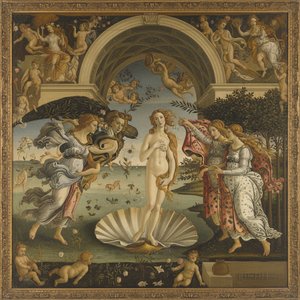
Sandro Botticelli's “Untitled (2854),” a captivating depiction of figures huddled before an arched building, offers a glimpse into the vibrant social and artistic life of Renaissance Florence. Dating from around 1490 – a period marked by both burgeoning optimism and underlying political tension – this painting transcends mere representation; it’s a tableau brimming with narrative potential and imbued with a quiet, contemplative atmosphere. The scene unfolds beneath a sky hinting at impending rain, an element that immediately establishes a mood of intimacy and shared experience. The figures, dressed in clothing reminiscent of the late 15th century – a blend of practicality and subtle ornamentation – suggest a gathering of friends, perhaps merchants or members of a local guild, engaged in conversation and respite from the bustling city.
Botticelli’s masterful technique is immediately apparent. He employs a delicate *tempera* on wood panel, a medium favored for its luminosity and ability to capture subtle details. Notice how he renders the folds of fabric with an almost sculptural quality – each crease and pleat meticulously defined yet imbued with a sense of movement. The figures themselves are portrayed with a graceful elegance characteristic of Botticelli’s style, their poses relaxed and naturalistic, avoiding the rigid formality often found in earlier Renaissance works. The artist's use of color is restrained but effective; muted earth tones dominate, punctuated by the brighter hues of the umbrellas scattered throughout the scene – splashes of red, blue, and yellow that draw the eye and add a touch of visual interest.
Symbolism and Context: Florence in Transition
The setting itself—a building with prominent arches—is significant. Such architectural elements were common in Florentine civic buildings and churches, suggesting a public space or perhaps a gathering place for a specific community. The presence of the umbrellas isn’t merely decorative; it speaks to the unpredictable nature of Florentine weather – a recurring theme throughout Botticelli's work, often used to symbolize transience and the fragility of life. Furthermore, the clothing worn by the figures offers clues about their social standing and profession. The variety in attire hints at a diverse group, reflecting the complex social fabric of Renaissance Florence.
Botticelli’s artistic output during this period reflects the broader cultural shifts occurring in Italy. The early Renaissance was characterized by a renewed interest in classical antiquity, but also by a growing sense of individualism and secularism. His mythological paintings, such as “The Birth of Venus” and “Primavera,” demonstrate this fascination with classical themes while simultaneously exploring human emotions and experiences. "Untitled (2854)" can be viewed within this context – it’s not simply a portrait of a group of people; it's an exploration of social interaction, community, and the fleeting beauty of everyday life.
The Emotional Resonance: A Moment Frozen in Time
Despite its seemingly simple composition, “Untitled (2854)” possesses a remarkable emotional depth. The figures’ engaged expressions – smiles, thoughtful gazes, gestures of conversation – invite us to imagine their stories and connect with them on a human level. There's a sense of warmth and camaraderie in the scene, suggesting a shared moment of connection amidst the uncertainties of life. The muted palette and soft lighting contribute to this feeling of intimacy, creating an atmosphere that is both serene and evocative.
Botticelli’s ability to capture such nuanced emotions through his art is what makes “Untitled (2854)” so compelling. It's a painting that invites contemplation and offers a glimpse into the lives of ordinary people in Renaissance Florence – a world of beauty, intrigue, and profound human experience. A reproduction of this work would bring a touch of timeless elegance and quiet sophistication to any interior space, serving as a constant reminder of the enduring power of art to capture the essence of humanity.
Technical Details & Reproduction Considerations
As with many works by Botticelli, precise details regarding the dimensions and original materials used in “Untitled (2854)” remain somewhat elusive. ArtsDot’s meticulous hand-painted reproductions strive to faithfully recreate the painting's delicate *tempera* technique and subtle color palette. We utilize archival-quality pigments and canvas to ensure that our reproductions possess a remarkable level of detail and longevity, mirroring the original artwork as closely as possible.
The choice of canvas size is carefully considered to maintain the proportions and visual impact of the original painting. Our skilled artisans pay close attention to Botticelli’s characteristic brushstrokes and layering techniques, ensuring that each reproduction captures the artist's unique style and artistic vision. Whether you are a seasoned art collector or simply seeking a beautiful piece of artwork for your home, ArtsDot’s hand-painted reproductions offer an unparalleled opportunity to own a stunning representation of this iconic Renaissance masterpiece.
Opere correlate


Biografia dell'artista
primi anni di vita e formazione
Sandro Botticelli, nato Alessandro di Mariano di Vanni Filippoipi intorno al 1445, è stata una figura chiave nel primo Rinascimento della pittura italiana. Inizialmente oscurato postumo, l'opera di Botticelli è stata rivitalizzata nella tarda ottava e novantina del secolo XIX dai pre-rafaeliani, portando a una rivalutazione dei suoi contributi artistici. Botticelli nacque a Firenze, in Italia, e visse tutta la sua vita nello stesso quartiere. La sua famiglia, inclusa il padre Mariano di Vanni d'Amedeo Filippoipi, era coinvolta in varie professioni, che li hanno portati a entrare in contatto con gli artisti. Giorgio Vasari riferì che Botticelli fu inizialmente addestrato come orefice.stile artistico e opere notevoli
L'opera di Botticelli è caratterizzata da una elegante linearità, che colma il divario tra il tardo gotico italiano e il primo Rinascimento. Le sue opere più famose, La nascita di Venere e Primavera, sono esposte alla Galleria degli Uffizi a Firenze, che ospita una collezione significativa delle sue opere. * La nascita di Venere (visualizza su ArtsDot) * Primavera (esplora l'arte di Sandro Botticelli su ArtsDot) * Natività mistica (Galleria Nazionale d'Arte Moderna, Roma), datata 1501, è l'unica opera di Botticelli con una data precisa.eredità e influenza
Lo stile di Botticelli si è evoluto in un approccio più personale negli anni '90 del Cinquecento, divergendo dai contemporanei come Leonardo da Vinci e dallo stile rinascimentale alto emergente. La sua opera è stata riconosciuta come un contributo significativo al movimento dell'arte rinascimentale italiana. * Il Rinascimento italiano * Sandro Botticelli su Wikipedia- Artisti notevoli del Rinascimento italiano includono Sandro Botticelli, Leonardo da Vinci, Michelangelo e Tiziano.
- La Galleria degli Uffizi a Firenze ospita una collezione significativa delle opere di Botticelli.
- L'opera di Botticelli è stata riconosciuta come una figura chiave nel primo Rinascimento della pittura italiana.

Sandro Botticelli
1445 - 1510 , Italia
Informazioni rapide
- Artisti Influenti:
- Fra Angelico
- Paolo Uccello
- Data Di Nascita: c. 1445
- Luogo Di Nascita: Firenze, Italia
- Movimento Artistico: Primo Rinascimento
- Nazionalità: Italiana
- Nome Completo: Sandro Botticelli
- Opere Notevoli:
- Nascita di Venere
- Primavera
- Natività Mistica
Articoli correlati
Botticelli: I 25 Capolavori Immortali dell'Arte Rinascimentale | ArtsDot
Esplora i 25 capolavori di Sandro Botticelli, l'icona del Rinascimento italiano. Scopri la storia, il simbolismo e le tecniche dietro opere come 'La Nascita di Venere'. Stampe d'arte di alta qualità su ArtsDot.com per decorare casa con bellezza senza tempo.

I 25 Capolavori della Galleria degli Uffizi: Arte Rinascimentale per la Tua Casa
Esplora i 25 capolavori della Galleria degli Uffizi a Firenze! Scopri la storia di Botticelli, Leonardo e Raffaello. Trova riproduzioni artistiche di alta qualità per decorare casa con stile su ArtsDot.com.

I 10 Capolavori del Rinascimento Iniziale che Hanno Definito l'Arte: Scopri i Maestri
Esplora i 10 capolavori del Rinascimento italiano: Leonardo, Michelangelo, Raffaello e altri maestri. Scopri la storia, il simbolismo e le tecniche di queste opere iconiche. Trova riproduzioni d'arte di alta qualità su !

I 10 Capolavori a Tempera su Tavola che Hanno Rivoluzionato la Storia dell'Arte | ArtsDot
Scopri i 10 capolavori a tempera su tavola che hanno segnato la storia dell'arte! Esplora le opere di Giotto, Duccio e Botticelli. Trova riproduzioni d'arte di alta qualità per arredare casa con stile su ArtsDot.com.

The Dawn of a New Vision: Exploring the Artistic Innovations of the Early Renaissance
Explore the groundbreaking innovations of the Early Renaissance! Discover the art, history, and humanist ideals that shaped a new era in painting, sculpture & architecture. Learn about Masaccio, Florence, and more.



