


 Anteprima in scala reale
 Condividi
 Condividi
 Dettagli

 Scarica immagine
 Articoli simili
 Radiografia
 Slideshow
Drawing the Eel
 Oil On Canvas
- WallArt
- Dutch Golden Age
 1650
1650- Early Modern
 75.0 x 106.0 cm
 Metropolitan Museum of Art
 Leggi tutto
Giclée / Stampe d'arte
Stampa giclée o su tela di qualità museale, con produzione rapida e diverse opzioni di finitura. ( Ordina la riproduzione dipinta a mano Acquista download)




P118B $10

P118H $10

P118W $10

P438Z $10

P508JH $12

P508YH $12

P805H $10

P805Z $10

P919BZ $10

P919G $10

P919XJ $10

P959ZH $10

P968JZ $12

W106C $8

W218G $10

W218JH $8

W218Y $10

W307PJ $10

W316G $10

W316PJ $8

W316Y $10

W398PJ $8

W4111J $10

W500HY $15

W500JH $15

W692G $12

W849H $8

W940BG $15

W953PJ $8




Scegli tra le nostre dimensioni predefinite, che rispettano le proporzioni originali dell'opera d'arte.

È possibile inserire dimensioni personalizzate per adattare l'opera a una cornice o a uno spazio specifico. Se la dimensione selezionata non corrisponde alle proporzioni dell'immagine originale, procederemo al ritaglio dell'opera o all'estensione dell'immagine con un bordo specchiato o a tinta unita. Un mockup digitale ti verrà inviato per approvazione prima dell'inizio della produzione.
Si prega di notare che l'anteprima a schermo non riflette il ritaglio o l'estensione effettivi. Solo il mockup mostrerà accuratamente la composizione finale.
Sebbene siano disponibili dimensioni personalizzate, si raccomanda di selezionare una dimensione dall'elenco predefinito per preservare le proporzioni originali.
Consegna in tutto il mondo () in 2 settimane invece delle normali 4/5 settimane. (16 Agosto)

Spedizione espressa gratuita in tutto il mondo

Tela in lino di alta qualità

Assicurazione completa sulla spedizione

Garanzia di rimborso dei dazi doganali

Garanzia di fedeltà cromatica dell'originale

Politica di reso entro 60 giorni (solo per difetti di fabbricazione)

Garanzia di rimborso al 100%

Sconto per acquisti multipli
 L'opzione vetro è disponibile solo per dimensioni inferiori a 110 cm

Drawing the Eel
Giclée / Stampe d'arte
Dimensioni della riproduzione
-


Prezzo totale
$ 62
Descrizione del pezzo
Drawing the Eel – A Window Into Seventeenth Century Holland
Salomon van Ruysdael’s “Drawing the Eel,” completed around 1650, isn't merely a depiction of a rural Dutch scene; it’s an exquisitely crafted meditation on light, observation, and the subtle grandeur of everyday life. Hanging in the Metropolitan Museum of Art in New York City—a testament to its enduring beauty—this painting offers viewers a captivating glimpse into the artistic sensibilities of the Dutch Golden Age.
The Painter's Vision: Ruysdael’s Innovative Landscape Style
Unlike many of his contemporaries who favored dramatic vistas and idealized forms, Salomon van Ruysdael championed a remarkably restrained approach. He prioritized capturing the precise nuances of natural light—particularly its diffused glow filtering through overcast skies—a technique that would become synonymous with his distinctive style. This meticulous attention to detail distinguishes “Drawing the Eel” from canvases dominated by grand gestures; instead, it invites contemplation and rewards careful scrutiny.
A Village Scene Illuminated: Composition and Detail
The painting unfolds across a wide horizontal format, showcasing a tranquil river meandering through a verdant landscape. Dominating the composition is a substantial house—likely belonging to a wealthy landowner—positioned prominently on the right side of the canvas. Surrounding it are trees laden with fruit, creating a rich tapestry of textures and colors. Scattered throughout the scene are figures engaged in various activities: villagers tending livestock, children playing near the riverbank, and individuals gathered around a cart exchanging greetings. Each element is rendered with painstaking accuracy—the folds of clothing, the reflections on the water’s surface, even the individual leaves on the trees—demonstrating Ruysdael's mastery of observation.
Symbolism Within Simplicity: Reflecting Dutch Values
“Drawing the Eel” speaks volumes about the values prevalent in seventeenth-century Holland. The river symbolizes prosperity and abundance – a reflection of the nation’s flourishing trade and agricultural output. The house represents stability and social status, highlighting the importance of family lineage and civic responsibility. Furthermore, the scene embodies a humanist ethos, portraying ordinary people engaged in honest labor and fostering community bonds. Ruysdael's subtle use of color—primarily muted greens and browns—contributes to an atmosphere of serenity and reinforces this overarching message.
Technique: Oil Paint Mastery
Ruysdael’s masterful application of oil paint is evident throughout the artwork. He employed a layering technique known as “glazing,” applying thin translucent washes of color over previous layers to build up depth and luminosity. This method allowed him to achieve remarkable realism, capturing the subtle variations in tone and hue that would have been impossible with tempera paints—the dominant medium of the time. The resulting surface possesses an unparalleled sheen and vibrancy, preserving the original pigment layer remarkably well.
Emotional Resonance: A Moment Frozen in Time
"Drawing the Eel" transcends mere visual representation; it evokes a profound sense of tranquility and nostalgia for a bygone era. It captures not just the physical environment but also the spirit of Dutch society—a culture characterized by pragmatism, industriousness, and an appreciation for beauty found in the commonplace. Viewing this painting is akin to stepping back into seventeenth-century Holland, experiencing its understated elegance and contemplating its enduring relevance to our own time.
Opere correlate


Biografia dell'artista
Il Maestro Sottile del Paesaggio Olandese: La Vita di Salomon van Ruysdael
Nell'epoca d'oro dei Paesi Bassi del XVII secolo, un periodo definito da una prosperità senza precedenti e da un fiorire artistico straordinario, Salomon van Ruysdael emerse come un pittore dalla profonda sensibilità atmosferica. Nato intorno al 1602 a Naarden, la sua vita fu profondamente intrecciata con la trama stessa dell'Età dell'Oro olandese. Mentre la storia spesso proietta un'ombra lunga sul suo fratello più celebre, Jacob van Ruisdael, Salomon riuscì a ritagliarsi una nicchia distinta e insostituibile nel canone della pittura di paesaggio. La sua opera non si limita a ritrarre la terra; essa cattura l'essenza pulsante della campagna olandese, dove la luce e l'acqua eseguono una danza silenziosa ed eterna sulla tela.
Le fondamenta della sua arte furono gettate in un ambiente domestico dove l'artigianato e la precisione erano primari. Suo padre, Jacob Jansz de Gooyer, era un abile intagliatore specializzato nelle intricate cornici in ebano che racchiudevano gli specchi e i dipinti più preziosi dell'epoca. Questa precoce esposizione ai dettagli meticolosi della cornice instillò probabilmente in Salomon una riverenza duratura per la consistenza e l'integrità strutturale. Sebbene la sua formazione formale fosse sorprendentemente ampia — comprendendo le complessità del latino e persino della medicina — il suo cuore rimase legato al mondo visivo. Entrando a far parte del prestigioso Gremio di San Luca di Haarlem nel 1623, egli entrò in un circolo d'élite di creatori, ponendosi sotto l'influenza diretta di maestri come Jan Porcellis e <
Una Sinfonia di Acqua e Luce
La vera maestria di Salomon van Ruysdael risiede nella sua capacità di rendere le qualità effimere dell'atmosfera olandese. A differenza di molti dei suoi contemporanei, che cercavano viste drammatiche e sconvolgenti o tempeste turbolente, Salomon trovò la sua più grande ispirazione nella quiete delle vie d'acqua interne. Le sue composizioni si concentrano spesso sul flusso ritmico dei fiumi e sulla tranquilla distesa dei laghi, dove il cielo e l'acqua si incontrano in una transizione fluida di toni smorzati e luce soffusa. In capolavori come Veduta del fiume vicino a Deventer, si può osservare come egli utilizzi una tavolozza delicata per evocare l'aria umida e fresca dei Paesi Bassi, invitando lo spettatore a immergersi in un momento di profonda immobilità.
La sua abilità tecnica è particolarmente evidente nel trattamento dei soggetti marini e fluviali. In opere come Imbarcazioni a vela in uno specchio d'acqua interno, egli dimostra una capacità impareggiabile di catturare il peso e il movimento delle barche che navigano attraverso correnti calme. L'integ로razione di elementi umani — come la sottile presenza di pescatori in Fiume con pescatori — non è mai invadente; piuttosto, queste figure servono a fornire scala e un senso di realtà vissuta al paesaggio. Attraverso il suo pennello, l'acqua diventa più di una semplice superficie; diventa uno specchio che riflette le nuvole mutevoli e la luce morbida e diffusa che caratterizza il cielo olandese.
Eredità e Significato Artistico
Il significato storico di Salomon van Ruysdael risiede nel suo ruolo di pioniere del paesaggio atmosferico. Egli si allontanò dalle rigide descrizioni topografiche delle epoche precedenti verso un'esperienza della natura più emotiva e sensoriale. La sua capacità di fondere la precisione degli elementi della natura morta con la vastità della pittura di paesaggio creò un'estetica unica che risuonò con la classe media olandese, alla ricerca di un'arte che riflettesse il proprio ambiente pacifico e laborioso.
Oggi, la sua eredità è preservata in alcune delle istituzioni più prestigiose al mondo, tra cui il Museo Thyssen-Bornemisza. Studiare un Van Ruisdael significa sottoporsi a una lezione di pazienza e osservazione. La sua opera rimane una testimonianza della bellezza che si trova nell'essenziale, ricordandoci che le verità artistiche più profonde si trovano spesso nei riflessi più silenziosi di un fiume o nel bagliore più tenue di un sole che tramonta. Il suo contributo all'Età dell'Oro olandese rimane un capitolo essenziale nella storia di come l'umanità abbia imparato a vedere il mondo non solo per ciò che è, ma per ciò che trasmette.

Salomon Van Ruysdael
1602 - 1670 , Paesi Bassi
Informazioni rapide
- Artistic Movement Or Style: Dutch Golden Age Landscape Painting
- Artists Who Influenced This Artist:
- Jan Porcellis
- Esaias van de Velde
- Date Of Birth: Naarden, Netherlands (1602)
- Date Of Death: November 3, 1670
- Full Name: Salomon van Ruysdael
- Nationality: Dutch
- Notable Artworks:
- River landscape
- Ferry Near Gorinchem
- View of Deventer
- Place Of Birth: Naarden
Articoli correlati

I 10 Capolavori dell'Età d'Oro Olandese: Arte, Storia e Stile per la Tua Casa
Esplora i 10 capolavori dell'Età d'Oro Olandese con ! Rembrandt, Vermeer e altri maestri rivivono in dipinti iconici. Scopri storia, tecnica e colori di opere senza tempo per arredare la tua casa con arte di qualità museale. Esplora la collezione online!

Golden Light & Dutch Skies: Bringing the Magic of Dutch Golden Age Landscapes into Your Home
Transform your home with the breathtaking light of Dutch Golden Age landscapes. Discover how hand-painted oil reproductions of masterworks like Ruisdael and Vermeer bring timeless elegance, atmosphere, and soulful texture to modern interiors. Elevate your space with museum-quality art.
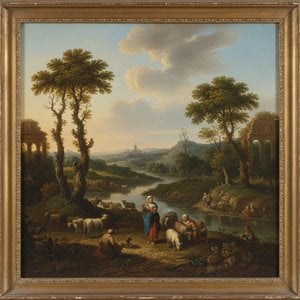
Nicolaes Berchem e l'Età dell'Oro Olandese: Un Rifugio Idilliaco tra Realismo e Mito
Esplora l'incantevole mondo di Nicolaes Berchem e la pittura del Secolo d'Oro Olandese. Analisi approfondita, simbolismo nascosto e l'eredità artistica di un maestro del paesaggio arcadiaco.

Charles Leickert: Capturing the Dutch Golden Age Light – A Comprehensive Study of Technique, Context, and Legacy
Explore the captivating winter landscapes of Charles Leickert, a master of Dutch Golden Age light & atmosphere. Discover his techniques, symbolism, and lasting legacy – a comprehensive study for art enthusiasts and collectors.

Golden Age Reflections: Dutch Baroque Painting & Cultural Innovation
Explore the Dutch Golden Age of painting! Discover key artists like Vermeer & ter Borch, their innovative techniques, and the rich cultural context behind these Baroque masterpieces. Learn about collecting & appreciating this iconic art period.



