Anteprima in scala reale
 Condividi
 Condividi
 Dettagli
 Guida stampabile

 Scarica
 Articoli simili
 Radiografia
 Slideshow
 Statistiche
Landscape Mural
 Oil On Canvas
- WallArt
- Hudson River School
 1852
1852 277.0 x 232.0 cm
 Taft Museum of Art
 Leggi tutto
Giclée / Stampe d'arte
Stampa giclée o su tela di qualità museale, con produzione rapida e diverse opzioni di finitura. ( Ordina la riproduzione dipinta a mano Passa all'immagine digitale)




P118B €10

P118H €10

P118W €10

P438Z €10

P508JH €12

P508YH €12

P805H €10

P805Z €10

P919BZ €10

P919G €10

P919XJ €10

P959ZH €10

P968JZ €12

W106C €8

W218G €10

W218JH €8

W218Y €10

W307PJ €10

W316G €10

W316PJ €8

W316Y €10

W398PJ €8

W4111J €10

W500HY €15

W500JH €15

W692G €12

W849H €8

W940BG €15

W953PJ €8




Scegli tra le nostre dimensioni predefinite, che rispettano le proporzioni originali dell'opera d'arte.

Inserisci la larghezza e l'altezza desiderate, per adattarle alla tua cornice o alla tua parete. Una stampa può essere solo ritagliata, mai resa più grande dell'immagine originale; pertanto, un formato con una forma differente comporterà la perdita di una parte dell'opera. Ti invieremo un mockup digitale da approvare prima di procedere con la stampa. L'immagine mostrata in questa pagina non rappresenta il ritaglio reale — solo il mockup lo mostra.
Consegna in tutto il mondo () in 2 settimane invece delle normali 4/5 settimane. (21 Ottobre)

Spedizione espressa gratuita in tutto il mondo

Tela in lino di alta qualità

Assicurazione completa sulla spedizione

Garanzia di rimborso dei dazi doganali

Garanzia di perfetta fedeltà cromatica

Politica di reso entro 100 giorni (solo per difetti di fabbricazione)

Garanzia di rimborso al 100%

Sconto per acquisti multipli
 L'opzione vetro è disponibile solo per dimensioni inferiori a 110 cm

Landscape Mural
Giclée / Stampe d'arte
Dimensioni della riproduzione
-


Prezzo totale
€ 54
A Serene Vision of the Hudson Valley: Robert Seldon Duncanson’s “Landscape Mural”
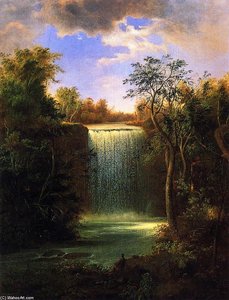
Robert Seldon Duncanson's "Landscape Mural," painted in 1852, isn’t merely a depiction of a river valley; it’s a carefully constructed meditation on nature, memory, and the burgeoning American identity. This monumental work, now residing within the Taft Museum of Art in Cincinnati, Ohio, stands as a pivotal piece of the Hudson River School—a movement that sought to capture the sublime beauty of America's landscapes with scientific precision and Romantic fervor. Duncanson, an African-American artist navigating a deeply segregated society, imbued this painting with layers of meaning, subtly reflecting on themes of race, spirituality, and the relationship between humanity and the natural world.
The scene unfolds beneath a brooding, yet ultimately benevolent, sky – a classic Hudson River School motif. A gently flowing river dominates the composition, its surface mirroring the clouds above in a delicate dance of reflection. The foreground is anchored by a cluster of trees, their branches reaching upwards like supplicating arms, while a distant bridge arches gracefully across the valley, hinting at civilization’s presence without overwhelming the scene's tranquility. Notice the meticulous detail with which Duncanson renders each element – the texture of bark, the ripples in the water, the subtle gradations of color in the foliage. This commitment to realism was paramount for the Hudson River School artists, who sought to elevate landscape painting to a level of scientific accuracy and artistic merit.
The Painter’s Palette: Technique and Materials
Duncanson employed the traditional technique of *fresco secco*, applying his pigments directly onto dry plaster. This method, favored by Renaissance masters, demanded both skill and speed – the artist had to work quickly before the plaster dried and the colors set. The resulting surface is remarkably durable, allowing the painting to retain its vibrancy across centuries. The color palette is predominantly cool—greens, blues, and grays—creating a sense of atmospheric depth and distance. Duncanson masterfully utilizes *chiaroscuro*, the dramatic contrast between light and shadow, to sculpt the forms and heighten the emotional impact of the scene. The subtle variations in tone suggest a soft, diffused light, characteristic of an overcast day – a common occurrence in the Ohio Valley during that period.
A Symbol of Progress and Identity
Beyond its aesthetic beauty, “Landscape Mural” carries significant historical weight. Duncanson’s work emerged during a time of profound social change in America—the abolitionist movement was gaining momentum, and discussions about race and equality were becoming increasingly urgent. While the painting itself doesn't explicitly address these issues, scholars have interpreted it as a subtle commentary on the African-American experience. The river, often associated with journeys and transitions, can be seen as a metaphor for the arduous path to freedom and self-determination. The bridge, representing connection and progress, symbolizes the hope for a more just and equitable future. Furthermore, Duncanson’s decision to depict a serene landscape—a departure from the often-grim realities of life in 19th-century America—suggests a yearning for spiritual renewal and harmony with nature.
Emotional Resonance: A Legacy of Tranquility
Looking at “Landscape Mural” today, one is immediately struck by its profound sense of tranquility. The painting invites the viewer to step into the scene, to breathe in the fresh air, and to lose oneself in the beauty of the natural world. It’s a testament to Duncanson's skill as an artist—his ability to capture not just the appearance of a landscape, but also its emotional essence. The painting’s enduring appeal lies in its capacity to evoke feelings of peace, contemplation, and connection to something larger than oneself. It remains a powerful reminder of the transformative power of art and the importance of preserving our natural heritage.
Domande e risposte
Quale tonalità di fondo attraversa "Landscape Mural" di Robert Seldon Duncanson?
"Landscape Mural" tende verso una tonalità Green to Violet Spectrum.
Di cosa è fatto "Landscape Mural"?
"Landscape Mural" è realizzata in Oil On Canvas.
Quanto è satura la tavolozza di "Landscape Mural"?
I colori di "Landscape Mural" di Robert Seldon Duncanson hanno una saturazione Balanced Soft. La saturazione descrive quanto i colori siano vivaci o attenuati.
Opere correlate


Biografia dell'artista
Robert Seldon Duncanson: Una Vita e un'Eredità
- Nato: Fayetteville, New York (circa 1821)
- Morto: 21 dicembre 1872
- Origine: ArtsDot
Primi Anni e Sviluppo Artistico
- La famiglia di Duncanson era di origine europea e africana. Suo padre, John Dean Duncanson, era un commerciante nero libero che instillò nei suoi figli il valore del duro lavoro e dell'istruzione.
- La famiglia si trasferì a Monroe, Michigan, dove Robert fece apprendistato come falegname e pittore. Dimostrò presto un talento per l'arte, portandolo a dedicarsi al ritratto.
- Nel 1840, si trasferì a Cincinnati, Ohio, un fiorente centro culturale noto come la "Atene dell'Ovest". Questo ambiente fornì opportunità di crescita artistica ed esposizione.
- Duncanson era in gran parte autodidatta, studiando stampe e incisioni, disegnando dalla natura e copiando opere di altri artisti. Mancava di una formazione formale ma sviluppò un occhio acuto e una tecnica abile.
Stile Artistico e Influenze
- Influenza della Scuola del Fiume Hudson: Lo stile di Duncanson fu fortemente influenzato dalla Scuola del Fiume Hudson, nota per le sue romantiche rappresentazioni della natura selvaggia americana. Artisti come Thomas Cole furono ispirazioni significative.
- Focus sul Paesaggio: Passò dal ritratto a concentrarsi principalmente sui paesaggi, catturando scene della Valle dell'Ohio e oltre.
- Romanticismo: Le sue opere spesso trasmettevano un senso di grandiosità, tranquillità e connessione spirituale con la natura, caratteristico del Romanticismo.
- Palette Colori e Tecnica: Duncanson impiegò una ricca tavolozza di colori e dettagli meticolosi nei suoi dipinti, dimostrando una padronanza della tecnica.
Principali Realizzazioni e Riconoscimenti
- Prime Mostre: Le sue opere furono esposte alla Cincinnati Academy of Fine Arts fin dal 1842, guadagnandosi il riconoscimento all'interno della comunità artistica locale.
- Tour Europeo (1853-1854): Un punto di svolta significativo nella sua carriera fu un viaggio in Europa dove studiò i maestri europei e ampliò i suoi orizzonti artistici.
- Acclamazione Internazionale: Duncanson ottenne un riconoscimento internazionale, esponendo le sue opere in Inghilterra, Scozia, Canada e negli Stati Uniti. Diventò il primo artista afroamericano a ottenere una tale ampia approvazione.
- Tradizione della Valle dell'Ohio: Ha svolto un ruolo chiave nello sviluppo della tradizione paesaggistica della Valle dell'Ohio, contribuendo in modo significativo alla sua identità artistica.
Significato Storico e Eredità
- Pioniere per gli Artisti Neri: Il successo di Duncanson abbatté le barriere per gli artisti afroamericani durante un'epoca di pregiudizio e discriminazione razziale. Servì da ispirazione per le generazioni future.
- Identità Razziale nell'Arte: Gli storici dell'arte dibattono sull'estensione in cui la sua razza influenzò la sua espressione artistica, alcuni suggerendo rappresentazioni simboliche sottili di temi razziali all'interno dei suoi paesaggi.
- Figura Dimenticata Riscoperta: Per molti anni, l'opera di Duncanson fu ampiamente trascurata. La borsa di studio e le mostre recenti hanno portato a una rinnovata attenzione ai suoi contributi alla storia dell'arte americana.
- Una Testimonianza di Resilienza: La sua storia di vita è una testimonianza della resilienza e del talento degli afroamericani di fronte all'avversità, dimostrando la loro capacità di raggiungere l'eccellenza artistica nonostante le sfide sistemiche.

Robert Seldon Duncanson
1821 - 1872 , Stati Uniti d'America
Informazioni rapide
- Artisti Influenti: ['Thomas Cole']
- Data Di Morte: 21 dicembre 1872
- Data Di Nascita: c. 1821
- Luogo Di Nascita: Fayetteville, USA
- Movimento Artistico: Hudson River School
- Nazionalità: Americano
- Nome Completo: Robert Seldon Duncanson
- Opere Notevoli:
- Roses Still Life
- Waterfall...
- Vulture and Its Prey
- Minnenopa Falls
Articoli correlati

Robert Spencer: Luminism, Narrative & the American Landscape Tradition
Explore the captivating world of Luminism & the Hudson River School with our expert analysis. Discover the history, artists, and enduring beauty of 19th-century American landscape painting. Find museum-quality reproductions at ArtsDot.

Echoes of Arcadia: Nostalgia & Transformation in Vintage Landscape Art
Explore the evocative world of vintage landscape art! Discover the history, artists & emotional power behind masterpieces from the Hudson River School & beyond. Expert insights for collectors & enthusiasts.
Robert Seldon Duncanson: Landscape, Abolitionism & Shaping American Identity
Discover Robert Seldon Duncanson, the first internationally acclaimed African American landscape artist. Explore his connection to the Hudson River School, abolitionism, and enduring legacy through serene vistas & powerful symbolism.

I 10 Capolavori della Scuola del Fiume Hudson: Arte, Storia e Decorazioni Raffinate
Esplora i 10 capolavori della Scuola del Fiume Hudson: Cole, Church e Bierstadt. Scopri la storia, le tecniche e l'emozione di questi iconici paesaggi americani. Trova riproduzioni artistiche di alta qualità su ArtsDot.com!
The Sublime Landscape: Exploring the Hudson River School Movement
Explore the captivating world of the Hudson River School! Discover the history, artists, and defining characteristics of this iconic American art movement. Learn about Romanticism's influence & find inspiration for your collection.