


 Anteprima in scala reale
 Condividi
 Condividi
 Dettagli
 Guida
Guida

 Scarica
 Articoli simili
 Radiografia
 Slideshow
 Statistiche
The ellipse

 Leggi tutto
Riproduzione a olio fatta a mano
Olio su tela dipinto a mano nelle tue dimensioni e con la tua cornice, realizzato su ordinazione dai nostri artisti. ( Passa alle stampe Passa all'immagine digitale)




P118B $10

P118H $10

P118W $10

P438Z $10

P508JH $12

P508YH $12

P805H $10

P805Z $10

P919BZ $10

P919G $10

P919XJ $10

P959ZH $10

P968JZ $12

W106C $8

W218G $10

W218JH $8

W218Y $10

W307PJ $10

W316G $10

W316PJ $8

W316Y $10

W398PJ $8

W4111J $10

W500HY $15

W500JH $15

W692G $12

W849H $8

W940BG $15

W953PJ $8




Scegli tra le nostre dimensioni predefinite, che rispettano le proporzioni originali dell'opera d'arte.

È possibile inserire dimensioni personalizzate per adattare l'opera a una cornice o a uno spazio specifico. Se la dimensione selezionata non corrisponde alle proporzioni dell'immagine originale, provvederemo a ritagliare l'opera o a estendere il dipinto con elementi aggiuntivi dipinti a mano. Un mockup digitale ti sarà inviato per approvazione prima dell'inizio della produzione.
Si prega di notare che l'anteprima a schermo non riflette il ritaglio o l'estensione effettivi. Solo il mockup mostrerà accuratamente la composizione finale.
Sebbene siano disponibili dimensioni personalizzate, consigliamo di selezionare una dimensione dall'elenco predefinito per preservare le proporzioni originali.
Dopo l'ordine, il team di ArtsDot.com contatterà il cliente via e-mail per ricevere le istruzioni e fornirà un'anteprima del mockup
Consegna in tutto il mondo () in 3/4 settimane anziché nelle normali 5 settimane. (23 Settembre). Nessun compromesso sulla qualità.

Spedizione espressa gratuita in tutto il mondo

Tela in lino di alta qualità

Assicurazione completa sulla spedizione

Garanzia di rimborso dei dazi doganali

Garanzia di perfetta fedeltà cromatica

Politica di reso entro 100 giorni (solo per difetti di fabbricazione)

Garanzia di rimborso al 100%

Sconto per acquisti multipli
 L'opzione vetro è disponibile solo per dimensioni inferiori a 110 cm

The ellipse
Tecnica di riproduzione
Dimensioni della riproduzione
-


Prezzo totale
$ 263
René Magritte’s “The Ellipse”: A Surrealist Enigma
René Magritte's "The Ellipse," painted in 1948, is not merely a depiction of a man holding a gun to his mouth; it’s a meticulously constructed visual paradox, a profound meditation on perception, reality, and the unsettling nature of representation. This iconic work, rendered in gouache on paper, embodies the core tenets of Surrealism – a movement Magritte both embraced and subtly subverted. The painting immediately confronts the viewer with an arresting image: a figure, seemingly ordinary yet imbued with a palpable sense of dread, positioned against a stark, almost clinical backdrop. The man’s posture, the gun's placement, and the overall composition create a disquieting tension that lingers long after the initial viewing.
Magritte’s artistic journey was deeply shaped by personal tragedy – the untimely death of his mother at a young age. This event, coupled with his early exposure to Impressionism before gravitating towards Surrealism, instilled within him a fascination with hidden meanings and the power of suggestion. “The Ellipse” can be interpreted as an extension of this preoccupation; it’s not about literal depiction but rather about evoking a feeling, a sense of unease that stems from the collision of familiar elements in an unfamiliar arrangement. The painting's deliberate ambiguity forces the viewer to actively engage with the artwork, questioning what is being presented and how it relates to their own understanding of the world.
Symbolism and Interpretation
The symbolism within “The Ellipse” is layered and open to interpretation, a hallmark of Magritte’s approach. The man holding the gun is perhaps the most obvious element, representing self-destruction, vulnerability, or even a symbolic gesture of defiance against an unseen force. However, the context surrounding this central image – the stark background, the muted colors, and the almost detached manner in which the scene is presented – complicates any simplistic reading. The ellipse itself, a geometric shape often associated with precision and order, contrasts sharply with the chaotic emotional state suggested by the figure’s posture.
Furthermore, the painting's placement within Magritte’s “Vache” period (French for ‘nasty’ or ‘mean’) is significant. This phase saw a shift in his artistic style towards more provocative and often unsettling imagery, characterized by grotesque figures and jarring juxtapositions. The use of bright, almost garish colors during this time was intended to shock the viewer and challenge conventional notions of beauty and representation. The painting’s title, “The Ellipse,” adds another layer of intrigue; it could refer to a mathematical concept – a curve defined by two foci – or simply serve as a deliberate misdirection, further emphasizing the artwork's surreal quality.
Technique and Artistic Style
Magritte’s technique in "The Ellipse" is deceptively simple. He employs gouache on paper, a medium known for its opacity and ability to create rich, layered colors. The brushstrokes are loose and expressive, contributing to the painting's overall sense of immediacy and emotional intensity. Despite this seemingly straightforward approach, Magritte meticulously crafted each element of the composition, paying close attention to detail and creating a carefully balanced visual arrangement. The use of light and shadow is particularly effective in highlighting the figure’s form and emphasizing his vulnerability.
The painting's style firmly aligns with Surrealism, but it also incorporates elements of Cubism and Dadaism – movements that Magritte admired and drew inspiration from. The fragmented perspective, the distorted proportions, and the deliberate ambiguity all contribute to the artwork’s unsettling effect. Magritte wasn’t simply replicating reality; he was actively constructing a new visual language, one that challenged viewers to question their assumptions about perception and representation.
A Timeless Masterpiece: Reproduction Possibilities
ArtsDot offers meticulously crafted hand-painted reproductions of “The Ellipse,” allowing art lovers to experience the profound impact of this iconic work in a tangible way. Our skilled artists replicate Magritte’s distinctive style, capturing the painting's subtle nuances and emotional depth with remarkable accuracy. Whether you choose a large-scale canvas for your grand salon or a smaller print for your study, our reproductions provide an authentic representation of this seminal Surrealist masterpiece.
Beyond simply replicating the image, ArtsDot’s team ensures that each reproduction is infused with the same artistic intention as the original – to provoke thought, evoke emotion, and challenge conventional ways of seeing. Explore our selection of “The Ellipse” reproductions today and bring this enigmatic work into your home or office.
Opere correlate


Biografia dell'artista
primi anni di vita e inizi artistici
René François Ghislain Magritte, un rinomato artista surrealista belga, nacque il 21 novembre 1898 a Lessines, provincia dell'Hainaut, Belgio. La sua giovinezza è rimasta in parte misteriosa, con poco noto sul suo infanzia. Tuttavia, è documentato che iniziò le lezioni di disegno nel 1910.evoluzione artistica e influenze
Lo stile artistico di Magritte si è evoluto notevolmente negli anni, influenzato da vari movimenti come l'impressionismo, il futurismo e il cubismo. I suoi primi dipinti, datati intorno al 1915, erano nello stile impressionista. Dal 1916 al 1918, studiò all’Académie Royale des Beaux-Arts a Bruxelles, sotto Constant Montald.periodo surrealista e opere notevoli
Nel 1926, Magritte produsse il suo primo dipinto surrealista, Il Cavaliere Perduto (Le Jockey Perdu), segnando l'inizio della sua associazione con il movimento surrealista. Il suo lavoro è caratterizzato da immagini stimolanti, spesso che raffigurano oggetti ordinari in contesti insoliti, sfidando la percezione della realtà degli osservatori.- Les Amants (1927-1928), una serie di dipinti che presentano persone con panni che coprono i loro volti, si presume sia stata ispirata dalla storia della morte della madre.
- Gli Amanti, un'altra opera iconica, presenta una coppia che si bacia con i volti coperti da panni bianchi, invitando lo spettatore a riflettere sull’amore e l’identità. (disponibile per l'acquisto come riproduzione su olio fatta a mano o stampa su tela presso ArtsDot.com)
vita successiva e eredità
Il lavoro di Magritte è stato esposto negli Stati Uniti nel 1936 e nuovamente in due mostre retrospective, una al Museum of Modern Art nel 1965 e l'altra al Metropolitan Museum of Art nel 1992. È rimasto impegnato nella sinistra politica ma ha sostenuto l’autonomia artistica. Musei notevoli che espongono le opere di Magritte:- Musées Royaux des Beaux-Arts de Belgique, Bruxelles, Belgio (scopri i capolavori dei musées royaux des beaux-aarts de belgique su ArtsDot.com)
- Magritte Museum, parte dei musées royaux des beaux-arts de belgique, che espone la più grande collezione di opere di Magritte al mondo.
Conclusione
L'eredità di René Magritte come maestro surrealista è duratura, con le sue immagini stimolanti che continuano a ispirare e affascinare. Il suo lavoro, caratterizzato da un unico blend tra l’ordinario e l’inaspettato, rimane una pietra angolare dell’arte surrealista. Scopri di più su René Magritte
René Magritte
1898 - 1967 , belgio
Informazioni rapide
- Artisti Influenti:
- Impressionismo
- Futurismo
- Cubismo
- Data Di Nascita: 21 novembre 1898
- Luogo Di Nascita: Lessines, Belgio
- Movimento Artistico: Surrealismo
- Nazionalità: Belga
- Nome Completo: René François Ghislain Magritte
- Opere Notevoli:
- Le Jockey Perdu
- Gli Amanti
- La Traduzione delle immagini
- Tempo trasfixo
- La condizione umana
Articoli correlati

Beyond Reality: A Beginner's Guide to the Magic of Surrealism for the Modern Collector
Embark on a visual journey into Surrealism. Discover the magic of dreamlike landscapes, iconic masters like Dalí, and expert tips for collecting surrealist masterpieces to transform your home with intrigue and wonder.

Pop Surrealism: A Collision of Culture, Dreams & the Subconscious in Post-War Art
Explore the captivating world of Pop Surrealism with ArtsDot. Discover key artists like George Condo & Robert Williams, investment potential, and the movement's cultural impact. Expert insights for collectors.

Surrealismo: 10 Capolavori che Hanno Definito un Movimento Artistico | .it
Esplora i 10 capolavori del Surrealismo con .it! Scopri le storie di Dalí, Magritte e Miró, simbolismo e colori che hanno rivoluzionato l'arte. Stampe d'arte di alta qualità per la tua casa. Esplora la collezione online!
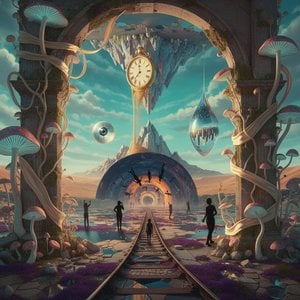
Dreamscapes & Disrupted Realities: Exploring Surrealism's Enduring Influence
Explore the fascinating world of Surrealism! Discover its origins, key artists like Dalí & Magritte, and enduring influence on art & culture. Expert insights & high-quality reproductions at ArtsDot.

I 10 Capolavori Surrealisti che Hanno Definito un Movimento Artistico | ArtsDot
Esplora i 10 capolavori del Surrealismo con ArtsDot.com! Scopri le storie di Dalí, Magritte e altri maestri, il simbolismo nascosto e l'impatto di questo movimento artistico rivoluzionario. Quadri surrealisti per la tua casa: acquista stampe d'arte di alta qualità online. Scopri tutte le opere su W


