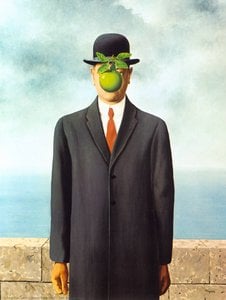
Anteprima in scala reale
 Condividi
 Condividi
 Dettagli

 Scarica immagine
 Articoli simili
 Radiografia
 Slideshow
Elective Affinities
 Acrylic On Canvas
- WallArt
- Surrealist Painting
 1933
1933 41.0 x 33.0 cm
 Leggi tutto
Giclée / Stampe d'arte
Stampa giclée o su tela di qualità museale, con produzione rapida e diverse opzioni di finitura. ( Passa alla versione dipinta a mano Passa all'immagine)




P118B $10

P118H $10

P118W $10

P438Z $10

P508JH $12

P508YH $12

P805H $10

P805Z $10

P919BZ $10

P919G $10

P919XJ $10

P959ZH $10

P968JZ $12

W106C $8

W218G $10

W218JH $8

W218Y $10

W307PJ $10

W316G $10

W316PJ $8

W316Y $10

W398PJ $8

W4111J $10

W500HY $15

W500JH $15

W692G $12

W849H $8

W940BG $15

W953PJ $8




Scegli tra le nostre dimensioni predefinite, che rispettano le proporzioni originali dell'opera d'arte.

È possibile inserire dimensioni personalizzate per adattare l'opera a una cornice o a uno spazio specifico. Se la dimensione selezionata non corrisponde alle proporzioni dell'immagine originale, procederemo al ritaglio dell'opera o all'estensione dell'immagine con un bordo specchiato o a tinta unita. Un mockup digitale ti verrà inviato per approvazione prima dell'inizio della produzione.
Si prega di notare che l'anteprima a schermo non riflette il ritaglio o l'estensione effettivi. Solo il mockup mostrerà accuratamente la composizione finale.
Sebbene siano disponibili dimensioni personalizzate, si raccomanda di selezionare una dimensione dall'elenco predefinito per preservare le proporzioni originali.
Consegna in tutto il mondo () in 2 settimane invece delle normali 4/5 settimane. (10 Agosto)

Spedizione espressa gratuita in tutto il mondo

Tela in lino di alta qualità

Assicurazione completa sulla spedizione

Garanzia di rimborso dei dazi doganali

Garanzia di fedeltà cromatica dell'originale

Politica di reso entro 60 giorni (solo per difetti di fabbricazione)

Garanzia di rimborso al 100%

Sconto per acquisti multipli
 L'opzione vetro è disponibile solo per dimensioni inferiori a 110 cm

Elective Affinities
Giclée / Stampe d'arte
Dimensioni della riproduzione
-


Prezzo totale
$ 63
Descrizione del pezzo
Elective Affinities: A Surrealist Enigma
René Magritte’s *Elective Affinities*, painted in 1933, isn't merely a depiction of a bird and an egg within a cage; it’s a meticulously crafted invitation to question the very nature of perception and representation – a cornerstone of the artist’s enduring surrealist vision. This deceptively simple image, rendered in oil on canvas with a quiet, almost clinical precision, immediately unsettles the viewer, prompting a slow recognition that something is profoundly amiss. The cage itself, a commonplace object, becomes imbued with an unsettling significance, its bars suggesting confinement and restriction while simultaneously framing a scene of unexpected intimacy – the bird perched delicately upon the egg. The choice to depict this particular arrangement isn’t arbitrary; it's rooted in Johann Wolfgang von Goethe’s 1809 novel of the same name, exploring the concept of “elective affinities” – the inexplicable attraction between seemingly unrelated objects or individuals. Magritte, however, doesn’t offer a straightforward illustration of the philosophical idea but rather transforms it into a visual puzzle, forcing us to confront our own assumptions about how we interpret the world around us.The Seeds of Surrealism and a Personal Trauma
Understanding *Elective Affinities* requires delving into the formative experiences that shaped René Magritte’s artistic trajectory. Born in Lessines, Belgium, in 1898, Magritte's early life was marked by a deeply unsettling event: the suicide of his mother when he was just thirteen years old. The image of her body recovered from the River Sambre, with her dress obscuring her face, became a haunting motif that would subtly permeate his later work – manifesting in veiled figures and a persistent exploration of hidden realities. This early trauma instilled within him a fascination with mystery, loss, and the unsettling power of what remains unseen. It’s believed this experience fundamentally altered his perception of reality, leading him to reject traditional artistic conventions and seek ways to represent the subconscious mind. His initial training in Impressionism provided a foundation, but it was the influence of Giorgio de Chirico's enigmatic paintings – particularly *The Song of Love* – that truly ignited his surrealist sensibilities, introducing him to the power of juxtaposing familiar objects in unexpected contexts.Symbolic Layers and Artistic Technique
Beyond its philosophical underpinnings, *Elective Affinities* is a masterclass in Magritte’s distinctive artistic technique. He employs a meticulous realism, rendering each element – the cage, the bird, the egg – with painstaking detail. Yet, this apparent precision serves to heighten the painting's strangeness. The muted color palette—primarily browns and grays—contributes to the overall sense of detachment and unease. The lighting is soft and diffused, casting subtle shadows that further obscure details and create a dreamlike atmosphere. Magritte’s use of perspective is deliberately flattened, eliminating depth and creating a feeling of claustrophobia within the confines of the cage. The bird's posture – perched confidently atop the egg – suggests a sense of dominion or perhaps even a quiet defiance against its confinement. Notably, the painting was created during a period when Magritte was grappling with his own artistic identity, experimenting with different styles and techniques before settling into his signature surrealist aesthetic.A Reflection on Perception and Representation
Ultimately, *Elective Affinities* is not simply about a bird and an egg; it’s a meditation on the relationship between perception and representation. Magritte challenges us to question what we see – or think we see – and to consider how our own experiences and preconceptions shape our understanding of the world. The painting invites us to recognize that reality, as we perceive it, is often constructed through layers of interpretation and that seemingly simple objects can hold profound symbolic meaning. It’s a poignant reminder that truth isn't always readily apparent and that sometimes, the most compelling art lies in its ability to provoke questions rather than provide answers. The reproduction offered by ArtsDot.com allows you to bring this enigmatic masterpiece into your own space, inviting contemplation and sparking dialogue about the nature of reality itself.Opere correlate


Biografia dell'artista
primi anni di vita e inizi artistici
René François Ghislain Magritte, un rinomato artista surrealista belga, nacque il 21 novembre 1898 a Lessines, provincia dell'Hainaut, Belgio. La sua giovinezza è rimasta in parte misteriosa, con poco noto sul suo infanzia. Tuttavia, è documentato che iniziò le lezioni di disegno nel 1910.evoluzione artistica e influenze
Lo stile artistico di Magritte si è evoluto notevolmente negli anni, influenzato da vari movimenti come l'impressionismo, il futurismo e il cubismo. I suoi primi dipinti, datati intorno al 1915, erano nello stile impressionista. Dal 1916 al 1918, studiò all’Académie Royale des Beaux-Arts a Bruxelles, sotto Constant Montald.periodo surrealista e opere notevoli
Nel 1926, Magritte produsse il suo primo dipinto surrealista, Il Cavaliere Perduto (Le Jockey Perdu), segnando l'inizio della sua associazione con il movimento surrealista. Il suo lavoro è caratterizzato da immagini stimolanti, spesso che raffigurano oggetti ordinari in contesti insoliti, sfidando la percezione della realtà degli osservatori.- Les Amants (1927-1928), una serie di dipinti che presentano persone con panni che coprono i loro volti, si presume sia stata ispirata dalla storia della morte della madre.
- Gli Amanti, un'altra opera iconica, presenta una coppia che si bacia con i volti coperti da panni bianchi, invitando lo spettatore a riflettere sull’amore e l’identità. (disponibile per l'acquisto come riproduzione su olio fatta a mano o stampa su tela presso ArtsDot.com)
vita successiva e eredità
Il lavoro di Magritte è stato esposto negli Stati Uniti nel 1936 e nuovamente in due mostre retrospective, una al Museum of Modern Art nel 1965 e l'altra al Metropolitan Museum of Art nel 1992. È rimasto impegnato nella sinistra politica ma ha sostenuto l’autonomia artistica. Musei notevoli che espongono le opere di Magritte:- Musées Royaux des Beaux-Arts de Belgique, Bruxelles, Belgio (scopri i capolavori dei musées royaux des beaux-aarts de belgique su ArtsDot.com)
- Magritte Museum, parte dei musées royaux des beaux-arts de belgique, che espone la più grande collezione di opere di Magritte al mondo.
Conclusione
L'eredità di René Magritte come maestro surrealista è duratura, con le sue immagini stimolanti che continuano a ispirare e affascinare. Il suo lavoro, caratterizzato da un unico blend tra l’ordinario e l’inaspettato, rimane una pietra angolare dell’arte surrealista. Scopri di più su René Magritte
René Magritte
1898 - 1967 , belgio
Informazioni rapide
- Artisti Influenti:
- Impressionismo
- Futurismo
- Cubismo
- Data Di Nascita: 21 novembre 1898
- Luogo Di Nascita: Lessines, Belgio
- Movimento Artistico: Surrealismo
- Nazionalità: Belga
- Nome Completo: René François Ghislain Magritte
- Opere Notevoli:
- Le Jockey Perdu
- Gli Amanti
- La Traduzione delle immagini
- Tempo trasfixo
- La condizione umana
Articoli correlati

René Magritte: I 25 Capolavori che Definiscono il Surrealismo | ArtsDot
Esplora i 25 capolavori di René Magritte, il maestro del surrealismo. Scopri storie, significati e tecniche dietro opere iconiche come 'L'Impero delle Luci'. Trova riproduzioni d'arte su tela e idee per decorazioni uniche su ArtsDot.com.

Feathered Visions: A Historical & Artistic Exploration of Birds in Painting
Explore the rich history of birds in painting! Discover symbolism, artistic movements & master artists like Audubon. High-quality reproductions available at ArtsDot.

L'Enigma della Realtà: René Magritte e la Sovversione Poetica del Quotidiano
Esplora l'enigmatico universo di René Magritte con ArtsDot. Analisi approfondite del surrealismo, della pittura metafisica e dei temi ricorrenti nelle sue opere più iconiche. Scopri il significato nascosto dietro le immagini e la sua influenza sull'arte contemporanea.

Surrealismo: 10 Capolavori che Hanno Definito un Movimento Artistico | .it
Esplora i 10 capolavori del Surrealismo con .it! Scopri le storie di Dalí, Magritte e Miró, simbolismo e colori che hanno rivoluzionato l'arte. Stampe d'arte di alta qualità per la tua casa. Esplora la collezione online!
Dreamscapes & Disrupted Realities: Exploring Surrealism's Enduring Influence
Explore the fascinating world of Surrealism! Discover its origins, key artists like Dalí & Magritte, and enduring influence on art & culture. Expert insights & high-quality reproductions at ArtsDot.