


 Anteprima in scala reale
 Invia
Invia Condividi
 Dettagli opera
 Guida
Guida

 Scarica
 Simili
 Radiografia
 Slideshow
 Q&A
Q&A Statistiche
San Michele


 Espandi i dettagli
Riproduzione a olio fatta a mano
Olio su tela dipinto a mano nelle tue dimensioni e con la tua cornice, realizzato su ordinazione dai nostri artisti. ( Passa alle stampe Passa all'immagine digitale)




P118B €10

P118H €10

P118W €10

P438Z €10

P508JH €12

P508YH €12

P805H €10

P805Z €10

P919BZ €10

P919G €10

P919XJ €10

P959ZH €10

P968JZ €12

W106C €8

W218G €10

W218JH €8

W218Y €10

W307PJ €10

W316G €10

W316PJ €8

W316Y €10

W398PJ €8

W4111J €10

W500HY €15

W500JH €15

W692G €12

W849H €8

W940BG €15

W953PJ €8




Scegli tra le nostre dimensioni predefinite, che rispettano le proporzioni originali dell'opera d'arte.

Inserisci la larghezza e l'altezza desiderate, per adattarle alla tua cornice o alla tua parete. Trattandosi di un'opera dipinta a mano, in caso di dimensioni con un formato differente, l'artista può estendere leggermente il dipinto oltre i bordi dell'immagine o ritagliare una piccola parte — la scelta spetta a te. Ti invieremo un mockup digitale da approvare prima che la realizzazione abbia inizio. L'immagine mostrata in questa pagina non rappresenta il risultato finale — solo il mockup lo fa.
Dopo l'ordine, il team di ArtsDot.com contatterà il cliente via e-mail per ricevere le istruzioni e fornirà un'anteprima del mockup
Consegna in tutto il mondo () in 3/4 settimane anziché nelle normali 5 settimane. (28 Ottobre). Nessun compromesso sulla qualità.

Spedizione espressa gratuita in tutto il mondo

Tela in lino di alta qualità

Assicurazione completa sulla spedizione

Garanzia di rimborso dei dazi doganali

Garanzia di fedeltà cromatica assoluta

Politica di reso entro 100 giorni (solo per difetti di fabbricazione)

Garanzia di rimborso al 100%

Offerta per acquisti multipli
 L'opzione vetro è disponibile solo per dimensioni inferiori a 110 cm

San Michele
Tecnica di riproduzione
Dimensioni riproduzione
-


Prezzo finale calcolato
€ 232
Raphael: The Poet Painter of Urbino
Raffaello Sanzio da Urbino, known simply as Raphael, was born between March 28 and April 6, 1483, in the small but culturally rich city of Urbino, Italy. His father Giovanni Santi served as a court painter to Duke Federico da Montefeltro, providing young Raphael with his earliest artistic exposure. This upbringing immersed him in an environment that valued art and intellectual pursuits.
Federico’s court was more literary than artistic, but Giovanni Santi was a poet of sorts as well as a painter, and had written a rhymed chronicle of the life of Federico, and both wrote the texts and produced the decor for masque-like court entertainments. His poem to Federico shows him as keen to demonstrate awareness of the most advanced North Italian painters, and Early Netherlandish artists as well.
Growing up in this environment gave Raphael the excellent manners and social skills stressed by Giorgio Vasari – who described him as “fully trained ‘master’” – and he was integrated into the central circle of the ruling family. Raphael’s father died in 1494 when Raphael was eleven, and Raphael seems to have played a role in managing the family workshop from this point.
Early Artistic Development & Influences
Raphael's artistic journey can be categorized into three distinct phases. His early Umbrian period was heavily influenced by his father’s style and the artistic atmosphere of Urbino, characterized by a gentle grace and attention to detail. He likely took on responsibilities within the family workshop, further honing his skills under the guidance of local artists.
In 1504, he moved to Florence, where he absorbed the stylistic traditions of Leonardo da Vinci and Michelangelo – whose fighting warriors from the Battle of Anghiari provided an extraordinary example of martial art (the painting deteriorated very rapidly because of shortcomings in Leonardo’s experimental technique and so is no longer visible). Raphael’s imagination which is particularly developed in the details of St Michael, was more balanced in the figure of the Archangel, the focus of the entire composition.
The St. Michael Fresco: Symbolism & Technique
The St. Michael fresco commissioned by Pope Julius II is a masterpiece of the Florentine period and echoes those stimuli which Raphael received from the great masters who worked in Florence or whose paintings were visible there.
The painting depicts Saint Michael battling Satan, symbolizing God triumphing over evil. Raphael’s meticulous attention to detail—particularly the rendering of musculature and drapery—demonstrates his mastery of anatomy and perspective. He employed linear perspective to create depth and volume, while his understanding of human anatomy allowed him to depict the figures with naturalism and grace.
The artist utilized oil on poplar wood – a common support for Italian paintings during the Renaissance period – achieving a luminous finish that captures the drama of the scene. Raphael’s style is characterized by harmony, balance, and clarity of form—qualities that would become hallmarks of Neoclassical painting centuries later.
Historical Context & Legacy
The St Michael fresco was created during the High Renaissance period, which was characterized by a renewed interest in classical art and culture. Raphael’s work profoundly influenced subsequent generations of artists, establishing him as one of the most revered figures in Western art history.
His legacy extends beyond individual paintings; Raphael's artistic principles—his emphasis on beauty, proportion, and idealized human form—continue to inspire artists today. The St Michael fresco stands as a testament to Raphael’s genius and his enduring contribution to the visual arts.
Domande e risposte
È disponibile una guida per "San Michele" di Raffaello?
La guida a "San Michele" è la pagina Schede didattiche dell'opera: una scheda informativa stampabile che presenta l'opera con la sua didascalia, i crediti e la tabella identificativa (artista, date, tecnica, dimensioni originali, collezione).
A quale artista è attribuito "San Michele"?
"San Michele" è attribuito a Raffaello.
Quale soggetto e quale atmosfera si incontrano in "San Michele" di Raffaello?
"San Michele" di Raffaello unisce archangel michael, saint george, dragon combat, renaissance painting, raphael masterpiece, religious iconography, classical art influence con un'atmosfera Sereno.
Opere simili


Biografia dell'artista
**primi anni di vita e formazione**
Raphael (Raffaello Sanzio da Urbino), un rinomato pittore e architetto italiano, nacque tra il 28 marzo e il 6 aprile 1483, nella piccola ma culturalmente significativa città di Urbino. Suo padre, Giovanni Santi, era un pittore di corte per il duca, offrendo a Raffaello un'esposizione precoce al mondo dell’arte. Dopo la morte del padre all'età di undici anni, Raffaello probabilmente gestì l'officina familiare, consolidando ulteriormente le sue fondamenta artistiche.**carriera artistica e influenze**
Il percorso artistico di Raffaello può essere suddiviso in tre fasi distinte, ciascuna caratterizzata da uno stile unico:- primi anni a Umbriglia: caratterizzati dall'influenza del padre e dall'atmosfera culturale di Urbino.
- periodo fiorentino (1504-1508): assorbendo le tradizioni artistiche di Firenze, che hanno profondamente influenzato il suo stile.
- periodo romano (1508-1520): lavorando per due papi e i loro associati, producendo alcune delle sue opere più celebrate, tra cui La scuola di Atene nella stanza della segnatura Vaticana.
**opere notevoli e eredità**
Alcune delle opere più importanti di Raffaello includono:- Il giudizio di Solemano (visualizza su ArtsDot)
- La Madonna di Esterhazy (visualizza su ArtsDot)
- Stanze Vaticane - Vista della stanza della segnatura (visualizza su ArtsDot)
- S. Sebastiano (visualizza su ArtsDot)
- La donna velata (visualizza su ArtsDot)
**influenza e eredità**
L'influenza di Raffaello sull'arte è profonda, con le sue opere che costituiscono un pilastro del Rinascimento maturo. Il suo stile sereno e armonioso è stato un modello per la pittura neoclassica, come notato da l' storico dell'arte Johann Joachim Winckelmann. Nonostante l'influenza successiva dello stile di Michelangelo, Raffaello rimane uno degli artisti più celebrati della storia. visualizza il profilo di Raffaello su ArtsDot
Raffaello
1483 - 1520 , Italia
Dettagli rapidi
- Artisti Influenti:
- Giovanni Santi
- Pietro Perugino
- Leonardo da Vinci
- Michelangelo
- Artisti Influenzati: ['Neoclassicismo']
- Data Di Morte: 6 aprile 1520
- Data Di Nascita: 28 marzo 1483
- Luogo Di Nascita: Urbino, Italia
- Movimento Artistico: Rinascimento maturo
- Nazionalità: Italiana
- Nome Completo: Raffaello Sanzio da Urbino
- Opere Notevoli:
- La Scuola di Atene
- Madonna Solly
- Madonna del Cardellino
- Le Tre Grazie
- La Messa a Bolsena
Articoli correlati

The Enduring Legacy of Fresco Painting: Techniques, History & Contemporary Relevance
Explore the rich history & enduring artistry of fresco painting – from Giotto to Michelangelo! Discover techniques, conservation efforts, & modern applications. Learn how ArtsDot brings this timeless art form to your home.

The Enduring Legacy of Fresco: Technique, History & Artistic Expression Across Cultures
Explore the rich history & enduring legacy of fresco painting! Discover ancient techniques, Giotto's masterpieces, and modern applications. Expert insights for art lovers & professionals.

Raffaello Sanzio: I 25 Capolavori Immortali dell'Arte Rinascimentale | ArtsDot
Esplora i 25 capolavori immortali di Raffaello Sanzio, il maestro del Rinascimento italiano. Scopri la storia, le tecniche e l'emozione dietro dipinti iconici come 'La Scuola di Atene'. Trova riproduzioni d'arte di alta qualità per decorare casa tua su ArtsDot.com.

L'Affresco Personalizzato: Un Viaggio Emozionale nell'Arte che Trasforma il Tuo Spazio
Scopri l'arte dell'affresco personalizzato! Esplora la storia, le tecniche e realizza il tuo capolavoro unico con esperti artigiani. : qualità garantita e consulenza professionale.
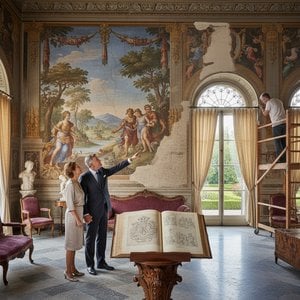
L'Arte dei Murales di Famiglia: Trasformare le Mura in Memorie Eterne
Scopri l'arte del fresco e crea murales familiari unici! Esplora la storia, le tecniche e realizza il tuo sogno artistico con : esperti artisti e qualità garantita.


![Stanze Vaticane - Il Fuoco nel Borgo (dettaglio) [01]](/media/artworks/images-thumb/76/f6/76f6220ba33c4e1d9790e47ace4c7148.jpg)
