


 Anteprima in scala reale
 Condividi
 Condividi
 Dettagli
 Guida
Guida

 Scarica
 Articoli simili
 Radiografia
 Slideshow
 Statistiche
Netherlandish Proverbs (detail)


 Leggi tutto
Giclée / Stampe d'arte
Stampa giclée o su tela di qualità museale, con produzione rapida e diverse opzioni di finitura. ( Ordina la riproduzione dipinta a mano Passa all'immagine digitale)




P118B $10

P118H $10

P118W $10

P438Z $10

P508JH $12

P508YH $12

P805H $10

P805Z $10

P919BZ $10

P919G $10

P919XJ $10

P959ZH $10

P968JZ $12

W106C $8

W218G $10

W218JH $8

W218Y $10

W307PJ $10

W316G $10

W316PJ $8

W316Y $10

W398PJ $8

W4111J $10

W500HY $15

W500JH $15

W692G $12

W849H $8

W940BG $15

W953PJ $8




Scegli tra le nostre dimensioni predefinite, che rispettano le proporzioni originali dell'opera d'arte.

È possibile inserire dimensioni personalizzate per adattare l'opera a una cornice o a uno spazio specifico. Se la dimensione selezionata non corrisponde alle proporzioni dell'immagine originale, procederemo al ritaglio dell'opera o all'estensione dell'immagine con un bordo specchiato o a tinta unita. Un mockup digitale ti verrà inviato per approvazione prima dell'inizio della produzione.
Si prega di notare che l'anteprima a schermo non riflette il ritaglio o l'estensione effettivi. Solo il mockup mostrerà accuratamente la composizione finale.
Sebbene siano disponibili dimensioni personalizzate, si raccomanda di selezionare una dimensione dall'elenco predefinito per preservare le proporzioni originali.
Consegna in tutto il mondo () in 2 settimane invece delle normali 4/5 settimane. (24 Settembre)

Spedizione espressa gratuita in tutto il mondo

Tela in lino di alta qualità

Assicurazione completa sulla spedizione

Garanzia di rimborso dei dazi doganali

Garanzia di perfetta fedeltà cromatica

Politica di reso entro 100 giorni (solo per difetti di fabbricazione)

Garanzia di rimborso al 100%

Sconto per acquisti multipli
 L'opzione vetro è disponibile solo per dimensioni inferiori a 110 cm

Netherlandish Proverbs (detail)
Giclée / Stampe d'arte
Dimensioni della riproduzione
-


Prezzo totale
$ 62
A Window Into Flemish Life: Pieter Bruegel’s “The Peasant Wedding”
Pieter Bruegel the Elder's "The Peasant Wedding," completed in 1569, stands as a monumental achievement of Northern Renaissance art—a vibrant tableau that transcends mere depiction to deliver profound commentary on societal values and human experience. Painted during a period marked by religious anxieties and economic hardship, this masterpiece captures not just an event but the very essence of rural Flemish society, cementing Bruegel’s reputation as one of the foremost genre painters of his era.- Subject Matter: The painting portrays a wedding celebration in a humble peasant village—a scene brimming with detail and observation that eschews idealized representations for unflinching realism. Guests arrive at varying times, driven by diverse motivations – some eager to greet the newlyweds, others preoccupied with personal affairs, while still others simply aimlessly wander through the festivities.
- Style: Bruegel’s style is characterized by its meticulous attention to detail and its masterful use of perspective. Unlike the polished surfaces favored by Italian Renaissance artists, his canvases retain a palpable texture—a deliberate choice that reflects the materiality of everyday life and reinforces the painting's grounding in observation.
Technique: Oil Paint on Canvas – A Symphony of Color and Texture
Bruegel employed oil paint on canvas, a technique perfected during this period which allowed for unparalleled luminosity and tonal range. Layers upon layers of pigment were applied with painstaking precision—a process demanding considerable skill and patience. The artist skillfully manipulated color to convey mood and emotion, utilizing earthy hues alongside brighter shades to illuminate the scene and draw the viewer’s eye into its complex narrative.Historical Context: Reformation Anxiety and Societal Reflection
“The Peasant Wedding” emerged during a turbulent time—the height of the Protestant Reformation in Flanders. The painting serves as a subtle critique of religious dogma and social hierarchy, presenting a snapshot of rural life untouched by grand pronouncements or formal ceremonies. Bruegel’s depiction underscores the importance of community bonds and familial traditions—values that resonated deeply with viewers grappling with existential questions about faith and morality.Emotional Impact: Capturing the Complexity of Human Experience
Ultimately, “The Peasant Wedding” succeeds in conveying a profound emotional resonance—a poignant portrayal of ordinary life imbued with humor, pathos, and wisdom. Bruegel’s masterful composition captures not just what is seen but what is felt—inviting viewers to engage with the painting on an intellectual and affective level. It remains a testament to the enduring power of art to illuminate human nature and celebrate the beauty found within the commonplace.A stunning reproduction of “The Peasant Wedding” brings this iconic artwork into your home, allowing you to appreciate Bruegel’s unparalleled skill and his timeless vision. Explore ArtsDot for exceptional quality prints and framed canvases.
Opere correlate


Biografia dell'artista
vitae e formazione
Pieter Brueghel il Vecchio, figura chiave della pittura rinascimentale, nacque e crebbe a Breda, Belgio, tra il 1525 e il 1530. Il suo maestro, Pieter Coecke van Aelst, era un pittore di Anversa che guidò lo sviluppo artistico precoce di Brueghel. Dopo aver studiato con Coecke, Brueghel divenne maestro libero nella corporazione dei pittori di Anversa nel 1551.Contributi artistici e stile
L'opera di Brueghel è rinomata per le sue innovative scelte tematiche, concentrandosi su paesaggi e scene contadine. I suoi dipinti, come Paesaggio con l'addio ad Egitto (37 x 55 cm, Courtauld Institute Galleries, Londra), hanno dimostrato la sua maestria nell'uso dell'olio su tavola. Lo stile di Brueghel, caratterizzato dall'uso del chiaroscuro, creava un senso di profondità e realismo, rendendo i suoi dipinti immersivi.Opere notevoli e musei
* Paesaggio delle Alpi (musée du Louvre, Parigi), un esempio eccellente delle capacità di pittura paesaggistica di Brueghel. * Triptico (rinascimento settentrionale, olio su tela), un esempio notevole dell'uso dell'olio su tavola da parte di Brueghel. * I Musées Reali delle Belle Arti di Bruxelles vantano una collezione impressionante di oltre 20.000 opere d'arte, tra cui opere di Brueghel.Eredità e influenza
L'influenza di Brueghel sulla pittura dell'età d'oro fiamminga e sui successivi sviluppi artistici è innegabile. La sua opera ha ispirato artisti sia nel campo delle arti letterarie che del cinema, con riferimenti ai suoi dipinti che compaiono nei film come Solaris (1972) e Melancolia (2011). Scopri altre opere di Brueghel su ArtsDot.com: [https://ArtsDot.com/@/pieter-bruegel-the-elder](https://ArtsDot.com/@/pieter-bruegel-the-elder)- Scopri i capolavori dei Musées Reali delle Belle Arti (Bruxelles, Belgio): /it/art/show/art-d3cf2d-it/
- Scopri di più sulla pittura fiamminga antica su Wikipedia: [https://en.wikipedia.org/wiki/early_netherlandish_painting](https://en.wikipedia.org/wiki/early_netherlandish_painting)

Pieter Bruegel il Vecchio
1525 - 1569 , Belgio
Informazioni rapide
- Artisti Influenti:
- Hieronymus Bosch
- Pieter Coecke van Aelst
- Artisti Influenzati:
- Isaac van Ostade
- Adriaen Brouwer
- Data Di Nascita: c. 1525-1530
- Luogo Di Nascita: Bruges, Belgio
- Movimento Artistico: Rinascimento settentrionale
- Nazionalità: Belga
- Nome Completo: Pieter Bruegel il Vecchio
- Opere Notevoli:
- Paesaggio con l'addio ad Egitto
- Paesaggio delle Alpi
- Triptico (rinascimentale)
- Il Trionfo della Morte
- Nozze contadine
Articoli correlati

Golden Age Reflections: Dutch Baroque Painting & Cultural Innovation
Explore the Dutch Golden Age of painting! Discover key artists like Vermeer & ter Borch, their innovative techniques, and the rich cultural context behind these Baroque masterpieces. Learn about collecting & appreciating this iconic art period.

Pieter Bruegel il Vecchio: Genere, Paesaggio e Commento Sociale nella Flandra del XVI Secolo
Esplora la vita e le opere di Pieter Bruegel il Vecchio, maestro della pittura fiamminga del XVI secolo. Analisi approfondite sul suo commento sociale, l'innovazione nel genere pittorico e l'influenza duratura sull'arte rinascimentale.
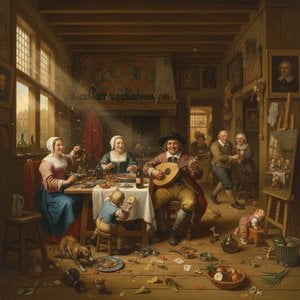
Jan Steen e la Vivacità della Vita Quotidiana: Un Maestro del Genere Olandese nell'Età dell'Oro
Esplora la vita e le opere di Jan Steen, maestro del genere pittorico olandese. Analisi approfondita dello stile, del simbolismo e dell'eredità artistica di questo icona del Secolo d'Oro.

Adriaen van Ostade: A Master of Dutch Genre Painting & Social Commentary
Explore the life & work of Adriaen van Ostade, a leading Dutch Golden Age painter. Discover his realistic genre scenes, social commentary, and lasting influence on art history. Learn more at ArtsDot.

Genre Painting: A Window into Daily Life & Societal Values of the Dutch Golden Age
Explore the captivating world of Dutch Golden Age genre painting! Discover realistic depictions of daily life, masterful artists like Ostade & Metsu, and hidden symbolism. Learn about this influential art movement with ArtsDot.


