


 Anteprima in scala reale
 Condividi
 Condividi
 Dettagli
 Guida stampabile

 Scarica
 Articoli simili
 Radiografia
 Slideshow
 Statistiche
Composition con Grigio e Ocra


 Leggi tutto
Giclée / Stampe d'arte
Stampa giclée o su tela di qualità museale, con produzione rapida e diverse opzioni di finitura. ( Ordina la riproduzione dipinta a mano Passa all'immagine digitale)




P118B €10

P118H €10

P118W €10

P438Z €10

P508JH €12

P508YH €12

P805H €10

P805Z €10

P919BZ €10

P919G €10

P919XJ €10

P959ZH €10

P968JZ €12

W106C €8

W218G €10

W218JH €8

W218Y €10

W307PJ €10

W316G €10

W316PJ €8

W316Y €10

W398PJ €8

W4111J €10

W500HY €15

W500JH €15

W692G €12

W849H €8

W940BG €15

W953PJ €8




Scegli tra le nostre dimensioni predefinite, che rispettano le proporzioni originali dell'opera d'arte.

Inserisci la larghezza e l'altezza desiderate, per adattarle alla tua cornice o alla tua parete. Una stampa può essere solo ritagliata, mai resa più grande dell'immagine originale; pertanto, un formato con una forma differente comporterà la perdita di una parte dell'opera. Ti invieremo un mockup digitale da approvare prima di procedere con la stampa. L'immagine mostrata in questa pagina non rappresenta il ritaglio reale — solo il mockup lo mostra.
Consegna in tutto il mondo () in 2 settimane invece delle normali 4/5 settimane. (22 Ottobre)

Spedizione espressa gratuita in tutto il mondo

Tela in lino di alta qualità

Assicurazione completa sulla spedizione

Garanzia di rimborso dei dazi doganali

Garanzia di perfetta fedeltà cromatica

Politica di reso entro 100 giorni (solo per difetti di fabbricazione)

Garanzia di rimborso al 100%

Sconto per acquisti multipli
 L'opzione vetro è disponibile solo per dimensioni inferiori a 110 cm

Composition con Grigio e Ocra
Giclée / Stampe d'arte
Dimensioni della riproduzione
-


Prezzo totale
€ 54
Composition 1 A: Exploring Mondrian's Geometric Harmony
Piet Mondrian’s Composition 1 A is not merely a painting; it is a visual manifesto, a distillation of artistic principles that would come to define an era. Emerging from the tumultuous currents of early 20th-century art, this work embodies the core tenets of Neoplasticism – a style Mondrian believed could express universal harmony through pure abstraction. To gaze upon its stark arrangement of black lines and rectangular planes is to encounter a world stripped bare of representational clutter, leaving only the essential elements of form and color. The painting’s power resides not in what it depicts, but in how it is depicted: a rigorous exploration of balance, tension, and the fundamental building blocks of visual experience.
A Journey Towards Abstraction
Mondrian's path to this radical simplicity was far from direct. Born Pieter Cornelis Mondriaan in Amersfoort, Netherlands, he initially trained as a teacher while simultaneously pursuing his artistic passions. His early works reveal a fascination with naturalistic landscapes, echoing the traditions of the Hague School and Dutch Impressionism. However, a restless spirit drove him to experiment – Pointillism, Fauvism – always searching for an authentic visual language. The pivotal moment arrived with his move to Paris in 1912, where exposure to Cubism ignited a transformative process. He began deconstructing forms, dismantling traditional perspective, and gradually reducing his palette. This wasn’t merely stylistic experimentation; it was a philosophical quest. Mondrian sought to transcend the subjective and represent an underlying reality – a spiritual order accessible through pure abstraction.
De Stijl and the Pursuit of Universal Beauty
Composition 1 A is deeply rooted in the principles of De Stijl (The Style), a Dutch artistic movement co-founded by Mondrian and Theo van Doesburg. This group envisioned art as a vehicle for social and spiritual renewal, believing that abstract forms could embody universal values. The painting’s limited palette – primarily black, white, and shades of gray – wasn't arbitrary. It represented a deliberate rejection of emotional expression in favor of clarity and objectivity. The bold, straight black lines aren’t simply outlines; they are dynamic forces creating structure and defining space. The asymmetrical arrangement of the rectangles introduces a subtle tension, preventing the composition from becoming static or predictable. This careful balance between order and dynamism is crucial to the work's enduring appeal. It evokes a sense of calm rationality, yet simultaneously engages the eye with its intricate interplay of shapes.
Technique and Material Considerations
Mondrian meticulously crafted Composition 1 A using oil paint on canvas—a technique that allowed for precise layering and tonal control. He began by sketching an underlying grid pattern of uniform rectangles based on the golden ratio, ensuring structural integrity and visual harmony. Subsequent application of black lines delineated these rectangles, establishing a framework for the painting's composition. Finally, shades of gray and ochre were applied to fill in the remaining spaces, creating a balanced interplay between color and form. The artist’s deliberate choices reflected his unwavering commitment to Neoplasticist ideals—a rejection of illusionism and an embrace of pure geometric abstraction.
Legacy and Influence
The impact of Composition 1 A extends far beyond the confines of the easel. Mondrian's Neoplasticism profoundly influenced graphic design, architecture, and fashion throughout the 20th century and continues to inspire contemporary artists today. His emphasis on geometric forms and primary colors became synonymous with modernism itself. As Stephen Bayley eloquently stated: “Mondrian has come to mean Modernism. His name and his work sum up the High Modernist ideal. I don't like the word 'iconic', so let’s say that he’s become totemic – a totem for everything Modernism set out to be.” Owning a reproduction of this iconic piece is not simply acquiring an artwork; it’s embracing a legacy of artistic innovation and a vision of a more ordered, balanced world.
Domande e risposte
Quali tecnica e stile caratterizzano "Composition con Grigio e Ocra" di Piet Mondrian?
In "Composition con Grigio e Ocra", la tecnica del Acrilico su tela incontra il movimento Neoplasticism.
"Composition con Grigio e Ocra" presenta forti contrasti chiaroscurali?
"Composition con Grigio e Ocra" di Piet Mondrian mostra un contrasto Deciso tra le sue zone chiare e scure.
Come viene descritto il tono emotivo di "Composition con Grigio e Ocra" di Piet Mondrian?
"Composition con Grigio e Ocra" ha un'atmosfera Serenità.
Opere correlate


Biografia dell'artista
**primi anni di vita e carriera nei Paesi Bassi (1872-1911)**
pieter cornelis mondriaan, noto dopo il 1911 come piet mondrian, era un pittore e teorico dell'arte olandese nato il 7 marzo 1872 ad Amersfoort, nei Paesi Bassi. Iniziò la sua carriera come insegnante di istruzione primaria mentre praticava la pittura, inizialmente nello stile impressionista olandese della scuola di Haarlem.- Le sue opere giovanili, caratterizzate da paesaggi naturalistici, possono essere viste in dipinti come the red mill e trees in moonrise, esposte al kunstmuseum den haag.
- La ricerca di mondrian per uno stile personale lo portò a esplorare vari movimenti artistici, tra cui il puntinismo e il fauvismo.
- La sua prima mostra nel 1893 segnò l'inizio della sua carriera prolifica.
**l'evoluzione dello stile di mondrian**
da figurativo all'astratto la direzione artistica di mondrian si è spostata verso uno stile sempre più astratto, culminando in una forma non rappresentativa che chiamò neoplasticismo. Questa 'arte plastica pura' mirava a creare 'bellezza universale', limitando il suo vocabolario formale ai colori primari (rosso, blu e giallo), ai valori (nero, bianco e grigio) e alle direzioni (orizzontali e verticali).- Esempi di questo stile possono essere visti in dipinti come composition with yellow patch (46 x 46 cm, neoplasticismo, olio su tela).
- Il lavoro di mondrian ha avuto un'enorme influenza sull'arte del XX secolo, influenzando non solo la pittura astratta ma anche il design, l'architettura e la moda.
**eredità e influenza**
l'eredità di mondrian si estende oltre il suo lavoro stesso, influenzando stili e movimenti importanti come la pittura a campo colorato, l'espressionismo astratto e il minimalismo. Lo storico dell'arte stephen bayley ha notato che mondrian è diventato un totem per tutto ciò che il modernismo voleva essere.- Esplora altri lavori di mondrian su ArtsDot.com.
- Impara sul movimento de stijl e sulla sua influenza sull'arte moderna su wikipedia.
- Scopri altri artisti influenti come vincent van gogh e il loro impatto sul mondo dell'arte.
**opere chiave ed esposizioni**
* piet mondrian: apple blossom (cubismo) (visualizza su ArtsDot.com) * piet mondrian: still life with vase of spices ii (cubismo) (visualizza su ArtsDot.com) * piet mondrian: passionflower (73 x 48 cm, kunstmuseum den haag, post impressionism, watercolor) (visualizza su ArtsDot.com)
Piet Mondrian
1872 - 1944 , Paesi Bassi
Informazioni rapide
- Artisti Influenti:
- Hague School
- Impressionismo
- Pointillism
- Fauvismo
- Cubismo
- Artisti Influenzati:
- Color Field painting
- Abstract Expressionism
- Minimalismo
- Data Di Nascita: 7 marzo 1872
- Luogo Di Nascita: Amersfoort, Paesi Bassi
- Movimento Artistico: De Stijl, Neoplasticismo
- Nazionalità: Olandese
- Nome Completo: Piet Mondrian
- Opere Notevoli:
- Composition with Red, Yellow and Blue
- Broadway Boogie Woogie
- Tableau no. 2 Composition no. V
- Rhythm of Black Lines
Articoli correlati

Theo van Doesburg e il Neoplasticismo: Pionieri dello Stijl e l'Evoluzione dell'Astrattismo
Esplora il rivoluzionario movimento De Stijl e l'influenza di Theo van Doesburg sul Neoplasticismo. Analisi approfondita, storia, principi e impatto sull'arte moderna.

Piet Mondrian: Deconstructing Reality – A Study of Neo-Plasticism & Universal Harmony
Esplora il rivoluzionario mondo di Piet Mondrian e del Neoplasticismo. Analisi approfondite delle sue opere più iconiche, l'influenza di 'De Stijl' e la ricerca dell'armonia universale nell'arte astratta.
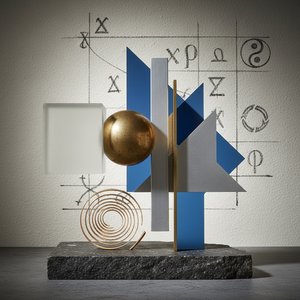
Beyond Form: Exploring the Philosophical Foundations of Geometric Abstraction
Explore the philosophical roots & artistic evolution of geometric abstraction with ArtsDot. Discover Mondrian, Malevich, De Stijl & more. Expert insights for collectors and art enthusiasts.

Beyond Form & Color: Geometric Abstraction's Evolution in 20th/21st Century Art
Explore the evolution of geometric abstraction from Cubism to contemporary art. Discover key artists like Malevich & Mondrian, investment insights, and expert collecting advice at ArtsDot.

Astrazione Geometrica: 10 Capolavori che Hanno Definito un Movimento Artistico
Esplora i 10 capolavori dell'Astrazione Geometrica: Mondrian, Malevich e Kandinsky rivoluzionano l'arte moderna. Scopri la storia, i colori e le tecniche di questi movimenti iconici. Stampe d'arte di alta qualità su ArtsDot.com!


