- Home

- Stampa su tela
- Paul Signac
- Antibes, thunderstorms
 Preview
 Ordina la riproduzione Acquista download
 Invia
Invia
 Condividi
 Dettagli opera
 Aggiungi ai preferiti

 Scarica
 Simili
 Radiografia
 Slideshow
Antibes, thunderstorms
 Oil On Canvas
- WallArt
- Neo-Impressionism
 1919
1919- 19th Century
 46.0 x 55.0 cm
 Scopri di più
Giclée / Stampa d'arte
Stampa giclée o su tela di qualità museale, con produzione rapida e diverse opzioni di finitura.




P118B $10

P118H $10

P118W $10

P438Z $10

P508JH $12

P508YH $12

P805H $10

P805Z $10

P919BZ $10

P919G $10

P919XJ $10

P959ZH $10

P968JZ $12

W106C $8

W218G $10

W218JH $8

W218Y $10

W307PJ $10

W316G $10

W316PJ $8

W316Y $10

W398PJ $8

W4111J $10

W500HY $15

W500JH $15

W692G $12

W849H $8

W940BG $15

W953PJ $8




Scegli tra le nostre dimensioni predefinite, che rispettano le proporzioni originali dell'opera d'arte.

È possibile inserire dimensioni personalizzate per adattare l'opera a una cornice o a uno spazio specifico. Se la dimensione selezionata non corrisponde alle proporzioni dell'immagine originale, procederemo al ritaglio dell'opera o all'estensione dell'immagine con un bordo specchiato o a tinta unita. Un mockup digitale ti verrà inviato per approvazione prima dell'inizio della produzione.
Si prega di notare che l'anteprima a schermo non riflette il ritaglio o l'estensione effettivi. Solo il mockup mostrerà accuratamente la composizione finale.
Sebbene siano disponibili dimensioni personalizzate, si raccomanda di selezionare una dimensione dall'elenco predefinito per preservare le proporzioni originali.
Consegna in tutto il mondo () in 2 settimane invece delle normali 4/5 settimane. (27 Luglio)

Spedizione espressa gratuita in tutto il mondo

Tela in lino di alta qualità

Assicurazione completa sulla spedizione

Garanzia di rimborso dei dazi doganali

Garanzia di fedeltà cromatica

Politica di reso entro 60 giorni (solo per difetti)

Garanzia di rimborso al 100%

Sconto per acquisti multipli
 L'opzione vetro è disponibile solo per dimensioni inferiori a 110 cm

Antibes, thunderstorms
Giclée / Stampa d'arte
Dimensioni riproduzione
-


Prezzo totale finale
-
Descrizione dell'opera
Antibes, Thunderstorms – A Pointillist Masterpiece by Paul Signac
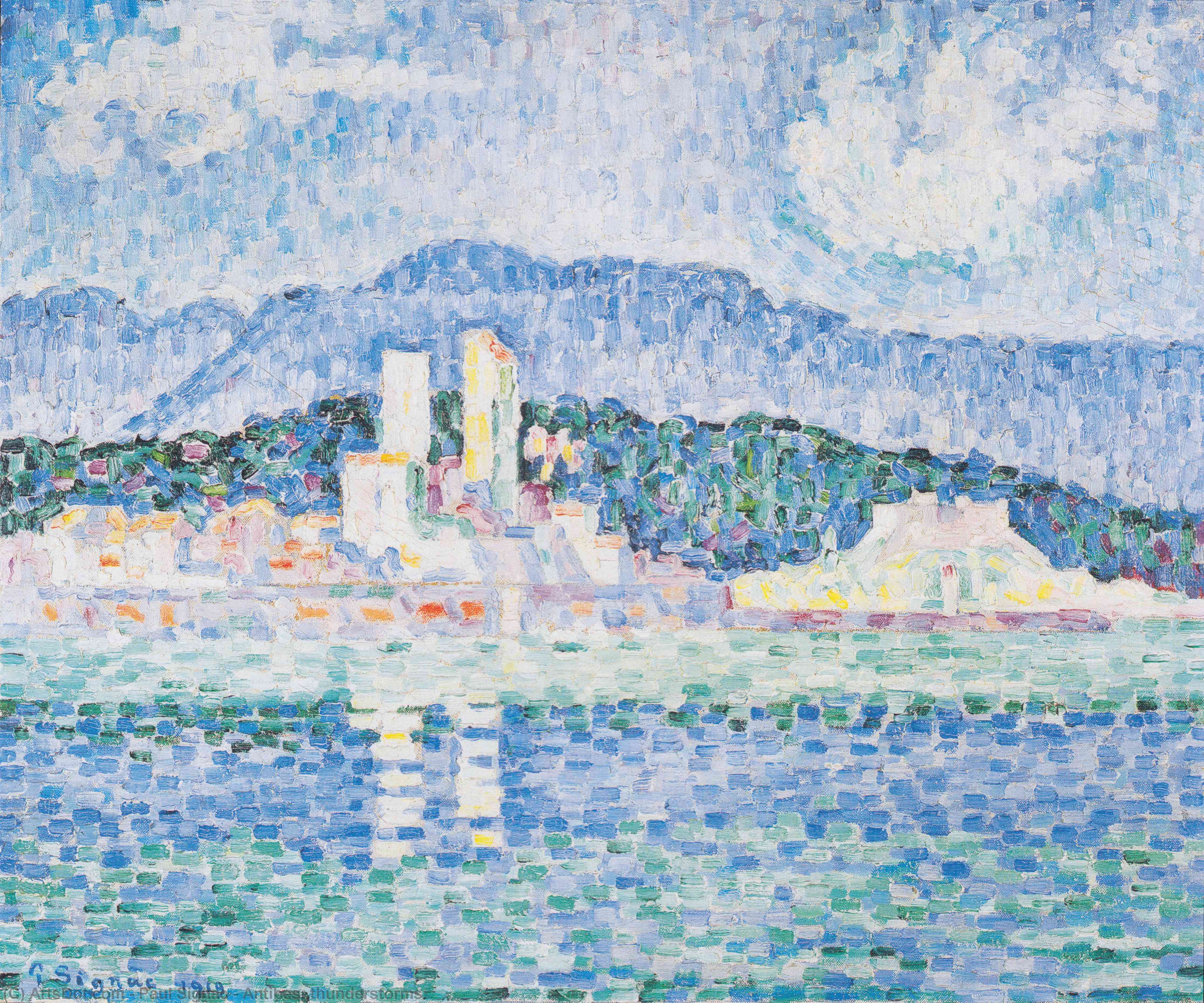
Paul Signac’s “Antibes, Thunderstorms,” painted in 1919, is more than just a depiction of a coastal scene; it's a meticulously constructed meditation on light, color, and the very nature of perception. This evocative work, measuring 46 x 55 cm, captures the dramatic beauty of Antibes, France, at dusk or dawn – a moment suspended in time where the sea, sky, and architecture converge under a brooding, storm-laden canopy. The painting’s immediate impact lies in its shimmering surface, created through Signac's revolutionary Pointillist technique, a method he pioneered alongside Georges Seurat.
- The Science of Color: Signac’s approach was deeply rooted in scientific principles. He believed that the eye could more effectively blend colors when presented with small dots of pure hue than when painted with broad strokes. This optical mixing is brilliantly demonstrated here, where countless tiny points of color – blues, greens, ochres, and whites – coalesce to create a luminous effect, mimicking the way light itself interacts with the landscape.
- A Harmonious Vision: The composition emphasizes atmospheric perspective, utilizing darker blues and greens in the distance to suggest depth while brighter colors draw the viewer’s eye towards the foreground elements. This careful manipulation of value and saturation creates a sense of spatial recession, characteristic of Pointillism's focus on visual sensation rather than strict realism.
The Birth of Pointillism
“Antibes, Thunderstorms” represents a crucial moment in the development of modern art. Signac’s work emerged from a desire to move beyond the limitations of Impressionism, which often struggled to capture the fleeting effects of light and atmosphere. He sought a more systematic approach, one that could harness the power of color theory to create paintings that were both visually stunning and intellectually rigorous. This pursuit led him and Seurat to develop Pointillism – a technique that would profoundly influence generations of artists.
The painting’s meticulous detail—the individual dots painstakingly applied layer upon layer—reflects Signac's belief in the importance of observation and scientific analysis. It wasn't simply about representing what he saw; it was about understanding *how* he saw it, translating his visual experience into a structured system of color and form.
Symbolism and Emotional Impact
Beyond its technical brilliance, “Antibes, Thunderstorms” possesses a subtle symbolic resonance. The depiction of a coastal scene, coupled with the dramatic presence of impending storms, evokes a sense of both tranquility and unease. The hazy atmosphere, created by Signac’s technique, lends the painting a dreamlike quality, inviting contemplation about the transient nature of beauty and the power of the natural world.
The shimmering light and textured surface create an immersive experience for the viewer, transporting them to the shores of Antibes. The work's emotional impact is one of quiet wonder – a reminder of the profound beauty that can be found in even the most fleeting moments.
Provenance and Significance
Painted in 1919, this artwork stands as a testament to Paul Signac’s enduring legacy. His innovative approach to color and composition continues to inspire artists today, and his work is held in prestigious collections worldwide. This hand-painted reproduction offers an exceptional opportunity to own a piece of art history – a window into the mind of one of modernism's most influential figures.
Opere simili


Biografia dell'artista
Primi anni e formazione
Paul Victor Jules Signac, pittore neo-impressionista francese, nacque l'11 novembre 1863 a Parigi. Inizialmente intraprese un corso di architettura prima di decidere di diventare pittore all'età di 18 anni. Questa decisione fu influenzata da una mostra delle opere di Claude Monet.Stile artistico e influenze
Lo stile di Signac era caratterizzato dall'uso di piccoli punti di colore puro, che accostava per creare un senso di profondità e luce. Questa tecnica, nota come puntinismo, fu sviluppata in collaborazione con Georges Seurat. Il lavoro di Signac fu anche influenzato dai suoi viaggi lungo la costa europea, dove catturò la bellezza delle città portuali in acquerelli.Opere notevoli e associazioni
- Boulevard de Clichy (1886), un'opera post-impressionista che mette in mostra lo stile meticoloso di Signac.
- Il Boetta Rossa, Saint-Tropez (1895), una vibrante pittura marina con un boetta rosso-arancio su uno sfondo blu intenso.
- Membro fondatore della Société des Artistes Indépendants, che organizzò mostre annuali che stabilirono tendenze nell'arte del primo XX secolo.
Eredità e influenza
Il lavoro di Signac ebbe un profondo impatto sullo sviluppo del fauvismo, influenzando artisti come Henri Matisse e André Derain. In qualità di presidente della Société des Artistes Indépendants, Signac sostenne gli artisti più giovani ed espose opere controverse dei Fauves e dei Cubisti.- Visualizza altre opere di Paul Signac su https://ArtsDot.com/@/paul-signac
- Esplora la tecnica del puntinismo e la sua influenza sul neoimpressionismo su https://en.wikipedia.org/wiki/pointillism
- Scopri il movimento artistico del simbolismo, emerso come reazione al realismo nel campo della cultura nel XIX secolo, su https://en.wikipedia.org/wiki/symbolist_painting
Date chiave
- 11 novembre 1863: nato a Parigi
- 1884: ha co-fondato la Société des Artistes Indépendants
- 15 agosto 1935: è deceduto all'età di 71 anni

Paul Signac
1863 - 1935 , Francia
Dati rapidi
- Artisti Influenti:
- Claude Monet
- Georges Seurat
- Artisti Influenzati:
- Henri Matisse
- André Derain
- Data Di Nascita: 11 novembre 1863
- Luogo Di Nascita: Parigi, Francia
- Movimento Artistico: Neo-Impressionismo
- Nazionalità: Francese
- Nome Completo: Paul Signac
- Opere Notevoli:
- Boulevard de Clichy (1886)
- Il Boia Rosso, Saint-Tropez (1895)
Articoli correlati

Paul Cézanne: I 25 Capolavori che Hanno Rivoluzionato l'Arte Moderna | ArtsDot
Esplora i 25 capolavori di Paul Cézanne, il maestro dell'impressionismo e post-impressionismo. Scopri la storia, le tecniche e i colori iconici dietro opere come 'Le grandi bagnanti' e 'Mont Sainte-Victoire'. Trova riproduzioni artistiche di alta qualità per decorare la tua casa su ArtsDot.com.

Paul Klee: Le 25 Opere Più Iconiche per Arricchire la Tua Casa con l'Arte
Esplora le 25 opere più iconiche di Paul Klee, maestro dell'arte astratta e del colore. Scopri la storia, lo stile unico e il significato dei suoi capolavori. Trova riproduzioni d'arte di alta qualità per decorare casa con ArtsDot.com.

I 25 Capolavori del Metropolitan Museum di New York: Arte, Storia e Decorazioni Raffinate
Esplora i 25 capolavori del Metropolitan Museum di New York! Scopri la storia, gli artisti (Van Gogh, Monet, Rembrandt) e le emozioni dietro dipinti iconici. Trova riproduzioni artistiche di alta qualità per decorare casa con stile su ArtsDot.com.
I Capolavori della National Gallery di Washington: 25 Opere Indimenticabili per la Tua Casa
Esplora i 25 capolavori imperdibili della National Gallery di Washington! Scopri la storia di Cézanne, Matisse, Picasso e altri maestri. Trova l'arte perfetta per la tua casa su ArtsDot.com.

James Abbott McNeill Whistler: I 25 Capolavori che Definirono un'Epoca - Arte e Decorazioni di Lusso
Esplora i 25 capolavori di James Abbott McNeill Whistler, il maestro dell'estetismo e dei notturni. Scopri la storia, le tecniche e l'armonia unica nei suoi dipinti più famosi. Stampe d'arte e riproduzioni di alta qualità su ArtsDot.com.