


 Anteprima in scala reale
 Condividi
 Condividi
 Dettagli
 Guida stampabile

 Scarica
 Articoli simili
 Radiografia
 Slideshow
 Statistiche
Conqueror


 Leggi tutto
Riproduzione a olio fatta a mano
Olio su tela dipinto a mano nelle tue dimensioni e con la tua cornice, realizzato su ordinazione dai nostri artisti. ( Passa alle stampe Passa all'immagine digitale)




P118B €10

P118H €10

P118W €10

P438Z €10

P508JH €12

P508YH €12

P805H €10

P805Z €10

P919BZ €10

P919G €10

P919XJ €10

P959ZH €10

P968JZ €12

W106C €8

W218G €10

W218JH €8

W218Y €10

W307PJ €10

W316G €10

W316PJ €8

W316Y €10

W398PJ €8

W4111J €10

W500HY €15

W500JH €15

W692G €12

W849H €8

W940BG €15

W953PJ €8




Scegli tra le nostre dimensioni predefinite, che rispettano le proporzioni originali dell'opera d'arte.

È possibile inserire dimensioni personalizzate per adattare l'opera a una cornice o a uno spazio specifico. Se la dimensione selezionata non corrisponde alle proporzioni dell'immagine originale, provvederemo a ritagliare l'opera o a estendere il dipinto con elementi aggiuntivi dipinti a mano. Un mockup digitale ti sarà inviato per approvazione prima dell'inizio della produzione.
Si prega di notare che l'anteprima a schermo non riflette il ritaglio o l'estensione effettivi. Solo il mockup mostrerà accuratamente la composizione finale.
Sebbene siano disponibili dimensioni personalizzate, consigliamo di selezionare una dimensione dall'elenco predefinito per preservare le proporzioni originali.
Dopo l'ordine, il team di ArtsDot.com contatterà il cliente via e-mail per ricevere le istruzioni e fornirà un'anteprima del mockup
Consegna in tutto il mondo () in 3/4 settimane anziché nelle normali 5 settimane. (10 Ottobre). Nessun compromesso sulla qualità.

Spedizione espressa gratuita in tutto il mondo

Tela in lino di alta qualità

Assicurazione completa sulla spedizione

Garanzia di rimborso dei dazi doganali

Garanzia di perfetta fedeltà cromatica

Politica di reso entro 100 giorni (solo per difetti di fabbricazione)

Garanzia di rimborso al 100%

Sconto per acquisti multipli
 L'opzione vetro è disponibile solo per dimensioni inferiori a 110 cm

Conqueror
Tecnica di riproduzione
Dimensioni della riproduzione
-


Prezzo totale
€ 226
A Symphony of Geometric Forms: The Soul of Paul Klee’s “Conqueror”
In the vast landscape of twentieth-century abstraction, few works possess the rhythmic tension and symbolic depth found in Paul Klee’s 1937 masterpiece, “Conqueror.” To encounter this painting is to step into a realm where the boundaries between music and vision dissolve, leaving behind a visual melody composed of sharp edges and vibrant hues. Klee, a master who viewed the canvas as a stage for cosmic movement, presents us with a narrative that feels both ancient and avant-garde. At its heart, the work depicts a solitary figure poised with a bow and arrow, standing in defiant confrontation against a monumental cube. This is not merely a depiction of a hunter; it is an exploration of the human spirit’s encounter with the overwhelming, structured forces of existence.
The composition is a masterclass in balanced tension. Klee utilizes a tripartite arrangement, placing the central figure before a colossal geometric monolith, flanked by two smaller cubes that anchor the scene. This deliberate structuring creates a sense of contained energy, as if the very air around the figure is vibrating with the potential for action. The figure’s posture, bolstered by a shield visible upon his back, speaks to a profound resilience—a visual metaphor for the courage required to face life's most daunting obstacles. For the collector or interior designer, this piece offers a sophisticated focal point that commands attention through its structural integrity and its ability to anchor a room with both weight and whimsy.
The Alchemy of Color and Expressionist Technique
Klee’s technique in “Conqueror” eschews the sterile precision often associated with geometric abstraction, opting instead for an expressionist vitality that breathes life into every shape. His brushstrokes are bold and textured, defining the contours of the human form and the massive cubes with a dynamism that suggests movement even within static forms. The artist’s palette is a carefully orchestrated clash of primary energies; vibrant yellows, deep reds, and piercing blues interact to create a visual richness that transcends mere decoration. These colors do not simply sit upon the surface; they evoke an emotional temperature, ranging from the warmth of sunlight to the urgent apprehension of a looming shadow.
This interplay of color and texture invites a tactile engagement with the work. The surface of the painting possesses a rhythmic quality, mirroring Klee’s lifelong fascination with musical arrangement. As one observes the way the light seems to catch the layered pigments, the painting reveals itself as a "visual music"—a term often used by scholars to describe Klee's ability to translate auditory harmony into graphic form. For those seeking to adorn a space with art that inspires deep contemplation, “Conqueror” provides an inexhaustible well of detail, rewarding the eye with new discoveries upon every viewing.
A Legacy of Abstraction for the Modern Collector
Understanding “Conqueror” requires acknowledging the historical weight Klee carried during its creation. Painted in 1937, a period of immense global upheaval, the painting’s themes of confrontation and protection resonate with a timeless psychological truth. Klee, a Swiss-born artist who navigated the complex movements of Cubism, Surrealism, and Expressionism, had reached a pinnacle of maturity where he could manipulate the most basic elements of art—line, dot, and plane—to communicate the most complex human emotions. The work stands as a testament to his ability to find the "hidden rhythms of the universe" within the simplest of shapes.
Integrating a high-quality reproduction of this masterpiece into a contemporary interior allows for a bridge between historical significance and modern aesthetic sensibilities. Whether placed in a minimalist gallery setting or a richly textured study, “Conqueror” brings with it an aura of intellectual depth and artistic prestige. It is more than a painting; it is an invitation to witness the triumph of form over chaos, making it an essential acquisition for anyone dedicated to the enduring power of fine art.
Domande e risposte
È possibile ordinare una riproduzione a olio di "Conqueror"?
Puoi ordinare una riproduzione dipinta a mano di "Conqueror" di Paul Klee direttamente su questa pagina: una riproduzione a olio dipinta a mano su tela di lino, realizzata su ordinazione.
Quale collocazione si adatta meglio al formato di "Conqueror" di Paul Klee?
Il formato (Portrait) e lo spazio consigliato (Living Room) sono i due dettagli di posizionamento registrati per "Conqueror" di Paul Klee.
Chi ha creato "Conqueror"?
"Conqueror" è attribuito a Paul Klee.
Come posso acquistare una stampa di "Conqueror" di Paul Klee?
È possibile ordinare una stampa di "Conqueror" di Paul Klee direttamente su questa pagina: una stampa fine art su tela di cotone o carta canvas d'archivio.
I colori di "Conqueror" appaiono intensi o delicati?
"Conqueror" di Paul Klee mostra un'intensità cromatica Vivid.
In che modo lo stile di "Conqueror" si relaziona all'epoca del suo autore?
"Conqueror" appartiene al movimento Expressionist Abstraction, e il suo autore ha operato nell'epoca Età Moderna.
Come può essere utilizzato "Conqueror" di Paul Klee nell'arredamento d'interni?
"Conqueror" di Paul Klee è consigliato per Accent, idealmente in un Living Room. L'uso e lo spazio aiutano a individuare l'ambiente ideale per una riproduzione.
Opere correlate


Biografia dell'artista
Paul Klee: Una Vita di Colore e Forma
Primi Anni e Formazione
- Paul Klee nacque il 18 dicembre 1879 a Münchenbuchsee, in Svizzera.
- Suo padre era un insegnante di musica tedesco e sua madre una cantante svizzera, favorendo fin da piccolo un apprezzamento per le arti.
- Klee inizialmente studiò disegno ma alla fine abbandonò la rappresentazione realistica a favore di forme più espressive.
- Studiò all'Accademia delle Arti Visive di Monaco tra il 1898 e il 1901.
Sviluppo Artistico e Influenze
- Le opere giovanili di Klee mostrano influenze da Art Nouveau e Simbolismo, ma iniziò rapidamente a sviluppare il suo stile unico.
- Un viaggio fondamentale in Tunisia nel 1914 ebbe un profondo impatto sul suo uso del colore e dell'astrazione – la luce e l'atmosfera ispirarono uno spostamento verso palette più audaci.
- Fu profondamente influenzato da movimenti come l'Espressionismo, il Cubismo e il Surrealismo, sebbene non si sia mai pienamente allineato a nessuno di essi.
- Il suo interesse per la musica informò fortemente il suo approccio artistico, spesso paragonando la pittura alla composizione di brani musicali.
Gli Anni della Bauhaus e Oltre
- Dal 1931 al 1933, Klee insegnò alla influente scuola d'arte, design e architettura Bauhaus insieme a Wassily Kandinsky.
- Questo periodo vide un fiorire del suo lavoro astratto, esplorando la teoria del colore e le relazioni formali.
- Con l'ascesa del Nazismo in Germania, Klee fu licenziato dalla Bauhaus nel 1933 a causa della sua “arte degenerata”.
- Tornò in Svizzera e continuò a dipingere, ma la sua salute peggiorò durante questo periodo.
Temi Principali e Stile Artistico
- L'opera di Klee è caratterizzata da un'esplorazione giocosa ma profonda del colore, della linea e della forma.
- Spesso impiegava immagini infantili e composizioni stravaganti, impregnate di significato simbolico.
- Temi ricorrenti includono giardini, paesaggi, ritratti e arrangiamenti astratti.
- I suoi “Quaderni di Paul Klee”, pubblicati postumi, rivelano le sue estese indagini teoriche sul colore e il design.
Eredità e Significato Storico
- Paul Klee morì il 29 giugno 1940 a Muralto, in Svizzera.
- È considerato uno degli artisti più importanti del XX secolo, colmando il divario tra arte figurativa e astratta.
- Il suo uso innovativo del colore e le sue opere teoriche continuano a ispirare artisti e designer oggi.
- L'opera di Klee rimane molto richiesta dai collezionisti e dai musei in tutto il mondo, consolidando il suo posto come figura iconica nella storia dell'arte moderna.

Paul Klee
1879 - 1940 , Svizzera
Informazioni rapide
- Data Di Morte: 29 giugno 1940
- Data Di Nascita: 18 dicembre 1879
- Luogo Di Nascita: Münchenbuchsee, Svizzera
- Movimento Artistico:
- Espressionismo
- Cubismo
- Surrealismo
- Nazionalità: Svizzero-tedesco
- Nome Completo: Paul Klee
- Opere Notevoli:
- Hamamet
- Festival dei Chiari di Luna
- Nelle case di Saint Germain
- Ritmi Rossoverde e Violaviallo
- Nuvole su Bor
- Contemplazione
- Siblings
- Personaggio da fiaba
Articoli correlati

Paul Klee: Le 25 Opere Più Iconiche per Arricchire la Tua Casa con l'Arte
Esplora le 25 opere più iconiche di Paul Klee, maestro dell'arte astratta e del colore. Scopri la storia, lo stile unico e il significato dei suoi capolavori. Trova riproduzioni d'arte di alta qualità per decorare casa con ArtsDot.com.

Paul Cézanne: I 25 Capolavori che Hanno Rivoluzionato l'Arte Moderna | ArtsDot
Esplora i 25 capolavori di Paul Cézanne, il maestro dell'impressionismo e post-impressionismo. Scopri la storia, le tecniche e i colori iconici dietro opere come 'Le grandi bagnanti' e 'Mont Sainte-Victoire'. Trova riproduzioni artistiche di alta qualità per decorare la tua casa su ArtsDot.com.

Astrazione Geometrica: 10 Capolavori che Hanno Definito un Movimento Artistico
Esplora i 10 capolavori dell'Astrazione Geometrica: Mondrian, Malevich e Kandinsky rivoluzionano l'arte moderna. Scopri la storia, i colori e le tecniche di questi movimenti iconici. Stampe d'arte di alta qualità su ArtsDot.com!

Beyond Form & Color: Geometric Abstraction's Evolution in 20th/21st Century Art
Explore the evolution of geometric abstraction from Cubism to contemporary art. Discover key artists like Malevich & Mondrian, investment insights, and expert collecting advice at ArtsDot.
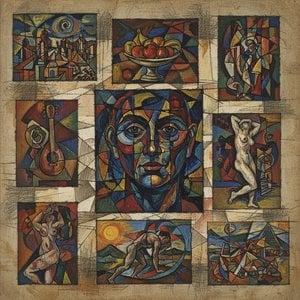
Cubismo Espressionista: 10 Capolavori che Hanno Definito un Movimento Artistico Rivoluzionario
Esplora i 10 capolavori che hanno rivoluzionato l'arte con il Cubismo Espressionista! Scopri Picasso, Braque e altri maestri. Quadri famosi, tecniche innovative e colori audaci ti aspettano su ArtsDot.com. Trova la tua prossima opera d'arte!


