

 Anteprima in scala reale
 Invia
Invia Condividi
 Dettagli opera
 Guida
Guida

 Scarica
 Simili
 Radiografia
 Slideshow
 Domande e risposte
 Statistiche
Number 23, 1951

- 148.0 x 119.0 cm


 Espandi i dettagli
Giclée / Stampe d'arte
Stampa giclée o su tela di qualità museale, con produzione rapida e diverse opzioni di finitura. ( Acquista il dipinto realizzato a mano Passa all'immagine digitale)




P118B €10

P118H €10

P118W €10

P438Z €10

P508JH €12

P508YH €12

P805H €10

P805Z €10

P919BZ €10

P919G €10

P919XJ €10

P959ZH €10

P968JZ €12

W106C €8

W218G €10

W218JH €8

W218Y €10

W307PJ €10

W316G €10

W316PJ €8

W316Y €10

W398PJ €8

W4111J €10

W500HY €15

W500JH €15

W692G €12

W849H €8

W940BG €15

W953PJ €8




Scegli tra le nostre dimensioni predefinite, che rispettano le proporzioni originali dell'opera d'arte.

Inserisci la larghezza e l'altezza desiderate, per adattarle alla tua cornice o alla tua parete. Una stampa può essere solo ritagliata, mai resa più grande dell'immagine originale; pertanto, un formato con una forma differente comporterà la perdita di una parte dell'opera. Ti invieremo un mockup digitale da approvare prima di procedere con la stampa. L'immagine mostrata in questa pagina non rappresenta il ritaglio reale — solo il mockup lo mostra.
Consegna in tutto il mondo () in 2 settimane invece delle normali 4/5 settimane. (12 Novembre)

Spedizione espressa gratuita in tutto il mondo

Tela in lino di alta qualità

Assicurazione completa sulla spedizione

Garanzia di rimborso dei dazi doganali

Garanzia di fedeltà cromatica assoluta

Politica di reso entro 100 giorni (solo per difetti di fabbricazione)

Garanzia di rimborso al 100%

Offerta per acquisti multipli
 L'opzione vetro è disponibile solo per dimensioni inferiori a 110 cm

Number 23, 1951
Giclée / Stampe d'arte
Dimensioni riproduzione
-


Prezzo finale calcolato
€ 56
The Raw Nerve: Paul Jackson Pollock’s Black Pouring
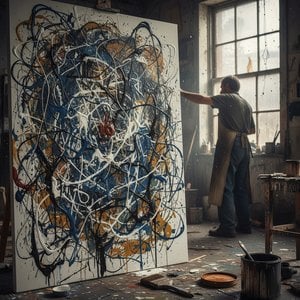
Paul Jackson Pollock's "Number 23, 1951" isn’t merely a painting; it’s an immersion. Created during a pivotal period of his artistic evolution – the “black pourings” – this work represents a deliberate retreat from the vibrant, all-over drips that initially defined his fame and a profound exploration into the subconscious. It's a piece that vibrates with a potent energy, a visual manifestation of anxiety, introspection, and a burgeoning interest in surrealist imagery and psychological depth. The stark monochrome palette immediately commands attention, stripping away any pretense of representational art and forcing the viewer to confront the raw materiality of paint itself.
- The Technique: Pollock’s method here is strikingly precise yet utterly chaotic. He thinned enamel paint – a material he experimented with extensively – to an almost liquid consistency, then employed a large basting syringe to fling and squirt it onto the unprimed canvas. This wasn't a spontaneous act of abandon; rather, it was a carefully orchestrated process, resulting in swirling patterns that seem to both coalesce and disintegrate before your eyes. The slow drying time allowed for an unexpected merging of colors and textures, creating a layered effect reminiscent of geological strata or even the shifting sands of memory.
- The Figures: Embedded within this turbulent field are enigmatic figures – faces, breasts, hands—fragments that emerge from the swirling chaos with a disconcerting immediacy. These aren’t easily deciphered; they're not portraits in the traditional sense but rather symbolic representations of anxieties and desires lurking beneath the surface. Their fragmented nature mirrors the fractured state of the psyche, suggesting a struggle to articulate inner turmoil.
A Surrealist Awakening: Influences and Intent
Pollock’s exploration of black paint wasn't born in isolation. The period coincided with a renewed interest in surrealism, fueled by his exposure to the works of artists like Joan Miró and Max Ernst. He was captivated by the idea of tapping into the unconscious mind, believing that painting could be a vehicle for accessing hidden emotions and symbolic imagery. “Number 23” is therefore a direct response to this influence, a deliberate attempt to bypass rational thought and delve into the realm of dreams and intuition. The absence of a clear narrative or subject matter further reinforces this surrealist impulse, inviting viewers to project their own interpretations onto the canvas.
Historical Context:The painting was created in 1951, a time of significant global upheaval – the Korean War raged on, and anxieties about the Cold War were escalating. Pollock’s work reflects this atmosphere of uncertainty and tension, capturing a sense of unease and psychological strain.
Decoding the Symbols: Faces and the Unconscious
The recurring presence of faces within “Number 23” is particularly intriguing. These aren't idealized or flattering representations; they are distorted, fragmented, and often obscured by layers of paint. Some scholars interpret them as self-portraits—a visual manifestation of Pollock’s own anxieties and insecurities. Others see them as archetypal figures representing primal instincts and unconscious desires. The ambiguity is deliberate, encouraging viewers to engage in a dialogue with the painting and construct their own meaning.
- The Breast/Hand Motif: The prominent presence of what appears to be a breast or hand—a recurring motif in Pollock’s black pourings—has been interpreted as symbols of vulnerability, creation, and perhaps even mortality.
- Fragmented Forms: The overall fragmentation of the figures suggests a sense of psychological disintegration, reflecting the anxieties of the post-war era.
A Legacy in Monochrome: Reproduction and Appreciation
"Number 23, 1951" stands as a testament to Pollock’s groundbreaking approach to painting—a radical departure from traditional techniques and a profound exploration of the human psyche. ArtsDot offers high-quality reproductions that capture the essence of this iconic work, allowing you to bring its raw energy and enigmatic symbolism into your own space. Consider it not just a decoration, but an invitation to contemplate the complexities of the human experience.
Domande e risposte
In che modo tecnica e movimento si fondono in "Number 23, 1951"?
In "Number 23, 1951", la tecnica del Acrilico su tela incontra il movimento Abstract Expressionism.
Quanto sono intensi i colori di "Number 23, 1951" di Jackson Pollock?
"Number 23, 1951" di Jackson Pollock presenta un'intensità cromatica Monocromatico.
Qual è il colore dominante di "Number 23, 1951" di Jackson Pollock?
Il colore dominante di "Number 23, 1951" di Jackson Pollock è Grigio medio (#847f6a).
Opere simili


Biografia dell'artista
Infanzia, Famiglia e Formazione
La storia di Jackson Pollock ha inizio nei paesaggi selvaggi di Cody, nel Wyoming, dove nacque il 28 gennaio 1912. Ultimo di cinque fratelli, figlio di Stella May McClure e LeRoy Pollock, crebbe in un contesto segnato dal lavoro del padre come agrimensore, una professione che imponeva spostamenti costanti attraverso i vasti orizzonti dell'Ovest americano. Questa esistenza nomade fece sì che i primi anni del giovane fossero definiti da frequenti traslochi, una inquietudine che sembrava rispecchiare i confini mutevoli del lavoro paterno. Questi primi viaggi attraverso l'Ovest gli offrirono un incontro diretto e immediato con il mondo naturale e con la risonanza spirituale dell'arte dei nativi americani, impressioni che si sarebbero depositate silenziosamente nel suo subconscio molto prima che tenesse in mano un pennello.
Crescendo, la ricerca di un senso di appartenenza lo spinse verso l'energia urbana della costa. Si iscrisse alla Manual Arts High School di Los Angeles, cercando una struttura formale per i suoi impulsi nascenti. Tuttavia, la vera maturazione del suo tratto avvenne molto più tardi, con il trasferimento a New York City. Fu lì, presso l'Art Students League, che iniziò un lungo e trasformativo periodo di studi. Dal 1929 al 1942, operò sotto la guida di Thomas Hart Benton. Mentre Benton poneva l'accento su composizioni ritmiche e sul peso narrativo della vita americana, il giovane studente stava già iniziando a scivolare verso le proprie verità interiori, decisamente più astratte.
Lo Sviluppo di una Tecnica Unica
Entro il 1947, un cambiamento profondo si era impossessato del suo modo di approcciare la tela. Si allontanò dal tradizionale cavalletto, scegliendo invece di adagiare le sue tele direttamente sul pavimento. Questa trasformazione gli permise di chinarsi sopra la propria opera, diventando parte integrante dell'atto creativo stesso. Non si limitava a stendere il colore; lo faceva colare, spruzzare e lanciare dall'alto, lasciando che il liquido precipitasse in schemi imprevedibili. Questo metodo trasformò l'atto del dipingere in una vera e propria performance fisica, in cui la gravità e il gesto dettavano la forma finale.
I suoi strumenti erano tanto non convenzionali quanto i suoi metodi. Utilizzava bastoni, coltelli e persino siringhe per manipolare il mezzo fluido. A volte impiegava spatole o vernici molto fluide per ottenere texture specifiche. Spesso incideva la superficie o utilizzava oggetti insoliti per accumulare uno spesso strato di colore, conferendo all'opera una qualità tattile e scultorea. Questo processo non riguardava tanto un lavoro controllato con il pennello, quanto piuttosto un rilascio ritmico, quasi primordiale, di energia sulla superficie.
Opere Chiave ed Espressioni Artistiche
Allontanandosi dai vincoli dell'inginocchiato cavalletto, le sue tele iniziarono a riflettere un coinvolgimento più viscerale con il mezzo pittorico. Nel 1943, produsse Mural, un'opera monumentale dalle dimensioni di 2,4 per 6,1 metri, che dimostrò la sua capacità di dominare una superficie vastissima. Durante questo periodo, le sue esplorazioni nell'inconscio e l'atto stesso del dipingere lo portarono a creare opere come Eyes in the Heat, realizzata intorno al 1946. Questi pezzi non erano semplici immagini, ma vere e proprie testimonianze di una presenza fisica, dove il movimento del suo intero corpo dettava la posizione di ogni schizzo e di ogni pozza di colore.
Gli anni successivi lo videro perfezionare quelle composizioni ritmiche "all-over" che avrebbero definito la sua reputazione. Egli cercava di creare un senso di spazio infinito, in cui nessun punto singolo potesse dominare sugli altri. Questo approccio emerge con chiarezza in Number 1, 1949, un'opera che cattura un impetuoso sfogo di energia, e in Lavender Mist, Number 1, 1950, che rimane un tassello fondamentale della sua produzione. In queste opere, l'interazione tra controllo e caso crea un equilibrio delicato, come se il colore fosse liberato piuttosto che applicato.
Le sue sperimentazioni tardive continuarono a spingere i confini di come il colore potesse essere manipolato su una superficie orizzontale. Utilizzava spesso bastoni, coltelli o persino le latte stesse per scagliare il pigmento, dando vita a complessi intrecci di linee. Questo metodo è chiaramente visibile in Blue Poles, Number 11, 1952 e nell'energetica Convergence. Attraverso queste opere, raggiunse uno stato in cui il dipinto sembrava possedere una vita propria, emergendo da un'immersione profonda nella propria immaginazione.
Mecenatismo, Atelier e Commissioni
Il percorso della sua carriera fu plasmato sia dalle necessità pubbliche che dalla generosità di alcuni sostenitori vitali. Tra il 1938 e il 1942, Jackson Pollock trovò un impiego stabile come pittore per il WPA Federal Art Project, un periodo che fornì un ritmo necessario alla sua pratica in evoluzione. Questa stabilità lasciò il posto a un'alleanza più personale e trasformativa quando Peggy Guggenheim gli offrì un contratto in galleria nel luglio del 1943. Il suo sostegno si rivelò essere molto più che professionale; nel 1945, le fornì un anticipo di 2.000 dollari per aiutarlo ad acquistare una casa, un gesto che intrecciò profondamente la sua vita privata con la sua sopravvivenza artistica.
La sua vita creativa trovò infine il suo centro a East Hampton, New York. Lì, all'interno della Pollock-Krasner House and Studio, visse e lavorò accanto alla moglie, Lee Krasner. Lo studio era un luogo di intenso movimento fisico, dove i confini tra l'artista e la tela si dissolvevano. Spesso si allontanava dal tradizionale cavalletto, preferendo adagiare le tele direttamente sul pavimento per confrontarsi con il colore da ogni lato. Questo spazio di lavoro non era semplicemente una stanza dedicata alla produzione, ma un sito di profonda e inquieta energia, dove avvenivano i suoi esperimenti più radicali.
Gli ultimi anni e la morte
La vita privata dell'artista era profondamente intrecciata con le sue lotte creative. Nel 1945, sposò l'artista Lee Krasner, un'unione che garantì una presenza significativa nella sua vita durante i suoi anni più trasformativi. Eppure, sotto la superficie della sua ascesa professionale, rimaneva un'ombra persistente. Lottò contro la dipendenza dall'alcol per tutta la vita, una battaglia che complicò spesso la sua esistenza e la sua capacità di affrontare le pressioni della sua crescente fama.
Questa turbolenza, sia interna che esterna, raggiunse un tragico epilogo a East Hampton, New York, USA. L'11 agosto 1956, all'età di 44 anni, la sua vita fu interrotta in un improvviso e violento incidente. Mentre era alla guida, fu coinvolto in una collisione con un solo veicolo causata dall'alcol. Lo schianto si rivelò fatale, lasciando in eredità un'eredità tanto tumultuosa quanto il colore che aveva lanciato sulle sue tele.
Eredità e influenza sull'arte moderna
Le onde d'urto dei suoi metodi radicali si propagarono ben oltre le mura dello studio di East Hampton. Rompendo il legame tradizionale tra il pennello e il cavalletto, Jackson Pollock divenne una figura centrale del movimento dell'Espressionismo Astratto, un cambiamento che alterò fondamentalmente la traiettoria della creatività americana. La sua presenza contribuì a consolidare la posizione di New York City come centro globale per l'arte moderna, spostando il cuore dell'avanguardia dal dominio europeo. Fu tra i primi pittori americani a essere riconosciuto come un pari dei grandi maestri europei del XX secolo, dimostrando che un linguaggio nuovo e viscerale poteva emergere dal suolo degli Stati Uniti.
La sua influenza agì da catalizzatore per molti dei movimenti artistici successivi che gli seguirono. Il modo in cui si confrontò con la tela — trattandola come un'arena per l'azione fisica piuttosto che come una mera superficie di rappresentazione — aprì le porte a molti che cercavano di esprimere l'inconscio attraverso il gesto. Questa enfasi sul processo creativo stesso ha lasciato un segno permanente nella storia dell'arte moderna, assicurando che lo spontaneo e l'imprevisto occupino per sempre un posto nella cassetta degli attrezzi dell'artista.
- Number 1, 1949
- Blue Poles: Number 11, 1952
- Convergence
- Autumn Rhythm. Number 30, 1950
Dove ammirare le sue opere oggi
Per testimoniare le tracce fisiche del suo movimento, è necessario viaggiare verso le grandi istituzioni che hanno preservato la sua energia radicale. A New York, il Museum of Modern Art custodisce diverse sue tele, permettendo agli spettatori di trovarsi di fronte alle composizioni sconfinate e prive di un centro focale che hanno definito la sua epoca. Anche la National Gallery of Art a Washington D.C. conserva le sue opere, offrendo uno spazio per osservare gli intricati reticoli di colore che ha saputo ottenere attraverso i suoi metodi unici. Oltre l'Atlantico, la Tate Gallery di Londra mantiene viva la sua presenza all'interno delle proprie collezioni, assicurando che la sua influenza si estenda ben oltre le coste americane.
Per coloro che cercano una connessione più intima con il suo processo creativo, la Pollock-Krasner House and Studio a East Hampton offre un profondo senso di appartenenza al luogo. Questo sito, Monumento Storico Nazionale, è lo spazio in cui lui e sua moglie, Lee Krasner, hanno vissuto e lavorato. La proprietà rimane un legame vitale con la sua esistenza, preservando l'ambiente che ha nutrito la sua transizione dalle forme tradizionali ai metodi spontanei eseguiti direttamente sul pavimento, che hanno cambiato il corso della pittura moderna. Camminare attraverso questi spazi regala la percezione della scala e della realtà fisica della sua lotta creativa.
- Number 1, 1949
- Blue Poles: Number 11, 1952
- Mural (1943)
- Convergence

Jackson Pollock
1912 - 1956 , Stati Uniti d'America
Dettagli rapidi
- Artistic Movement Or Style: Espressionismo Astratto
- Artists Or Movements Influenced By This Artist:
- Color Field painting
- Espressionismo Astratto
- Artists Who Influenced This Artist:
- Thomas Hart Benton
- José Clemente Orozco
- David Alfaro Siqueiros
- Date Of Birth: 1912
- Date Of Death: 1956
- Full Name: Paul Jackson Pollock
- Nationality: Americano
- Notable Artworks:
- Number 1, 1950 (Lavender Mist)
- One: Number 31, 1950
- Blue Poles: Number 11, 1952
- Convergence
- Place Of Birth: Cody, Stati Uniti d'America
Articoli correlati

I 25 capolavori di Francis Bacon: l'arte del caos e dell'emozione
Scopri i 25 capolavori di Francis Bacon tra espressionismo e caos. Esplora la collezione su ArtsDot.com.
Jackson Pollock e l'Espressionismo Astratto: Rivoluzione Pittorica tra Psicoanalisi e Azione
Esplora la rivoluzionaria arte di Jackson Pollock e l'Espressionismo Astratto. Analisi approfondite, tecnica del dripping, psicoanalisi e i capolavori iconici che hanno cambiato la storia dell'arte.

Oltre le forme: 10 capolavori astratti che hanno rivoluzionato l'arte
Esplora 10 capolavori dell'arte astratta: dai ritmi di Pollock alla geometria di Kandinsky. Scopri la storia e l'emozione dietro ogni opera iconica e trova riproduzioni di qualità museale per il tuo design d'interni. Esplora l'intera collezione su ArtsDot.com.

Beyond Reality: Exploring Symbolism's Influence on Modern Art & Psychological Expression
Explore the captivating world of Symbolism! Discover key artists, psychological themes & its lasting impact on modern art. Expert insights for collectors and enthusiasts at ArtsDot.

Espressionismo Astratto: I 10 Capolavori che Hanno Definito un Movimento Artistico Rivoluzionario
Esplora i 10 capolavori dell'Espressionismo Astratto con ! Scopri Pollock, Rothko e De Kooning: storia, tecnica e significato di opere iconiche per arredare la tua casa con arte di alta qualità. Esplora la collezione online!


