


 Anteprima in scala reale
 Invia
Invia Condividi
 Dettagli opera

 Scarica immagine
 Simili
 Radiografia
 Slideshow
Skull


 Espandi i dettagli
Giclée / Stampe d'arte
Stampa giclée o su tela di qualità museale, con produzione rapida e diverse opzioni di finitura. ( Acquista il dipinto realizzato a mano Acquista immagine)




P118B $10

P118H $10

P118W $10

P438Z $10

P508JH $12

P508YH $12

P805H $10

P805Z $10

P919BZ $10

P919G $10

P919XJ $10

P959ZH $10

P968JZ $12

W106C $8

W218G $10

W218JH $8

W218Y $10

W307PJ $10

W316G $10

W316PJ $8

W316Y $10

W398PJ $8

W4111J $10

W500HY $15

W500JH $15

W692G $12

W849H $8

W940BG $15

W953PJ $8




Scegli tra le nostre dimensioni predefinite, che rispettano le proporzioni originali dell'opera d'arte.

È possibile inserire dimensioni personalizzate per adattare l'opera a una cornice o a uno spazio specifico. Se la dimensione selezionata non corrisponde alle proporzioni dell'immagine originale, procederemo al ritaglio dell'opera o all'estensione dell'immagine con un bordo specchiato o a tinta unita. Un mockup digitale ti verrà inviato per approvazione prima dell'inizio della produzione.
Si prega di notare che l'anteprima a schermo non riflette il ritaglio o l'estensione effettivi. Solo il mockup mostrerà accuratamente la composizione finale.
Sebbene siano disponibili dimensioni personalizzate, si raccomanda di selezionare una dimensione dall'elenco predefinito per preservare le proporzioni originali.
Consegna in tutto il mondo () in 2 settimane invece delle normali 4/5 settimane. (23 Agosto)

Spedizione espressa gratuita in tutto il mondo

Tela in lino di alta qualità

Assicurazione completa sulla spedizione

Garanzia di rimborso dei dazi doganali

Garanzia di fedeltà cromatica

Politica di reso entro 60 giorni (solo per difetti di fabbricazione)

Garanzia di rimborso al 100%

Offerta per acquisti multipli
 L'opzione vetro è disponibile solo per dimensioni inferiori a 110 cm

Skull
Giclée / Stampe d'arte
Dimensioni riproduzione
-


Prezzo totale calcolato
$ 62
Descrizione del pezzo
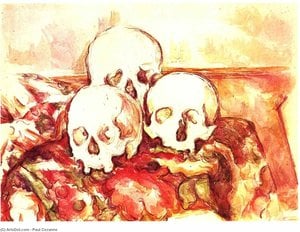
Paul Cézanne’s Skull: A Study in Mortality and Form
Within the realm of art, few images possess the unsettling yet profoundly captivating power of Paul Cézanne's Skull (1900). More than a simple depiction of bone, this chalk drawing—now residing at the Staatsgalerie Stuttgart—is a masterclass in Post-Impressionist technique and a poignant meditation on life’s ephemeral nature. It’s a work that invites prolonged contemplation, revealing layers of symbolism and artistic innovation with each viewing.
Cézanne's fascination with skulls wasn’t merely morbid; it stemmed from a deep exploration of form and structure. He sought to capture the essence of an object—in this case, the skull—not through realistic representation but by distilling it down to its fundamental geometric shapes: planes, cylinders, and cones. This approach, revolutionary for his time, paved the way for Cubism and profoundly influenced generations of artists. The skull itself becomes a study in volume and perspective, rendered with an almost sculptural quality that transcends mere portraiture.
The Context of Post-Impressionism
To fully appreciate Skull, it’s crucial to understand the artistic climate from which it emerged. Following the Impressionists' focus on capturing fleeting moments of light and color, a new generation of artists—including Cézanne, Gauguin, Van Gogh, and Seurat—began to push beyond surface appearances. They weren’t interested in simply *seeing* but in *understanding* how things were constructed. Post-Impressionism wasn't a unified style, but rather a diverse group of artists experimenting with different approaches to express emotion, ideas, and the underlying structure of reality.
Cézanne’s work stands apart within this movement. While he shared the desire for greater formal control than his Impressionist predecessors, he rejected their emphasis on optical realism. Instead, he employed a more subjective approach, using color and line to convey his own perception of the subject—a process that would later become central to Cubism.
A Study in Technique: Chalk and Form
Cézanne’s choice of chalk as his medium is integral to the painting's impact. Chalk allows for a remarkable immediacy and expressiveness, enabling him to build up layers of tone and texture with rapid, confident strokes. The bold lines delineate the skull’s contours, while subtle shading creates a sense of depth and volume—almost as if the skull were emerging from the flat surface of the paper. Notice how he uses broken planes of color to suggest form rather than relying on traditional shading techniques.
The cloth-covered table beneath the skull adds another layer of textural interest, grounding the image in a familiar domestic setting. The vase and candle holder in the background provide subtle visual anchors, preventing the composition from feeling overly stark or isolated. Cézanne masterfully balances simplicity with complexity, creating an image that is both visually arresting and intellectually stimulating.
Symbolism and Mortality
Of course, the skull itself carries a potent symbolic weight—a universal reminder of mortality and the transience of life. However, Cézanne doesn’t dwell on this theme in a sentimental or morbid way. Instead, he presents the skull as an object of study, a subject worthy of careful observation and artistic representation. The painting isn't about death itself but about the *process* of seeing and understanding—a process that inevitably leads to confronting our own mortality.
The stark simplicity of the composition—the skull against the neutral background—heightens this sense of contemplation. It forces the viewer to engage directly with the image, prompting questions about life, death, and the nature of art itself. Skull is a powerful reminder that even in its apparent austerity, it’s a deeply layered and emotionally resonant work.
For those seeking a high-quality reproduction of this iconic artwork, ArtsDot offers meticulously hand-painted reproductions that capture the essence of Cézanne's vision. Explore our collection today to bring this timeless masterpiece into your home or studio.
Opere simili


Biografia dell'artista
vitae e influenze
paul cézanne, pittore post-impressionista francese, nacque il 19 gennaio 1839 ad Aix-en-Provence, Francia. La sua giovinezza fu segnata da un forte legame con la famiglia e la sua attività bancaria, che gli fornirono sicurezza finanziaria. Ciò gli permise di concentrarsi sulle sue aspirazioni artistiche senza il peso dello stress finanziario. les nabis, neo-impressionismo e simbolismo influenzarono le prime opere di Cézanne, caratterizzate dall'enfasi sulle forme geometriche e su una tavolozza cromatica limitata. Il suo interesse per le opere di paul gauguin e georges seurat ha ulteriormente consolidato il suo stile post-impressionista.stile artistico e tecniche
L'uso innovativo di Cézanne dei piani cromatici e delle piccole pennellate ripetitive creava campi complessi che esprimevano il suo intenso studio dei soggetti. Il suo approccio spesso esploratorio all’arte portò allo sviluppo di una nuova lingua pittorica, che enfatizzava la struttura sottostante degli oggetti in una composizione.- caratteristiche principali:
- forme geometriche e faccette
- tavolozza cromatica ridotta
- enfasi sull'essenza costruttiva del mondo fisico
- prospettiva multipla e simultaneità
- opere influenti:
- the pond at jas de bouffan (1880)
- portrait of emile zola (1866)
- bosco (1892)
- musei che espongono le opere di Cézanne:
- musée marmottan monet a Parigi, Francia
- the museum of fine arts a Houston, Stati Uniti
eredità e impatto
L'opera pionieristica di Cézanne nel post-impressionismo ha aperto la strada a vari movimenti d’avanguardia, tra cui il cubismo, il fauvismo e il surrealismo. La sua influenza può essere vista nelle opere di pablo picasso, henri matisse e georges braque. L'eredità di Cézanne continua a ispirare artisti ed appassionati d’arte, consolidando il suo posto come figura fondamentale nella storia dell’arte moderna.- movimenti artistici correlati:
- visualizza le opere di Cézanne:

Paul Cézanne
1839 - 1906 , Francia
Dati rapidi
- Artisti Che Hanno Influenzato:
- Paul Gauguin
- Georges Seurat
- Artisti Influenzati:
- Pablo Picasso
- Henri Matisse
- Georges Braque
- Data Di Nascita: 19 gennaio 1839
- Luogo Di Nascita: Aix-en-Provence, Francia
- Movimento Artistico: Post-Impressionismo
- Nazionalità: Francese
- Nome Completo: Paul Cézanne
- Opere Notevoli:
- Lo stagno a Jas de Bouffan
- Ritratto di Émile Zola
- Bosco
- Grandi Bagnanti
Articoli correlati

Paul Cézanne: I 25 Capolavori che Hanno Rivoluzionato l'Arte Moderna | ArtsDot
Esplora i 25 capolavori di Paul Cézanne, il maestro dell'impressionismo e post-impressionismo. Scopri la storia, le tecniche e i colori iconici dietro opere come 'Le grandi bagnanti' e 'Mont Sainte-Victoire'. Trova riproduzioni artistiche di alta qualità per decorare la tua casa su ArtsDot.com.

Vanitas & Beyond: Exploring Mortality's Artistic Legacy for the Elite Collector
Explore the rich history & symbolism of Vanitas paintings with ArtsDot. Discover masterpieces reflecting mortality, societal values, & collecting insights for discerning art enthusiasts.
I 10 Capolavori a Olio Che Hanno Rivoluzionato la Storia dell'Arte |
Esplora i 10 capolavori a olio che hanno segnato la storia dell'arte! Da Van Gogh a Leonardo, scopri le storie e le tecniche dei più grandi maestri. Trova riproduzioni di alta qualità e idee per arredare con arte su .

Beyond Impressionism: Exploring Emotional Depth & Formal Innovation in Post-Impressionist Art
Explore the profound emotional depth & formal innovations of Post-Impressionism with our expert guide. Discover Cézanne, Van Gogh, Gauguin & more. Learn about art history, collecting, and investing in this pivotal movement.

Crimson Threads of Narrative: Exploring Symbolism & Representation in Artworks Featuring the Red Dress
Explore the rich symbolism of the red dress in art history! From ancient power displays to iconic portraits like Cézanne’s 'Madame Cezanne', discover the cultural and artistic significance behind this captivating color. Expert analysis & insights.



