


 Anteprima in scala reale
 Condividi
 Condividi
 Dettagli
 Guida stampabile

 Scarica
 Articoli simili
 Radiografia
 Slideshow
 Statistiche
Badende
 Oil On Canvas
- WallArt
- Expressionism
 1914
1914 81.0 x 97.0 cm
 Museo Folkwang
 Leggi tutto
Riproduzione a olio fatta a mano
Olio su tela dipinto a mano nelle tue dimensioni e con la tua cornice, realizzato su ordinazione dai nostri artisti. ( Passa alle stampe Passa all'immagine digitale)




P118B €10

P118H €10

P118W €10

P438Z €10

P508JH €12

P508YH €12

P805H €10

P805Z €10

P919BZ €10

P919G €10

P919XJ €10

P959ZH €10

P968JZ €12

W106C €8

W218G €10

W218JH €8

W218Y €10

W307PJ €10

W316G €10

W316PJ €8

W316Y €10

W398PJ €8

W4111J €10

W500HY €15

W500JH €15

W692G €12

W849H €8

W940BG €15

W953PJ €8




Scegli tra le nostre dimensioni predefinite, che rispettano le proporzioni originali dell'opera d'arte.

È possibile inserire dimensioni personalizzate per adattare l'opera a una cornice o a uno spazio specifico. Se la dimensione selezionata non corrisponde alle proporzioni dell'immagine originale, provvederemo a ritagliare l'opera o a estendere il dipinto con elementi aggiuntivi dipinti a mano. Un mockup digitale ti sarà inviato per approvazione prima dell'inizio della produzione.
Si prega di notare che l'anteprima a schermo non riflette il ritaglio o l'estensione effettivi. Solo il mockup mostrerà accuratamente la composizione finale.
Sebbene siano disponibili dimensioni personalizzate, consigliamo di selezionare una dimensione dall'elenco predefinito per preservare le proporzioni originali.
Dopo l'ordine, il team di ArtsDot.com contatterà il cliente via e-mail per ricevere le istruzioni e fornirà un'anteprima del mockup
Consegna in tutto il mondo () in 3/4 settimane anziché nelle normali 5 settimane. (12 Ottobre). Nessun compromesso sulla qualità.

Spedizione espressa gratuita in tutto il mondo

Tela in lino di alta qualità

Assicurazione completa sulla spedizione

Garanzia di rimborso dei dazi doganali

Garanzia di perfetta fedeltà cromatica

Politica di reso entro 100 giorni (solo per difetti di fabbricazione)

Garanzia di rimborso al 100%

Sconto per acquisti multipli
 L'opzione vetro è disponibile solo per dimensioni inferiori a 110 cm

Badende
Tecnica di riproduzione
Dimensioni della riproduzione
-


Prezzo totale
€ 291
A Moment of Serenity: Otto Mueller’s “Badende”
Otto Mueller's "Badende," painted in 1914, isn’t merely a depiction of nude figures bathing; it’s an immersion into a world of quiet contemplation and the harmonious connection between humanity and nature. This evocative work, now meticulously reproduced for art lovers worldwide through ArtsDot.com, offers a glimpse into the heart of German Expressionism – a movement characterized by its raw emotion, distorted forms, and profound engagement with the inner landscape of experience. Mueller, a key figure within the “Die Brücke” group, masterfully captures a fleeting moment of tranquility, inviting the viewer to share in the scene’s serene atmosphere.
The painting unfolds as a study in muted tones and fluid lines. The palette is dominated by soft blues, grays, and beiges – colors that blend seamlessly together, creating an almost hazy effect reminiscent of a summer afternoon spent beside a cool stream. This deliberate lack of sharp contrasts contributes significantly to the work’s overall sense of peace and detachment from the anxieties of the era. Mueller's technique is characterized by layered washes of oil paint applied with loose brushstrokes, resulting in a remarkably soft and blended surface. There’s an absence of hard edges; instead, forms emerge organically through subtle shifts in color and texture – mirroring the natural curves of the human body and the gentle ripples of water.
The Influence of Egyptian Art and the Romani Spirit
Mueller's artistic vision was deeply influenced by his fascination with ancient Egypt. He admired the Egyptians’ use of simplified forms, clean lines, and a restrained color palette – qualities he sought to emulate in his own work. This influence is particularly evident in the figures themselves, which are rendered with an almost hieroglyphic quality, their bodies reduced to essential shapes that convey a sense of timelessness and dignity. Furthermore, Mueller’s close association with the Romani community profoundly shaped his artistic perspective. He frequently depicted Romani women in his paintings, capturing their beauty, strength, and connection to nature – often portraying them in settings that evoke a sense of freedom and independence.
The composition itself is deliberately asymmetrical, avoiding any rigid formality. The figures are scattered across the canvas with a casual grace, as if they’ve simply materialized within this watery realm. One woman bends gracefully over the water, while another emerges from its depths, creating a dynamic yet balanced arrangement. This deliberate lack of central focus draws the viewer's eye throughout the scene, encouraging them to linger and absorb every detail.
Symbolism and Emotional Resonance
While “Badende” appears deceptively simple on the surface, it’s rich in symbolic meaning. The act of bathing itself represents purification, renewal, and a connection to the primal forces of nature. The figures are not presented as objects of desire or eroticism; rather, they embody a sense of vulnerability and openness – inviting us to contemplate our own relationship with the natural world and our place within it. The diffused lighting further enhances this emotional resonance, creating an atmosphere of quiet introspection and spiritual contemplation.
Mueller’s “Badende” is more than just a beautiful painting; it's a testament to his artistic vision – a harmonious blend of observation, emotion, and symbolism. Through its evocative imagery and masterful technique, the work continues to captivate viewers with its timeless appeal and profound sense of serenity. Reproductions available through ArtsDot.com allow art enthusiasts to experience this masterpiece in their own homes, bringing a touch of German Expressionism’s quiet beauty into any space.
Technical Details & Historical Context
Created in 1914 during a pivotal period of artistic experimentation, “Badende” exemplifies the shift away from traditional academic styles towards more subjective and emotionally driven approaches. Mueller's choice of distemper on canvas – a technique known for its matte finish and ability to create soft textures – further contributes to the painting’s ethereal quality. The work measures 81 x 97 cm, offering an intimate scale that draws the viewer into the scene. It is a prime example of Mueller’s artistic evolution, showcasing his mastery of color, line, and form within the context of the burgeoning Expressionist movement.
Otto Mueller (1874-1930), a key member of “Die Brücke,” faced significant challenges during his career. His work was later deemed "degenerate" by the Nazi regime, leading to the confiscation and destruction of many of his paintings. Despite this persecution, Mueller’s legacy endures through reproductions like those offered by ArtsDot.com, ensuring that his evocative vision continues to inspire and resonate with audiences worldwide.
Domande e risposte
Quali sono le dimensioni dell'originale "Badende"?
Le dimensioni registrate di "Badende" di Otto Müller sono 81 x 97 cm. È possibile ordinare riproduzioni in altre dimensioni mantenendo le stesse proporzioni.
Che livello di contrasto presenta "Badende" di Otto Müller?
Il livello di contrasto di "Badende" di Otto Müller è Serene.
Quale formato e orientamento di stampa si consigliano per "Badende" di Otto Müller?
Per "Badende", la configurazione di stampa consigliata è un formato Medium con orientamento Portrait.
In quale stanza si consiglia di esporre "Badende" di Otto Müller?
"Badende" di Otto Müller è consigliato per un/una Living Room. Questo suggerimento si basa sul soggetto, sui colori e sull'atmosfera dell'opera.
Quali sono la tecnica e le dimensioni dell'originale "Badende" di Otto Müller?
"Badende" è stata realizzata in Oil On Canvas e misura 81 x 97 cm nella sua forma originale.
Quale tono emotivo accompagna lo stile Expressionism di "Badende"?
L'emozione Tranquil di "Badende" accompagna il suo stile Expressionism.
"Badende" è privo di copyright?
Per quanto riguarda il copyright, "Badende" è di pubblico dominio - il suo copyright è scaduto.
In quale anno e all'interno di quale movimento è stata realizzata "Badende"?
"Badende" di Otto Müller risale al 1914 e appartiene al Expressionism.
Opere correlate


Biografia dell'artista
La Primi Anni e la Formazione
Otto Müller, pittore e incisore tedesco, nacque il 16 ottobre 1874 a Liebau (oggi Lubawka, contea di Kamienna Góra), in Slesia, Polonia. Tra il 1890 e il 1892, si formò nella litografia a Görlitz e Breslau. Dal 1894 al 1896, Müller studiò all'Accademia di Belle Arti di Dresda e continuò i suoi studi a Monaco dal 1898.Evoluzione Artistica ed Espressionismo
I primi lavori di Müller furono influenzati dall'Impressionismo, dallo Jugendstil e dal Simbolismo. Tuttavia, stabilendosi a Berlino nel 1908, il suo stile divenne più espressionista. In questo periodo, interagì con figure importanti come Wilhelm Lehmbruck, Rainer Maria Rilke ed Erich Heckel. Nel 1910, Müller entrò a far parte del gruppo di Dresda "Die Brücke", un momento cruciale nel suo percorso espressionista.Opere Notabili e Stile
I dipinti di Müller spesso presentavano l'unità tra uomo e natura, caratterizzati da una semplificazione armoniosa di forma, colore e contorni. Le sue opere notevoli includono:- Paesaggi ispirati a "La notte stellata"
- Nudi espressivi e donne Rom (zingare), guadagnandogli il soprannome di "Gypsy Müller"
- Uso del tempera su tela grossolana per una finitura opaca
- Un prolifico incisore con quasi tutte le sue stampe realizzate in litografia, insieme ad alcune xilografie e acqueforti
Eredità e Impatto Post-Bellico
Müller combatté come soldato tedesco in Francia e Russia durante la prima guerra mondiale. Dopo la guerra, divenne professore all'Akademie der Bildenden Künste a Breslau fino alla sua morte il 24 settembre 1930. Nel 1937, i nazisti sequestrarono 357 delle sue opere dai musei tedeschi, dichiarandole "arte degenerata". Nonostante questa persecuzione, l'opera di Müller ha continuato a influenzare generazioni di artisti e rimane un importante esempio dell'espressionismo tedesco. La sua capacità di combinare elementi realistici con una sensibilità romantica lo rende un artista unico nel suo genere.
Otto Müller
1874 - 1930 , Polonia
Informazioni rapide
- Artisti Influenti:
- Wilhelm Lehmbruck
- Rainer Maria Rilke
- Erich Heckel
- Data Di Morte: 24 settembre 1930
- Data Di Nascita: 16 ottobre 1874
- Luogo Di Nascita: Liebau, Polonia
- Movimento Artistico: Espressionismo
- Nazionalità: Tedesca
- Nome Completo: Otto Mueller
- Opere Notevoli:
- Paesaggi ispirati a La notte stellata
- Nudi espressivi e donne Rom
- Autoritratti con modello e maschera
Articoli correlati

The Visceral Cry of a Nation: Exploring Emotion & Distortion in German Expressionism
Explore the powerful world of German Expressionism with ArtsDot. Discover Kirchner, Nolde & Die Brücke's emotive masterpieces. Learn about this pivotal art movement and its lasting impact on modern art.

Espressionismo Tedesco: 10 Capolavori Rivoluzionari per Arredare con Emozione
Esplora i 10 capolavori dell'Espressionismo Tedesco con ArtsDot.com! Scopri Kirchner, Munch e Nolde, le loro emozioni intense e tecniche rivoluzionarie. Arreda la tua casa con stampe d'arte di alta qualità. Esplora la collezione online!

The Enduring Allure of the Nude: A Historical & Artistic Exploration of the Human Form
Explore the captivating history of nude art! Discover iconic paintings & artists from classical to modern eras. Uncover symbolism, techniques & find museum-quality reproductions at ArtsDot.

Lovis Corinth: Un Ponte tra Impressionismo ed Espressionismo – Studio di un'Evoluzione Artistica
Esplora l'evoluzione artistica di Lovis Corinth, figura chiave tra Impressionismo ed Espressionismo tedesco. Analisi approfondita delle sue opere, influenze e il suo ruolo nel panorama artistico europeo. Scopri la sua eredità!
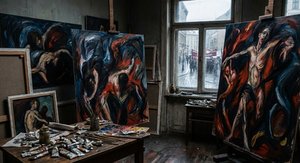
The Visceral Language of Emotion: Exploring Expressionism's Impact on 20th-Century Art
Explore the powerful world of Expressionism! Discover key artists like Kirchner & Nolde, understand its emotional impact, and learn about this revolutionary art movement's lasting legacy. Expert insights for collectors & enthusiasts.
