


 Anteprima in scala reale
 Invia
Invia Condividi
 Dettagli opera

 Scarica immagine
 Simili
 Radiografia
 Slideshow
Shock Troops Advance under Gas


 Espandi i dettagli
Riproduzione a olio fatta a mano
Olio su tela dipinto a mano nelle tue dimensioni e con la tua cornice, realizzato su ordinazione dai nostri artisti. ( Acquista stampa Acquista immagine)




P118B $10

P118H $10

P118W $10

P438Z $10

P508JH $12

P508YH $12

P805H $10

P805Z $10

P919BZ $10

P919G $10

P919XJ $10

P959ZH $10

P968JZ $12

W106C $8

W218G $10

W218JH $8

W218Y $10

W307PJ $10

W316G $10

W316PJ $8

W316Y $10

W398PJ $8

W4111J $10

W500HY $15

W500JH $15

W692G $12

W849H $8

W940BG $15

W953PJ $8




Scegli tra le nostre dimensioni predefinite, che rispettano le proporzioni originali dell'opera d'arte.

È possibile inserire dimensioni personalizzate per adattare l'opera a una cornice o a uno spazio specifico. Se la dimensione selezionata non corrisponde alle proporzioni dell'immagine originale, provvederemo a ritagliare l'opera o a estendere il dipinto con elementi aggiuntivi dipinti a mano. Un mockup digitale ti sarà inviato per approvazione prima dell'inizio della produzione.
Si prega di notare che l'anteprima a schermo non riflette il ritaglio o l'estensione effettivi. Solo il mockup mostrerà accuratamente la composizione finale.
Sebbene siano disponibili dimensioni personalizzate, consigliamo di selezionare una dimensione dall'elenco predefinito per preservare le proporzioni originali.
Dopo l'ordine, il team di ArtsDot.com contatterà il cliente via e-mail per le istruzioni e fornirà un'anteprima del mockup
Consegna in tutto il mondo () in 3/4 settimane anziché nelle normali 5 settimane. (26 Agosto). Nessun compromesso sulla qualità.

Spedizione espressa gratuita in tutto il mondo

Tela in lino di alta qualità

Assicurazione completa sulla spedizione

Garanzia di rimborso dei dazi doganali

Garanzia di fedeltà cromatica

Politica di reso entro 60 giorni (solo per difetti di fabbricazione)

Garanzia di rimborso al 100%

Offerta per acquisti multipli
 L'opzione vetro è disponibile solo per dimensioni inferiori a 110 cm

Shock Troops Advance under Gas
Tecnica di riproduzione
Dimensioni riproduzione
-


Prezzo totale calcolato
$ 263
Descrizione dell'opera
Otto Dix’s “Shock Troops Advance under Gas” – A Chronicle of Trauma and Modernity
Otto Dix's "Shock Troops Advance under Gas," painted in 1924, isn’t merely a depiction of war; it’s a visceral scream rendered in stark black and white. This arresting work, currently housed at The Art Institute of Chicago, serves as a brutal indictment of the First World War and its enduring psychological scars. Dix, deeply affected by his own experiences as an artillery gunner on both the Western and Eastern fronts, channeled his trauma into a style he termed “Neue Sachlichkeit” – New Objectivity – characterized by unflinching realism and a deliberate rejection of romanticized depictions of conflict.
The painting immediately assaults the viewer with its chaotic composition. A dense mass of soldiers, their faces obscured by gas masks, surges forward across a desolate landscape. The figures are not heroic or valiant; they’re distorted, grotesque even, reduced to anonymous masses consumed by a horrifying ordeal. Dix masterfully employs a limited palette – primarily black, white, and shades of gray – to amplify the sense of despair and decay. This monochromatic approach isn't simply stylistic; it mirrors the bleakness of the battlefield and the emotional numbness experienced by those who fought there. The use of drypoint etching technique, combined with aquatint, creates a remarkable textural quality, emphasizing the rough surfaces of uniforms, the crumbling earth, and the suffocating gas itself.
The Anatomy of Horror: Technique and Symbolism
Dix’s technical prowess is evident in his meticulous rendering of detail, juxtaposed against the overall sense of chaos. Notice how he meticulously depicts the individual gas masks, highlighting their uncomfortable angles and the grim determination etched on the soldiers' faces. The figures are not uniformly rendered; some appear to be collapsing, others staggering forward with a vacant stare, while still others seem lost in a detached nightmare. This deliberate lack of clarity contributes to the painting’s unsettling effect, mirroring the disorientation and psychological trauma experienced by soldiers exposed to gas attacks.
Symbolism permeates every aspect of “Shock Troops Advance under Gas.” The gas itself represents not just chemical warfare but also the insidious corruption of the human spirit. It obscures vision, both literal and metaphorical, blinding soldiers to reason and morality. The desolate landscape – a barren wasteland punctuated by shattered buildings – symbolizes the destruction wrought by war and the loss of innocence. The positioning of the figures, seemingly trapped in an endless forward march, speaks to the futility and relentless nature of conflict. Even the composition itself—a tightly packed mass with no clear focal point—reflects the overwhelming sense of chaos and disorientation experienced on the front lines.
Historical Context: Weimar Germany and the Shadow of War
To fully appreciate “Shock Troops Advance under Gas,” it’s crucial to understand its historical context. Painted in the aftermath of World War I, the painting reflects the profound disillusionment and social upheaval gripping Weimar Germany. The country was grappling with economic instability, political extremism, and a deep sense of national shame following the devastating conflict. Dix's unflinching portrayal of war directly challenged the prevailing patriotic narratives and exposed the brutal realities that had been deliberately obscured by official propaganda.
Dix’s work aligned him with the broader movement of “Neue Sachlichkeit,” which sought to depict reality without sentimentality or romanticism. However, unlike many of his contemporaries, Dix didn't shy away from confronting uncomfortable truths about German society and its role in the war. His paintings served as a powerful critique of militarism, nationalism, and the moral bankruptcy of the ruling elite.
Emotional Resonance: A Timeless Testament to Human Suffering
"Shock Troops Advance under Gas" is more than just a historical document; it’s a profoundly moving work of art that continues to resonate with viewers today. Dix's masterful use of composition, technique, and symbolism creates an intensely unsettling experience, forcing us to confront the horrors of war and its lasting impact on individuals and societies. The painting’s stark imagery and emotional honesty serve as a timeless reminder of the human cost of conflict – a message that remains tragically relevant in our own turbulent times.
Opere simili


Biografia dell'artista
Primi anni e formazione
Wilhelm Heinrich Otto Dix, un rinomato pittore e incisore tedesco, nacque il 2 dicembre 1891 a Unterhhausen, in Germania. Figlio maggiore di un operaio di una fonderia di ferro e di una sarta che aveva scritto poesie in gioventù, Dix fu esposto all'arte fin dalla tenera età. Le ore trascorse nello studio del suo cugino, Fritz Amann, pittore, furono decisive nel formare l'ambizione di Otto di diventare un artista.Carriera artistica
Tra il 1906 e il 1910, Dix svolse un apprendistato con il pittore Carl Senff, iniziando a dipingere i suoi primi paesaggi. Nel 1910, entrò nella Kunstgewerbeschule di Dresda (accademia delle arti applicate), dove Richard Guhr fu tra i suoi insegnanti. La sua carriera artistica è segnata da opere potenti e provocatorie che riflettono la realtà sociale e politica del suo tempo:- Metropolis (1928), una rappresentazione sprezzante delle azioni depravate della Repubblica di Weimar.
- La trincea (1923), che raffigurava corpi smembrati e decomposti di soldati dopo una battaglia, causò uno scandalo che portò il museo Wallraf-Richartz a nascondere il dipinto dietro un sipario.
- I mutilati di guerra, una serie di dipinti che svelano il lato brutale della guerra e illustrano il loro status dimenticato all'interno della società tedesca contemporanea.
Influenze e sviluppo artistico
Dix fu influenzato inizialmente dall'Espressionismo e dal Dadaismo, ma come molti artisti della sua generazione in Germania negli anni '20, si ispirò alle tendenze italiane e francesi per abbracciare uno stile di disegno freddo e lineare e immagini più realistiche. Il movimento della Neue Sachlichkeit (Nuova Oggettività) ebbe un ruolo fondamentale nel suo sviluppo artistico. Questa corrente mirava a rappresentare la realtà in modo diretto e senza idealizzazioni, spesso con un tono critico e satirico. Dix si distinse per la sua capacità di combinare realismo e allegoria, creando opere che riflettevano le contraddizioni e le tensioni della società tedesca del periodo tra le due guerre mondiali.Riconoscimenti e collezioni
Le opere di Otto Dix sono esposte in importanti musei e collezioni a livello internazionale:- Il Suermondt-Ludwig-Museum in Germania, che presenta opere di vari artisti tra cui Otto Dix.
- Il Goethe-Museum a Francoforte, in Germania, dedicato alla vita e all'opera di Johann Wolfgang von Goethe, uno dei più famosi scrittori e statisti tedeschi.
- MoMA (The Museum of Modern Art) a New York.
Eredità e impatto
Dix fu una figura chiave del movimento Neue Sachlichkeit, insieme a George Grosz. Le sue rappresentazioni spietate e realistiche della società di Weimar e della brutalità della guerra continuano a influenzare gli artisti oggi. La sua opera offre uno sguardo penetrante sulla realtà sociale e politica dell'epoca, denunciando la corruzione, l'ipocrisia e le conseguenze devastanti della guerra. Dix è ricordato per il suo stile pittorico unico, caratterizzato da un realismo crudo, una forte carica critica e una capacità di rappresentare la complessità dell'esperienza umana. **Importanti link:**
Otto Dix
1891 - 1969 , Germania
Dati rapidi
- Artisti Influenti:
- Carl Senff
- Richard Guhr
- George Grosz
- Max Beckmann
- Data Di Nascita: 2 dicembre 1891
- Luogo Di Nascita: Unterhhausen, Germania
- Movimento Artistico: Neue Sachlichkeit
- Nazionalità: Germana
- Nome Completo: Otto Dix
- Opere Notevoli:
- Metropolis
- La trincea
- Feriti di guerra
- Fiamme
- Ritratto di Sylvia von Harden
Articoli correlati
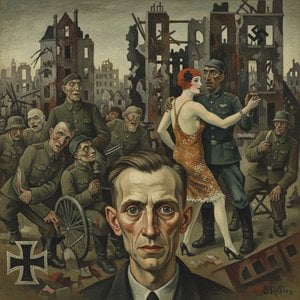
Otto Dix: Trauma, Società e Ribellione Artistica nella Germania di Weimar
Esplora l'opera provocatoria di Otto Dix e la Neue Sachlichkeit nella Germania di Weimar. Analisi approfondita del trauma, della decadenza sociale e dell'impatto artistico di questo maestro.

I 10 Dipinti Più Famosi Dominati dal Nero: Maestri e Storie d'Arte
Esplora i 10 dipinti più iconici dominati dal nero, da Caravaggio a Munch. Scopri storie, tecniche e il potere espressivo di artisti come Rembrandt e Goya. Trova stampe d'arte di alta qualità per la tua casa su .

Echoes of Trauma & Hope: Representing Transformation in Artworks of 1918
Explore the profound artistic responses to World War I's trauma & hope. Discover Expressionist masterpieces by Bacon, de Kooning & more. Expert insights for collectors & art enthusiasts at ArtsDot.
I 10 Dipinti Più Famosi Dominati dal Nero Mars: Arte e Decorazioni di Lusso
Esplora i 10 dipinti più iconici dominati dal nero Mars Black. Scopri la storia, gli artisti e il simbolismo di capolavori oscuri. Trova riproduzioni d'arte di lusso per decorare casa su .

Espressionismo Astratto: I 10 Capolavori che Hanno Definito un Movimento Artistico Rivoluzionario
Esplora i 10 capolavori dell'Espressionismo Astratto con ! Scopri Pollock, Rothko e De Kooning: storia, tecnica e significato di opere iconiche per arredare la tua casa con arte di alta qualità. Esplora la collezione online!



