


 Anteprima in scala reale
 Invia
Invia Condividi
 Dettagli opera

 Scarica immagine
 Simili
 Radiografia
 Slideshow
 Statistiche
King Karl XIV Johan


 Espandi i dettagli
Riproduzione a olio fatta a mano
Olio su tela dipinto a mano nelle tue dimensioni e con la tua cornice, realizzato su ordinazione dai nostri artisti. ( Passa a Stampe Passa all'immagine digitale)




































Scegli tra le nostre dimensioni predefinite, che rispettano le proporzioni originali dell'opera d'arte.

È possibile inserire dimensioni personalizzate per adattare l'opera a una cornice o a uno spazio specifico. Se la dimensione selezionata non corrisponde alle proporzioni dell'immagine originale, provvederemo a ritagliare l'opera o a estendere il dipinto con elementi aggiuntivi dipinti a mano. Un mockup digitale ti sarà inviato per approvazione prima dell'inizio della produzione.
Si prega di notare che l'anteprima a schermo non riflette il ritaglio o l'estensione effettivi. Solo il mockup mostrerà accuratamente la composizione finale.
Sebbene siano disponibili dimensioni personalizzate, consigliamo di selezionare una dimensione dall'elenco predefinito per preservare le proporzioni originali.
Dopo l'ordine, il team di ArtsDot.com contatterà il cliente via e-mail per le istruzioni e fornirà un'anteprima del mockup
Consegna in tutto il mondo () in 3/4 settimane anziché nelle normali 5 settimane. (9 Settembre). Nessun compromesso sulla qualità.

Spedizione espressa gratuita in tutto il mondo

Tela in lino di alta qualità

Assicurazione completa sulla spedizione

Garanzia di rimborso dei dazi doganali

Garanzia di fedeltà cromatica

Politica di reso entro 100 giorni (solo per difetti)

Garanzia di rimborso al 100%

Offerta per acquisti multipli
 L'opzione vetro è disponibile solo per dimensioni inferiori a 110 cm

King Karl XIV Johan
Tecnica di riproduzione
Dimensioni riproduzione
-


Prezzo totale calcolato
$ 263
Opere simili


Biografia dell'artista
Olof Johan Södermark (1790 - 1848): Unfinished Portrait Young Roman Woman
Olof Johan Södermark (11 march 1790 – 15 october 1848) was a swedish military officer, painter, graphic artist and sculptor born in Landskrona, Sweden. He embodied the spirit of his era—a blend of disciplined service and burgeoning artistic ambition—leaving behind a legacy marked by meticulous topographical studies alongside strikingly expressive portraits that capture the essence of Romanticism’s influence on Swedish art. His life unfolded against the backdrop of Napoleonic Wars and royal patronage, shaping him into one of Sweden's most distinguished artists of the early 19th century.Early Life and Military Career
Born in Landskrona Parish, Södermark demonstrated an aptitude for drawing from a young age, embarking on his military education at thirteen when he enrolled at the fortification corps. This formative experience instilled within him a dedication to precision and observation—skills that would prove invaluable throughout his distinguished career. He swiftly ascended through the ranks, becoming a lieutenant in 1808 with the Field Measurement Corps, primarily focused on cartography, a profession deeply rooted in scientific accuracy and artistic representation. His involvement in mapping Sweden’s landscapes foreshadowed his later commitment to capturing visual beauty with unwavering detail. Notably, he served as adjutant to Lieutenant General Sixten David Sparre, witnessing firsthand the complexities of military leadership and strategic planning. He fought at the Battle of Leipzig and Grossbeeren in 1813, and avoided death in the Norwegian uprising of 1814 when his drawing materials were said to have deflected a musket shot. He received a gold medal from the King for his part in coordinating the Swedish advance across the river at Tistedalen , as well as a promotion to captain. Two years later he was a major and by 1820 had received a knighthood from King Charles XIV John, previously the French Marshall Jean Bernadotte, who routed the Swedish army at Lubeck in 1806, but treated the prisoners with such humanity as to become their king just a few years later.The Napoleonic Wars and Artistic Awakening
The eruption of the Napoleonic Wars propelled Södermark into active service, where he participated in pivotal battles like Grossbeeren and Leipzig in 1813. His courage and resilience shone through during the Norwegian uprising of 1814, demonstrating unwavering loyalty to his country amidst turbulent political upheaval. Recognizing his talent for visual communication, he was awarded a medal from the King for bravery—a testament to his dedication and valor—and progressed to major rank by 1816. Continuing his military service under Count Carl Carlsson Mörner, he undertook expeditions to Norway, enduring two wounds during wartime engagements, solidifying his reputation as a steadfast soldier.Royal Patronage and Artistic Exploration
A significant turning point arrived in 1820 when Södermark accepted a commission to study the site for Karlsborg Fortress—a project that demanded both technical expertise and artistic sensitivity. He meticulously drafted plans and actively participated in its construction, blending his military duties with a burgeoning passion for architectural design. Simultaneously, he pursued his artistic endeavors, experimenting with etching techniques inspired by Romantic ideals. His early prints of monuments showcased his mastery of line and tonal gradation—skills honed through years of observation and disciplined practice. Recognizing the limitations of printmaking as a medium for conveying emotion, Södermark turned towards portrait painting, seeking to capture the psychological depth and nuance characteristic of the era. He taught drawing at the military academy, but just for a term. Between 1824 and 1828 he travelled to Paris and later Rome; an invitation from the sculptor Johan Niclas Byström (1783-1848) introduced him to the realities of artistic life and to the small colony of Swedish artists and writers living in the eternal city.Rome and Artistic Maturity
Inspired by the sculptor Johan Niclas Byström’s invitation, Södermark travelled to Rome in 1820, immersing himself in the artistic milieu of the Eternal City—a crucible for neoclassical revival. Under Byström's guidance and that of Bengt Erland Fogelberg, he honed his sculptural skills alongside painting, recognizing the complementary nature of these disciplines. However, he ultimately prioritized portraiture, dedicating himself to capturing the likenesses of prominent figures with remarkable accuracy and expressive subtlety. He remained in Rome until 1828, absorbing the influences of Hellenic art and refining his artistic technique—a period that profoundly shaped his stylistic vision. Before his premature death in 1848, he took to artistic life with the zeal of a latecomer. His initial training came as a sculptor, the last remaining lucrative niche for an artist in Rome. Printmaking briefly held his attention, but it was in portrait painting that he could successfully apply his skills as a draughtsman. His free and confident under-drawing is generally concealed in finished compositions. Some of these were paid commissions, as in the King and Queen in 1831; but others were of close friends and literary acquaintances. He painted the Swedish lyric poet Karl August Nicander in 1827 and the female writer and reformer Fredrika Bremer in 1843. Perhaps most impressive is his portrayal of the writer Stendhal (1840), the arch-realist that had opined as early as 1824 that western painting was “on the eve of a revolution…”. Stendal and Södermark seem to have found common ground, partly because both served as officers in the Napoleonic wars, but also from a belief in the same artistic ideals. The penname of “Stendal” came from the birthplace of Johann Joachim Winckelmann, the German pioneer of Neoclassicism. His time in Munich (c1832-1834) coincided with Prince Otto of Bavaria becoming King of a newly independent Greece and a resulting current that sought to paint classical civilisation in the academic style. Södermark seems to have worked tirelessly during this period, aggravating his already poor health by painting outside in the winter months and decades before the plein-air movements of the 1860s. Before his premature death in 1848, he took to artistic life with the zeal of a latecomer. His initial training came as a sculptor, the last remaining lucrative niche for an artist in Rome. Printmaking briefly held his attention, but it was in portrait painting that he could successfully apply his skills as a draughtsman. His free and confident under-drawing is generally concealed in finished compositions. Some of these were paid commissions, as in the King and Queen in 1831; but others were of close friends and literary acquaintances. He painted the Swedish lyric poet Karl August Nicander in 1827 and the female writer and reformer Fredrika Bremer in 1843. Perhaps most impressive is his portrayal of the writer Stendhal (1840), the arch-realist that had opined as early as 1824 that western painting was “on the eve of a revolution…”. Södermark’s legacy resides in his ability to fuse military precision with artistic sensitivity—a testament to his multifaceted talent and enduring contribution to Swedish art history.
Olof Johan Södermark
1790 - 1848 , Sweden
Dati rapidi
- Artistic Movement Or Style: Neoclassicism
- Artists Who Influenced This Artist: ['Jean-Auguste Dominique Ingres']
- Date Of Birth: 1790
- Date Of Death: 1848
- Full Name: Olof Johan Södermark
- Nationality: Swedish
- Notable Artworks:
- King Karl XIV Johan
- henri beyle
- Place Of Birth: Landskrona, Sweden
Articoli correlati

Il XIX Secolo nell'Arte: 10 Capolavori da Ammirare e Riscoprire
Esplora i 10 capolavori del XIX secolo! Da Manet a Klimt, scopri la storia e l'arte di dipinti iconici. Impressionismo, realismo e romanticismo ti aspettano su ArtsDot.com. Scopri tutta la collezione online.

Johan Krouthén: Navigating Swedish Romanticism Through Landscape & Light
Explore the captivating landscapes of Johan Krouthén, a Swedish artist who broke from tradition to embrace realism & idealism. Discover his technique, influences, and legacy with ArtsDot.

Thomas George Webster: Navigating Genre Boundaries & American Identity in 19th-Century Landscape Painting
Explore the captivating genre scenes of Thomas George Webster, a Victorian painter bridging British traditions with American themes. Discover his style, influences & legacy in 19th-century art history.

William Henry Pyne: A Topographical Vision of Early 19th-Century England – Art, Society & Watercolour's Rise
Explore the captivating world of William Henry Pyne (1769-1843), a key figure in early 19th-century English art. Discover his stunning watercolours, architectural studies & contribution to the rise of watercolour painting. Learn about this fascinating artist's life and legacy.
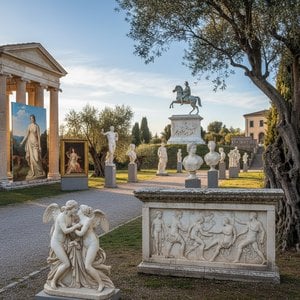
I 10 Capolavori del Neoclassicismo che Hanno Definito l'Arte: Scopri i Maestri
Esplora i 10 capolavori del Neoclassicismo con ! Scopri la storia di David, Ingres e Canova e lasciati ispirare dalla bellezza classica. Quadri famosi e riproduzioni d'arte per decorare casa con eleganza. Esplora la collezione online!