Anteprima in scala reale
 Condividi
 Condividi
 Dettagli

 Scarica immagine
 Articoli simili
 Radiografia
 Slideshow
Stylites


 Leggi tutto
Riproduzione a olio fatta a mano
Olio su tela dipinto a mano nelle tue dimensioni e con la tua cornice, realizzato su ordinazione dai nostri artisti. ( Passa alla stampa Passa all'immagine)




P118B $10

P118H $10

P118W $10

P438Z $10

P508JH $12

P508YH $12

P805H $10

P805Z $10

P919BZ $10

P919G $10

P919XJ $10

P959ZH $10

P968JZ $12

W106C $8

W218G $10

W218JH $8

W218Y $10

W307PJ $10

W316G $10

W316PJ $8

W316Y $10

W398PJ $8

W4111J $10

W500HY $15

W500JH $15

W692G $12

W849H $8

W940BG $15

W953PJ $8




Scegli tra le nostre dimensioni predefinite, che rispettano le proporzioni originali dell'opera d'arte.

È possibile inserire dimensioni personalizzate per adattare l'opera a una cornice o a uno spazio specifico. Se la dimensione selezionata non corrisponde alle proporzioni dell'immagine originale, provvederemo a ritagliare l'opera o a estendere il dipinto con elementi aggiuntivi dipinti a mano. Un mockup digitale ti sarà inviato per approvazione prima dell'inizio della produzione.
Si prega di notare che l'anteprima a schermo non riflette il ritaglio o l'estensione effettivi. Solo il mockup mostrerà accuratamente la composizione finale.
Sebbene siano disponibili dimensioni personalizzate, consigliamo di selezionare una dimensione dall'elenco predefinito per preservare le proporzioni originali.
Dopo l'ordine, il team di ArtsDot.com contatterà il cliente via e-mail per le istruzioni e fornirà un'anteprima del mockup
Consegna in tutto il mondo () in 3/4 settimane anziché nelle normali 5 settimane. (10 Agosto). Nessun compromesso sulla qualità.

Spedizione espressa gratuita in tutto il mondo

Tela in lino di alta qualità

Assicurazione completa sulla spedizione

Garanzia di rimborso dei dazi doganali

Garanzia di fedeltà cromatica dell'originale

Politica di reso entro 60 giorni (solo per difetti di fabbricazione)

Garanzia di rimborso al 100%

Sconto per acquisti multipli
 L'opzione vetro è disponibile solo per dimensioni inferiori a 110 cm

Stylites
Tecnica di riproduzione
Dimensioni della riproduzione
-


Prezzo totale
$ 263
Descrizione dell'opera
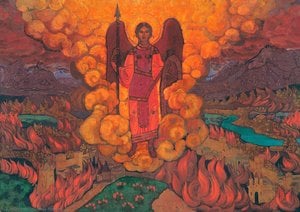
The Silent Sentinel – An Exploration of “Stylites” by Nicholas Roerich
Nicholas Roerich’s “Stylites,” painted in 1917, isn't merely a depiction of a solitary figure; it’s an invitation to contemplate the profound intersection of spirituality, isolation, and the enduring human quest for connection. This arresting image, rendered in a palette of evocative blues and purples – colors often associated with introspection and the ethereal – immediately draws the viewer into a scene both starkly simple and deeply resonant. The central figure, seated before a monumental rock formation that dominates the landscape, embodies a quiet dignity and an almost unnerving stillness. He’s not gazing outward, but inward, suggesting a journey of profound self-reflection.
Roerich's artistic lineage is complex and fascinating. Initially influenced by Russian Symbolism – a movement characterized by its exploration of the mystical and spiritual realms through art – he evolved into an artist deeply connected to Eastern philosophies, particularly Theosophy and Vedanta. This confluence of influences profoundly shaped his work, imbuing it with layers of symbolism and a sense of timelessness. “Stylites” exemplifies this evolution; the figure’s posture and the surrounding landscape evoke ancient ascetic traditions, hinting at a deliberate detachment from worldly concerns in pursuit of enlightenment.
The Pillar – A Symbol of Perseverance and Spiritual Ascent
The most striking element of the painting is undoubtedly the pillar itself. It's not simply a geological feature; it’s a potent symbol of endurance, sacrifice, and spiritual ascent. The legend of Simeon Stylites, the Syrian monk who spent nearly four decades standing atop a pillar in the desert, served as a powerful inspiration for Roerich. This historical figure became a metaphor within his work for those who choose to dedicate their lives to a singular pursuit – whether it be artistic creation, philosophical inquiry, or spiritual practice. The painting subtly references this legend, prompting us to consider what it means to commit oneself fully to a path of self-discipline and inner transformation.
Roerich’s technique is notable for its expressive brushwork and masterful use of color. He employs loose, gestural strokes that convey both the solidity of the rock formation and the ethereal quality of the figure's presence. The blues and purples are not applied uniformly; they shift and blend, creating a sense of depth and atmosphere. Notice how he uses light to sculpt the form of the pillar, suggesting its immense weight and the challenges it represents. The subtle details – the bird in flight, the trees – add layers of narrative without overwhelming the central theme.
Historical Context & Roerich’s Vision
“Stylites” was created during a period of tremendous upheaval in Russia—the aftermath of World War I and the tumultuous events surrounding the Bolshevik Revolution. Roerich, deeply concerned with preserving cultural heritage and promoting peace, saw art as a powerful tool for spiritual renewal. He believed that through artistic expression, one could transcend the limitations of the material world and connect with something larger than oneself. This conviction is evident in his work’s emphasis on symbolism, mythology, and the exploration of universal themes.
The painting's connection to Simeon Stylites reflects Roerich’s fascination with Eastern asceticism and its potential for spiritual growth. He saw in the monk’s solitary existence a model for those seeking to overcome ego and achieve enlightenment. Furthermore, Roerich was deeply interested in the Himalayas, viewing them as a sacred landscape imbued with ancient wisdom. “Stylites” can be interpreted as an attempt to capture the essence of this mystical realm – a place where the boundaries between the earthly and the divine blur.
A Timeless Reflection - The Emotional Resonance
Ultimately, "Stylites" is a profoundly moving work that invites contemplation. It’s not simply a portrait; it's an allegory of the human condition—a testament to the enduring power of faith, perseverance, and the search for meaning in a world often characterized by chaos and uncertainty. The painting’s quiet intensity and symbolic richness resonate with viewers on a deep emotional level, prompting us to reflect on our own journeys of self-discovery and the choices we make along the way. It serves as a reminder that even in solitude, there is an opportunity for profound connection – not just with others, but with something far greater than ourselves.


Biografia dell'artista
Nicholas Roerich: Vita, Arte e Eredità
Primi Anni di Vita ed Educazione
- Nicholas Konstantinovich Roerich nacque il 9 ottobre 1874 a San Pietroburgo, Russia.
- Suo padre, notaio tedesco baltico, e sua madre, una donna russa, coltivarono in lui fin da giovane un apprezzamento per le arti.
- Roerich perseguì sia il diritto che l'arte contemporaneamente, iscrivendosi all'Università di San Pietroburgo e all'Accademia d'Arti Imperiali nel 1893.
- Ricevette il titolo di “Artista” nel 1897 e una laurea in legge l'anno successivo.
Iniziative Artistiche e Influenze
- Lo sviluppo artistico di Roerich fu significativamente influenzato da Simbolismo Russo, un movimento che enfatizzava la spiritualità e la profondità emotiva.
- Diventò coinvolto nella società “World of Art” di Sergei Diaghilev, diventando presidente dal 1910 al 1916.
- Il suo lavoro iniziale mostrava un fascino per l'archeologia e il design teatrale, portando a collaborazioni su produzioni per i Ballets Russes.
- Fu anche influenzato da apocrifi e scritti settari medievali come il Libro dell’Oca.
Collaborazione con i Ballets Russes
- I progetti di Roerich per i Ballets Russes furono molto apprezzati, in particolare il suo lavoro su Alexander Borodin's Principe Igor (1909) e Igor Stravinsky’s Il Rituale della Primavera (1913).
- I suoi progetti di scenografia combinavano ricerca storica con arte immaginativa, creando produzioni visivamente sbalorditive.
- Questa collaborazione lo affermò come figura di spicco nel design teatrale nei primi anni del XX secolo.
Sviluppo Artistico e Temi
- I dipinti di Roerich si evolsero per incorporare temi sempre più mistici e spirituali, riflettendo il suo crescente interesse per la Teosofia e le religioni orientali.
- La sua serie Studi Architettonici (1904–1905) dimostrò la sua abilità architettonica e il suo impegno nella preservazione del patrimonio culturale.
- Motivi ricorrenti nelle sue opere includono paesaggi maestosi, antiche città e figure religiose come San Pantelemon e Kuan Yin.
- Spesso raffigurava l'Himalaya, una regione che per lui aveva un profondo significato spirituale.
Realizzazioni Principali e Riconoscimenti
- Roerich fu un fervente sostenitore della protezione dell’arte e dell’architettura durante i tempi di guerra.
- I suoi sforzi portarono alla creazione del Patto Roerich (1935), un trattato internazionale per la conservazione degli oggetti culturali, guadagnandogli numerose nomine per il Premio Nobel per la Pace.
- Viaggiò ampiamente in Asia Centrale, conducendo ricerche archeologiche e documentando culture antiche.
- Le sue opere sono esposte in importanti collezioni museali in tutto il mondo, tra cui la Galleria d'Arte di Astrakhan.
Significato Storico ed Eredità
- L’impatto di Nicholas Roerich sull’arte e sulla cultura russa è immensurabile.
- Ha colmato il divario tra l'espressione artistica e l'esplorazione spirituale, influenzando generazioni di artisti e pensatori.
- Il suo impegno nella conservazione del patrimonio culturale rimane rilevante oggi, evidenziando l’importanza di proteggere la nostra eredità condivisa.
- L’eredità di Roerich si estende oltre i suoi dipinti; è ricordato come un artista visionario, studioso e umanitario.

Nikolaj Roerich
1874 - 1947 , Russia
Informazioni rapide
- Artisti Influenti:
- Gauguin
- Van Gogh
- Data Di Nascita: 9 ottobre 1874
- Luogo Di Nascita: San Pietroburgo, Russia
- Movimento Artistico: Simbolismo russo
- Nazionalità: Russo
- Nome Completo: Nikolaj Konstantinovič Rerich
- Opere Notevoli:
- Monte dei cinque tesori
- Percorso verso Kailas 4
- Ponte di Gloria
- Lago dei Naga
Articoli correlati

Gustave Moreau: Il Visionario del Simbolismo e Precursore dell'Arte Fantasy Moderna
Esplora il mondo affascinante di Gustave Moreau, pittore simbolista visionario e precursore dell'arte fantasy moderna. Analisi delle sue opere più iconiche e l'influenza del Simbolismo.

Navigating Symbolism & Sentiment: A Comprehensive Exploration of Boats in Art History
Explore the rich history of boats in art! Discover symbolism & style from ancient myths to Impressionist masterpieces. Expert insights for collectors at ArtsDot.

Jan van Eyck: Innovazione, Simbolismo e l'Alba della Pittura Primitiva Fiamminga
Esplora l'innovazione e il simbolismo rivoluzionari di Jan van Eyck, padre della pittura fiamminga. Analisi approfondita della tecnica ad olio, del Polittico dell'Agnello Mistico e dei suoi capolavori. Scopri la sua eredità artistica.

Tra Vigne e Muri: Un Percorso Curoriale per l'Arte nelle Cantine e Sale di Degustazione – Esaltare l'Esperienza Enologica Attraverso Paesaggi, Simbolismo e Armonia d'Interni
Scopri come l'arte eleva l'esperienza enologica! Guide esperte per cantine d'autore, design innovativo e strategie di valorizzazione del territorio. Ispirazioni uniche per hotel e professionisti.
Simbolismo nell'Arte: 10 Capolavori da Ammirare e Scoprire | ArtsDot
Esplora il fascino del Simbolismo nell'arte con 10 capolavori iconici. Scopri le storie di Klimt, Munch e altri maestri, i significati nascosti e l'uso suggestivo dei colori. Trova la tua opera simbolista perfetta su ArtsDot.com!