

 Anteprima in scala reale
 Invia
Invia Condividi
 Dettagli opera
 Guida
Guida

 Scarica
 Simili
 Radiografia
 Slideshow
 Domande e risposte
 Statistiche
Lotus


 Espandi i dettagli
Giclée / Stampe d'arte
Stampa giclée o su tela di qualità museale, con produzione rapida e diverse opzioni di finitura. ( Acquista il dipinto realizzato a mano Passa all'immagine digitale)




P118B €10

P118H €10

P118W €10

P438Z €10

P508JH €12

P508YH €12

P805H €10

P805Z €10

P919BZ €10

P919G €10

P919XJ €10

P959ZH €10

P968JZ €12

W106C €8

W218G €10

W218JH €8

W218Y €10

W307PJ €10

W316G €10

W316PJ €8

W316Y €10

W398PJ €8

W4111J €10

W500HY €15

W500JH €15

W692G €12

W849H €8

W940BG €15

W953PJ €8




Scegli tra le nostre dimensioni predefinite, che rispettano le proporzioni originali dell'opera d'arte.

Inserisci la larghezza e l'altezza desiderate, per adattarle alla tua cornice o alla tua parete. Una stampa può essere solo ritagliata, mai resa più grande dell'immagine originale; pertanto, un formato con una forma differente comporterà la perdita di una parte dell'opera. Ti invieremo un mockup digitale da approvare prima di procedere con la stampa. L'immagine mostrata in questa pagina non rappresenta il ritaglio reale — solo il mockup lo mostra.
Consegna in tutto il mondo () in 2 settimane invece delle normali 4/5 settimane. (3 Novembre)

Spedizione espressa gratuita in tutto il mondo

Tela in lino di alta qualità

Assicurazione completa sulla spedizione

Garanzia di rimborso dei dazi doganali

Garanzia di fedeltà cromatica assoluta

Politica di reso entro 100 giorni (solo per difetti di fabbricazione)

Garanzia di rimborso al 100%

Offerta per acquisti multipli
 L'opzione vetro è disponibile solo per dimensioni inferiori a 110 cm

Lotus
Giclée / Stampe d'arte
Dimensioni riproduzione
-


Prezzo finale calcolato
€ 56
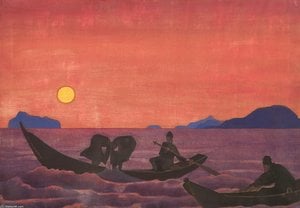
A Vision of Serenity: Exploring Roerich's "Lotus"
To gaze upon Nicholas Roerich’s Lotus is to step across the threshold into a realm suspended between waking life and profound meditation. This painting, executed in 1933, is not merely a depiction of a landscape; it is an immersion into a state of spiritual grace. The overall impression is one of breathtaking tranquility, achieved through a masterful handling of light and color that seems to emanate from the very heart of the scene. Roerich, whose life was a tapestry woven with threads of art, archaeology, and philosophy, imbues this canvas with his characteristic blend of cultural reverence and deep humanism.
Technique and Palette: The Artistry of Light
The technical execution speaks volumes about the artist's skill. Rendered in what appears to be oil on canvas, the visible brushstrokes lend a palpable texture to the surface, suggesting an almost tactile quality akin to impasto work. Roerich employs a warm and diffused lighting scheme, seemingly originating from the upper right corner, which bathes the entire scene in the glow of a perpetual sunset. The color palette is intoxicating—a rich symphony of oranges, soft pinks, deep purples, and earthy browns. These hues do more than decorate; they evoke emotion, wrapping the viewer in a blanket of warm nostalgia. While the perspective feels somewhat flattened, contributing to its dreamlike quality, it is this deliberate stylistic choice that allows the focus to remain entirely on the spiritual resonance rather than mere topographical accuracy.
Symbolism and Spiritual Depth
At the core of the composition lies the solitary figure, seated in deep contemplation by the still waters. This meditating form serves as the painting's anchor, universally symbolizing enlightenment, inner peace, and the journey toward self-discovery. The surrounding elements—the vast lake mirroring the sky, the gently rolling hills punctuated by stylized mountain peaks—represent the immense, sometimes overwhelming, expanse of existence itself. The lotus motif, though perhaps subtly integrated into the overall theme rather than overtly depicted, carries its weight of purity rising untainted from the mud, a potent symbol echoed throughout Indian artistic traditions that so influenced Roerich’s vision.
A Cultural Echo: Context and Style
Roerich's lifelong fascination with global cultures is evident here. The style marries what might be termed stylized realism with unmistakable influences drawn from ancient Indian art. This fusion allows the piece to feel both deeply rooted in tradition and vibrantly contemporary. Considering its creation in 1933, it stands as a testament to an era when spiritual yearning intersected powerfully with artistic expression. For collectors or designers seeking a piece that transcends mere decoration, this work offers a narrative depth—a visual meditation perfect for a sanctuary space or a grand hall where contemplation is encouraged.
Domande e risposte
Come può essere utilizzato "Lotus" di Nikolaj Roerich nell'arredamento d'interni?
L'uso (Focal) e lo spazio (Lounge) sono le due raccomandazioni indicate per "Lotus" di Nikolaj Roerich.
In che modo "Lotus" di Nikolaj Roerich lega Symbolism al paese d'origine dell'artista?
L'opera Symbolism "Lotus" è stata realizzata da un artista nato in Russia.
In che anno è stata realizzata l'opera "Lotus" di Nikolaj Roerich e a quale movimento appartiene?
"Lotus" è stata realizzata nel 1933, nell'ambito del movimento Symbolism.
Opere simili




Biografia dell'artista
Nicholas Roerich: Vita, Arte e Eredità
Primi Anni di Vita ed Educazione
- Nicholas Konstantinovich Roerich nacque il 9 ottobre 1874 a San Pietroburgo, Russia.
- Suo padre, notaio tedesco baltico, e sua madre, una donna russa, coltivarono in lui fin da giovane un apprezzamento per le arti.
- Roerich perseguì sia il diritto che l'arte contemporaneamente, iscrivendosi all'Università di San Pietroburgo e all'Accademia d'Arti Imperiali nel 1893.
- Ricevette il titolo di “Artista” nel 1897 e una laurea in legge l'anno successivo.
Iniziative Artistiche e Influenze
- Lo sviluppo artistico di Roerich fu significativamente influenzato da Simbolismo Russo, un movimento che enfatizzava la spiritualità e la profondità emotiva.
- Diventò coinvolto nella società “World of Art” di Sergei Diaghilev, diventando presidente dal 1910 al 1916.
- Il suo lavoro iniziale mostrava un fascino per l'archeologia e il design teatrale, portando a collaborazioni su produzioni per i Ballets Russes.
- Fu anche influenzato da apocrifi e scritti settari medievali come il Libro dell’Oca.
Collaborazione con i Ballets Russes
- I progetti di Roerich per i Ballets Russes furono molto apprezzati, in particolare il suo lavoro su Alexander Borodin's Principe Igor (1909) e Igor Stravinsky’s Il Rituale della Primavera (1913).
- I suoi progetti di scenografia combinavano ricerca storica con arte immaginativa, creando produzioni visivamente sbalorditive.
- Questa collaborazione lo affermò come figura di spicco nel design teatrale nei primi anni del XX secolo.
Sviluppo Artistico e Temi
- I dipinti di Roerich si evolsero per incorporare temi sempre più mistici e spirituali, riflettendo il suo crescente interesse per la Teosofia e le religioni orientali.
- La sua serie Studi Architettonici (1904–1905) dimostrò la sua abilità architettonica e il suo impegno nella preservazione del patrimonio culturale.
- Motivi ricorrenti nelle sue opere includono paesaggi maestosi, antiche città e figure religiose come San Pantelemon e Kuan Yin.
- Spesso raffigurava l'Himalaya, una regione che per lui aveva un profondo significato spirituale.
Realizzazioni Principali e Riconoscimenti
- Roerich fu un fervente sostenitore della protezione dell’arte e dell’architettura durante i tempi di guerra.
- I suoi sforzi portarono alla creazione del Patto Roerich (1935), un trattato internazionale per la conservazione degli oggetti culturali, guadagnandogli numerose nomine per il Premio Nobel per la Pace.
- Viaggiò ampiamente in Asia Centrale, conducendo ricerche archeologiche e documentando culture antiche.
- Le sue opere sono esposte in importanti collezioni museali in tutto il mondo, tra cui la Galleria d'Arte di Astrakhan.
Significato Storico ed Eredità
- L’impatto di Nicholas Roerich sull’arte e sulla cultura russa è immensurabile.
- Ha colmato il divario tra l'espressione artistica e l'esplorazione spirituale, influenzando generazioni di artisti e pensatori.
- Il suo impegno nella conservazione del patrimonio culturale rimane rilevante oggi, evidenziando l’importanza di proteggere la nostra eredità condivisa.
- L’eredità di Roerich si estende oltre i suoi dipinti; è ricordato come un artista visionario, studioso e umanitario.

Nikolaj Roerich
1874 - 1947 , Russia
Dettagli rapidi
- Artisti Influenti:
- Gauguin
- Van Gogh
- Data Di Nascita: 9 ottobre 1874
- Luogo Di Nascita: San Pietroburgo, Russia
- Movimento Artistico: Simbolismo russo
- Nazionalità: Russo
- Nome Completo: Nikolaj Konstantinovič Rerich
- Opere Notevoli:
- Monte dei cinque tesori
- Percorso verso Kailas 4
- Ponte di Gloria
- Lago dei Naga
Articoli correlati

Nicholas Roerich: Misticismo, Montagne e la Ricerca di una Saggezza Senza Tempo nell'Arte
Esplora il mondo affascinante di Nicholas Roerich: simbolismo, paesaggi himalayani e la profonda filosofia dell'Agni Yoga. Scopri l'arte che rivela saggezza senza tempo e un viaggio spirituale unico.

I 25 capolavori di John Constable: la poesia della natura inglese
Scopri i 25 capolavori di John Constable e il Romanticismo inglese. Esplora la collezione su ArtsDot.com.

I 10 Capolavori del Paesaggio Romantico: Arte, Storia e Decorazioni di Lusso
Esplora i 10 capolavori del Paesaggio Romantico con ArtsDot.com! Caspar David Friedrich, Turner e altri maestri: storia, tecnica e colori che definiscono un'epoca. Trova riproduzioni d'arte di lusso per la tua casa. Scopri la collezione completa online!

Evocations of Place: A Historical Journey Through Landscape Art
Explore the rich history of landscape art with ArtsDot. Discover renowned artists, movements like Impressionism & Romanticism, and expert guidance for collecting timeless pieces. Find your perfect serene escape today!

Evocations of Place: A Historical Journey Through Landscape Art
Explore the rich history of landscape art with ArtsDot. Discover renowned artists, movements like Impressionism & tonalism, and expert guidance for collecting timeless pieces. Find your perfect serene escape today!


