


 Anteprima in scala reale
 Invia
Invia Condividi
 Dettagli opera

 Scarica immagine
 Simili
 Radiografia
 Slideshow
 Statistiche
Untitled 120


 Espandi i dettagli
Giclée / Stampe d'arte
Stampa giclée o su tela di qualità museale, con produzione rapida e diverse opzioni di finitura. ( Acquista il dipinto realizzato a mano Passa all'immagine digitale)




P118B $10

P118H $10

P118W $10

P438Z $10

P508JH $12

P508YH $12

P805H $10

P805Z $10

P919BZ $10

P919G $10

P919XJ $10

P959ZH $10

P968JZ $12

W106C $8

W218G $10

W218JH $8

W218Y $10

W307PJ $10

W316G $10

W316PJ $8

W316Y $10

W398PJ $8

W4111J $10

W500HY $15

W500JH $15

W692G $12

W849H $8

W940BG $15

W953PJ $8




Scegli tra le nostre dimensioni predefinite, che rispettano le proporzioni originali dell'opera d'arte.

È possibile inserire dimensioni personalizzate per adattare l'opera a una cornice o a uno spazio specifico. Se la dimensione selezionata non corrisponde alle proporzioni dell'immagine originale, procederemo al ritaglio dell'opera o all'estensione dell'immagine con un bordo specchiato o a tinta unita. Un mockup digitale ti verrà inviato per approvazione prima dell'inizio della produzione.
Si prega di notare che l'anteprima a schermo non riflette il ritaglio o l'estensione effettivi. Solo il mockup mostrerà accuratamente la composizione finale.
Sebbene siano disponibili dimensioni personalizzate, si raccomanda di selezionare una dimensione dall'elenco predefinito per preservare le proporzioni originali.
Consegna in tutto il mondo () in 2 settimane invece delle normali 4/5 settimane. (10 Settembre)

Spedizione espressa gratuita in tutto il mondo

Tela in lino di alta qualità

Assicurazione completa sulla spedizione

Garanzia di rimborso dei dazi doganali

Garanzia di fedeltà cromatica

Politica di reso entro 100 giorni (solo per difetti)

Garanzia di rimborso al 100%

Offerta per acquisti multipli
 L'opzione vetro è disponibile solo per dimensioni inferiori a 110 cm

Untitled 120
Giclée / Stampe d'arte
Dimensioni riproduzione
-


Prezzo totale calcolato
$ 62
Mark Rothko’s ‘Untitled 120’: A Dialogue with Darkness
“Untitled 120” presents a deceptively simple composition – two stark red rectangles delineated by crisp white borders. Yet, within this apparent minimalism lies a profound meditation on human emotion and the weight of existence, characteristic of Mark Rothko’s mature style. This piece, likely created around 1968, embodies the culmination of decades spent exploring color fields as vehicles for conveying deep psychological states. The painting's power resides not in representational imagery but in its ability to evoke a visceral response – a sense of unease, contemplation, and perhaps even sorrow.
- The Rothko Aesthetic: Rothko’s work emerged from the abstract expressionist movement, yet he deliberately distanced himself from the gestural brushstrokes favored by his contemporaries. Instead, he developed a technique of layering thin washes of color – often applied with squeegees – to create luminous blocks that seem to float within the canvas.
- Color as Emotion: Rothko believed that color possessed an inherent emotional quality. The intense red, a hue frequently associated with passion, danger, and even blood, is tempered by the cool white, creating a dynamic tension. This interplay of warm and cool tones is central to the painting’s impact.
- Historical Context: Rothko was working during a period of significant social and political upheaval – the Vietnam War, civil rights struggles, and widespread anxieties about the future. These concerns undoubtedly informed his artistic explorations, leading him to confront themes of mortality and human suffering.
A Legacy Rooted in Trauma
Understanding “Untitled 120” requires acknowledging Mark Rothko’s deeply personal history. Born Markus Yakovlevich Rothkowitz in Daugavpils, Latvia (then part of the Russian Empire) in 1903, his early life was marked by displacement and hardship. His family's emigration to Portland, Oregon, in 1913, following pogroms and political instability in Russia, further shaped his worldview. The premature death of his father, a pharmacist and intellectual, at a young age left an indelible mark on Rothko’s psyche – a recurring motif reflected in the painting’s somber mood.
This biographical context is crucial to interpreting Rothko's work. His paintings are not merely abstract compositions; they are intensely personal expressions of grief, loss, and existential questioning. The red rectangles can be seen as symbolic representations of these unresolved emotions, demanding attention and inviting the viewer to confront their own anxieties about life and death.
Technique and Composition
The painting’s technical execution is meticulously controlled. Rothko's use of thin washes of color creates a remarkable sense of depth and luminosity. The squeegee technique, employed to spread and manipulate the paint, results in smooth, unbroken surfaces that seem to dissolve at the edges. This deliberate lack of detail forces the viewer to focus on the pure qualities of color and form.
- Layering and Transparency: Rothko built up his paintings through multiple layers of translucent washes, allowing the underlying colors to subtly influence the final effect.
- Negative Space: The white borders surrounding the red rectangles are not merely decorative; they contribute significantly to the painting’s composition by creating areas of negative space that further emphasize the forms and enhance their sense of isolation.
Collecting Rothko's Vision
"Untitled 120" represents a pivotal work in Mark Rothko’s oeuvre, offering a profound insight into his artistic vision. A hand-painted reproduction captures not only the visual impact of the original but also the emotional depth and technical mastery that define Rothko’s legacy. This piece is ideal for collectors seeking to enrich their spaces with works that provoke contemplation and evoke powerful emotions. Its stark simplicity makes it remarkably versatile, complementing a wide range of interior design styles – from minimalist modern to classic contemporary.
Opere simili


Biografia dell'artista
giovinezza e influenze
mark rothko (marcus rothkowitz), un rinomato artista americano, è nato il 25 settembre 1903 a Dvinsk, Lettonia. La sua famiglia emigrò negli Stati Uniti quando aveva solo dieci anni. Questo cambiamento culturale avrebbe influenzato in seguito il suo stile artistico.evoluzione artistica
Le prime opere di Rothko erano caratterizzate dall'astrattismo espressionista, uno stile che enfatizzava il processo creativo piuttosto che il prodotto finale. I suoi dipinti, come no. 18 (1948) e untitled (1948), mostravano il suo approccio unico al colore e alla forma.- campo di colore: l'uso da parte di Rothko di audaci campi rettangolari di colore, spesso in forte contrasto tra loro, creava un senso di profondità ed emozione.
- struttura organica: i suoi dipinti sembravano respirare la vita, come se i colori fossero entità viventi.
opere notevoli ed esposizioni
- no. 10 (1950), un dipinto che ha segnato un significativo cambiamento nello stile di Rothko, è ora parte della collezione del Museum of Modern Art.
- I Seagram Murals, una serie di dipinti commissionati per il ristorante Four Seasons, hanno mostrato la capacità di Rothko di adattare il suo stile a diversi ambienti.
- no. 3 (1950), un dipinto che esemplifica l'uso di Rothko di audaci campi rettangolari di colore.
vita successiva e eredità
La vita di Rothko è stata segnata da difficoltà nella salute mentale e da un matrimonio tumultuoso. È morto il 25 febbraio 1970 all'età di 66 anni. Nonostante le sue sfide, Rothko ha lasciato un segno indelebile nel mondo dell'arte. ochre and red on red (campo di colore), un dipinto che mostra l'approccio unico di Rothko al colore, può essere trovato nella collezione ArtsDot.com. La pagina Wikipedia su Mark Rothko fornisce ulteriori informazioni sulla sua vita e sul suo stile artistico.
Mark Rothko
1903 - 1970 , Lettonia
Dati rapidi
- Artisti Influenti:
- Wassily Kandinsky
- Piet Mondrian
- Artisti Influenzati: ['Minimalismo']
- Data Di Morte: 25 febbraio 1970
- Data Di Nascita: 25 settembre 1903
- Luogo Di Nascita: Daugavpils, Lettonia
- Movimento Artistico: Espressionismo Astratto
- Nazionalità: Americano
- Nome Completo: Mark Rothko / Marcus Rothkowitz
- Opere Notevoli:
- No. 18 (1948)
- No. 10 (1950)
- Murals Seagram
- No. 3 (1950)
Articoli correlati

Bianco Sublime: I 10 Dipinti Più Famosi Dominati dal Colore Bianco | .it
Esplora i 10 dipinti più celebri dominati dal bianco, da Monet a Malevich. Scopri la storia, le tecniche e l'impatto di queste opere iconiche. Trova stampe su tela e riproduzioni d'arte di alta qualità per decorare casa con stile su .
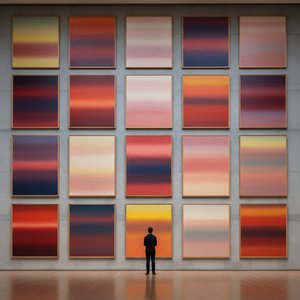
Mark Rothko: Le 25 Opere Più Iconiche per Arredare con Emozione e Profondità
Esplora le 25 opere più iconiche di Mark Rothko, il maestro dell'espressionismo astratto. Scopri la storia, i colori e l'emozione dietro ogni tela. Acquista riproduzioni artistiche di alta qualità per arredare con stile su ArtsDot.com

Astrazione Geometrica: 10 Capolavori che Hanno Definito un Movimento Artistico
Esplora i 10 capolavori dell'Astrazione Geometrica: Mondrian, Malevich e Kandinsky rivoluzionano l'arte moderna. Scopri la storia, i colori e le tecniche di questi movimenti iconici. Stampe d'arte di alta qualità su ArtsDot.com!

Espressionismo Astratto: I 10 Capolavori che Hanno Definito un Movimento Artistico Rivoluzionario
Esplora i 10 capolavori dell'Espressionismo Astratto con ! Scopri Pollock, Rothko e De Kooning: storia, tecnica e significato di opere iconiche per arredare la tua casa con arte di alta qualità. Esplora la collezione online!

Kandinsky: I 25 Capolavori che Hanno Rivoluzionato l'Arte Moderna | ArtsDot
Esplora i 25 capolavori di Wassily Kandinsky, pioniere dell'arte astratta. Scopri la storia, il significato e le tecniche dietro ogni dipinto iconico. Trova riproduzioni d'arte di alta qualità per decorare la tua casa su ArtsDot.com.


