


 Anteprima in scala reale
 Condividi
 Condividi
 Dettagli
 Guida stampabile

 Scarica
 Articoli simili
 Radiografia
 Slideshow
 Statistiche
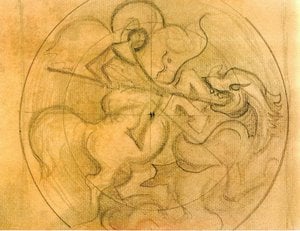
Untitled
 38.0 x 46.0 cm
 Leggi tutto
L'opera d'arte visualizzata in questa pagina è protetta dalle leggi sul diritto d'autore, il che significa che non possiamo legalmente creare o vendere una riproduzione identica. Tale protezione è garantita da accordi internazionali quali la Convenzione di Berna e dalle leggi nazionali, incluse quelle stabilite da Legge sul copyright degli Stati Uniti - Titolo 17. Tutti i diritti riservati. Le immagini presenti su questo sito sono protette da copyright e non possono essere riprodotte o utilizzate senza l'autorizzazione scritta di WahooArt.com o dei rispettivi proprietari del copyright.
Questo metodo è pienamente conforme alle normative sul diritto d'autore poiché non prevede la copia o la duplicazione dell'opera protetta. Si tratta invece di una rielaborazione creativa: un nuovo dipinto che trae ispirazione dall'originale, senza tuttavia esserne identico.
Giclée / Stampe d'arte
Stampa giclée o su tela di qualità museale, con produzione rapida e diverse opzioni di finitura. ( Ordina la riproduzione dipinta a mano Passa all'immagine digitale)




































Scegli tra le nostre dimensioni predefinite, che rispettano le proporzioni originali dell'opera d'arte.

Inserisci la larghezza e l'altezza desiderate, per adattarle alla tua cornice o alla tua parete. Una stampa può essere solo ritagliata, mai resa più grande dell'immagine originale; pertanto, un formato con una forma differente comporterà la perdita di una parte dell'opera. Ti invieremo un mockup digitale da approvare prima di procedere con la stampa. L'immagine mostrata in questa pagina non rappresenta il ritaglio reale — solo il mockup lo mostra.
Consegna in tutto il mondo () in 2 settimane invece delle normali 4/5 settimane. (22 Ottobre)

Spedizione espressa gratuita in tutto il mondo

Tela in lino di alta qualità

Assicurazione completa sulla spedizione

Garanzia di rimborso dei dazi doganali

Garanzia di perfetta fedeltà cromatica

Politica di reso entro 100 giorni (solo per difetti di fabbricazione)

Garanzia di rimborso al 100%

Sconto per acquisti multipli
 L'opzione vetro è disponibile solo per dimensioni inferiori a 110 cm

Untitled
Giclée / Stampe d'arte
Dimensioni della riproduzione
-


Prezzo totale
€ 54
Opere correlate



Biografia dell'artista
Manabu Mabe: A Lost Legacy of Vibrant Abstraction
Manabu Mabe (1924-1997) remains an enigma in the annals of Brazilian art, a figure whose prodigious talent tragically curtailed by fate itself – specifically, the disappearance of his Varig Flight 707 cargo plane carrying fifty of his paintings en route from Tokyo to Rio de Janeiro in 1979. Yet, despite this devastating loss, Mabe’s artistic output continues to inspire awe and fascination, cementing his place as a pivotal voice within Grupo Seibi, a collective that championed lyrical abstraction and profoundly shaped the landscape of Brazilian modernism. Born in Japan, Mabe's early life was marked by an itinerant spirit, fostering a deep connection with diverse cultures and experiences that would later permeate his artistic vision. He moved to São Paulo in the late 1950s, establishing himself as a craftsman specializing in hand-painted ties – a seemingly humble profession that belied the burgeoning creative force within him. It was during this period that he achieved remarkable recognition, securing the top prize at São Paulo’s contemporary art salon and earning Brazil's highest honor at the São Paulo Biennial. Furthermore, his youthful brilliance garnered him accolades as one of the “artists under 35” at Paris’s inaugural Biennial, signaling a burgeoning international reputation. Mabe’s artistic style evolved dramatically over time, embracing Color Field painting techniques reminiscent of Mark Rothko and Willem de Kooning. Characterized by expansive canvases dominated by luminous hues—often warm yellows and reds—his works eschewed representational imagery for emotionally resonant compositions that prioritized texture and tonal gradation. The Grupo Seibi collective, founded in 1963, provided him with a crucial platform to explore these stylistic choices and engage in dialogues with fellow artists who shared similar ambitions. This group’s commitment to abstraction mirrored Mabe's own desire to transcend the confinements of traditional artistic conventions. The disappearance of Flight 707 represents not merely an artistic tragedy but also a profound disruption of cultural exchange between Japan and Brazil. The lost paintings, considered by many critics as Mabe’s magnum opus—pieces like “TA SO GA RE” and “Esperança du Jouém”—were destined to further enrich the discourse on Brazilian art history. These canvases exemplify his masterful use of Color Field painting, capturing serene landscapes in evocative tones and demonstrating a remarkable sensitivity to texture and visual harmony. The absence of these artworks underscores the enduring impact Mabe’s artistic vision had on the cultural heritage of both nations. Despite the heartbreaking circumstances surrounding his demise in São Paulo in 1997, Manabu Mabe's legacy persists through reproductions of his surviving paintings—primarily housed in institutions like MASP and MoMA—and continues to captivate audiences worldwide. His work stands as a testament to the transformative power of abstraction and serves as an enduring reminder of an artist whose brilliance was tragically cut short, leaving behind a vibrant tapestry of color and emotion that will continue to inspire generations of artists and art lovers alike. ## Early Life Mabe was born into a formerly prosperous family in Japan, where his father owned a ferryboat business and a hotel called the House of Flowers. When Mabe was seven years old, his father experienced financial ruin. “A Japanese father never explains business affairs to the family,” Mabe recalled in a 1959 interview, “but I knew something terrible had happened. My father was bankrupt and humiliated.” The family's circumstances led them to emigrate to Brazil in 1934, enduring a 50-day journey in steerage. His father became a contract laborer on a São Paulo coffee plantation. Young Manabu worked in the plantation fields, tending to rice and vegetables between coffee trees, and eventually became strong enough to carry 88-pound coffee sacks. Despite the demanding physical labor, he taught himself Portuguese by kerosene lamp at night and collected paper scraps for drawing. ## Personal Life Mabe married Yoshino in 1951 and had three children. In 1952, he met Tadashi Kaminagai and became an admirer of Kaminagai’s art, later recalling how he would spend hours beside the artist “admiring the marvelous colors he used to paint a macaw on Dr. Honda's veranda.” He won the painting prize at the second São Paulo International Biennial (1953), where only two Japanese-Brazilian artists were accepted. ## Artistic Style and Grupo Seibi Mabe’s artistic style evolved dramatically over time, embracing Color Field painting techniques reminiscent of Mark Rothko and Willem de Kooning. Characterized by expansive canvases dominated by luminous hues—often warm yellows and reds—his works eschewed representational imagery for emotionally resonant compositions that prioritized texture and tonal gradation. The Grupo Seibi collective, founded in 1963, provided him with a crucial platform to explore these stylistic choices and engage in dialogues with fellow artists who shared similar ambitions. This group’s commitment to abstraction mirrored Mabe's own desire to transcend the confinements of traditional artistic conventions. ## Major Achievements and Recognition Overnight, Mabe became an international success. Within a year of exhibiting his first abstractions in São Paolo galleries, he won in 1959 the Grant Award and the Braun Award at the First Paris Biennial, the Best National Painter Award at the Fifth São Paulo Biennial, and the Purchase Award at the Dallas Museum of Fine Arts. Time Magazine even covered his lightning-fast rise to fame in an article entitled “Mabe’s Golden Year.” Numerous other accolades quickly followed: the 1960 Fiat Prize at the 30th Venice Biennale. He had a major retrospective at the São Paulo Museum of Art in 1986.
Manabu Mabe
1924 - 1997 , Japan
Informazioni rapide
- Artistic Movement Or Style: Abstrattismo lirico / Grupo Seibi
- Artists Or Movements Influenced By This Artist: ['Color Field']
- Date Of Birth: 1924
- Date Of Death: 1997
- Full Name: Manabu Mabe
- Nationality: Giapponese
- Notable Artworks:
- TA SO GA RE
- Esperança du Jouém
- Place Of Birth: Kumamoto, Giappone