

 Anteprima in scala reale
 Invia
Invia Condividi
 Dettagli opera
 Guida
Guida

 Scarica
 Simili
 Radiografia
 Slideshow
 Q&A
Q&A Statistiche
The Three Graces

- 50.0 x 35.0 cm


 Espandi i dettagli
Giclée / Stampe d'arte
Stampa giclée o su tela di qualità museale, con produzione rapida e diverse opzioni di finitura. ( Acquista il dipinto realizzato a mano Passa all'immagine digitale)




P118B €10

P118H €10

P118W €10

P438Z €10

P508JH €12

P508YH €12

P805H €10

P805Z €10

P919BZ €10

P919G €10

P919XJ €10

P959ZH €10

P968JZ €12

W106C €8

W218G €10

W218JH €8

W218Y €10

W307PJ €10

W316G €10

W316PJ €8

W316Y €10

W398PJ €8

W4111J €10

W500HY €15

W500JH €15

W692G €12

W849H €8

W940BG €15

W953PJ €8




Scegli tra le nostre dimensioni predefinite, che rispettano le proporzioni originali dell'opera d'arte.

Inserisci la larghezza e l'altezza desiderate, per adattarle alla tua cornice o alla tua parete. Una stampa può essere solo ritagliata, mai resa più grande dell'immagine originale; pertanto, un formato con una forma differente comporterà la perdita di una parte dell'opera. Ti invieremo un mockup digitale da approvare prima di procedere con la stampa. L'immagine mostrata in questa pagina non rappresenta il ritaglio reale — solo il mockup lo mostra.
Consegna in tutto il mondo () in 2 settimane invece delle normali 4/5 settimane. (2 Novembre)

Spedizione espressa gratuita in tutto il mondo

Tela in lino di alta qualità

Assicurazione completa sulla spedizione

Garanzia di rimborso dei dazi doganali

Garanzia di fedeltà cromatica assoluta

Politica di reso entro 100 giorni (solo per difetti di fabbricazione)

Garanzia di rimborso al 100%

Offerta per acquisti multipli
 L'opzione vetro è disponibile solo per dimensioni inferiori a 110 cm

The Three Graces
Giclée / Stampe d'arte
Dimensioni riproduzione
-


Prezzo finale calcolato
€ 55
The Three Graces by Lucas Cranach the Elder: A Renaissance Reverie
Lucas Cranach the Elder’s “The Three Graces” transcends mere depiction; it embodies the very spirit of Northern Renaissance artistry—a harmonious blend of classical ideals and humanist observation. Painted in 1535 during a period marked by religious upheaval, this masterpiece at the Nelson-Atkins Museum of Art stands as a testament to Cranach’s mastery of capturing beauty and conveying profound symbolic meaning.
Style and Influences: Cranach's work firmly establishes itself within the Northern Renaissance tradition. Drawing inspiration from Italian humanist thinkers like Leonardo da Vinci and Michelangelo, he skillfully integrates classical motifs—particularly those derived from Greek mythology—into his compositions. Unlike the opulent grandeur of Florentine art, Cranach’s aesthetic prioritizes restraint and elegance, favoring subtle tonal gradations and meticulous detail to illuminate the human form.
Painting Details and Technique: Executed in oil on panel, “The Three Graces” showcases Cranach's unparalleled technical prowess. The artist employs a pyramidal composition—a hallmark of Renaissance painting—to elevate the figures of Euphrosyne, Aglaea, and Thalia to a position of prominence. Delicate brushstrokes create an illusion of soft flesh tones and drapery folds, capturing the ethereal quality characteristic of Northern Renaissance art. Cranach’s meticulous attention to anatomical accuracy reflects his deep understanding of human anatomy, furthering enhancing the realism of the scene.
Symbolism: The painting's symbolism resonates deeply with humanist beliefs prevalent during Cranach’s time. The Graces—Euphrosyne (Joy), Aglaea (Splendor), and Thalia (Youth)—represent virtues associated with feminine beauty, grace, and prosperity. Their poses are deliberately reminiscent of sculptures by Praxiteles, emphasizing the ideal human form and celebrating divine harmony. The black background serves to heighten the luminosity of the nude figures, directing the viewer’s gaze towards their serene expressions and idealized postures.
Historical Context: Created amidst the Protestant Reformation, “The Three Graces” reflects a renewed interest in classical art as a counterbalance to medieval religious dogma. Cranach's patrons—including Frederick III of Saxony—embraced humanist ideals, fostering an environment conducive to artistic innovation. This painting exemplifies the Renaissance’s commitment to portraying human beauty and virtue with dignity and grace – values that continue to inspire artists and collectors today.
Availability: Explore a stunning reproduction of “The Three Graces” at ArtsDot.com, where you can acquire a high-quality print that captures the essence of this iconic Renaissance artwork.
Domande e risposte
Quale artista e quale stile si celano dietro "The Three Graces"?
"The Three Graces" è stata creata da Luca Cranach il Vecchio in stile Northern Renaissance. L'artista e il movimento definiscono la tradizione dell'opera.
Che atmosfera trasmette "The Three Graces"?
"The Three Graces" di Luca Cranach il Vecchio è descritto come Elegante per atmosfera. Questa classificazione può aiutare ad abbinare l'opera a un ambiente.
Dove posso trovare le statistiche relative a "The Three Graces" di Luca Cranach il Vecchio?
La pagina Statistiche di "The Three Graces" di Luca Cranach il Vecchio presenta le statistiche delle visite pubbliche: il numero di visite mensili di quest'opera, un confronto con le opere dell'artista più visualizzate e la provenienza dei visitatori.
Opere simili


Biografia dell'artista
La Vita e la Formazione di Lucas Cranach il Vecchio
Lucas Cranach il Vecchio, un pittore e incisore tedesco del Rinascimento, nacque nel 1472 a Kronach, nell'Alta Franconia. La sua data precisa di nascita rimane sconosciuta. Apprese l'arte del disegno da suo padre, Hans Maler, e successivamente sviluppò le sue abilità sotto la guida di maestri sud-tedeschi locali. Si trasferì a Vienna intorno al 1490, dove lavorò per alcuni anni prima di stabilirsi a Wittenberg.L’Ascesa alla Corte di Sassonia e il Ruolo nella Riforma
Il Patronato di Federico III: La carriera di Cranach conobbe una svolta significativa quando attirò l'attenzione del duca Federico III, elettore di Sassonia, noto anche come Federico il Saggio. Nel 1504, divenne pittore di corte degli elettori di Sassonia a Wittenberg, posizione che mantenne per gran parte della sua vita. Questo incarico gli fornì un accesso privilegiato alla nobiltà e ai circoli intellettuali dell'epoca.- Ritratti di Principi e Leader Riformatori: Cranach divenne famoso per i suoi ritratti dei principi tedeschi e delle figure chiave della Riforma protestante, tra cui Martin Lutero. Questi ritratti non erano solo rappresentazioni fisiche, ma anche dichiarazioni politiche e religiose.
- Temi Religiosi: Cranach dipinse anche soggetti religiosi, inizialmente aderendo alla tradizione cattolica, per poi esplorare nuovi modi di esprimere le preoccupazioni luterane attraverso la sua arte. La sua capacità di adattarsi ai cambiamenti religiosi lo rese un artista molto richiesto.
- La Bottega Cranach: La bottega di Cranach era una vera e propria fabbrica d'arte, con numerosi assistenti e allievi che contribuivano alla produzione di opere. Dopo la sua morte, il lavoro continuò grazie a suo figlio, Lucas Cranach il Giovane, e ad altri artisti della sua cerchia.
Opere Significative e Stile Artistico
Cranach sviluppò uno stile distintivo caratterizzato da colori vivaci, composizioni dinamiche e un'attenzione ai dettagli realistici. Le sue opere riflettono l'influenza dell'arte fiamminga, ma con una sensibilità tedesca unica.- La Caccia allo Stambecco dell’Elettore Federico III: (1529) è un capolavoro che incarna lo spirito del Rinascimento nordico, mostrando la maestria di Cranach nel catturare l'essenza della caccia e della vita di corte.
- Autoritratto: Un ritratto vivido dell’artista stesso, che dimostra la sua abilità nel rappresentare la luce e l’ombra.
- L'Annunciazione a Gioacchino: (1516-18) è una scena di gioiosa spiritualità, ora conservata al Museo delle Belle Arti di Budapest.
- Adamo ed Eva: Cranach dipinse diverse versioni di Adamo ed Eva, spesso con un'interpretazione allegorica e simbolica che riflette le preoccupazioni religiose dell’epoca.
Eredità e Impatto Culturale
Lucas Cranach il Vecchio lasciò un segno indelebile nella storia dell'arte tedesca. La sua capacità di combinare ritratti realistici con temi religiosi e allegorici lo rese uno dei pittori più importanti del Rinascimento nordico. Il suo lavoro influenzò generazioni di artisti successivi, e la sua bottega contribuì a diffondere il suo stile in tutta Europa. Cranach è ricordato non solo come un artista talentuoso, ma anche come una figura chiave nella diffusione delle idee della Riforma protestante attraverso l'arte. La sua eredità continua ad ispirare artisti e appassionati d’arte oggi.
Luca Cranach il Vecchio
1472 - 1553 , Germania
Dettagli rapidi
- Artistic Movement Or Style: Rinascimento tedesco
- Artists Or Movements Influenced By This Artist: ['Lucas Cranach il Giovane']
- Artists Who Influenced This Artist: ['Hans Maler (padre)']
- Date Of Birth: 1472
- Date Of Death: 1553
- Full Name: Lucas Cranach il Vecchio
- Nationality: Tedesco
- Notable Artworks:
- Caccia allo Stambecco dell'Elettore
- Autoritratto
- Annunciazione a Gioacchino
- Adamo ed Eva nel Giardino
- Place Of Birth (City And Country): Kronach, Germania
Articoli correlati

Echoes of Time: Exploring the Enduring Appeal & Historical Context of Vintage Art Prints
Explore the captivating world of vintage art prints! Discover their history, collecting tips & enduring appeal. Expert insights on chromolithography and building a legacy collection with ArtsDot.

Lucas van Leyden: Innovation & Intimacy in Early Netherlandish Printmaking
Explore the groundbreaking prints of Lucas van Leyden, a Dutch master bridging Gothic detail & Renaissance innovation. Discover his rare works, investment potential, and legacy for discerning collectors.
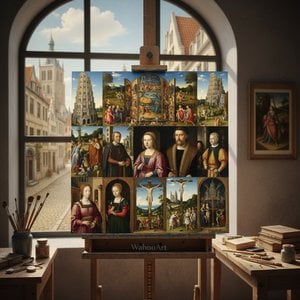
I 10 Capolavori del Rinascimento Nordico che Hanno Definito l'Arte | .it
Esplora i 10 capolavori del Rinascimento Nordico con .it! Jan van Eyck, Dürer e altri maestri rivivono in stampe di alta qualità. Trova l'arte perfetta per la tua casa e lasciati ispirare dalla bellezza senza tempo. Scopri tutta la collezione online!

The Enduring Legacy of Fine Art Prints: Technique, History & Aesthetic Impact
Explore the rich history & techniques of fine art prints. Discover investment potential, assess authenticity, and learn how to preserve your collection with expert guidance. Trusted insights for discerning collectors.

Stampe Giclée: Guida alla Qualità Museale e alla Longevità dell'Arte Digitale
Scopri la vera tecnica Giclée e come distinguere una stampa d'arte da un poster. Impara a proteggere il tuo investimento artistico.


