


 Anteprima in scala reale
 Invia
Invia Condividi
 Dettagli opera

 Scarica immagine
 Simili
 Radiografia
 Slideshow
Luneberger Heide
 Oil On Canvas
- WallArt
- Impressionism
 1908
1908- 19th Century
 84.0 x 99.0 cm
 Espandi i dettagli
Giclée / Stampe d'arte
Stampa giclée o su tela di qualità museale, con produzione rapida e diverse opzioni di finitura. ( Acquista il dipinto realizzato a mano Acquista immagine)




P118B $10

P118H $10

P118W $10

P438Z $10

P508JH $12

P508YH $12

P805H $10

P805Z $10

P919BZ $10

P919G $10

P919XJ $10

P959ZH $10

P968JZ $12

W106C $8

W218G $10

W218JH $8

W218Y $10

W307PJ $10

W316G $10

W316PJ $8

W316Y $10

W398PJ $8

W4111J $10

W500HY $15

W500JH $15

W692G $12

W849H $8

W940BG $15

W953PJ $8




Scegli tra le nostre dimensioni predefinite, che rispettano le proporzioni originali dell'opera d'arte.

È possibile inserire dimensioni personalizzate per adattare l'opera a una cornice o a uno spazio specifico. Se la dimensione selezionata non corrisponde alle proporzioni dell'immagine originale, procederemo al ritaglio dell'opera o all'estensione dell'immagine con un bordo specchiato o a tinta unita. Un mockup digitale ti verrà inviato per approvazione prima dell'inizio della produzione.
Si prega di notare che l'anteprima a schermo non riflette il ritaglio o l'estensione effettivi. Solo il mockup mostrerà accuratamente la composizione finale.
Sebbene siano disponibili dimensioni personalizzate, si raccomanda di selezionare una dimensione dall'elenco predefinito per preservare le proporzioni originali.
Consegna in tutto il mondo () in 2 settimane invece delle normali 4/5 settimane. (28 Agosto)

Spedizione espressa gratuita in tutto il mondo

Tela in lino di alta qualità

Assicurazione completa sulla spedizione

Garanzia di rimborso dei dazi doganali

Garanzia di fedeltà cromatica

Politica di reso entro 60 giorni (solo per difetti di fabbricazione)

Garanzia di rimborso al 100%

Offerta per acquisti multipli
 L'opzione vetro è disponibile solo per dimensioni inferiori a 110 cm

Luneberger Heide
Giclée / Stampe d'arte
Dimensioni riproduzione
-


Prezzo totale calcolato
$ 62
A Symphony of Earth and Atmosphere
In the quietude of 1908, Lovis Corinth captured a moment of profound stillness in his masterpiece, Luneberger Heide. This evocative landscape serves as a window into a world where the boundaries between earth, water, and sky dissolve into a singular, atmospheric experience. At first glance, the viewer is drawn to the commanding presence of a central tree, a sentinel of the German heath that anchors the composition with its rugged strength. Yet, as one lingers before the canvas, the true magic reveals itself in the subtle interplay of light and shadow. The painting does not merely depict a forest; it captures the very breath of the landscape, inviting the observer to step into a realm of soft, diffused light and muted natural tones that suggest a cool, overcast afternoon.
The technique employed by Corinth is a masterclass in late Impressionism, where the physical presence of the paint becomes as much a part of the story as the subject itself. Using oil on canvas, the artist utilized loose, visible brushstrokes that lend a tactile, rhythmic quality to the foliage and bark. This impasto-like texture creates a sense of movement within the stillness, as if the wind is perpetually rustling through the leaves. The perspective is intentionally flattened, eschewing rigid spatial accuracy in favor of an emotional depth. By focusing on the organic flow of branches and the hazy, amorphous shapes of the surrounding vegetation, Corinth achieves a dreamlike quality that prioritizes mood over meticulous detail, making the piece feel less like a photograph and more like a memory.
The Intersection of Impressionism and Expressionism
To understand Luneberger Heide, one must consider the pivotal role Lovis Corinth played in the evolution of modern art. As a bridge between the fleeting light of Impressionism and the raw, emotive power of Expressionism, Corinth’s work embodies a unique vitality. In this particular landscape, we see the remnants of his academic training blended with a burgeoning desire to express the internal spirit of nature. The color palette—a sophisticated arrangement of earthy greens, deep browns, and whispers of slate gray and blue—reflects a restrained elegance. There is no jarring brightness here; instead, there is a harmonious, subdued tonality that speaks to the resilience of the natural world.
Symbolically, the painting offers a profound meditation on continuity and solitude. The prominent tree stands as a symbol of endurance, rooted deeply in the soil while reaching toward an ephemeral sky, much like the human condition itself. The presence of water within the forest scene introduces an element of reflection, both literal and metaphorical, suggesting a sense of peace and eternal recurrence. For the collector or interior designer, this artwork offers more than mere decoration; it provides a focal point of tranquility. Its ability to evoke a feeling of peaceful solitude makes it an ideal centerpiece for spaces designed for contemplation, adding a layer of sophisticated, organic warmth to any curated environment.
Opere simili


Biografia dell'artista
Primi anni e formazione
Lovis Corinth, nato Franz Heinrich Louis il 21 luglio 1858 a Tapiau, in Prussia, fu un artista e scrittore tedesco la cui opera matura come pittore e incisore realizzò una sintesi di impressionismo ed espressionismo. La prima parte della vita di Corinth fu segnata dal suo talento per il disegno, che lo portò a studiare pittura all'Accademia di Königsberg nel 1876.Sviluppo artistico
Lo sviluppo artistico di Corinth fu influenzato da diverse figure e movimenti chiave:- I primi lavori di Lovis Corinth erano caratterizzati da un approccio naturalistico, incoraggiato dal suo istruttore Otto Günther.
- Studiò sotto Ludwig von Löfftz all'Accademia di Belle Arti di Monaco, che enfatizzava l'attenta osservazione dei colori e dei valori.
- Corinth fu anche influenzato da Courbet e dalla Scuola Barbizon, così come dalle opere di Rubens durante il suo periodo ad Anversa.
Opere notevoli e stile
Alcune delle opere più importanti di Corinth includono:- Nella Macello (78 x 89 cm, Staatsgalerie di Stoccarda, Germania), che mette in mostra il suo uso dell'olio su tela.
- Autoritratto (47 x 53 cm, Kunsthalle di Brema, Germania), che dimostra la sua abilità nel disegno.
- Semi-nuda femminile con cappello (283 x 383 cm, Kunstpalast, Düsseldorf, Germania), che evidenzia il suo uso della matita.
Eredità e vita successiva
La vita successiva di Corinth fu segnata dalla sua presidenza della Secessione berlinese dal 1915 al 1925. Pubblicò anche numerosi saggi sulla storia dell'arte, tra cui "Das Erlenen der Malerei" ("Sull'apprendimento della pittura") nel 1908. Corinth morì il 17 luglio 1925, dopo un ictus nel 1911 che lo aveva parzialmente paralizzato. Link chiave:
Lovis Corinth
1858 - 1925 , Paesi Bassi
Dati rapidi
- Artisti Influenti:
- Courbet
- Rubens
- Ludwig von Löfftz
- Data Di Nascita: 21 luglio 1858
- Luogo Di Nascita: Tauwade, Paesi Bassi
- Movimento Artistico: Impressionismo ed Espressionismo
- Nazionalità: Germana
- Nome Completo: Lovis Corinth (Franz Heinrich Louis)
- Opere Notevoli:
- Nella Macello
- Autoritratto
- Semi-nuda femminile con cappello
Articoli correlati

I 10 Capolavori Impressionisti che Hanno Rivoluzionato il Paesaggio Pittorico
Esplora i 10 capolavori impressionisti che hanno rivoluzionato il paesaggio pittorico! Monet, Renoir e altri maestri catturati in stampe su tela di alta qualità. Scopri la storia dell'arte e trova l'opera perfetta per arredare casa tua con ArtsDot.com.
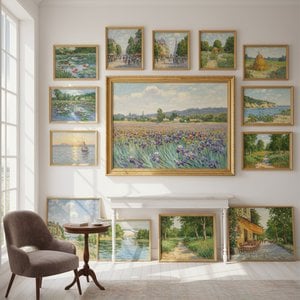
I 10 Capolavori Impressionisti che Hanno Rivoluzionato il Paesaggio Pittorico
Esplora i 10 capolavori impressionisti che hanno rivoluzionato il paesaggio pittorico! Monet, Renoir e altri maestri catturati in stampe su tela di alta qualità. Trova l'arte perfetta per la tua casa su ArtsDot.com.

Lovis Corinth: Un Ponte tra Impressionismo ed Espressionismo – Studio di un'Evoluzione Artistica
Esplora l'evoluzione artistica di Lovis Corinth, figura chiave tra Impressionismo ed Espressionismo tedesco. Analisi approfondita delle sue opere, influenze e il suo ruolo nel panorama artistico europeo. Scopri la sua eredità!

Evocations of Place: A Historical Journey Through Landscape Art
Explore the rich history of landscape art with ArtsDot. Discover renowned artists, movements like Impressionism & Romanticism, and expert guidance for collecting timeless pieces. Find your perfect serene escape today!

I 10 Capolavori del Paesaggio Romantico: Arte, Storia e Decorazioni di Lusso
Esplora i 10 capolavori del Paesaggio Romantico con ArtsDot.com! Caspar David Friedrich, Turner e altri maestri: storia, tecnica e colori che definiscono un'epoca. Trova riproduzioni d'arte di lusso per la tua casa. Scopri la collezione completa online!



